
The Metrics That Define E-Commerce & Quick Commerce Performance
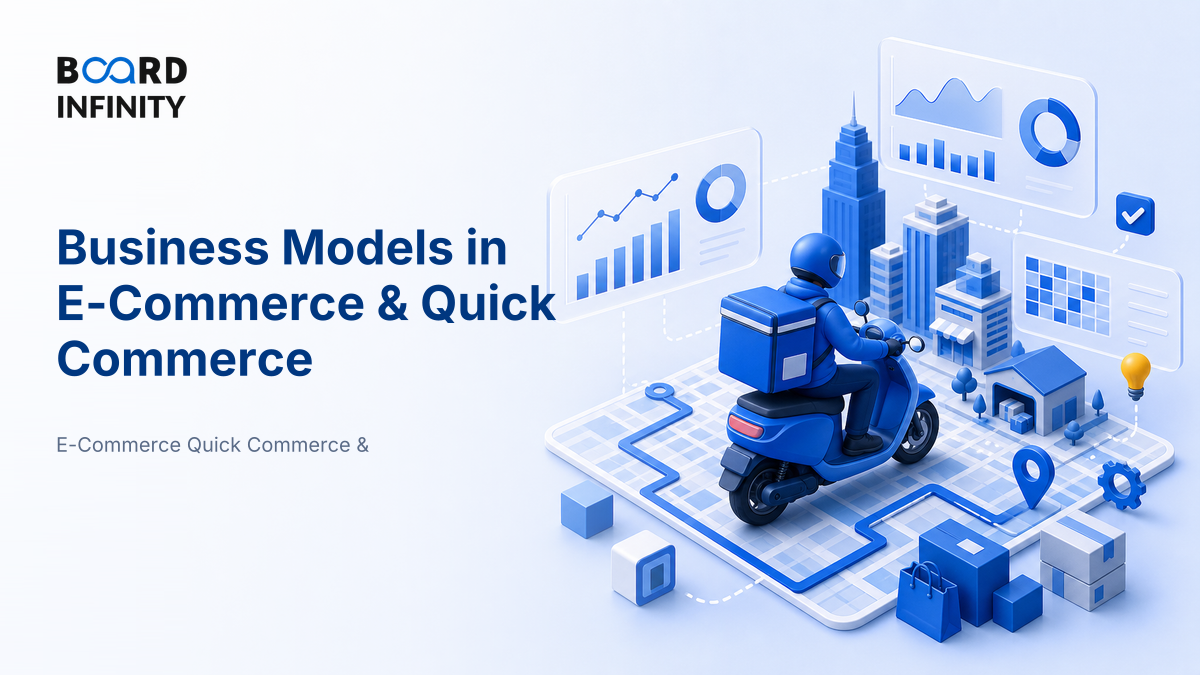
One cart takes two days to arrive with ten thousand choices; another reaches your door in ten minutes with the exact chips, milk, and charger you forgot to buy. Both look like “online shopping,” but their economics are almost opposite.
- E-commerce monetizes selection and trust through commissions, retail margins, fulfilment fees, ads, subscriptions, and private labels.
- Quick commerce monetizes urgency and proximity through convenience fees, delivery fees, local retail margins, ads, and high-frequency repeat orders.
- GMV is not revenue. GMV is the value of goods sold; platform revenue is the take rate, margin, fees, or ad income retained from that GMV.
- The core equation is simple: order revenue minus product cost, fulfilment, delivery, discounts, payment cost, returns, and customer acquisition.
- Marketplace models scale lighter because sellers own inventory; inventory-led models control customer experience but carry stock and margin risk.
- Quick commerce wins only with density. Speed becomes economical when many orders are delivered from compact dark-store catchments.
- The interview trap: saying “they make money from delivery charges” and ignoring ads, seller services, private labels, and contribution margin.
Big Picture: The Business Model Is a Money Flywheel
Think of an e-commerce or quick commerce company as a flywheel. It attracts demand, gives sellers or suppliers access to that demand, monetizes transactions and attention, then reinvests into selection, speed, price, and retention.
Core Explanation: Where the Money Comes From
The first move is to separate business model from app experience. A polished app is only the storefront. The real business model sits underneath - who owns the inventory, who fulfils the order, who pays whom, and which part of the transaction the platform keeps.
Alexander Osterwalder and Yves Pigneur define a business model as “the rationale of how an organization creates, delivers, and captures value” in Business Model Generation.
The Two-Sided Contrast: E-Commerce vs Quick Commerce
Both models sell digitally, but they optimize different promises. Traditional e-commerce optimizes assortment, price, reviews, and trust. Quick commerce optimizes availability, proximity, and immediacy.
The Five Revenue Pools You Must Know
Most strong answers move beyond “delivery fees.” The real money stack has several layers, and different players emphasize different layers.
- Marketplace commission or take rate: the platform enables third-party sellers and keeps a percentage or fixed fee per order.
- First-party retail margin: the company buys inventory, sells to customers, and earns the difference between selling price and product cost.
- Delivery and convenience fees: customers pay for shipping, faster delivery, small-cart handling, or convenience.
- Advertising and retail media: sellers or brands pay for sponsored listings, banners, search placement, sampling, or app visibility.
- Subscriptions and loyalty: customers pay or qualify for benefits such as free delivery, faster service, rewards, or exclusive offers.
- Private labels: the platform sells its own brands, often improving gross margin and supply control versus third-party products.
Nykaa is a useful Indian example because it is not just an online catalogue. FSN E-Commerce Ventures, which operates Nykaa, runs beauty, personal care, fashion, own brands, and offline touchpoints as described in its investor relations disclosures. The strategic lesson: vertical e-commerce can earn through trust, curation, content, brand relationships, retail margins, and private labels - not only through order delivery.
The Four Common Business Model Archetypes
When an interviewer says “compare business models,” answer in archetypes. This prevents a random company-by-company narration.
Unit Economics: The Interview Equation
Business models become serious when you move from revenue to unit economics - profit or loss per order, customer, store, or cohort. For quick commerce, the unit is often one order from one dark-store catchment. For e-commerce, it may be one order, seller, category, or customer cohort.
Order contribution can be simplified as:
Revenue retained per order - product cost - fulfilment cost - delivery cost - discounts - payment cost - returns or refunds - customer acquisition allocation.
Suppose a basket is ₹500. The platform retains ₹90 through retail margin, fees, and brand promotion. Variable costs are ₹35 picking and store handling, ₹40 delivery, ₹10 payment and support, and ₹20 discount. Contribution = ₹90 - ₹35 - ₹40 - ₹10 - ₹20 = -₹15. If higher order density cuts delivery cost to ₹25 and discount reduces to ₹10, contribution becomes ₹10 positive. That is why density and repeat behaviour matter more than headline GMV.
Case Study: BigBasket and the Grocery Economics Puzzle
BigBasket shows how online grocery economics depend on inventory discipline, basket-building, private labels, and local fulfilment - not just on promising faster delivery.
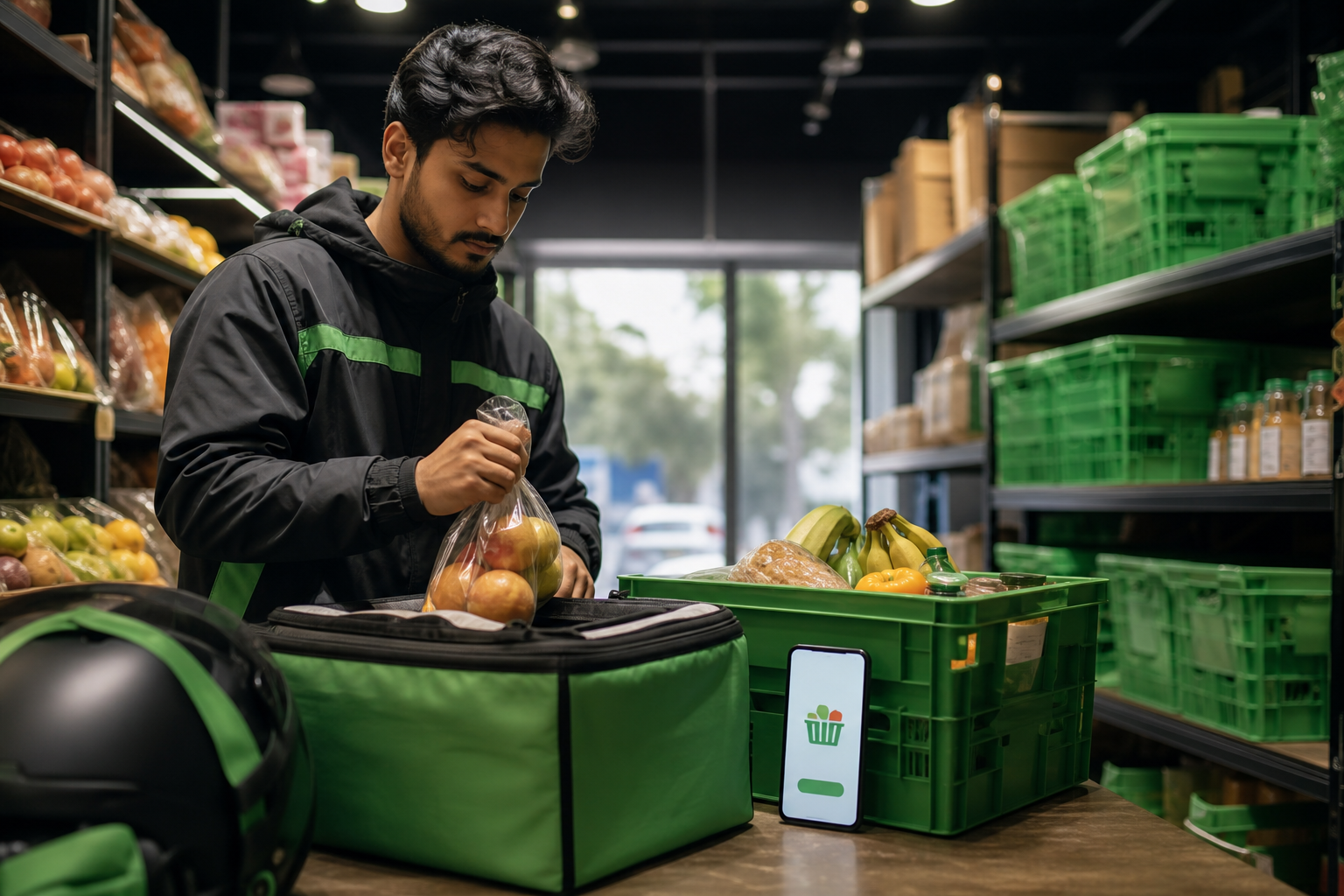
Situation: Online grocery is structurally hard. Margins are thin, products can spoil, baskets vary by neighbourhood, and customers expect freshness, availability, and fair pricing. A pure marketplace has less inventory risk, but grocery often needs stronger control over assortment, substitution, and delivery promise.
The move: BigBasket built a grocery-first model with controlled supply, repeat purchase behaviour, private-label opportunities, and faster fulfilment formats for urgent top-ups. Its primary driver is control over the grocery value chain - assortment, sourcing, inventory, and fulfilment. Supporting drivers include route density, predictable repeat demand, category depth, app-led reordering, and the ability to separate planned baskets from urgent convenience orders.
The lesson: In grocery and quick commerce, speed is not the business model by itself. Speed becomes valuable only when paired with dense demand, high inventory turns, low wastage, and enough gross profit per basket to pay for picking and last-mile delivery.
Definitions You Should Be Able to Say Clearly
How AI Changes E-Commerce & Quick Commerce Business Models
AI is not just a chatbot layer. It changes the economics of discovery, inventory, fulfilment, and monetization.
- Personalized merchandising: AI ranks products, bundles, and offers based on customer intent. This can improve conversion and average order value, but platforms must avoid manipulative pricing or opaque recommendations.
- Demand forecasting and replenishment: Quick commerce depends on stocking the right SKUs in the right dark store. Machine learning helps predict neighbourhood-level demand, stockouts, substitutions, and perishable wastage.
- Retail media optimization: AI helps brands target sponsored listings, test creatives, and allocate ad budgets within the app. This turns platform attention into a high-margin revenue pool.
Use NotebookLM for interview prep: upload one company annual report or investor presentation, your notes on business models, and a competitor snapshot. Ask: “Break this company's revenue model into GMV, take rate, margin, ads, fulfilment, and unit economics. Then generate five placement interview questions.” For safe prompting habits, revise using AI to research a sector without importing its errors.
Interview Relevance
“How do e-commerce and quick commerce companies make money? If quick commerce charges only a small delivery fee, how can the model ever become profitable?”
If you are comparing two companies, do not compare only delivery speed. Compare ownership of inventory, revenue pools, fixed costs, customer frequency, basket size, and contribution margin. The same logic will also help when you revise comparing two sectors on the same framework.
Common Mistake
The biggest mistake is treating GMV as profit. Candidates say, “The company sold ₹1,000 crore, so it made ₹1,000 crore,” and instantly lose credibility. The fix: always say, “GMV is the transaction base; the company earns only the retained margin, commission, fees, ads, or services after costs.”