
Emerging Trends Reshaping E-Commerce & Quick Commerce
A grocery cart once meant a weekly plan, a long slot, and a delivery window you hoped would hold. Now a customer can remember toothpaste at 8:47 pm and expect it before the tea gets cold.
That shift is not just faster delivery. It is a redesign of inventory, merchandising, payments, data, margins and customer expectation - and that is why e-commerce and quick commerce are being reshaped together.
- E-commerce optimizes for assortment, price discovery and convenience; quick commerce optimizes for immediacy, local availability and repeat frequency.
- The biggest trends are quick commerce, omnichannel retail, retail media, private labels, social/content commerce, embedded payments and AI-led personalization.
- The core trade-off is simple: faster delivery improves convenience but raises pressure on inventory density, picking productivity and delivery cost.
- Winning players do not win on speed alone. They combine demand density, local inventory, efficient fulfilment, sharp assortment and high repeat use.
- Track the sector using AOV, order frequency, fulfilment cost per order, contribution margin, stock-out rate and retention.
- AI changes the game through hyperlocal demand forecasting, personalized discovery, route optimization, fraud detection and automated seller operations.
- The interview-safe answer is: explain the consumer shift, map the operating model change, name 4-5 trends, connect them to unit economics, and give one Indian example.
Big Picture - From Online Storefront to Local Commerce Infrastructure
The easiest way to understand the sector is to stop seeing it as “shopping on an app.” Modern e-commerce is becoming a commerce operating system - discovery, ordering, payment, fulfilment, returns, advertising and data all stitched together.
Traditional e-commerce asks: “How do we give the customer maximum choice at the best delivered price?” Quick commerce asks: “How do we make high-frequency essentials available instantly, profitably and repeatedly?” The second question is harder because the promise is local, time-bound and operationally unforgiving.
Core Explanation - The Six Trends Reshaping the Sector
These trends are not separate headlines. They reinforce each other. Quick delivery increases repeat use; repeat use creates data; data improves personalization; personalization improves advertising; advertising and private labels improve margins.
1. Quick commerce is moving from novelty to habit
The first wave was about speed as a wow factor. The next wave is about use-case ownership: top-up groceries, snacks, personal care, pet food, medicines where permitted, stationery, electronics accessories and urgent household needs.
The strategic point: quick commerce does not need to replace monthly shopping. It can win by owning urgent, frequent and forgotten purchases. The primary driver is micro-market demand density, supported by dark-store placement, limited high-velocity assortment, rider availability and accurate promised delivery times.
2. Omnichannel is becoming the default retail model
Retail is no longer cleanly split into online and offline. Customers discover on Instagram, compare on marketplaces, check reviews, visit a store, order on an app, return through a pickup and expect the brand to remember them across all touchpoints.
For Indian retailers, the omnichannel shift is visible in grocery, fashion, electronics and beauty. The operating challenge is not the app; it is inventory visibility. A retailer must know what is available in a warehouse, dark store, brand store or seller location before promising the customer.
3. Retail media is turning platforms into advertising businesses
When a customer searches for “protein bar” or “face wash” inside a commerce app, that intent is valuable. Platforms can sell sponsored placements, brand stores, sampling and targeting to sellers and FMCG brands.
This trend matters because retail media can improve platform economics without increasing delivery fees. But it works only if customer trust is protected. Too many irrelevant sponsored results can damage the shopping experience.
4. Private labels are becoming a margin lever
Marketplaces and quick-commerce platforms increasingly use their demand data to identify gaps: high-frequency products, price-sensitive categories, underserved pack sizes and regional preferences. Private labels can improve margin because the platform captures more of the value chain.
The risk is credibility. In categories like food, beauty or baby care, trust and quality control matter as much as price. A private-label push without brand assurance can hurt the platform more than it helps.
5. Social and content commerce are reducing the distance between inspiration and checkout
Customers often do not start with a search box. They start with a creator video, a recipe, a skin-care routine, a festival look or a peer recommendation. Content commerce converts that inspiration into purchase.
Nykaa is a useful Indian example because beauty discovery often needs education - skin type, shade, routine, ingredients and occasion. The strategic lesson is that in high-involvement categories, content is not decoration; it reduces confusion and increases confidence.
6. Open networks and embedded payments are changing access
India-specific mechanics matter here. The Open Network for Digital Commerce aims to make digital commerce more interoperable across buyers, sellers and logistics providers (ONDC). UPI has also made instant digital payment behaviour mainstream through a standardized payment rail (NPCI UPI product overview).
The “so what” is important: easier seller access and smoother payment can reduce friction, but they do not automatically solve demand generation, service quality, returns or unit economics.
Definitions You Should Say Cleanly
- E-commerce: “Production, distribution, marketing, sale or delivery of goods and services by electronic means” - WTO work on electronic commerce.
- Quick commerce: A retail model that fulfils frequent, local purchases in minutes through nearby inventory and rapid last-mile delivery.
- Dark store: A small fulfilment location built for online picking and dispatch, not for walk-in shoppers.
- Retail media: Advertising sold by a retailer or platform using its shopper traffic, search intent and transaction data.
- Omnichannel retail: A model where discovery, inventory, purchase, delivery and returns work across online and offline touchpoints.
The Metrics That Reveal Whether a Trend Is Actually Working
Do not judge an e-commerce trend only by app downloads or delivery speed. In interviews, the stronger answer connects the trend to unit economics and customer behaviour.
If you need fresh sector numbers for a placement answer, use credible company filings, regulator pages and public datasets rather than random social posts. A good next skill is learning where to find current sector data and which sources to trust.
Case Study - BigBasket and the Shift from Scheduled Grocery to Faster Grocery
BigBasket shows how an e-grocery player can evolve from planned baskets toward faster fulfilment while using assortment, private labels and supply-chain discipline as supporting strengths.
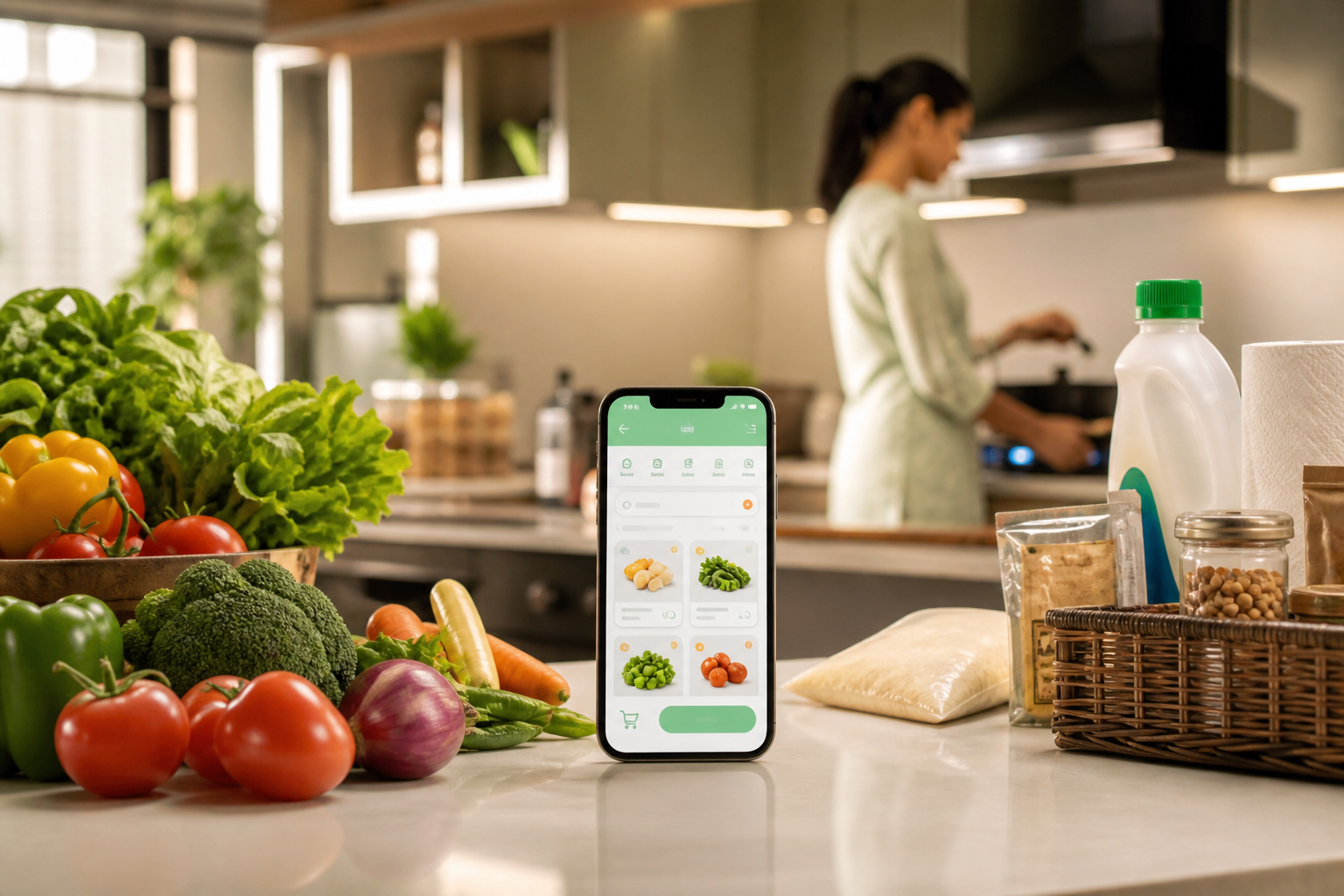
Situation: Online grocery began with a planned-shopping logic: customers built larger baskets, selected delivery slots and optimized for convenience over a store visit. But urban customers increasingly wanted both planned grocery and urgent top-up purchases.
The move: BigBasket’s strategic response can be understood as a portfolio shift. It retained the strengths of e-grocery - broad assortment, fresh produce handling, staples, private labels and scheduled delivery - while adding faster grocery propositions in selected markets. The primary driver was the need to serve more purchase occasions. Supporting drivers included local fulfilment capacity, high-repeat categories, procurement capability and household-level trust in grocery quality.
The lesson: Speed alone is not the whole strategy. In grocery, the winner must balance freshness, availability, price, pack size, substitution logic and delivery reliability. A ten-minute promise with poor fill rates is weaker than a slightly slower promise that consistently delivers the right basket.
How AI Changes Emerging Trends Reshaping E-Commerce & Quick Commerce
AI is not a separate trend sitting on top of e-commerce. It is becoming the decision layer inside discovery, inventory, fulfilment and support.
Student workflow: Before an interview, use NotebookLM or Perplexity to build a company brief. Upload the company’s annual report or investor presentation, add 3-4 competitor pages, and ask: “What are the top trends affecting this company’s commerce model, and which metrics prove whether they are working?” Then verify every specific number from the original source. For a safer method, revise using AI to research a sector without importing its errors.
Interview Relevance
“What are the major trends reshaping e-commerce and quick commerce in India, and how would you evaluate whether a player is building a sustainable business?”
If the question asks you to compare two companies, do not list features randomly. Use the same dimensions - customer segment, assortment, fulfilment model, revenue streams, metrics and risks. If you need a clean structure, revise comparing two sectors on the same framework.
Common Mistake
The most common mistake is saying “quick commerce is winning because delivery is faster.” That is shallow because speed is only the customer-facing promise; the real engine is demand density, right assortment, local inventory, fulfilment productivity and repeat behaviour. Fix: always connect speed to unit economics.