
Funnel & Conversion Metrics, and Where They Mislead
Before the campaign, the dashboard looked dull: fewer visitors, steady orders, decent repeat purchase. After the campaign, traffic exploded - and the conversion rate fell, making the team look worse even though absolute revenue improved. That is the quiet danger of funnel metrics: they can reveal the business or distort it, depending on how you read the denominator.
- A funnel is a sequence of customer steps, from awareness to action to repeat behaviour.
- Conversion rate means conversions divided by eligible users or sessions at that step - always state the numerator, denominator, segment, and time period.
- The most useful funnel question is not “What is our conversion?” but “Where is the biggest qualified drop-off and why?”
- Never judge a funnel only by the final conversion rate; check traffic quality, stage drop-offs, CAC, payback, retention, and margin.
- Blended conversion rates mislead when channel mix, customer intent, pricing, geography, or device mix changes.
- A good funnel analysis separates volume, conversion, value, and quality.
- In interviews, say: “I will define the funnel, compute stage conversions, isolate the drop-off, segment it, then validate with unit economics.”
Big Picture
Think of a funnel as a business microscope. It does not just show how many people buy; it shows where intent is created, where friction appears, and where the business may be acquiring the wrong audience.
Core Explanation: Read the Funnel Like a System
The funnel is not a single metric. It is a chain of linked ratios. If one stage improves but the next stage worsens, the business may not have improved at all.
For example, a discount campaign may increase add-to-cart rate but reduce gross margin. A celebrity ad may increase website visits but reduce overall conversion because it attracts many curious, low-intent users. A lead form may produce more leads but fewer qualified prospects for the sales team.
The four questions every funnel answers
The six funnel metrics you must know
Use these metrics as a diagnostic set. In real projects, “good” depends heavily on category, channel, product maturity, and customer intent, so always benchmark against the same segment and time window.
Worked example: one checkout fix, measured end to end
Suppose an app has 20,000 product-page visitors in a week. Of these, 4,000 add to cart, 2,400 start checkout, and 1,200 place an order.
If the team improves checkout completion from 50% to 60%, orders become 2,400 x 60% = 1,440. That is 240 extra orders. If contribution margin is ₹250 per order, the weekly incremental contribution is 240 x ₹250 = ₹60,000. The interview point: convert a metric improvement into business impact.
Where Funnel and Conversion Metrics Mislead
Funnel metrics mislead when the denominator changes silently. If you do not control for channel, intent, device, city, price, and time period, you may blame the wrong stage.
Six misleading measures to challenge
Definitions You Can Say in One Breath
- Metric: “A metric is a measuring system that quantifies a trend, dynamic, or characteristic.” - Farris, Bendle, Pfeifer and Reibstein.
- Funnel: An ordered set of customer stages that tracks movement from awareness to conversion and repeat behaviour.
- Conversion: A desired user action, such as signup, cart creation, payment, demo request, renewal, or referral.
- Conversion rate: Conversions divided by eligible users, sessions, or leads exposed to that step.
- Drop-off: Eligible users who do not move from one funnel stage to the next.
Case Study: Lenskart and the Omnichannel Funnel
Lenskart shows why a funnel must include online discovery, assisted trial, store conversion, and repeat eyewear needs - not just website purchase rate.
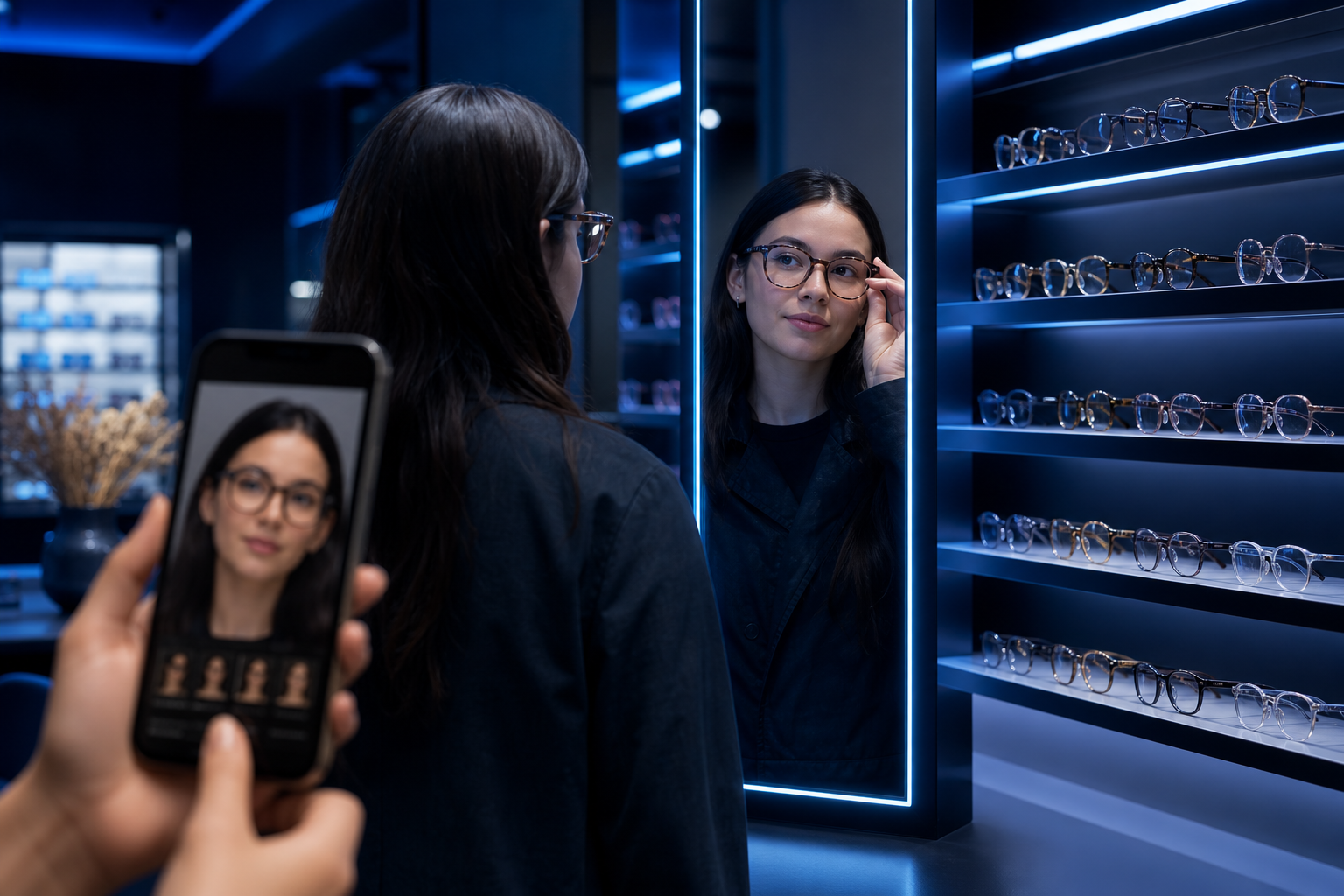
Situation: Eyewear is a high-consideration category. Customers care about fit, face shape, prescription accuracy, lens options, and trust. A pure online funnel can understate intent because many users browse frames digitally but prefer assisted trial or eye-testing before buying.
The move: Lenskart built an omnichannel funnel: online discovery, virtual try-on, home or store eye-testing, assisted frame selection, purchase, and replacement or repeat lens needs. The primary driver is reduction of fit and trust uncertainty. Supporting drivers include controlled product assortment, store presence, technology-led discovery, and repeat need in prescription eyewear.
Outcome or lesson: The lesson is not “offline stores improve conversion” as a single-cause answer. The stronger answer is that Lenskart reduces category-specific uncertainty through an omnichannel funnel, supported by product control, assisted service, and repeat eyewear demand. The strategic “so what”: for high-consideration categories, measure the customer journey, not just the channel where the first click happened.
How AI Changes Funnel & Conversion Metrics
AI makes funnel analysis faster, more granular, and more dangerous if used blindly. The core change is that teams can now predict, personalise, and diagnose funnel movement at user or cohort level.
One caution for India: if funnel analysis uses personal data, consent, minimisation, and privacy controls matter under the DPDP Act. A more personalised funnel is not automatically a more ethical or sustainable funnel.
Use NotebookLM or Perplexity to load a company annual report, app reviews, and recent campaign pages. Ask: “Map the likely funnel, list stage metrics, identify where conversion metrics may mislead, and frame three interview questions with answers.” Then verify every claim before using it.
Interview Relevance
“Our app installs increased sharply after a campaign, but purchase conversion rate fell. Is the campaign underperforming? How would you analyse it?”
Use this sentence in interviews: “A falling conversion rate is not automatically bad if the denominator expanded into colder traffic; I would judge it after segmenting traffic quality and checking unit economics.”
Common Mistake
The single biggest mistake is quoting “conversion rate” without defining the numerator, denominator, segment, and time window. It costs candidates because the same 5% can mean excellent qualified conversion or weak blended performance. One-line fix: always say, “Conversion rate of what action, among which eligible users, over what period, and from which source?”
What to Revise Next
Once you are comfortable reading funnels, move to the operating and analytical metrics that explain whether the business can actually deliver the demand it creates.