
Lean, Waste Elimination & Continuous Improvement
A supervisor says, "We are going lean," and half the shop floor immediately hears, "Job cuts are coming." That is the biggest misconception: real lean is not about squeezing people - it is about squeezing waste out of the work so people can solve better problems.
- Lean means creating needed customer value with fewer resources and less waste.
- The enemy is muda - any activity that consumes resources but does not create customer value.
- The basic lean logic is: define value, map the value stream, make work flow, let demand pull, and improve continuously.
- The eight common wastes are defects, overproduction, waiting, non-utilized talent, transportation, inventory, motion and extra-processing.
- Kaizen is continuous improvement through small, structured changes by people closest to the work.
- Do not optimize one department in isolation. Lean improves the end-to-end value stream.
- In interviews, always connect lean tools to business outcomes: lower lead time, higher first-pass yield, better service, safer operations and lower working capital.
Big Picture: Lean Is a Loop, Not a One-Time Cost Project
Lean begins with a deceptively simple question: "What would the customer actually pay for?" Everything else is either necessary support work to be minimized or waste to be eliminated. The best mental model is a loop because every improvement becomes the next baseline.
Core Explanation: How Lean Actually Works
The big idea is simple: make value flow with minimum interruption. Lean does not start by asking, "Where can we cut cost?" It starts by asking, "Where is the customer waiting, paying for rework, or being forced through steps that add no value?"
A lean process separates work into three buckets:
The Eight Wastes: What to Look For on the Shop Floor or in a Service Process
The eight wastes are often remembered as DOWNTIME. Use them as a diagnostic checklist when you are analyzing a plant, warehouse, hospital, bank branch, call centre or app support process.
IndiGo's operating model is often discussed through a lean lens because quick aircraft turnaround reduces waiting, underused assets and schedule disruption. The primary driver is standardised aircraft and operating routines, supported by tight ground-handling SOPs, route-density choices and disciplined scheduling. The so what: lean service design improves flow by attacking delay at the system level, not by asking one employee to work faster.
The Lean Toolkit: Tools Are Useful Only When Matched to the Waste
Interview answers often go wrong when candidates throw tool names randomly. A stronger answer says: "I see this waste, so I would use this lean tool, and I would track this metric."
Key Metrics to Track in Lean Projects
Lean must show up in numbers. Use these metrics to prove that waste elimination improved the system rather than merely shifting pressure from one team to another.
Worked Example: Spotting Waste in a Simple Process
Suppose a service team takes 10 hours from customer request to completion. When you map the work, only 2 hours are actual value-added processing. The remaining 8 hours are waiting for approval, rechecking data and queue time.
The key insight: if you add more people without removing the approval bottleneck, the queue may simply move to the next step. Lean asks you to redesign the flow before buying capacity.
Definitions You Can Say Cleanly in an Interview
- Lean: The Lean Enterprise Institute describes lean as creating needed value with fewer resources and less waste.
- Waste: Any activity that consumes resources but does not create customer value.
- Kaizen: Continuous improvement through small, structured changes by the people closest to the work.
- Value stream: The full sequence of activities required to deliver value to the customer.
- Jidoka: Toyota's idea of stopping when an abnormality occurs so defects do not flow downstream, described in the Toyota Production System.
- Kanban: A visual signal that authorizes production or replenishment based on actual demand.
Narayana Health: Lean Thinking in a Hospital, Not a Factory
Narayana Health shows how lean principles can improve patient flow, specialist productivity and affordability in a complex Indian healthcare setting.
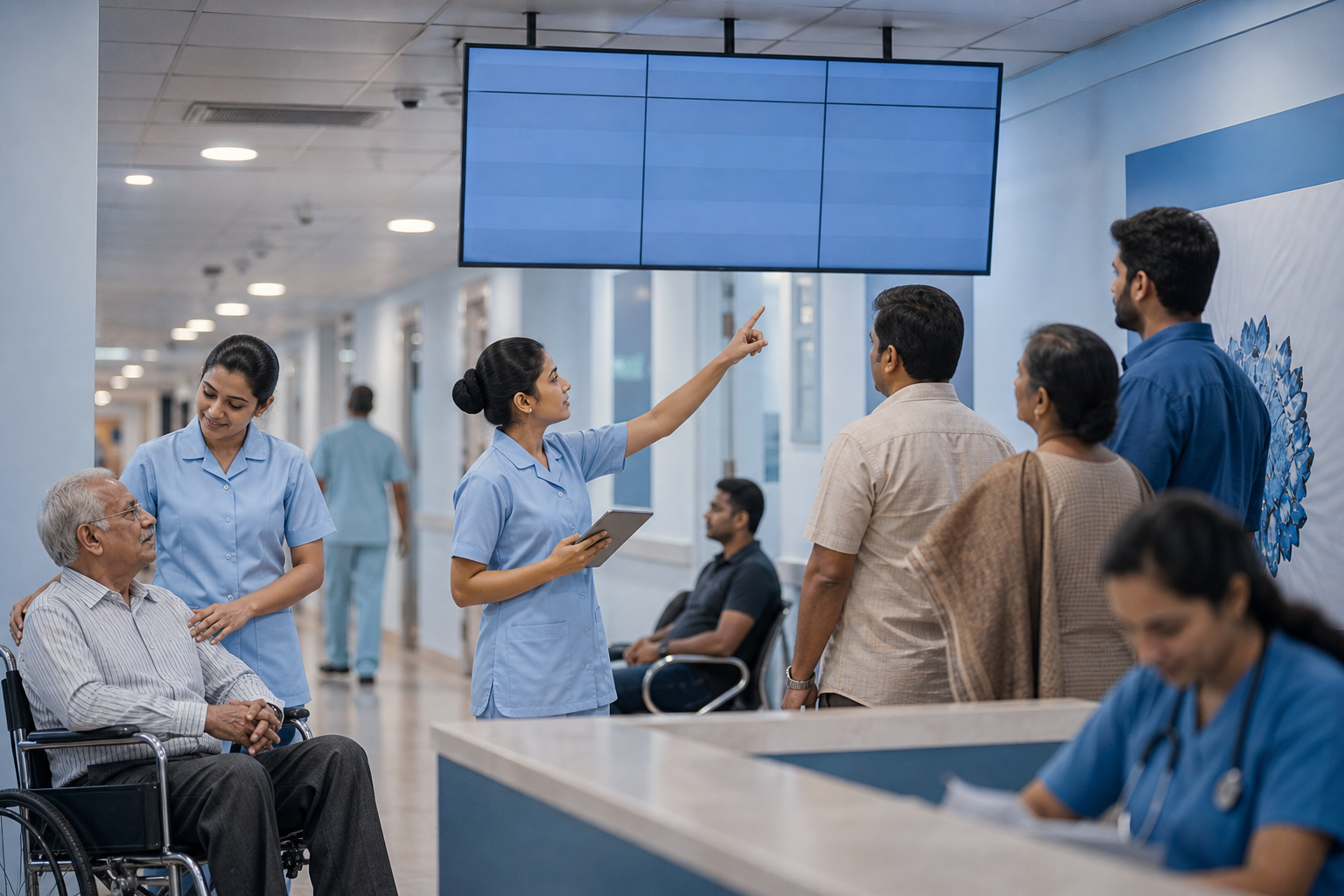
Situation: In hospital care, the bottleneck is rarely only the doctor. Patients wait because diagnostics, rooms, operating theatres, paperwork, billing, insurance approval, pharmacy and discharge all depend on each other. A delay in one step creates queues everywhere else.
The move: Narayana Health built a model that reflects lean service thinking: standard clinical pathways where appropriate, focused specialist utilization, disciplined scheduling, repeatable operating routines, centralized procurement logic and continuous attention to patient throughput. The primary driver is standardized flow around the patient journey. Supporting drivers include scale benefits, role clarity, protocol-driven clinical work and tight coordination across departments.
The lesson: Lean does not mean reducing care. It means removing non-care work so scarce clinical time is spent where it creates the most value. In a hospital, the equivalent of waste is a patient waiting for a file, a surgeon waiting for a theatre, a bed blocked by slow discharge, or a test repeated because information did not flow.
The interview-worthy takeaway: lean travels beyond manufacturing. The language changes from machines and inventory to patients and specialists, but the managerial logic remains the same - protect value, expose waiting and solve the constraint.
How AI Changes Lean, Waste Elimination & Continuous Improvement
AI does not replace lean thinking. It makes waste more visible, faster, and sometimes more predictive.
Student workflow: Use ChatGPT or Claude to practise lean diagnosis. Paste a short process description - for example, "customer complaint to refund approval" - and ask: "Classify each step as value-added, necessary non-value-added or waste; identify the likely bottleneck; recommend three lean countermeasures and the metric to track." Then challenge the answer by asking, "What could go wrong if we implement this blindly?"
Interview Relevance
"A factory has rising customer complaints, high work-in-progress inventory and long delivery lead times. How would you use lean principles to diagnose and improve the process?"
In operations, product, supply chain and consulting interviews, lean appears as a process-improvement case. If you want the broader project context, revise what a consultant does week to week because lean projects often involve gemba visits, stakeholder interviews, baselining and implementation tracking.
Use the phrase "end-to-end value stream" in your answer. It signals that you understand lean as a system improvement discipline, not a local cost-cutting exercise.
Common Mistake
The mistake that sinks candidates is treating lean as a toolbox - "use 5S, use kanban, use kaizen" - without diagnosing the waste first. It costs them because the interviewer sees tool memorisation, not managerial thinking. One-line fix: name the waste, locate it in the value stream, then choose the tool and metric.