
Case: Reducing Cost to Serve Without Hurting Service
A supermarket can cut cashier cost by pushing every shopper to self-checkout - and still make the Saturday queue worse. The best cost-to-serve moves do not simply remove cost; they redesign the way service is delivered so the customer barely feels the saving.
- Cost to serve is the full cost of fulfilling, delivering, supporting and retaining a customer, order, channel or segment.
- The goal is not “lowest cost”; it is lowest cost for the promised service level.
- Start by segmenting demand: customers, SKUs, channels and orders usually consume service resources unevenly.
- Protect 4-6 service KPIs while reducing cost KPIs - otherwise savings may be customer pain in disguise.
- The strongest levers are process redesign, demand shaping, channel shift, automation, network design and service-policy clarity.
- Interview-safe answer: map cost, segment demand, identify cost drivers, redesign service model, quantify impact and pilot with guardrail metrics.
- Common trap: cutting front-line cost first without understanding what service promise the customer actually values.
Big Picture: Cost to Serve Is a Service Design Problem
Think of cost to serve as an x-ray of hidden effort. Two customers may generate the same revenue, but one places predictable bulk orders while another orders small quantities, changes delivery slots, returns often and calls support repeatedly. The second customer is not “bad”; the service model may simply be mismatched to their behaviour.
Core Explanation: The Framework That Actually Works
Cost to serve is the total cost required to sell to, fulfil, deliver, support and retain a customer, order, SKU, route or channel.
In a case, you are usually asked to reduce cost without damaging customer experience. That means every recommendation must pass two tests:
The Five-Step Cost-to-Serve Case Process
The key consulting instinct is to separate bad cost from good cost. Bad cost does not improve the customer promise - rework, failed delivery, avoidable calls, manual reconciliation. Good cost protects the promise - quality checks, reliable routing, safety stock for critical SKUs, trained support for high-value customers.
Typical Cost-to-Serve Levers
Most strong answers combine one primary lever with supporting levers. A single lever rarely works alone because customer experience is created by a system.
Metrics: What to Track So Savings Do Not Hide Service Damage
Cost-to-serve work must always use a paired scorecard: one side for cost, one side for service. The right “good” number depends on industry and business model, so benchmark against the company baseline, the target segment and competitor promise rather than inventing a universal target.
Worked Example: A Small Cost-to-Serve Calculation
Assume an e-commerce category ships 100,000 monthly orders. Current cost per order is:
The saving is ₹18 per order. Across 100,000 orders, monthly saving is ₹18,00,000. But the answer is incomplete unless you also say: “I would only scale this if on-time delivery, perfect order rate and return rate remain within the promised service levels.”
Definitions You Can Say in One Breath
- Cost to serve: the full cost of fulfilling and supporting a customer, order, product, route, channel or segment.
- Service level: the measurable promise made to customers on availability, speed, reliability, accuracy or support.
- Cost driver: an activity, behaviour or complexity factor that causes cost to increase.
- Demand shaping: influencing customer behaviour so demand becomes cheaper and easier to serve.
- Service guardrail: a metric that must not deteriorate while cost-reduction levers are tested.
Case Study: DMart Reduces Cost to Serve by Designing a Low-Friction Retail Model
DMart shows how a retailer can reduce cost to serve by simplifying the operating model while protecting the customer promise of value, availability and predictable shopping.
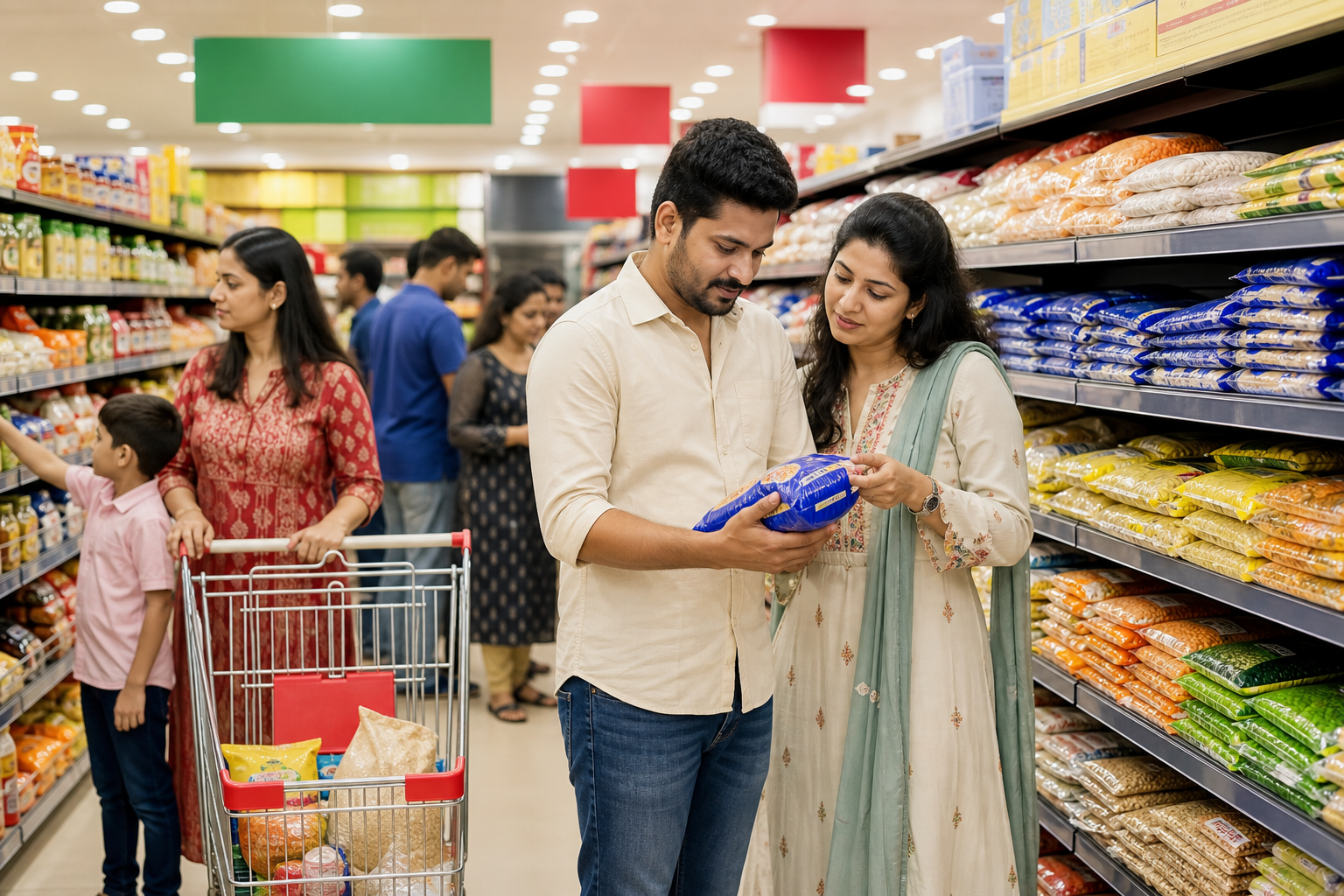
DMart’s retail model is a useful cost-to-serve case because the customer promise is not luxury service. The promise is sharper: everyday low prices, essential assortment, reliable availability and a no-frills shopping experience.
Situation: Grocery and general merchandise retail has thin margins. Costs creep in through excess SKUs, slow-moving inventory, expensive store operations, promotions, poor vendor coordination and complex service expectations.
The move: DMart’s primary driver is operating simplicity. It focuses on high-velocity everyday products, disciplined store operations and a value-led proposition. Supporting drivers include tight assortment discipline, supplier coordination, high inventory rotation, no-frills store experience and careful expansion. Together, these reduce the effort required to serve each shopping trip.
Outcome or lesson: The lesson is not “cut service.” DMart protects the service elements its customers value most - price, availability and predictability - while avoiding expensive service elements that are not central to its proposition. That is the essence of reducing cost to serve without hurting service.
So what for interviews: When explaining a company like DMart, avoid saying it wins only because of low prices. The stronger answer is: low prices are enabled by an operating model - focused assortment, efficient stores, vendor discipline, inventory rotation and a clear promise about what service will and will not include.
How AI Changes Reducing Cost to Serve Without Hurting Service
AI changes this topic because it helps companies see hidden service cost at a much finer level - by customer, SKU, route, ticket type, agent, store, pincode and time slot.
- AI finds micro cost drivers: Machine learning can identify patterns such as which delivery slots create failed attempts, which SKUs trigger returns, or which support issues lead to repeat calls.
- AI enables smarter service tiers: Instead of one service model for everyone, companies can offer differentiated promises - faster delivery for high-value urgent orders, lower-cost scheduled delivery for flexible customers.
- AI improves service deflection without abandonment: GenAI chat and voice bots can resolve simple queries, but the design must include escalation rules so complex customers are not trapped in automation.
Student workflow: Use NotebookLM before a case interview. Load your notes, the company annual report or investor presentation, and a few public customer reviews. Ask: “Identify likely cost-to-serve drivers, service guardrails and three quantified case hypotheses for this company.” Then verify every number yourself before using it.
Interview Relevance
“A consumer business has rising delivery and support costs, but customer complaints increase whenever it cuts service. How would you reduce cost to serve without hurting customer experience?”
This is an operations-heavy consulting case. If you want to place it within the broader consulting landscape, revise Strategy, Operations, Technology & Deal Advisory Compared before practising similar cases.
Say this line in your answer: “I will not recommend a cost lever until I know which service elements are valued, which are hygiene, and which are expensive but invisible to customers.” It signals mature consulting judgment.
Common Mistake
The single biggest mistake is treating cost reduction as headcount reduction or service reduction. It costs candidates because it sounds operationally naive and customer-blind. One-line fix: map the cost driver, preserve the service promise, and redesign the process before cutting visible capacity.