
Marketing Mix Interview Guide: Explain 4Ps and 7Ps with Examples
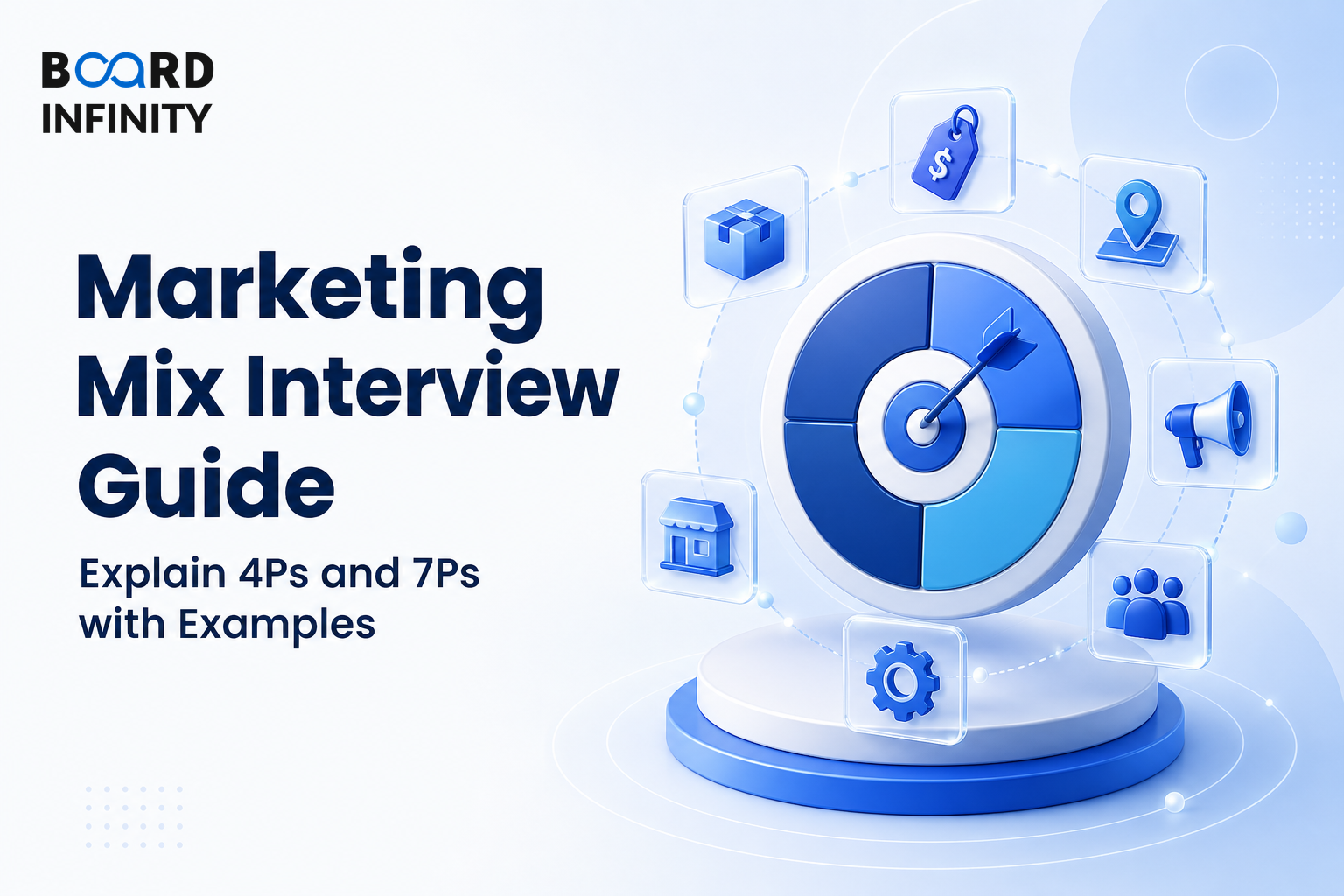
If a product is brilliant but priced wrongly, unavailable in the right channel, or promoted to the wrong audience, is it still a brilliant product? The marketing mix is where strategy stops being a slide and becomes the real set of choices customers actually experience.
- Marketing mix means the controllable tactical tools a firm blends to create the desired customer response.
- The classic 4Ps are Product, Price, Place and Promotion - best for physical goods and broad market offers.
- The 7Ps add People, Process and Physical Evidence - crucial for services, omnichannel businesses and customer experience.
- A strong answer does not list the Ps; it shows how they fit the target segment and reinforce positioning.
- Use the 7Ps when the customer experience depends on staff, delivery journey, ambience, trust signals or service consistency.
- Track the mix using metrics such as gross margin, conversion rate, weighted distribution, promotion ROI, CAC payback and NPS.
- The common mistake is treating each P separately; in reality, one weak P can break the whole proposition.
The marketing mix is the bridge between positioning and market execution. STP tells you whom to serve and how you want to be perceived; the 4Ps and 7Ps translate that into the product, price, channel, communication and experience customers see.
Core Explanation: From 4Ps to 7Ps
The simplest way to remember the marketing mix is this: Product creates value, Price captures value, Place delivers value, and Promotion communicates value. For services and experience-heavy businesses, the 7Ps add how the experience is delivered, by whom, and with what trust signals.
When do you use 4Ps versus 7Ps? Use the 4Ps for a product-led answer when the main challenge is offer, price, distribution and communication. Shift to 7Ps when the customer experience depends on human interaction, service delivery, waiting time, trust, ambience, installation, returns or support.
How to Apply the Marketing Mix in an Answer
A good marketing mix answer starts before the Ps. First define the target segment and positioning, then choose the mix elements that make that positioning believable.
Definitions You Can Say in One Breath
Kotler and Armstrong: Marketing mix is the “set of controllable tactical marketing tools” a firm blends to produce the desired market response.
4Ps: Product, Price, Place and Promotion - the classic controllable levers of a market offer.
7Ps: The 4Ps plus People, Process and Physical Evidence - used to manage service and experience delivery.
Metrics: How to Know Whether the Mix Is Working
Do not say “we will track awareness and sales” and stop there. Use metrics that connect each P to customer behaviour and business economics. Benchmarks vary by category, so compare against direct competitors, past campaigns and controlled experiments.
Case Study: Lenskart and the 7Ps in Omnichannel Eyewear
Lenskart shows how the 7Ps work together when a product category needs trust, trial, service and repeat purchase - not just advertising.
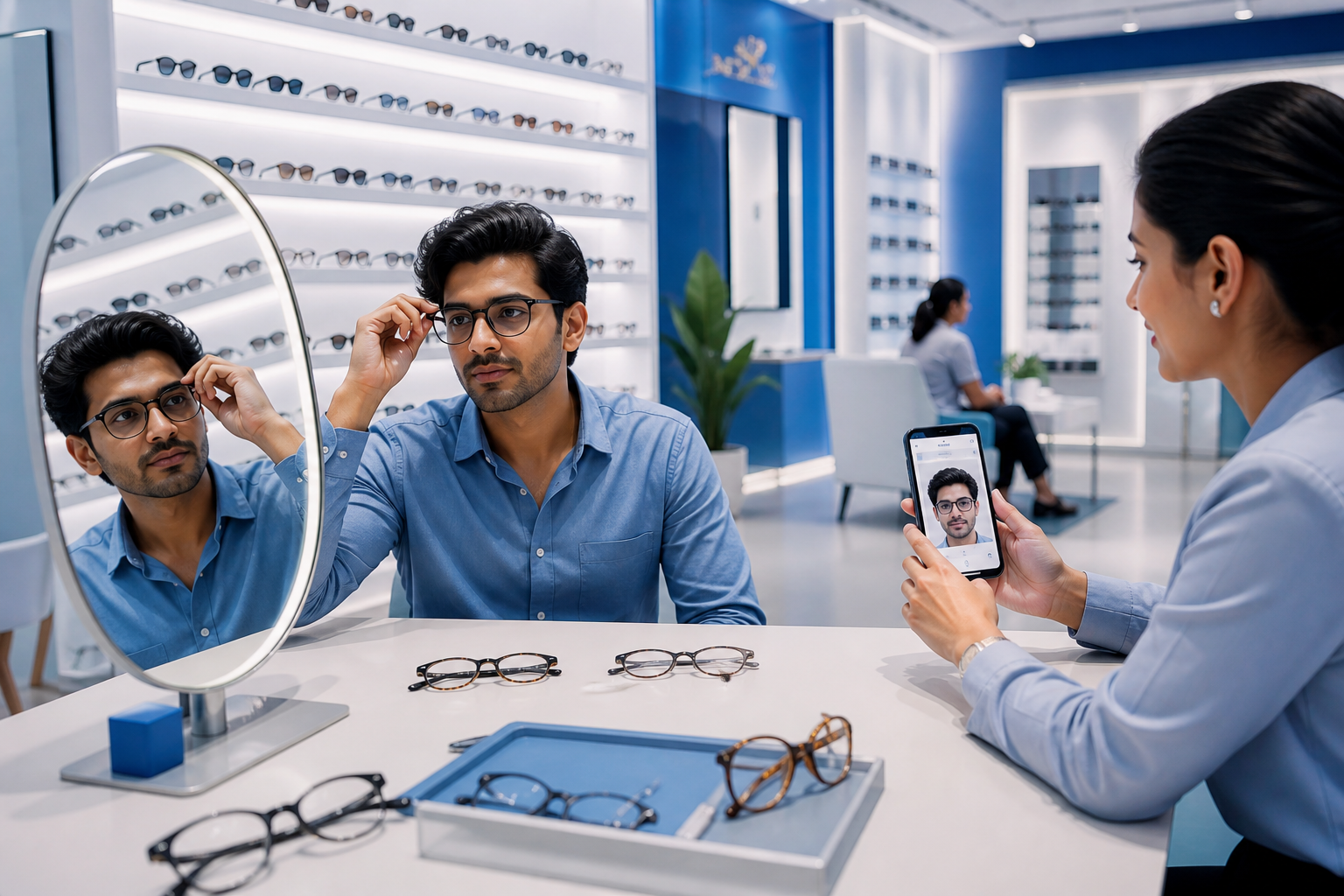
Situation: Eyewear in India had a clear friction problem. Customers needed prescription accuracy, face-fit confidence, style choice and trust in lenses. A pure online model could create reach, but eyewear also required trial and reassurance.
The move: Lenskart built an omnichannel mix instead of relying on one lever. Its primary driver was the integration of Product, Place and Process - a wide eyewear range, online plus offline access, and a smoother journey from eye test to frame selection to delivery. Supporting drivers included price ladders, digital try-on, store experience, trained staff, private-label control and visible service evidence.
Outcome and lesson: Lenskart became one of India’s most recognised eyewear businesses by reducing category friction across the journey. The strategic lesson is powerful: in high-involvement categories, the winning mix is not only “better promotion”; it is a coordinated system of product, channel, process, people and trust signals.
How AI Changes the Marketing Mix
AI does not replace the marketing mix; it makes each P more testable, personalised and dynamic. By 2026, the biggest change is the speed at which marketers can sense customer response and adjust the mix.
Use Perplexity or NotebookLM to study a company before interviews: load its website pages, recent annual report or investor presentation, then ask, “Map this company’s 7Ps, identify the weakest P, and suggest two metrics to validate the diagnosis.”
Interview Relevance
“Explain the 4Ps and 7Ps of marketing. Pick any Indian brand and show how you would use the framework to evaluate its marketing strategy.”
If the interviewer gives you a service brand, move quickly to 7Ps. For a hospital, airline, hotel, bank, edtech platform or food delivery app, People, Process and Physical Evidence are not add-ons - they are often the strategy.
Common Mistake
The biggest mistake is listing the Ps like a memory test without connecting them to the target segment and positioning. It costs candidates because it sounds theoretical. The fix: say “For this customer and positioning, the most critical P is...” and then justify it with one metric.
What to Revise Next
Now move from the tactical mix to the value logic behind it. Revise Customer Value & the Value Delivery Process first, then study How Marketing Connects with Sales, Finance, Product & Strategy so you can show how marketing decisions affect the full business.