
Omnichannel Marketing & Retail Media: Interview-Ready Framework for MBA Placements
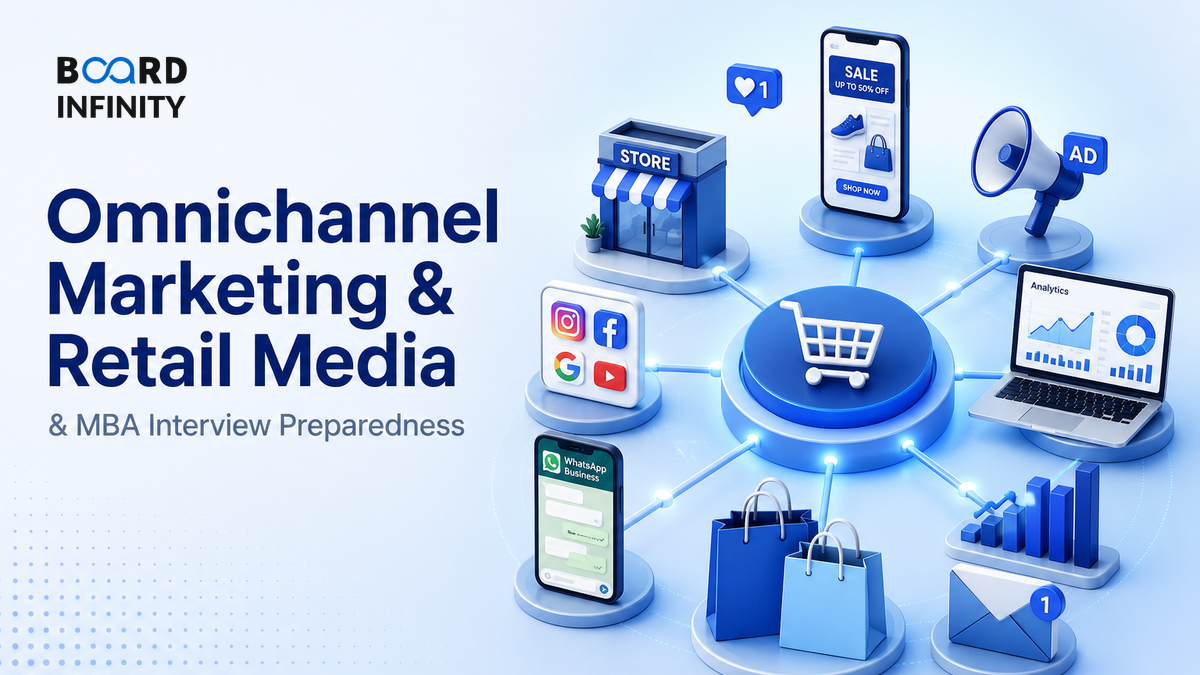
A shopper sees a lipstick shade on Instagram at lunch, compares reviews on a marketplace in the cab, tests it at a mall store in the evening, and finally buys it on the brand app with a personalised offer. Old marketing treated those as separate channels. Omnichannel marketing treats them as one continuous customer journey - and retail media turns that journey into a powerful advertising business.
- Omnichannel marketing means integrating touchpoints so the customer gets one connected experience across app, web, store, marketplace, social, CRM and service.
- Multichannel is presence. Omnichannel is orchestration - shared data, consistent messaging, unified inventory, and journey-level measurement.
- Retail media is advertising sold by retailers using shopper data and commerce surfaces such as search results, product pages, apps, stores and offsite audiences.
- The strategic shift is from buying attention to buying high-intent commerce moments close to the point of purchase.
- Retail media works because retailers have first-party purchase data, closed-loop attribution, and brand-safe inventory inside shopping journeys.
- Track omnichannel with customer-level metrics: incremental ROAS, conversion rate, repeat purchase rate, CAC, customer lifetime value and attribution quality.
- The interview-safe line: “Omnichannel is not being everywhere. It is designing one measurable journey across the places where the customer actually decides.”
The Big Picture
Omnichannel marketing connects the customer journey; retail media monetises parts of that connected journey for advertisers. The retailer is no longer just a seller of products - it becomes a data-rich media owner.
Core Explanation
The easiest way to understand this topic is to separate three layers: experience, data, and media monetisation.
At the experience layer, the customer wants continuity: “Do not make me restart the conversation.” A cart saved on the app should be visible on the website. A store associate should know that the customer browsed a product online. A service query should not ignore the customer's purchase history.
At the data layer, the company builds a unified customer view using consented first-party data: browsing behaviour, transactions, loyalty membership, store visits, service interactions and campaign responses.
At the monetisation layer, retailers convert this data and inventory into retail media: sponsored search listings, banner placements, sampling opportunities, in-store screens, shoppable content, and offsite ads targeted using retailer audiences.
Where Retail Media Fits
Retail media rises because retailers sit at the most valuable point in the marketing funnel: when the customer is already shopping. A sponsored shampoo result on a beauty app, a promoted snack on a quick-commerce platform, or a brand banner inside a grocery marketplace is not just awareness - it is advertising inside purchase intent.
The Five Building Blocks of a Strong Omnichannel Strategy
Key Metrics to Track
Good omnichannel measurement avoids vanity metrics. The best answer links customer experience metrics with commercial outcomes and media efficiency.
Platforms such as Blinkit, Swiggy Instamart and Zepto give FMCG brands advertising options inside search, category browsing and product discovery moments. The primary driver is extremely high purchase intent because the shopper is already building a basket; supporting drivers include first-party basket data, fast campaign feedback and strong category-level merchandising. The strategic so what: in categories like snacks, beverages and personal care, the shelf is increasingly both physical and algorithmic.
Definitions
- Omnichannel marketing: an integrated strategy where every customer touchpoint shares data, context and experience across one continuous journey.
- Retail media: advertising sold by retailers using shopper data and commerce surfaces to influence and measure purchase behaviour.
- First-party data: information a company collects directly from customer interactions it owns, with consent and governance.
- Closed-loop attribution: linking ad exposure to actual purchase or business outcome within the same measurable system.
Nykaa: Omnichannel Beauty Meets Retail Media
Nykaa shows how a specialist retailer can connect content, commerce, stores, data and brand advertising in a high-involvement category like beauty.
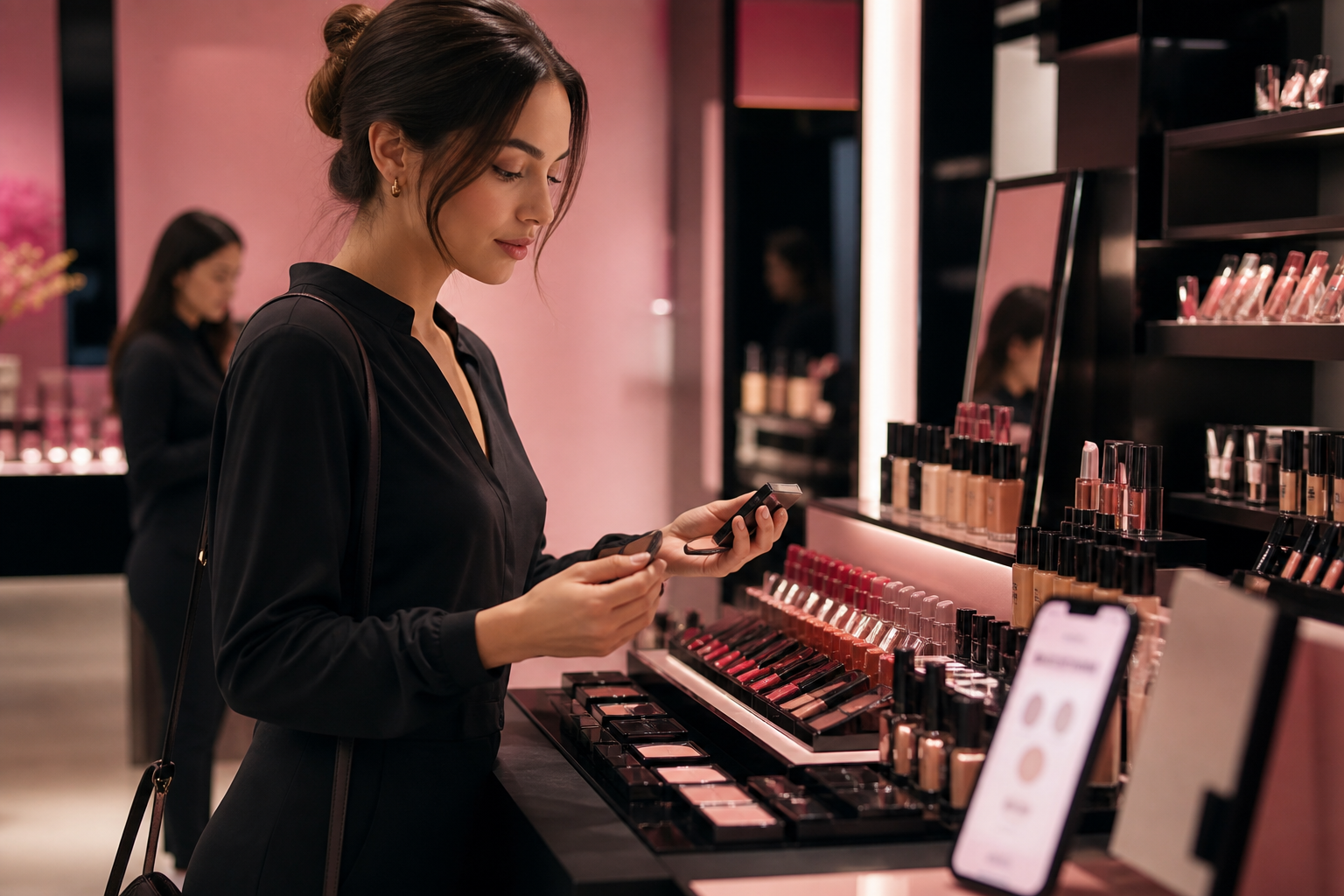
Situation: Beauty is a category where customers need trust. A lipstick shade, skin-care product or fragrance is hard to buy only through a static product listing. Customers want tutorials, reviews, ingredient information, shade matching, trial, returns confidence and brand reassurance.
The move: Nykaa built an ecosystem rather than a single sales channel. Its app and website support discovery and transactions; its physical stores help customers experience products; its content and influencer-led education reduce uncertainty; and its brand partnerships create opportunities for sponsored discovery and campaign visibility close to purchase moments.
The primary driver is trust-rich beauty discovery backed by first-party shopper data. The supporting drivers are curated assortment, owned content, store experience, loyalty and CRM, private labels, and brand partnerships. This is why the case is useful: Nykaa is not just “online plus offline.” It is a connected journey where each touchpoint plays a role.
Outcome or lesson: The strategic lesson is not that every brand must open stores or launch ads. The lesson is that a retailer with specialised customer data, trusted content and commerce surfaces can become both a seller and a media platform. That is the heart of retail media.
How AI Changes Omnichannel Marketing & Retail Media
AI makes omnichannel sharper because it can interpret signals across touchpoints and act faster than manual segmentation.
Use Perplexity to collect recent retail media examples from Amazon Ads, Flipkart Ads, Walmart Connect and Nykaa. Then paste the findings into ChatGPT and ask: “Create a 90-second interview answer comparing omnichannel marketing and retail media, with one Indian example and two KPIs.”
Interview Relevance
“A beauty or FMCG brand says it is present on its website, marketplaces, quick-commerce apps, Instagram and offline stores. Is that omnichannel marketing? How would you improve it, and where does retail media fit?”
If you are given a brand, do not start with channels. Start with the customer's decision journey. Then choose channels and retail media formats that remove friction at each stage.
Common Mistake
The biggest mistake is saying “omnichannel means selling everywhere.” That answer misses integration, data, customer experience and measurement. One-line fix: say “omnichannel is one connected, measurable journey across the right touchpoints - not maximum channel presence!”
What to Revise Next
Once omnichannel and retail media are clear, revise the next two shifts in modern marketing: how brands use purpose responsibly, and what future marketing roles now demand from managers.