
Channel Design & Channel Management
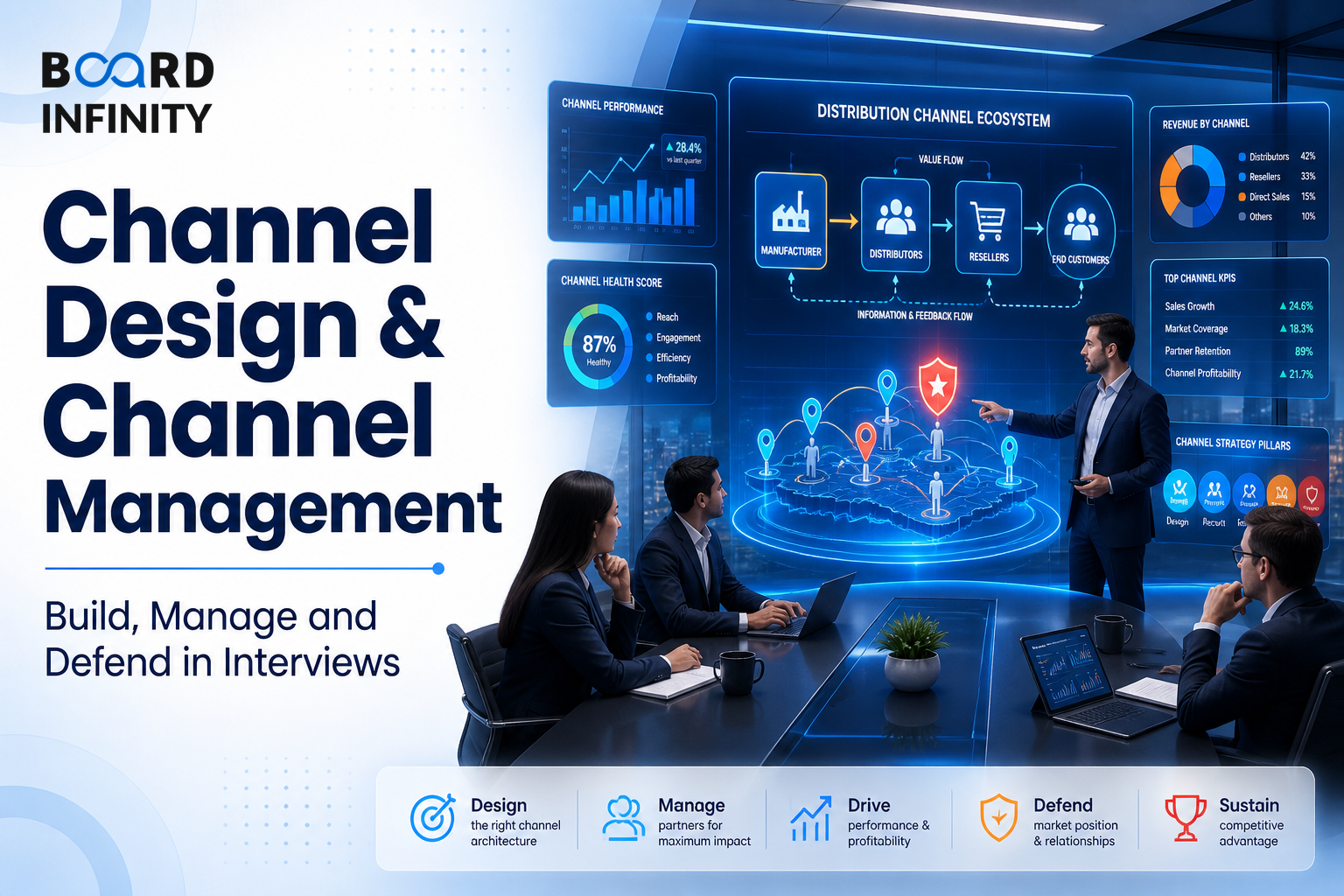
The biggest myth in distribution is that digital brands can “cut out the middleman.” A shampoo, shoe, phone or snack does not win because it has fewer channels - it wins because the right channel is present at the right buying moment, with the right economics and control.
- Channel design is the choice of routes through which a product reaches customers - direct, indirect or hybrid.
- Channel management is the ongoing work of selecting partners, motivating them, managing conflict and tracking performance.
- The best channel is not the cheapest one. It is the one that matches customer buying behaviour, service needs, unit economics and control requirements.
- Use three channel intensity choices: intensive for maximum reach, selective for controlled availability, and exclusive for premium control.
- Channel conflict is normal in hybrid models. Manage it with territory rules, pricing guardrails, role clarity and differentiated SKUs or services.
- Track channels using hard metrics: numeric distribution, weighted distribution, fill rate, sell-through, partner margin and OTIF.
- In interviews, never say “go D2C” or “use distributors” without explaining the customer journey, channel economics and conflict risk.
Big Picture: Channels Are a Designed System, Not a Sales Afterthought
A channel is the operating system between demand and delivery. It decides where the customer discovers the product, who explains it, who stocks it, who takes risk, who gives credit, who owns data and who earns the margin.
Core Explanation: How to Design a Channel That Actually Works
Channel design starts with one question: how does the target customer want to buy this category? Low-risk, frequently purchased categories need availability. High-involvement categories need advice, demonstration, financing, installation or trust. Premium categories need controlled experience and brand protection.
1. Start with Channel Service Outputs
Customers do not ask for “a wholesaler” or “a marketplace.” They ask for service outputs - the benefits a channel provides during purchase and consumption.
For example, a ₹10 impulse snack needs high spatial convenience and low waiting time. A premium mattress needs trial, reassurance and returns support. The channel design must fit the service need.
2. Choose the Route: Direct, Indirect or Hybrid
The next decision is the route to market. Each route trades off control, reach, cost and speed.
Apple sells through its own stores and online channels, but also uses selected resellers and telecom partners. The primary driver is experience control for a high-involvement premium product, supported by trained retail staff, service support and disciplined merchandising. The strategic lesson: even premium brands rarely avoid partners; they choose partners carefully.
3. Decide Channel Intensity
Channel intensity answers: how many outlets should carry the product? This is different from choosing the type of channel.
4. Design the Channel Flows
A channel is not only physical movement. It includes multiple flows, and each flow can be owned by a different player.
This is where many channel designs fail. A brand may design physical distribution but ignore payment terms, retailer margin, returns process or data visibility. The result is stock in the channel but weak sell-through.
5. Manage the Channel as a Performance Loop
Channel management is a loop: recruit the right partners, enable them, motivate them, measure them and then redesign the system. Good channel managers do not merely “push stock”; they build partner productivity.
Channel Conflict: The Problem You Must Anticipate
Channel conflict happens when one channel's goals or actions hurt another channel. It is especially common when a brand sells through offline dealers, online marketplaces, its own D2C site and quick-commerce platforms at the same time.
Amul's distribution is powerful because it matches product perishability with a cooperative procurement system, cold-chain logistics and a deep retail network. The primary driver is fit between category need and channel infrastructure, supported by brand trust, frequent replenishment and local outlet availability. The strategic lesson: distribution advantage often comes from operational design, not just advertising.
Channel Metrics: What a Manager Must Track
Channel performance must be measured at three levels: reach, availability and profitability. A channel that sells volume but destroys partner economics will not stay healthy.
Use metrics together. High numeric distribution with low sell-through suggests weak consumer pull or poor outlet choice. High sell-through with low fill rate suggests demand exists but supply is failing.
Definitions You Can Say in One Breath
Kotler and Keller: “Marketing channels are sets of interdependent organizations participating in making a product or service available for use or consumption.”
Channel design: deciding the route, partners, intensity and flows through which a product reaches target customers.
Channel management: selecting, enabling, motivating and controlling channel partners to deliver reach, service and profitable sales.
Omnichannel: an integrated channel system where customers move across touchpoints with consistent information, service and experience.
Lenskart: Building an Omnichannel Route for a Trust-Heavy Category
Lenskart shows how channel design can reduce purchase risk by combining digital discovery with assisted offline service in eyewear.

Eyewear is not a simple online purchase. Customers worry about prescription accuracy, face fit, frame look, lens quality and after-sales service. A pure online channel may offer assortment and convenience, but it cannot fully remove the anxiety of “will this suit me and work for my eyes?”
Lenskart's strategic move was to design an omnichannel system rather than depend on one route. Digital channels help customers browse, compare and reorder. Physical stores support eye tests, trials, fitting and trust. Service processes and customer data connect the journey across touchpoints.
The primary driver was fit between channel design and category risk. Supporting drivers included brand-building, store experience, supply-chain coordination, trained service processes and use of customer data. The lesson for interviews: do not call omnichannel “online plus offline.” The real advantage comes when each channel plays a different role in the customer journey.
How AI Changes Channel Design & Channel Management
AI is changing channel work from periodic planning to near-real-time optimization. The biggest shift is not “AI will replace distributors”; it is that brands can now sense demand, allocate inventory and detect channel problems faster.
- Demand sensing by micro-market: ML models can combine sales history, seasonality, local events, weather signals and campaign data to forecast demand at outlet, pin code or dark-store level. This helps decide which channel needs inventory today, not just this quarter.
- Smarter assortment and replenishment: AI can recommend which SKUs should go to general trade, modern trade, marketplaces or quick commerce based on velocity, margin, basket fit and stockout risk.
- Channel conflict detection: Price-monitoring and marketplace-scraping tools can flag unauthorized discounting, stock diversion, inconsistent listings and grey-market sellers faster than manual audits.
Use Perplexity or NotebookLM to study a company's route to market. Load its annual report, investor presentation and recent news, then ask: “Map this company's channels, partner types, conflict risks, and 5 KPIs a sales manager should track.” Verify every factual claim before using it in an interview.
Interview Relevance
“A D2C personal-care brand in India has good online traction but wants to scale offline. How would you design its distribution channel?”
In a case answer, say “channel role” before “channel name.” For example: quick commerce for urgent replenishment, modern trade for discovery and assortment, general trade for reach, D2C for data and loyalty.
Common Mistake
The most common mistake is recommending a channel because it sounds trendy - “go D2C,” “enter quick commerce,” or “expand offline” - without checking customer need, partner economics and conflict. The one-line fix: always justify the channel by its role in the customer journey and its economics for every participant.
What to Revise Next
Now move from the channel framework to India's real distribution landscape. First revise Distribution in India: General Trade, Modern Trade & Quick Commerce to understand the channel types. Then go deeper into Quick Commerce: Dark Stores, Economics & the Brand Playbook to see how one fast-growing channel changes assortment, pricing and fulfilment.