
Distribution in India: General Trade, Modern Trade & Quick Commerce
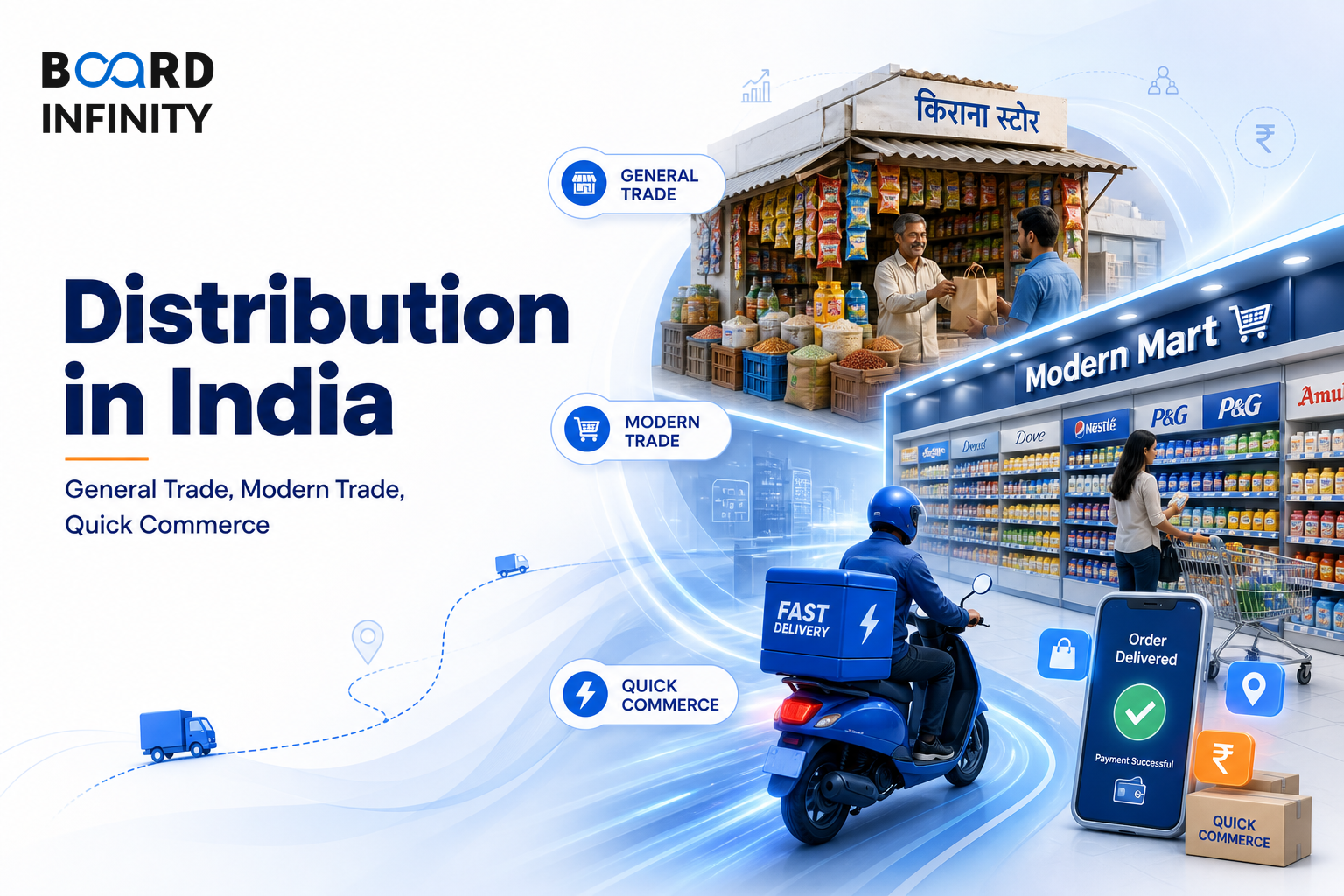
At 8:45 p.m., a shopper in Bengaluru can get toothpaste in 10 minutes from a quick-commerce app, while her parents in Jaipur still buy the same brand from the neighbourhood kirana that offers credit and knows their monthly basket. The brand has one product, but three very different distribution games - reach, shelf control and speed.
- General trade means India's traditional retail network - kiranas, paan shops, chemists and small stores - built for deep reach and relationship-led selling.
- Modern trade means organized retail - supermarkets, hypermarkets and chains - built for shopper experience, visibility, assortment and planned baskets.
- Quick commerce means app-led, dark-store fulfilment for fast delivery, built for urgent, top-up and impulse missions in dense urban markets.
- Do not rank channels as old versus new. Rank them by shopper mission, unit economics, service level and brand control.
- For mass FMCG, general trade usually drives reach; for premium discovery, modern trade helps; for convenience and impulse, quick commerce can accelerate trial.
- The best answer is a channel portfolio: which SKU, which city, which pack, which margin structure, which service model.
- The trap: saying “quick commerce will replace kiranas.” In India, channels coexist because occasions, geographies and economics differ.
Think of Indian distribution as a route-to-market portfolio. A company is not merely “selling to stores”; it is choosing the path by which the right SKU reaches the right shopper at the right time, at a cost the P&L can bear.
The Core Idea: Distribution Is Not “Availability”; It Is Channel Fit
Distribution is the system that makes a product available where, when and how the customer wants to buy it. In India, the complexity comes from the coexistence of dense urban app-led buying, organized retail shopping and the massive traditional kirana network.
The right channel choice depends on four questions:
General Trade, Modern Trade and Quick Commerce: The Practical Difference
General trade is still structurally important because India has a large base of small-format, neighbourhood retail. Modern trade gives brands a more controlled environment to showcase premium products and bundles. Quick commerce is powerful where density, order frequency and urgency make fast delivery economically workable.
Hindustan Unilever's Shikhar app is a useful Indian example of how traditional trade is becoming more digital without disappearing. The strategic point is not that an app replaces the salesman; it improves ordering convenience, assortment visibility and servicing for kiranas while the distributor network still performs fulfilment and relationship management.
The Channel Ladder: What Each Layer Is Really For
A good manager does not ask, “Which channel is best?” The sharper question is, “What job should each channel do for this category?”
How to Decide the Channel Mix
Use this five-step route-to-market logic when you are given a product category in an interview or case discussion.
Key Metrics to Track in Distribution
When you discuss distribution, move from intention to measurement. The exact benchmark varies by category and geography, but these are the metrics a brand manager or sales manager would actually track.
Definitions You Should Be Able to Say Cleanly
Kotler and Keller: “Marketing channels are sets of interdependent organizations participating in making a product or service available for use or consumption.”
- General trade: Traditional independent retail such as kiranas, chemists and small stores, usually served through distributors and sales representatives.
- Modern trade: Organized retail chains where buying, merchandising, promotions and assortment decisions are more centralized and process-driven.
- Quick commerce: App-based retail fulfilment from nearby dark stores or micro-warehouses, optimized for rapid delivery in dense catchments.
- Dark store: A small fulfilment outlet not meant for walk-in shoppers, used to pick and dispatch online orders quickly.
Case Study: Yoga Bar and ITC - Scaling a Premium Brand Across Channels
ITC's 2023 investment in Yoga Bar shows how a premium health-food brand can use different channels for different jobs instead of chasing blanket availability.
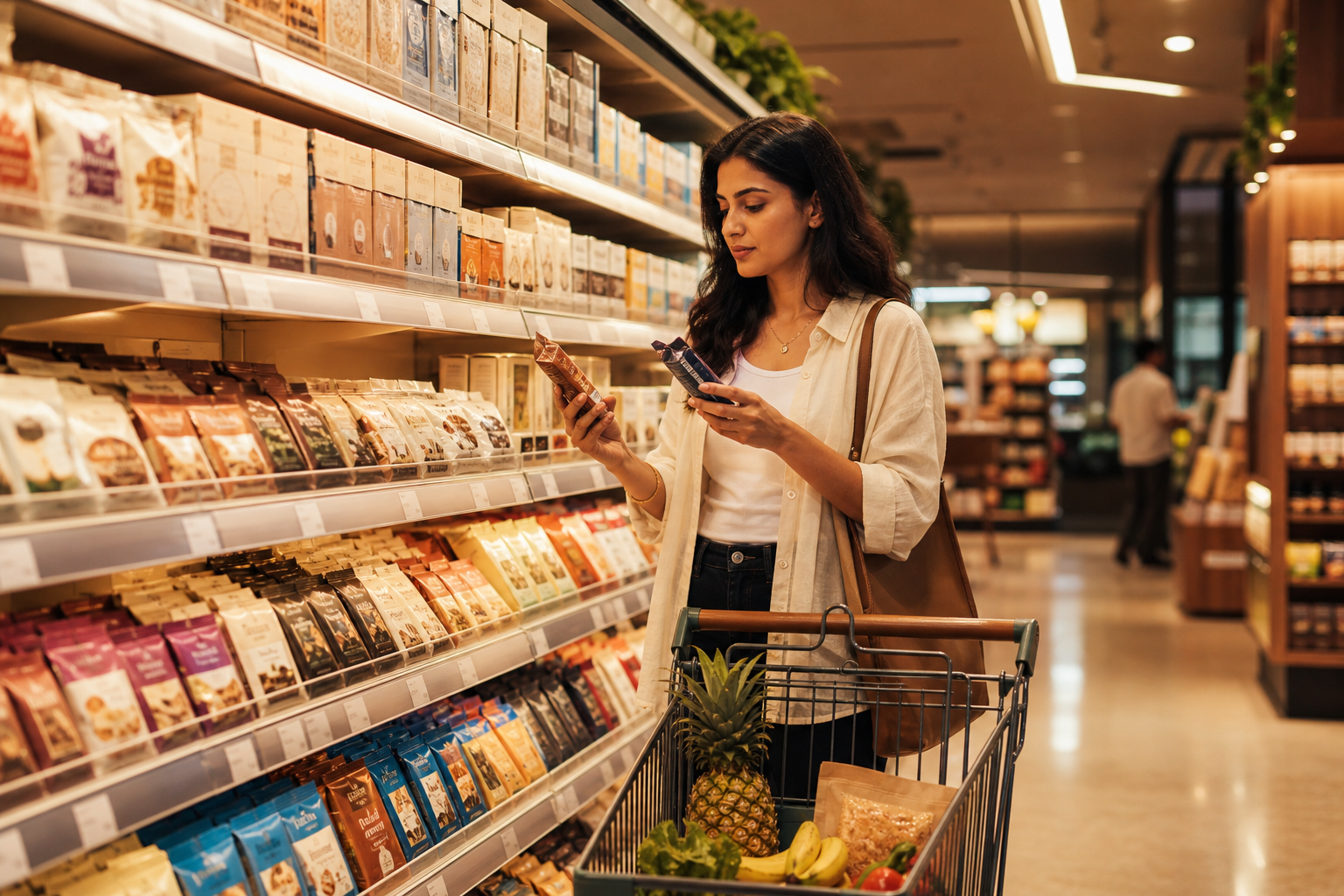
Situation: Yoga Bar built its appeal around healthier packaged foods such as bars, muesli and breakfast products. This type of category is not sold like a mass biscuit from day one. The shopper often needs discovery, trust, pack education and repeated trial.
The move: ITC announced an investment in Sproutlife Foods, the company behind Yoga Bar, in 2023. The strategic logic was channel complementarity. Yoga Bar brought a premium, health-oriented brand with urban relevance; ITC brought packaged-foods experience, procurement strength, trade relationships and the ability to expand availability over time.
The distribution lesson: The primary driver was channel-job fit: use modern trade, e-commerce and quick commerce for discovery and urban convenience, then use a stronger distribution backbone to selectively expand reach. Supporting drivers included ITC's category capabilities, supply-chain discipline, credibility with retailers and the ability to manage different pack-price architectures by channel.
Outcome or lesson: The case does not prove that every premium brand should immediately flood every kirana. It proves the opposite: scale works best when the brand sequences channels based on shopper behaviour, velocity and economics.
How AI Changes Distribution in India
AI is making distribution more granular. The old question was “Which city should we distribute in?” The newer question is “Which 200 store clusters, which SKUs, which replenishment rhythm and which platform keywords will maximize profitable availability?”
- Demand forecasting at micro-market level: ML models can use historical sales, seasonality, weather, local events and promotions to forecast demand for each store cluster or dark store.
- Assortment and replenishment for quick commerce: Platforms and brands can identify which SKUs deserve dark-store space because space is limited and stockouts directly affect app ranking and sales.
- Retail execution intelligence: Image recognition and salesforce apps can check shelf presence, planogram compliance and competitor visibility in modern trade and select general trade outlets.
Use Perplexity or NotebookLM to compare a company's annual report, investor presentation and recent news on distribution. Ask: “Map this company's route-to-market across general trade, modern trade, e-commerce and quick commerce; list likely interview questions and risks.” Then verify every factual claim before using it.
Interview Relevance
“If you are launching a premium healthy snack brand in India, how would you choose between general trade, modern trade and quick commerce?”
Use the phrase “channel-job fit”. It signals that you understand distribution as strategy, not merely logistics.
The biggest mistake is claiming that quick commerce will replace general trade. It costs candidates because it ignores India's geography, kirana relationships, credit behaviour, basket differences and fulfilment economics. The fix: say “channels will coexist, but their roles will specialize.”
What to Revise Next
Now go one level deeper into the two fastest-changing parts of this topic: Quick Commerce Deep-Dive: Dark Stores, Economics & the Brand Playbook, followed by D2C & Omnichannel Distribution: Website, Marketplaces & ONDC. Together, they complete the journey from traditional reach to digital-first channel strategy.