
Supply Chain & Logistics Basics Every Marketer Should Know
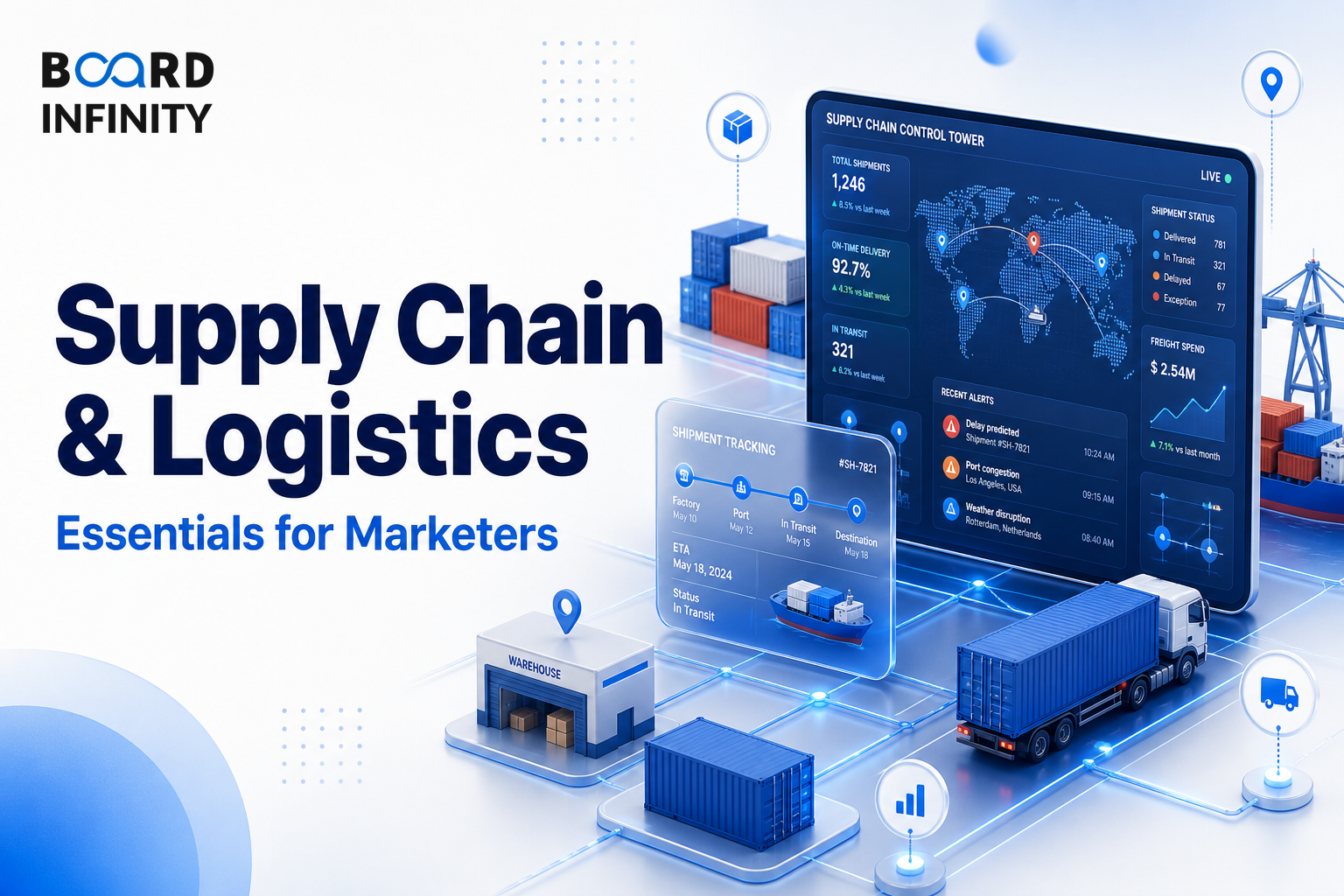
A shampoo ad can create demand in ten seconds; a weak supply chain can destroy it at the empty shelf. The moment a customer sees “10-minute delivery,” “limited-period offer,” or “available near you,” marketing has already made a logistics promise.
- Supply chain is the full system that fulfils customer demand - suppliers, factories, warehouses, transporters, stores, apps and returns.
- Logistics is the movement and storage part of that system - warehousing, transportation, last-mile and reverse flow.
- For marketers, the core link is simple: demand creation must match fulfilment capability.
- Promotion spikes, new launches and SKU proliferation can create the bullwhip effect - small demand changes become large upstream planning errors.
- The five metrics to speak fluently are OTIF, fill rate, stockout rate, inventory turns and forecast accuracy.
- A great campaign is not just memorable; it is available, replenished, delivered and serviceable.
- The best interview answer connects marketing decisions to supply chain trade-offs: service level, inventory, cost, speed and customer experience.
The Big Picture: Marketing Creates Demand, Supply Chain Keeps the Promise
Marketers often think of supply chain as “backend operations.” That is dangerous. In real business, supply chain is the bridge between a brand promise and a customer experience - especially in FMCG, e-commerce, quick commerce, retail, pharma, food delivery and consumer durables.
Core Explanation: The Supply Chain Basics Behind Marketing Decisions
The marketer’s supply chain question is not “How does the warehouse work?” It is: Can the business fulfil the demand I am about to create, at the service level the customer expects, without destroying margins?
Think of supply chain as a set of connected decisions. Each decision affects the marketing plan.
1. Demand Planning
Demand planning estimates future customer demand by SKU, region, channel and time period. Marketing affects it directly through campaigns, discounts, influencer pushes, festivals, new launches and bundling.
Example: A Diwali promotion for chocolates is not just a media plan. It needs production slots, packaging availability, distributor inventory, retail visibility and last-mile replenishment before the campaign breaks.
2. S&OP: Where Marketing Meets Operations
Sales and Operations Planning is the cross-functional process where sales, marketing, operations, finance and supply teams align one demand plan and one supply plan. For marketers, S&OP prevents a classic failure: promising growth that the supply chain cannot support.
3. Inventory: The Insurance Policy Against Uncertainty
Inventory is stock held to meet demand. It helps availability, but it also locks cash and creates obsolescence risk. Marketers must understand three inventory ideas:
- Cycle stock - normal stock used between replenishment cycles.
- Safety stock - extra stock kept to protect against demand spikes or supply delays.
- Dead stock - slow or unsold inventory, often caused by poor forecasting, failed launches or excessive SKU variety.
4. Warehousing and Fulfilment
Warehousing stores products; fulfilment picks, packs and dispatches orders. In modern commerce, fulfilment is part of the brand experience. A premium beauty product arriving damaged, late or with poor packaging hurts brand trust even if the ad was excellent.
5. Transportation and Last-Mile
Transportation moves goods between nodes - factory to warehouse, warehouse to distributor, distributor to store, or dark store to customer. Last-mile delivery is the final movement to the end customer and is often the most visible, variable and expensive leg.
6. Reverse Logistics
Reverse logistics manages returns, replacements, repairs, recalls and recycling. For marketers, this matters in categories like fashion, electronics, D2C, cosmetics and appliances where return experience shapes repeat purchase.
The Bullwhip Effect: The Trap Behind Many Promotions
The bullwhip effect happens when small changes in consumer demand become larger swings in orders upstream. A retailer sees a promotion spike, orders extra from a distributor, the distributor orders even more from the manufacturer, and the manufacturer overproduces. After the spike, everyone is stuck with excess stock.
Chocolate brands in India face sharp festive spikes around Raksha Bandhan, Diwali and gifting seasons. The marketing win depends not only on communication, but also on pack availability, temperature-sensitive handling, retailer stocking and replenishment timing. The strategic lesson: seasonal demand creation must be planned backward from production, cold-chain sensitivity and channel inventory - not only from media dates.
Definitions You Can Say Clearly
Supply chain - Chopra and Meindl: “A supply chain consists of all parties involved, directly or indirectly, in fulfilling a customer request.”
Logistics - APICS Dictionary: “The art and science of obtaining, producing, and distributing material and product in the proper place and in proper quantities.”
For interview use, add the marketer’s interpretation: supply chain is not a separate backend department; it is the operating system that converts brand demand into customer satisfaction.
Six Supply Chain Metrics Marketers Should Speak Fluently
Do not discuss “smooth logistics” vaguely. Use measures. Benchmarks differ by category, geography and channel, so treat the ranges below as interview thumb rules, not universal targets.
Worked Example: Reading a Campaign Through Supply Chain Metrics
A brand plans a regional campaign for 10,000 units. By the promised date, 9,200 units are delivered on time and complete. Total units supplied during the period are 9,700. Average inventory value is ₹5 lakh, and annualised COGS for that SKU-region is ₹60 lakh.
The lesson: a marketer should not celebrate only sales lift. If OTIF is weak, customers, retailers and channel partners experience the campaign as unreliable.
Zepto: When the Marketing Promise Is a Supply Chain Design
Zepto made ultra-fast grocery delivery a consumer promise, but the real strategic move was designing a supply chain built around nearby dark stores, tight SKU selection and rapid fulfilment.
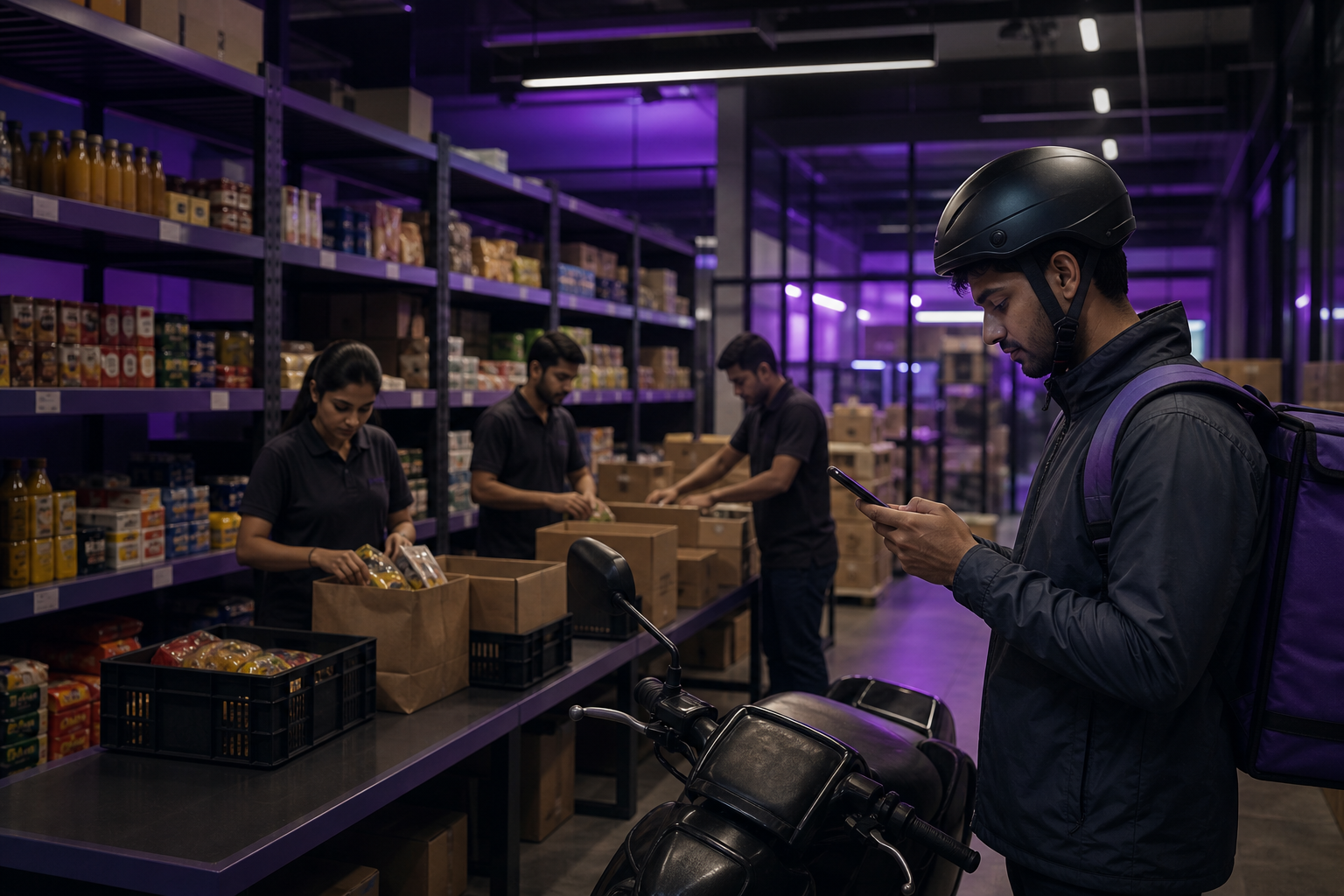
Situation: Indian urban consumers were already used to ordering food and essentials online, but grocery delivery still had friction - uncertain availability, longer delivery windows and planning effort. Quick commerce reframed the category around immediacy: if the customer wants milk, snacks, chargers or personal care items now, delivery speed itself becomes the value proposition.
The move: Zepto’s primary driver was a dense network of dark stores located close to demand clusters. This shortened the distance between inventory and customer. Supporting drivers made the model work: curated assortments instead of infinite SKU depth, fast picking inside stores, real-time inventory visibility, rider allocation, demand forecasting by neighbourhood and app-led demand shaping through search, offers and recommendations.
Outcome or lesson: The brand promise of speed is not just a communication idea; it is an operating model. The lesson for marketers is powerful: when logistics is the product experience, marketing, assortment, pricing, inventory and last-mile execution must be designed together. The risk is also real - speed can increase cost pressure, so the model needs high order density, repeat frequency and disciplined assortment management.
So what: Zepto proves that in some categories, supply chain is not support to marketing - it is the core of the positioning.
How AI Changes Supply Chain & Logistics Basics for Marketers
AI is making supply chain decisions faster, more granular and more connected to demand signals. For marketers, three shifts matter most in 2026.
- Demand sensing gets sharper: ML models combine sales history, promotion calendars, weather, local events, app behaviour and search trends to predict demand by SKU-location-time window. This helps marketers avoid overpromising during launches or festivals.
- Inventory allocation becomes dynamic: AI can recommend which warehouse, store or dark store should hold which SKU based on likely demand, margin, expiry risk and service priority. This is crucial for quick commerce, fashion and fresh categories.
- Delivery promises become algorithmic: Route optimisation and ETA prediction decide what delivery speed the customer sees. A marketer’s “same-day” or “10-minute” claim now depends on real-time capacity, congestion, rider availability and inventory accuracy.
Use NotebookLM: upload this lesson, a company annual report, and recent news about the company’s distribution or quick-commerce strategy. Ask: “What supply chain risks could affect this company’s marketing promise, and what interview questions may be asked?” Then convert the answer into a 5-point interview structure.
Interview Relevance
“You are launching a new consumer product with a heavy digital campaign. What supply chain and logistics issues should a marketer check before launch?”
In an answer, always connect supply chain to the customer promise. Say: “If the brand promises instant availability, I would first check OTIF, fill rate and city-wise inventory before scaling the campaign.” That sounds like a marketer who understands business execution.
Common Mistake
The costly mistake: Treating supply chain as a post-campaign execution detail. It costs candidates because real companies know that demand without availability wastes media money, frustrates channels and weakens brand trust. One-line fix: Frame supply chain as the fulfilment engine of the marketing promise - plan demand, inventory, service level and logistics together.
What to Revise Next
Now that you understand the basics, move to a deeper India-specific distribution story: Case Study: HUL & ITC - India's Distribution Powerhouses. That will show how reach, channel depth, rural distribution and execution discipline become long-term competitive advantage.