
Case Study: HUL & ITC — India's Distribution Powerhouses
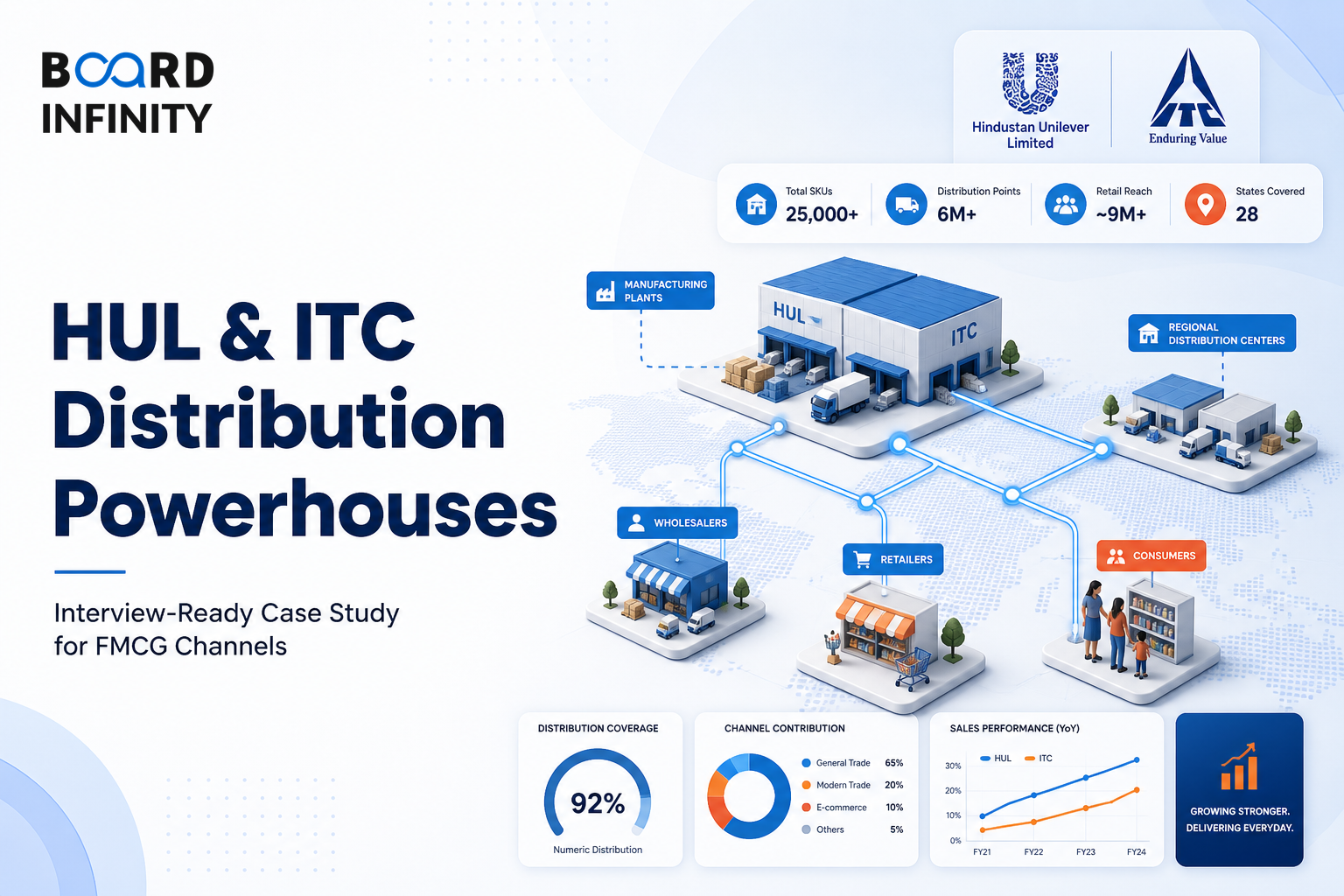
Before the morning rush, a kirana owner in Kanpur has already restocked soap sachets, biscuits, atta, noodles and shampoo packs - not because demand was predictable, but because two distribution machines reached the shelf before the consumer asked. In India, FMCG is not won only in TV ads or product labs; it is won in the last 50 metres between the distributor van and the shop counter.
- Distribution power means making the right SKU available profitably at the right outlet before demand is lost.
- HUL’s core strength is dense general trade execution across categories, supported by brand pull, small packs, rural reach and digital ordering.
- ITC’s core strength is converting deep trade relationships and agri-sourcing capability into a multi-category FMCG platform.
- India’s channel reality is fragmented: kiranas, wholesalers, modern trade, chemists, e-commerce, quick commerce and rural entrepreneurs all coexist.
- Do not compare only “reach”. Compare reach, control, assortment, cost-to-serve, data visibility and distributor economics.
- Track distribution with KPIs like numeric distribution, weighted distribution, fill rate, stock-out rate, range selling and distributor ROI.
- Best interview answer: define the channel, map the flow, compare HUL vs ITC, explain the moat, then discuss risks and AI-led changes.
Big Picture: Distribution Is a Demand Capture System
For FMCG, marketing creates desire, but distribution converts that desire into sales. The channel is not a pipe; it is a live operating system that moves products, credit, information, schemes and replenishment signals across millions of small decisions.
Core Explanation: Why HUL and ITC Are Distribution Powerhouses
Distribution power is a moat when it is hard to copy. In India, that difficulty comes from scale, local relationships, credit cycles, small pack economics, route discipline, rural complexity and the ability to serve both a premium supermarket and a small village kirana without breaking the cost structure.
HUL and ITC are both distribution powerhouses, but they did not build the same machine. HUL is the benchmark for broad, disciplined FMCG execution. ITC is a rare example of a company that used trade relationships, cash-flow strength, agri-linkages and brand-building to expand from cigarettes into foods, personal care, stationery and other FMCG categories.
The Channel Architecture: How the Machine Actually Works
An FMCG distribution system has three jobs: coverage, availability and economic viability. If any one fails, sales leak. A brand may have awareness, but if the SKU is not available, visible and affordable at the point of purchase, the consumer switches.
HUL’s strength is strongest in the first three steps: outlet segmentation, assortment fit and sales discipline. ITC’s strength is distinctive in step two and step five: it can use trade relationships, agri-sourcing intelligence and supply chain learning to support category expansion.
Distribution KPIs You Must Know
In interviews, saying “wide distribution” is too vague. Use metrics. FMCG benchmarks vary sharply by category, geography, outlet class and company strategy, so the safest answer is to state the formula and compare performance against the relevant category-territory benchmark.
HUL’s retailer ordering platform Shikhar is a good example of distribution becoming data-driven. The strategic point is not just that retailers can order digitally; it is that HUL improves assortment visibility, replenishment signals and retailer engagement. The primary driver is digital capture of secondary demand, supported by brand pull, distributor execution and a large SKU portfolio.
Definitions You Should Say Cleanly
Kotler and Keller: Marketing channels are “sets of interdependent organizations participating in the process of making a product or service available for use or consumption.”
Distribution power: the ability to make the right SKU available profitably at the right outlet before demand is lost.
Route-to-market: the chosen path through which a company serves outlets and consumers, including intermediaries, roles, costs and controls.
General trade: India’s traditional retail network of kiranas, wholesalers and small independent stores.
Modern trade: organized retail formats such as supermarkets, hypermarkets and chain stores with centralized buying and formal terms.
Secondary sales: sales from distributor to retailer, often more useful than factory dispatches for judging real market movement.
Case Study: ITC’s FMCG Expansion Through Distribution Adjacencies
ITC used deep trade relationships, agri-sourcing capability and brand-building to expand beyond cigarettes into a broad Indian FMCG portfolio.
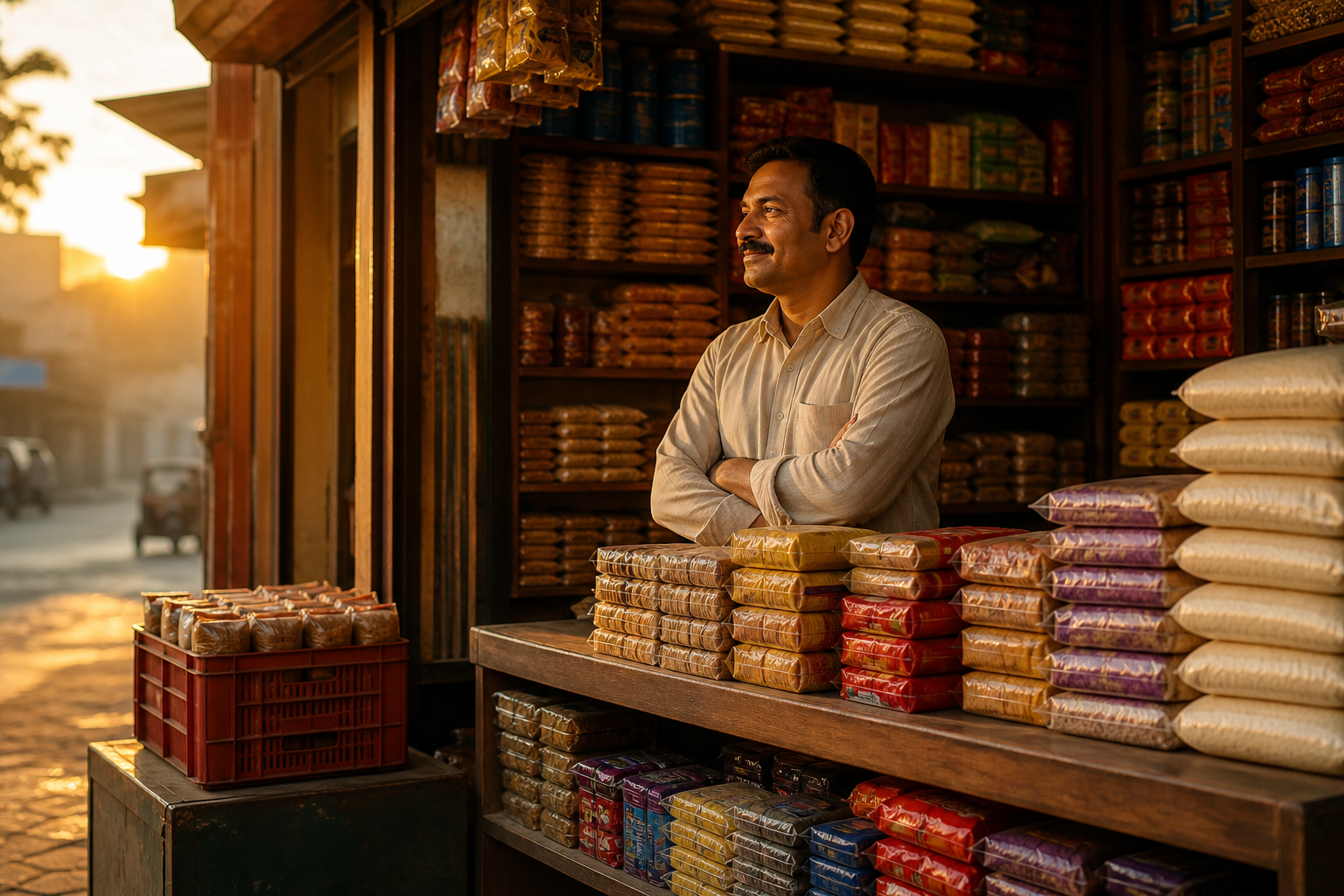
Situation. ITC began with powerful strengths in cigarettes: long-standing retailer relationships, distribution discipline, cash-flow strength and trade servicing capability. But cigarettes alone could not define the company’s future. The strategic challenge was to build large, consumer-facing FMCG categories where ITC could compete with entrenched players.
The move. ITC expanded into categories such as foods, snacks, biscuits, noodles, personal care and stationery while also using its agri-business capabilities to support brands like Aashirvaad. Its e-Choupal initiative, launched in 2000, connected farmers through digital kiosks and improved ITC’s rural procurement and market understanding. The core distribution move was not a simple “use the same distributors for everything”; it was to combine trade access with category-specific supply chains, brand investment, pack-price architecture and sourcing advantages.
Outcome and lesson. ITC became one of India’s most important FMCG challengers. The primary driver was its ability to convert existing institutional strengths into new consumer categories. Supporting drivers included agri-sourcing depth, strong brand creation, manufacturing investment, retailer relationships and a portfolio strategy that allowed multiple categories to ride the distribution system.
How AI Changes HUL & ITC Distribution
AI is changing FMCG distribution from periodic human judgment to continuous decision support. The impact is practical, not abstract.
Student workflow: Load HUL’s latest annual report, ITC’s latest annual report and your store-visit notes into NotebookLM. Ask: “Compare HUL and ITC on route-to-market, digital distribution, rural reach, channel risks and FMCG growth drivers. Generate five interview questions and model answers.” Then verify every claim against the annual report before using it.
Interview Relevance
“HUL and ITC both have strong distribution in India. Compare their distribution models and explain which one is more defensible.”
If asked “who is better?”, avoid a one-word answer. Say: HUL has the broader execution moat; ITC has a powerful adjacency moat in categories where sourcing, brand and channel reinforce each other.
Common Mistake
The biggest mistake is saying “HUL and ITC are strong because they have wide reach.” That answer is too shallow because it ignores channel economics, SKU availability, distributor ROI, assortment, data visibility and execution control. Fix: compare reach plus quality of reach - who reaches the right outlets, with the right SKU, at the right service cost.
What to Revise Next
This is the final lesson, so use it as a capstone. Do one integrated revision pass: connect STP to target outlets, 4Ps to pack-price-channel fit, sales management to beat productivity, and marketing strategy to defensible advantage. Then take one real company - HUL, ITC, Dabur, Britannia or Marico - and prepare a two-minute distribution answer using the same structure.