
The Digital Consumer Journey: ZMOT, the Messy Middle & Social Commerce
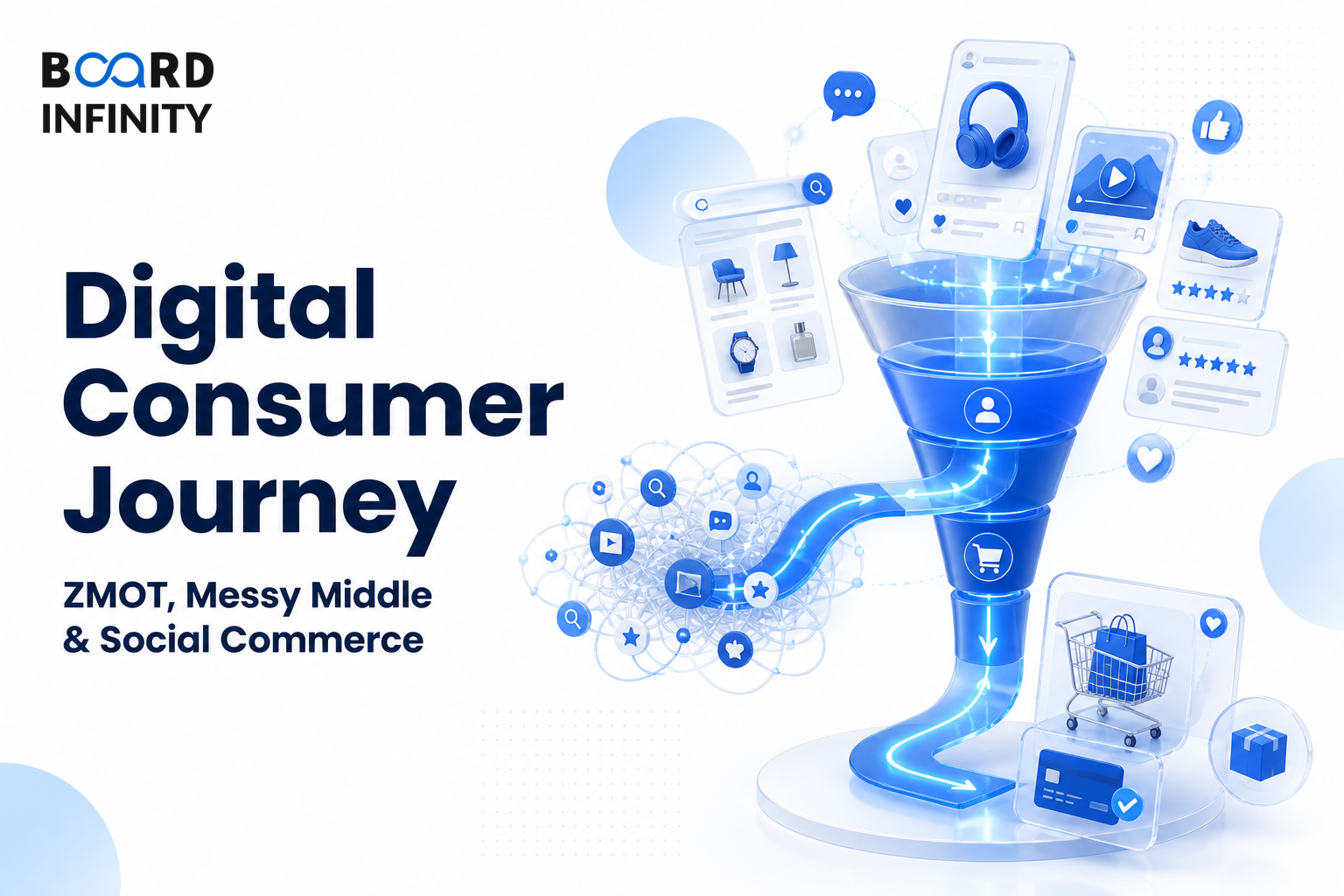
A shopper sees a pair of eyeglasses in a creator Reel, opens Google to check “Lenskart reviews,” compares frames on the app, sends screenshots to a friend on WhatsApp, visits a store for fit, then buys online during an offer. No single ad “converted” them - the journey was a loop of search, proof, hesitation and reassurance.
- ZMOT is the pre-purchase research moment - reviews, search, YouTube, Reddit, marketplaces and social proof before the buyer commits.
- The messy middle is the loop between trigger and purchase where consumers explore broadly, evaluate narrowly, then repeat.
- Social commerce turns social platforms from awareness channels into discovery, trust-building and transaction environments.
- The modern journey is not a neat funnel; it is a trigger - explore - evaluate - buy - experience - share system.
- Winning brands reduce uncertainty using reviews, creator proof, clear comparisons, easy returns, fast checkout and credible product content.
- Track the journey with CTR, search share, add-to-cart rate, conversion rate, ROAS and review quality - not just last-click sales.
- The interview trap: saying “digital journey = awareness to purchase funnel” without explaining search, social proof and attribution complexity.
Big Picture: The Journey Is a Loop, Not a Funnel
The digital consumer journey is the path a customer takes across online and offline touchpoints before, during and after purchase. The core shift is simple: consumers do not wait for a brand to speak. They actively search, compare, ask, watch, scroll, save, abandon and return.
Core Explanation: ZMOT, Messy Middle and Social Commerce
Zero Moment of Truth, or ZMOT, is the moment before the buying decision when consumers research what to buy, whom to trust and what risk to avoid. It sits before the old “first moment of truth,” where a shopper sees a product on a shelf or product page and chooses.
For a student, the simplest answer is: ZMOT is where the brand must be findable, credible and comparable before the customer reaches the cart. Search results, reviews, ratings, influencer demos, comparison videos, marketplace listings and friend recommendations all shape the decision.
Before buying a skincare product on Nykaa, a customer may watch dermatologist videos on YouTube, check ingredient explainers, compare ratings, read negative reviews and then look for a sale. The strategic so what: the brand is not competing only on the product page; it is competing across the research ecosystem before purchase intent becomes visible.
The Messy Middle: Why Consumers Loop Before They Buy
The messy middle is the space between a trigger and a purchase where consumers keep moving between two mental modes: exploration, where they expand options, and evaluation, where they narrow choices. Google’s work with The Behavioural Architects popularised this model for digital decision-making.
Inside this loop, people use mental shortcuts because the online world offers too much choice. The six useful shortcuts to remember are category heuristics, authority bias, social proof, scarcity bias, power of now and power of free.
How Social Commerce Fits Into the Journey
Social commerce is buying and selling through social platforms, creators, communities and chat-led journeys. It blends content, community, conversation and commerce into one path.
Social commerce matters because trust has shifted. A product demo by a creator, a WhatsApp recommendation from a friend, a comment thread under a Reel or a customer video may persuade faster than a polished brand ad. In India, the mechanics often include creator affiliate links, WhatsApp Business catalogs, UPI payments, marketplace links, live commerce experiments and community-led discovery.
What to Track: Journey Metrics That Actually Matter
Use metrics to locate friction. If awareness is high but search share is weak, ZMOT is failing. If add-to-cart is strong but conversion is weak, checkout or trust is failing. Benchmarks vary heavily by category, price point and platform, so treat these as directional planning ranges and compare against your own trend.
Definitions You Must Know
- Google - ZMOT: “The moment in the buying process when the consumer researches a product prior to purchase.”
- First Moment of Truth: The choice moment when a shopper first encounters the product on a shelf, app or product page.
- Second Moment of Truth: The experience moment after use, when satisfaction or disappointment becomes memory, review and repeat behavior.
- Messy middle: The exploration-evaluation loop between trigger and purchase, shaped by information overload and decision shortcuts.
- Social commerce: Commerce enabled by social content, creators, communities or chat, not only by a standalone e-commerce website.
Case Study: Lenskart and the Risk-Reduction Journey
Lenskart shows how a brand can convert a high-consideration product by combining ZMOT content, virtual try-on, omnichannel stores and social proof.
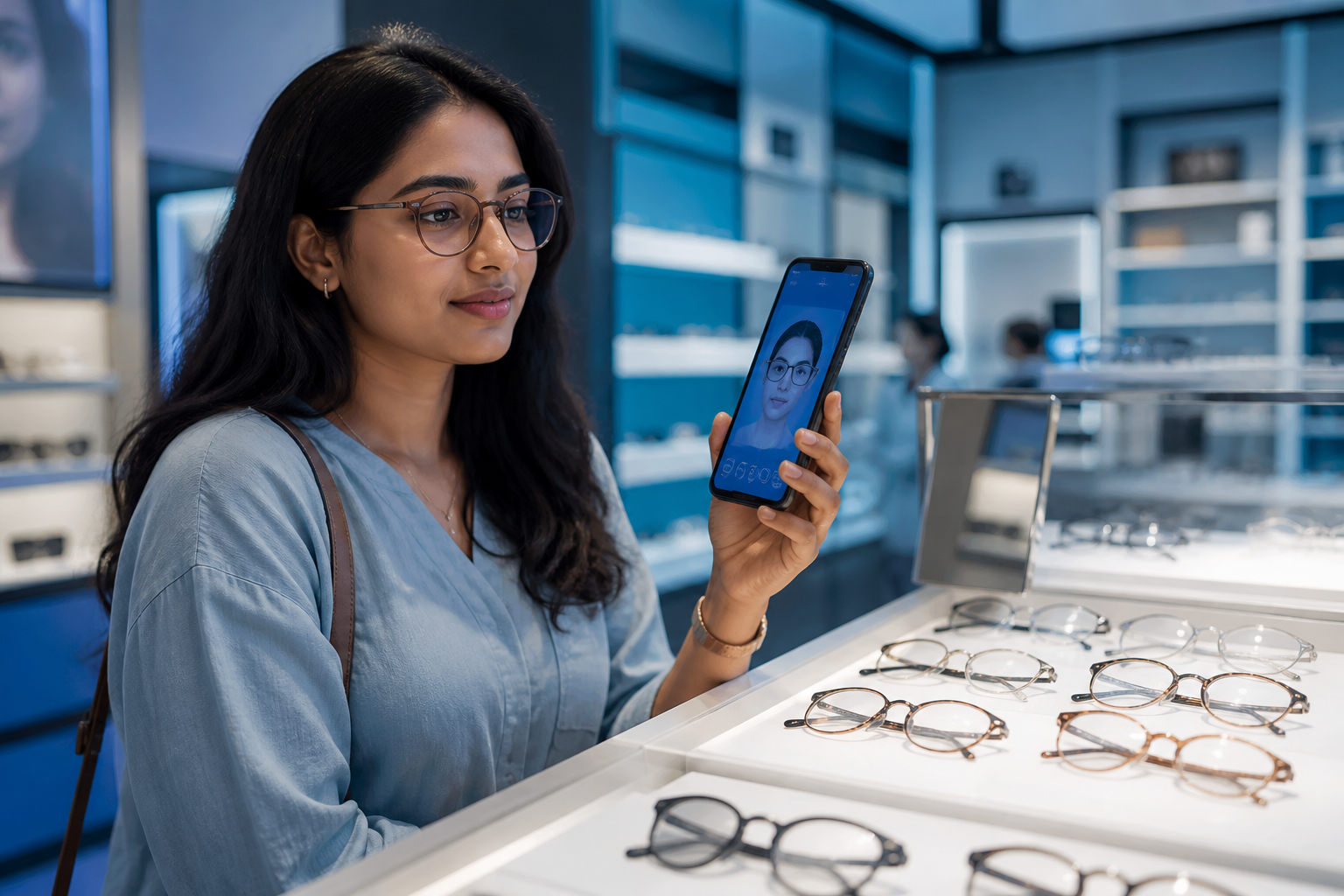
Situation: Eyewear is not a simple impulse purchase. Customers worry about frame fit, face shape, prescription accuracy, lens quality, returns and whether online photos will match real life. That makes the messy middle especially intense: people browse many styles, compare prices, seek opinions and often want physical reassurance.
The move: Lenskart built a journey that reduces perceived risk at multiple points. Its online experience supports discovery and comparison through product pages and virtual try-on. Its stores and eye-test services add offline trust. Social and creator-led content helps customers imagine frames on real faces. Offers, reminders and app-led journeys bring shoppers back when they hesitate.
Outcome or lesson: The primary driver is risk reduction in a high-consideration category. Supporting drivers include omnichannel presence, product visualisation, store assistance, review signals, remarketing and clear offers. The strategic lesson: in categories where fit and trust matter, the digital journey must not only generate demand - it must remove doubt stage by stage.
How AI Changes the Digital Consumer Journey
AI is not just another marketing tool here. It changes how customers discover, compare and trust brands.
Use Perplexity to map a brand’s ZMOT: search “What do customers check before buying from [brand] in India?” Then use ChatGPT or Claude to convert findings into a journey map with trigger, ZMOT touchpoints, messy-middle friction, social proof and conversion barriers.
Interview Relevance
“Explain how the digital consumer journey has changed with ZMOT, the messy middle and social commerce. Use an Indian brand example.”
When answering, do not list platforms randomly. Anchor every touchpoint to a job: discover, reassure, compare, convert or amplify.
The biggest mistake is treating the digital journey as a neat awareness-interest-desire-action funnel and then giving only a social media example. That misses ZMOT, research behavior, social proof and messy-middle loops. One-line fix: map the consumer’s uncertainty, then show which touchpoint reduces it.
What to Revise Next
Now move from journey mapping to how marketers actually learn what consumers think and do. Revise Market Research Fundamentals: Primary vs Secondary, Qual vs Quant, then Research Methods: Surveys, Sampling, Interviews & Focus Groups. Together, these topics help you support journey insights with real evidence rather than assumptions.