
The Psychology of Buying: Motivation, Perception & Attitudes
A commuter stands outside a metro station with three drink options: ₹10 tea, bottled water, and a premium cold coffee that costs several times more. The choice is not just about thirst - it is about a felt need, a quick mental filter, and a belief about what that brand says about the person holding it.
- Motivation explains the internal need or tension that pushes a consumer to act.
- Perception explains how the consumer selects, organizes and interprets brand signals.
- Attitude is the learned positive or negative evaluation that makes future choice easier.
- The buying mind works like a funnel: need arousal - attention - interpretation - attitude - intention - purchase.
- Marketers do not create all needs; they often activate, frame or attach brands to existing needs.
- The best interview answers connect psychology to 4Ps: product, price, place and promotion decisions.
- The biggest trap is saying “consumers buy because of price” without explaining the mental process behind value.
Big Picture: Buying Starts Before the Store
Consumer psychology is the bridge between a market stimulus and a market response. An ad, price, pack, shelf display or app notification does not directly cause purchase; it first passes through the buyer's motives, perceptions and attitudes.
Core Explanation: The Three Levers of Buying Psychology
The big idea is simple: motivation creates energy, perception gives meaning, and attitude creates preference. If any one of these fails, the consumer may notice the brand but not buy it.
1. Motivation: The “Why Now?” Behind Purchase
Motivation is the internal drive that pushes a consumer to satisfy a need. A need may be functional, emotional or social.
Maslow's hierarchy is useful here, not because every consumer climbs it neatly, but because it reminds you that the same product can satisfy different levels for different consumers.
A gym membership may satisfy health for one buyer, confidence for another, and social belonging for a third. The strategic lesson: segment by the motive behind usage, not only by age or income.
2. Perception: The “What Do I Make of This?” Filter
Perception is not reality; it is the consumer's interpreted version of reality. Two buyers can see the same price, pack or ad and reach different conclusions.
Three perception effects matter most in marketing:
- Selective attention: consumers notice only a fraction of stimuli, usually those relevant to a current need.
- Selective distortion: consumers interpret information to fit existing beliefs.
- Selective retention: consumers remember messages that support their attitudes and forget many others.
Paper Boat built perception around nostalgia, Indian flavours and storytelling rather than only beverage refreshment. The primary driver was emotional framing; supporting drivers included distinctive packaging, regional flavour cues and modern retail visibility. So what: perception can turn a familiar drink category into a differentiated memory brand.
3. Attitudes: The “Do I Like and Trust This?” Shortcut
Attitude is a learned tendency to evaluate a brand, product or idea positively or negatively. It works like a mental shortcut: once formed, it reduces decision effort.
The ABC model is interview-friendly:
- Affect: emotions toward the brand - warmth, excitement, pride, trust.
- Behavior: action tendency - trial, repeat, recommendation, switching.
- Cognition: beliefs - “this is durable,” “this is safe,” “this is good value.”
Definitions You Can Say in One Breath
- Motivation: Kotler and Armstrong define a motive as “a need that is sufficiently pressing to direct the person to seek satisfaction.”
- Perception: Kotler and Keller define perception as “the process by which people select, organize, and interpret information to form a meaningful picture of the world.”
- Attitude: Kotler and Keller define attitude as “a person’s enduring favorable or unfavorable evaluations, emotional feelings, and action tendencies toward some object or idea.”
How Marketers Track Motivation, Perception and Attitudes
These are psychological constructs, so marketers measure them through surveys, panels, experiments and digital behavior. Benchmarks vary heavily by category, but these rule-of-thumb signals help you speak concretely.
Case Study: Lenskart and the Psychology of Reducing Purchase Risk
Lenskart made eyewear buying feel easier, safer and more stylish by combining online choice with offline trust-building.
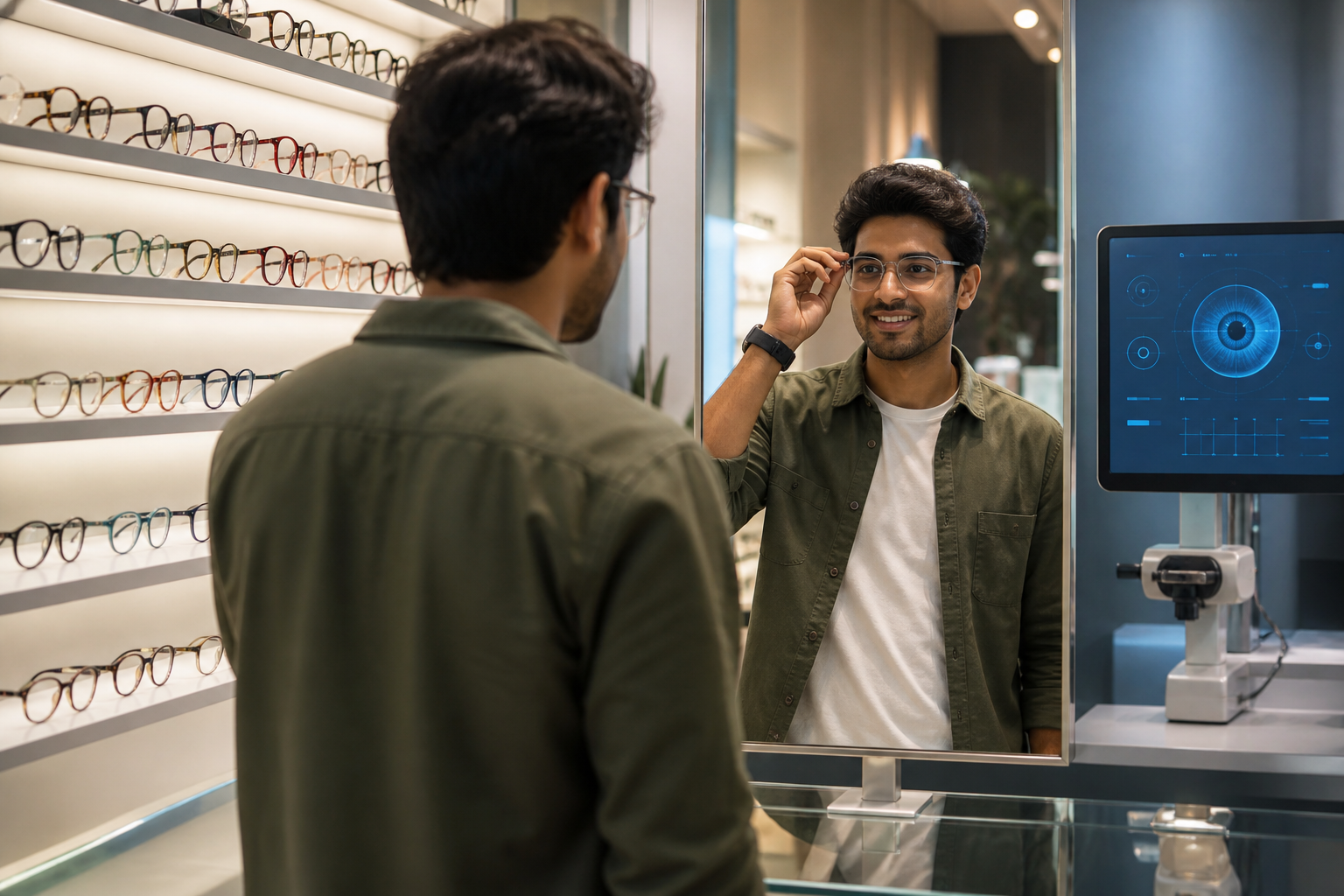
Situation: Eyewear buying in India carries high perceived risk. A frame affects vision, comfort and appearance; consumers worry about prescription accuracy, fit, return hassle and whether the style suits their face. Pure online discovery is useful, but many buyers still want human reassurance.
The move: Lenskart built an omnichannel model where consumers could discover styles digitally, use virtual try-on, visit stores for eye tests and fitting, and choose across accessible price tiers. The primary driver was risk reduction through omnichannel trust. Supporting drivers included wide assortment, visible value pricing, convenience of eye checks, fashion-led frame positioning and repeat nudges for replacement or upgrades.
Outcome or lesson: The strategic lesson is not “Lenskart won because it went online.” A better answer is: Lenskart aligned motivation, perception and attitude by making eyewear feel less risky, more fashionable and easier to buy across channels.
How AI Changes The Psychology of Buying
AI does not replace consumer psychology; it makes psychological targeting, testing and personalization faster. Three changes matter in 2026:
Practical student workflow: Use ChatGPT or Claude to create a “motivation-perception-attitude map” for any company before an interview. Prompt: “Analyze this brand's target consumer using motivation, perception and attitude. Then suggest which 4P decisions support each lever.” For better grounding, load the company website, annual report excerpts and recent campaign pages into NotebookLM, then ask for likely interview questions on consumer psychology.
AI can detect patterns, but it can also reinforce stereotypes if trained on biased historical data. Always validate psychological insights with research, experiments and ethical consent-based data use.
Interview Relevance
“Pick any consumer brand and explain how motivation, perception and attitudes influence its buying behavior. How would you use this insight as a marketer?”
Use this sentence in answers: “The same product can be bought for different motives, perceived through different cues, and chosen because of different attitudes.” It immediately makes your answer sound mature.
Common Mistake
The most common mistake is treating buying behavior as a single-cause decision - usually “price” or “advertising.” That costs candidates because it ignores the mental chain from need to interpretation to preference. One-line fix: explain the purchase through motivation, perception and attitude, then show how the 4Ps influence each stage.
What to Revise Next
Once the inner psychology is clear, move outward to the forces around the buyer. Revise Cultural, Social and Personal Influences on Consumer Behavior next, then study Behavioral Economics for Marketers: Biases, Nudges and Choice Architecture to understand how small decision environments can change choice.