
Industry 4.0 on the Shop Floor: Smart Manufacturing
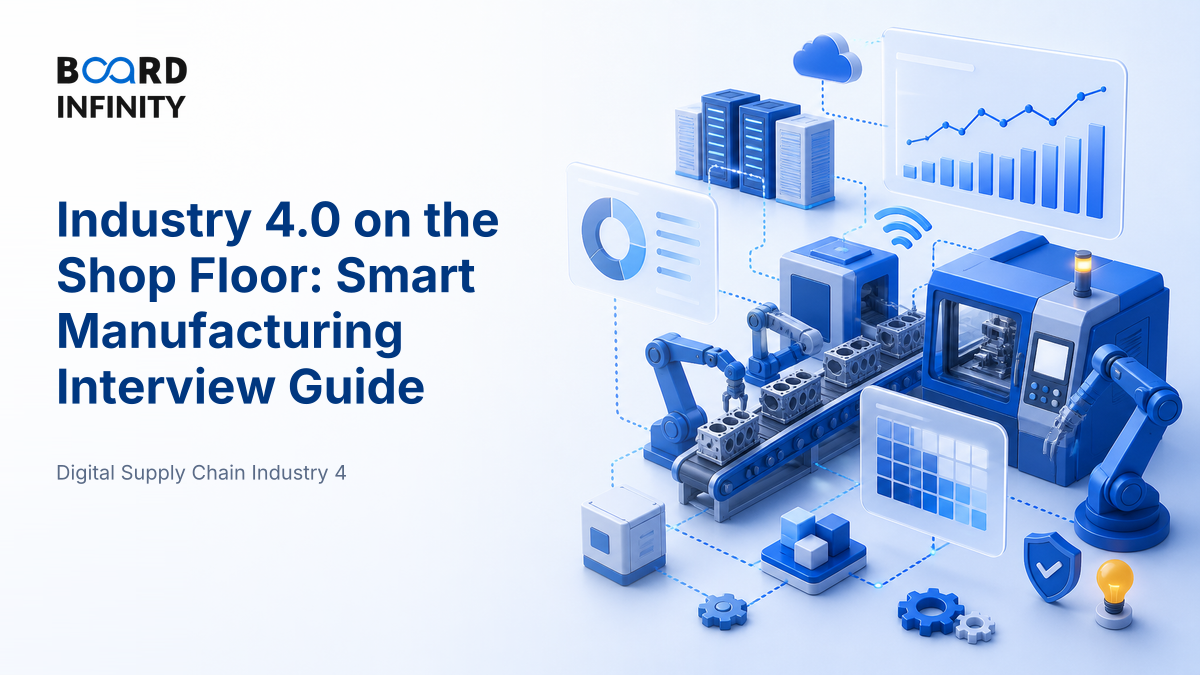
The biggest myth about Industry 4.0 is that a factory becomes “smart” when it buys more robots. Walk into a good smart shop floor and the more interesting thing is quieter: machines signal their own condition, operators see the next best action, quality defects are caught early, and planners react before yesterday’s schedule becomes tomorrow’s bottleneck.
- Smart manufacturing is a connected, data-driven manufacturing system that senses, analyses, decides and acts in near real time.
- Industry 4.0 is the broader wave: cyber-physical systems, industrial IoT, cloud, analytics, robotics, additive manufacturing and digital twins.
- The core mental model is a closed loop: sense data - analyse - decide - act - learn.
- Do not confuse automation with smart manufacturing. Automation executes; smart manufacturing learns and improves decisions.
- Best use cases usually start with business pain: downtime, scrap, changeover loss, energy waste, unsafe work or schedule instability.
- Track impact with OEE, first pass yield, MTBF, MTTR, schedule adherence and energy per unit.
- The common interview trap is listing technologies without explaining the operating problem they solve.
Big Picture: Industry 4.0 Is a Closed Loop, Not a Robot Purchase
On the shop floor, smart manufacturing turns physical operations into a learning system. Sensors and machines generate data, software converts it into insight, managers or algorithms make decisions, and the process is adjusted. The loop matters because value comes from faster, better decisions - not from technology decoration.
Core Explanation: What Actually Makes a Factory Smart?
A smart factory has four connected layers: physical assets, data infrastructure, decision intelligence and operating discipline. Miss any one layer and the system becomes either a flashy dashboard or expensive automation with weak business results.
The Four Layers of Smart Manufacturing
1. Asset layer: Machines, tools, operators, material-handling systems and inspection stations. This is where production actually happens.
2. Data layer: Sensors, PLCs, SCADA, MES, historians, barcodes, RFID and edge devices capture shop-floor signals. Without reliable data, analytics becomes guesswork.
3. Analytics layer: Statistical process control, machine learning, optimisation engines and digital twins turn raw signals into predictions or recommendations.
4. Operating layer: Supervisors, operators, maintenance teams and planners act on those recommendations through standard work, escalation rules and kaizen routines.
A motor on a packaging line sends vibration and temperature data continuously. Instead of replacing it on a fixed calendar or waiting for breakdown, the plant predicts abnormal behaviour and schedules maintenance during planned downtime. The primary driver is condition-based insight, supported by clean sensor data, spare availability and disciplined maintenance planning.
Automation vs Smart Manufacturing
Automation and smart manufacturing overlap, but they are not the same. A conveyor that moves material automatically is automation. A conveyor whose speed adjusts based on downstream congestion, machine health and shift output is closer to smart manufacturing.
If the underlying line is poorly designed, even the best sensor network will struggle. That is why smart manufacturing answers often connect back to line balancing and workstation design before discussing advanced technology.
Where Industry 4.0 Creates Value on the Shop Floor
The strongest answer is use-case led. Start with the loss bucket, then name the technology. Do not start with “AI, IoT and blockchain” and hope the interviewer connects the dots.
Key Shop-Floor Metrics to Track
Smart manufacturing must show operational impact. The exact benchmark varies by industry, product mix, asset age and labour model, so the interview-safe answer is: define the baseline, improve it sustainably, and ensure one metric does not improve by damaging another.
Worked Example: Calculating OEE
Suppose a machine is scheduled for an 8-hour shift. It is down for 1 hour, so it runs for 7 hours. During those 7 hours, it produces 840 units. The ideal rate is 150 units per hour, and 798 units pass quality inspection.
The managerial insight is not the number alone. Here, performance loss is the biggest gap, so the next investigation should examine speed loss, micro-stoppages, operator constraints, material flow and changeover practices.
Definitions You Can Say Cleanly
- Smart manufacturing: A connected manufacturing system that uses real-time data to improve production decisions, quality, cost, flexibility and uptime.
- Industry 4.0: The integration of cyber-physical systems, industrial IoT, analytics and automation into manufacturing and supply networks.
- Cyber-physical system: A system where physical equipment and digital software continuously monitor, control and adapt each other.
- Digital twin: A digital representation of a physical asset, line or process used to monitor, simulate and improve performance.
- MES: Manufacturing Execution System software that manages, tracks and controls production activity between planning and shop-floor equipment.
A useful authority lens is the ISA-95 architecture, which separates enterprise planning from manufacturing operations and control through defined system layers in the ISA-95 manufacturing operations standard. For a student, the practical takeaway is simple: ERP plans the business, MES runs production, and machines execute work.
Schneider Electric Hyderabad: Smart Manufacturing as a Management System
Schneider Electric’s Hyderabad smart factory is a strong Indian example because it shows that Industry 4.0 works when connected machines, energy visibility, operator workflows and management routines reinforce each other.
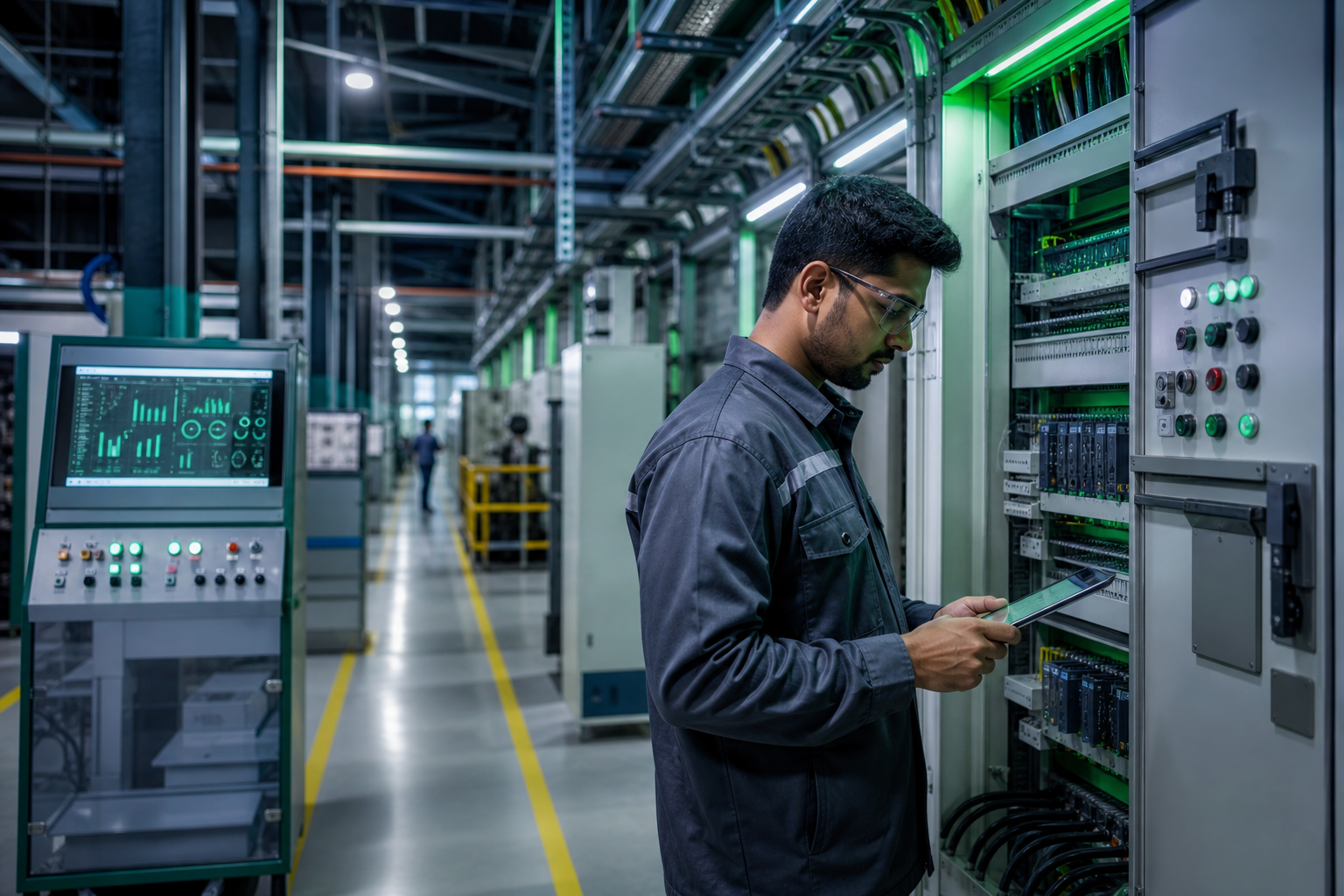
Situation: An electrical and energy-management manufacturing plant faces the classic high-mix challenge: product variety, quality expectations, energy intensity, maintenance needs and pressure for reliable delivery. Simply adding automation would not solve the full problem if production data remained scattered across machines, spreadsheets and supervisors’ judgement.
The move: The plant approach was to connect shop-floor equipment, make energy and production performance visible, digitise operator workflows, and use analytics for quicker decisions. The primary driver was not “more technology”; it was decision visibility at the point of work. Supporting drivers included standardised operating routines, trained operators, maintenance discipline, digital performance boards and leadership focus on measurable use cases.
Outcome and lesson: The useful lesson for interviews is qualitative but powerful: smart manufacturing succeeds when it connects operational problems to daily management. The same sensor data that supports predictive maintenance can also improve scheduling, energy efficiency, quality response and operator escalation. The win comes chiefly from an integrated operating system, supported by technology architecture, change management and disciplined measurement.
How AI Changes Smart Manufacturing
AI is making Industry 4.0 less dashboard-heavy and more decision-oriented. Three changes matter for 2026 placement interviews.
- Predictive quality moves upstream. Instead of detecting defects only at final inspection, AI models can use process parameters, images, vibration, temperature or torque signals to flag defect risk earlier in the line.
- Maintenance becomes more diagnostic. AI can classify failure patterns, prioritise alerts and help technicians compare the current symptom with past breakdown records, manuals and work orders.
- Planning becomes more adaptive. AI can support production scheduling by considering machine availability, labour constraints, material shortages, changeover time and order priority together.
Use NotebookLM before an operations interview: upload this lesson, the company’s annual report and one plant-related article, then ask, “Generate five smart manufacturing questions and answer each using the sense-analyse-decide-act loop.” For deeper supply impact, revise using AI for inventory optimisation and replenishment after this topic.
Interview Relevance
“Our plant has frequent downtime and quality variation. How would you apply Industry 4.0 or smart manufacturing to improve performance?”
Use the phrase “use-case led, not technology led.” It signals maturity because smart manufacturing investments should begin with operational pain and measurable value.
Common Mistake
The mistake that costs candidates is giving a shopping list: “IoT, AI, robotics, cloud, blockchain.” It sounds knowledgeable but not managerial because it does not connect technology to downtime, quality, flow or cost. The one-line fix: state the shop-floor problem first, then explain the data loop and the metric that will improve.