
Last-Mile Models: Own Fleet, Aggregator & Gig Riders
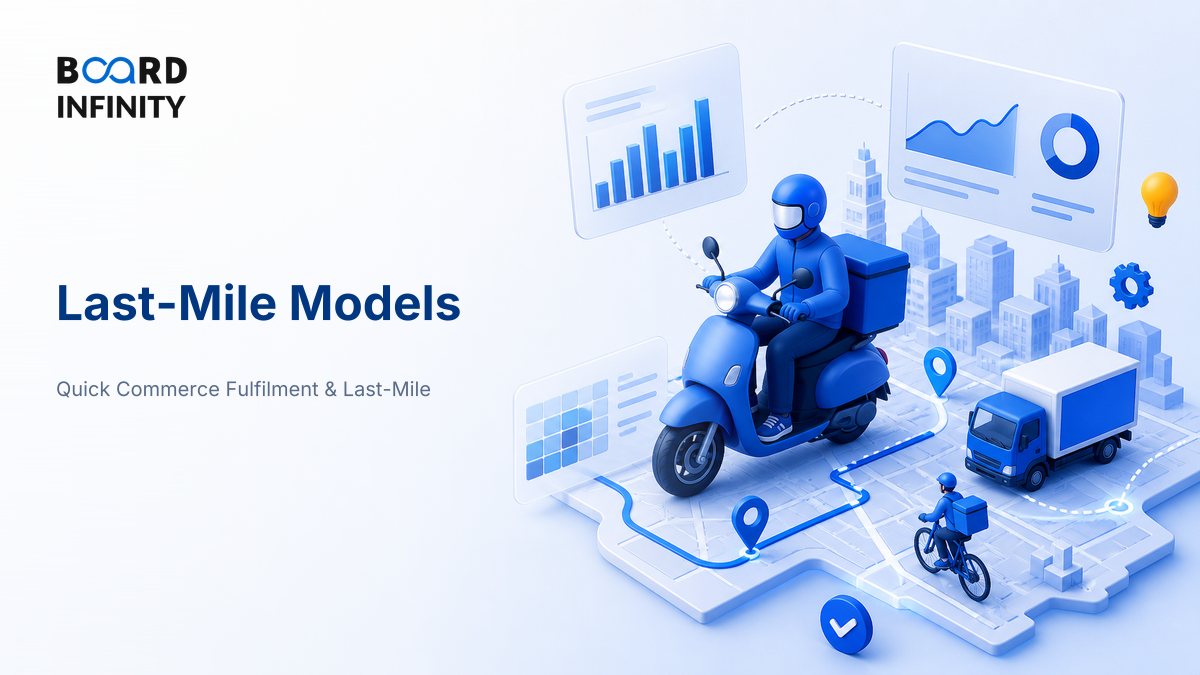
A packet of medicines, a hot biryani and a new phone cover may all travel the same final 3 kilometres - but the best delivery model for each is completely different. The surprise is that last-mile design is rarely about “finding riders”; it is about matching the customer promise to density, control and cost.
- Last-mile delivery is the final movement from a fulfilment point to the customer’s chosen handover point.
- Own fleet gives maximum control over service quality, brand experience and SOPs, but creates fixed capacity risk.
- Aggregator or 3PL models convert fixed delivery capacity into variable cost, but reduce direct control over rider behaviour and priority.
- Gig rider networks offer flexible supply for peaks and hyperlocal jobs, but need strong incentives, routing and compliance discipline.
- The model choice depends on five factors: order density, promise speed, product risk, demand variability and unit economics.
- The best companies usually run hybrid last-mile models: own fleet where control matters, partners where flexibility matters.
- Interview answer rule: never say “aggregator is cheaper” or “own fleet is better” without linking it to SLA, density and cost per delivered order.
The Big Picture: Last-Mile Is a Promise-to-Model Choice
Start with the promise, not the vehicle. A 10-minute grocery order, a scheduled furniture delivery and a reverse pickup have different service risks, so they need different last-mile models.
Think of last mile as the point where supply chain strategy becomes visible to the customer. If the delivery fails, the customer rarely blames the warehouse, inventory policy or routing engine - they blame the brand.
Core Explanation: The Three Last-Mile Models
The three models are not perfectly separate boxes. A company can own some riders, contract a logistics partner for other lanes, and use gig capacity for peak demand. What changes is who owns capacity, who controls dispatch and who carries service risk.
1. Own Fleet Model
In an own fleet model, the company directly controls delivery capacity through employed riders, dedicated contracted riders, leased vehicles or captive delivery teams.
Best fit: high service sensitivity, high product risk, predictable density and a brand promise where the delivery experience matters. Examples include perishable food, pharmacy, premium electronics, high-value B2B spares and scheduled services.
Trade-off: control improves, but capacity becomes less flexible. If demand drops, idle riders and vehicles still cost money.
2. Aggregator or 3PL Model
In an aggregator or third-party logistics model, delivery is executed by an external platform or logistics provider that supplies capacity, technology, riders and sometimes reverse logistics.
Best fit: variable demand, new-city expansion, non-core delivery activity, long-tail locations and categories where the customer accepts standardised delivery experience.
Trade-off: cost becomes more variable, but control depends on contracts, SLAs and partner governance. This is why model selection sits close to make versus buy and outsourcing economics.
3. Gig Rider Model
A gig rider model uses flexible, task-based riders who log in when they choose and are paid per order, per hour, per distance, per incentive slab or a combination of these.
Best fit: peak spikes, hyperlocal delivery, quick commerce, food delivery, event-led demand and markets where the company can attract enough rider supply.
Trade-off: flexibility is high, but reliability depends on incentives, dispatch fairness, rider earnings, local supply depth and regulatory compliance.
How to Choose the Right Last-Mile Model
Use this five-part decision test. It sounds simple, but it separates strong candidates from candidates who only remember definitions.
If you outsource delivery, the commercial contract matters as much as the operational design. Service credits, surge pricing, turnaround commitments and damage liability are natural extensions of contracting, incentives and service agreements.
Own Fleet vs Aggregator vs Gig Riders: Clean Comparison
Key Metrics to Track in Last-Mile Models
Do not evaluate last mile only on delivery cost. A cheap delivery that fails, damages the product or misses the promised slot destroys contribution and customer trust.
There is no universal “good” number across categories. A pharmacy, a grocery dark store and a furniture brand will have different benchmarks. The interviewer is testing whether you know the directional logic: service level, density and unit economics must improve together.
Definitions You Can Say in One Breath
- Last-mile delivery: final movement from a fulfilment point to the customer’s chosen handover point.
- Own fleet: delivery capacity directly controlled by the company through employees, dedicated contractors or captive vehicles.
- Aggregator model: external platform or 3PL executes deliveries using its network, technology and rider capacity.
- Gig rider: flexible delivery worker who accepts tasks through a platform and is paid per task, time, distance or incentive.
- Hybrid last mile: combination of own, partner and gig capacity designed around density, control and demand variability.
Case Study: Shadowfax and the Logic of Aggregated Last Mile
Shadowfax shows why many brands use an aggregator-style last-mile partner: it pools rider capacity and delivery demand across clients instead of every brand building its own fleet.
Shadowfax operates in India as a logistics platform serving last-mile and on-demand delivery needs across categories. Its strategic relevance is not just “it has riders”; the deeper point is that it converts fragmented, uneven delivery demand into a shared operating network.
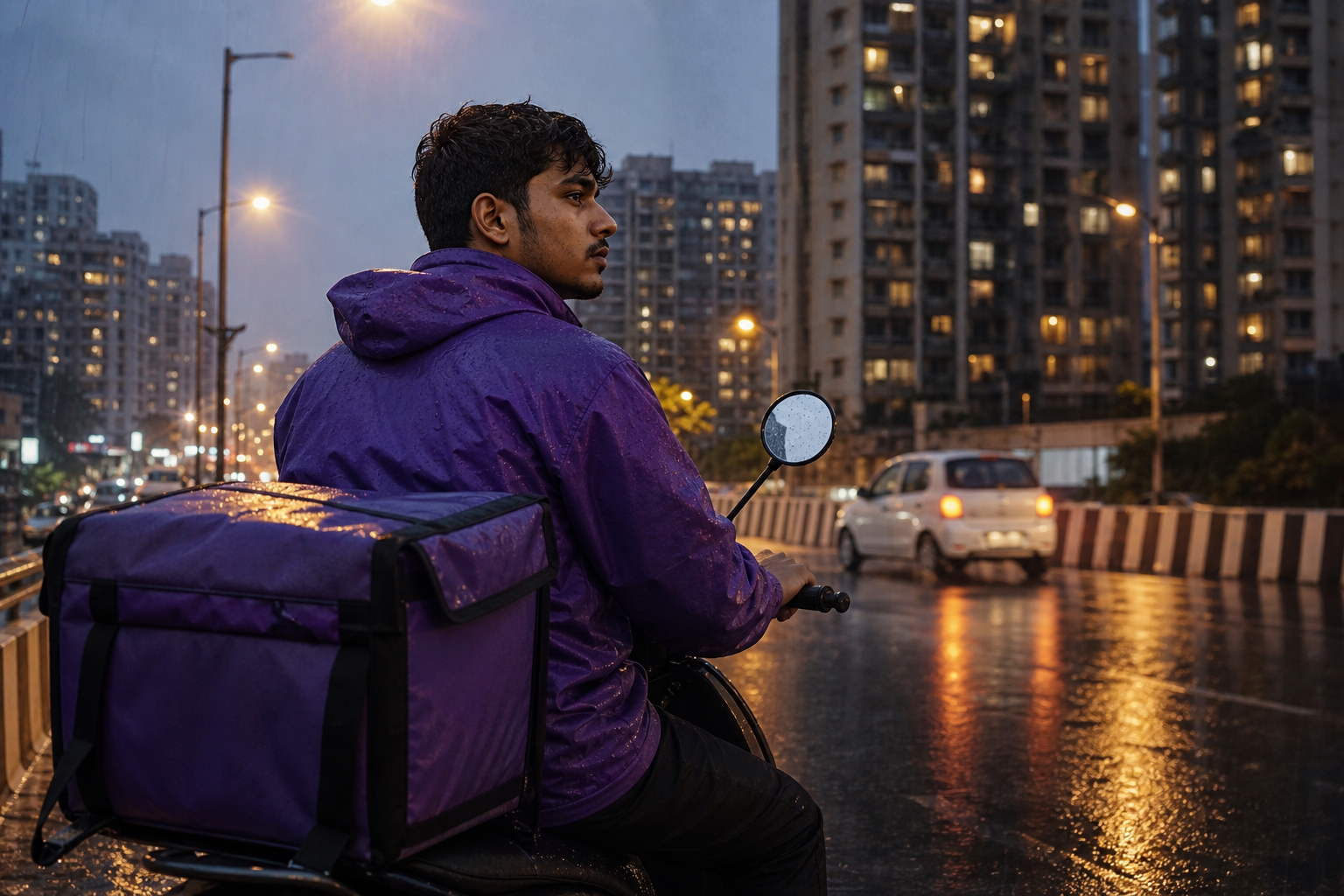
Situation: Many consumer brands face uneven delivery demand - lunch peaks, salary-day shopping, festive spikes, weekend surges and city-by-city variation. Building a dedicated fleet for every brand and every peak creates idle capacity outside those peaks.
The move: An aggregator platform pools demand across multiple clients and uses dispatch technology, rider onboarding, route assignment and local density to serve different delivery types. For a brand, this means faster expansion and lower fixed capacity commitment. For the platform, the operating challenge is to keep rider supply, routing, incentives and SLA discipline balanced.
Result or lesson: The primary driver is network pooling - demand from many clients makes rider capacity more useful than it would be inside one company. Supporting drivers include dispatch technology, local density, incentive design, partner SLAs and the ability to handle forward and reverse movement. The case proves that aggregators win when shared density beats captive control.
The interview takeaway: aggregators are not “cheap riders.” They are density businesses. Their advantage comes chiefly from pooled demand and flexible capacity, supported by technology, incentives and governance.
How AI Changes Last-Mile Models
AI is making last-mile decisions more dynamic. The old question was “Which model should we choose?” The sharper 2026 question is “Which model should handle this order, in this location, at this moment?”
- Dynamic dispatch and batching: ML models predict delivery time, rider availability, traffic risk and batching feasibility, then decide whether an order should go to an own rider, partner rider or gig pool.
- Rider supply forecasting: Platforms can predict shortage zones before peaks and adjust incentives, login nudges and positioning. This directly affects gig rider reliability.
- Exception prediction: AI can flag orders likely to fail because of address quality, customer unavailability, COD risk, weather, building access or unusual route patterns.
Use ChatGPT or Claude to prepare a last-mile interview case. Prompt: “Compare own fleet, aggregator and gig rider models for an online pharmacy entering Pune. Build assumptions for density, SLA, product risk, cost per order and rider utilisation, then recommend a hybrid model.” Then challenge the output by asking, “What operational risk did you ignore?”
For deeper operations prep, connect this topic to using AI for inventory optimisation and replenishment, because delivery speed is impossible if inventory is stocked in the wrong node.
Interview Relevance
“You are launching a same-day delivery service for a D2C personal care brand in three Indian cities. Would you use your own fleet, an aggregator, or gig riders?”
A strong answer uses the phrase: “I would not choose one model nationally; I would choose by zone density, SLA criticality and product risk.” That sounds like an operator, not a textbook answer.
Common Mistake
The mistake is choosing the model only on apparent cost per order. It costs candidates because last-mile cost is meaningless without on-time rate, first-attempt success, defect rate and density. The one-line fix: match the delivery model to SLA, density, product risk and unit economics together.