
Omnichannel Fulfilment and Store-as-Warehouse Models
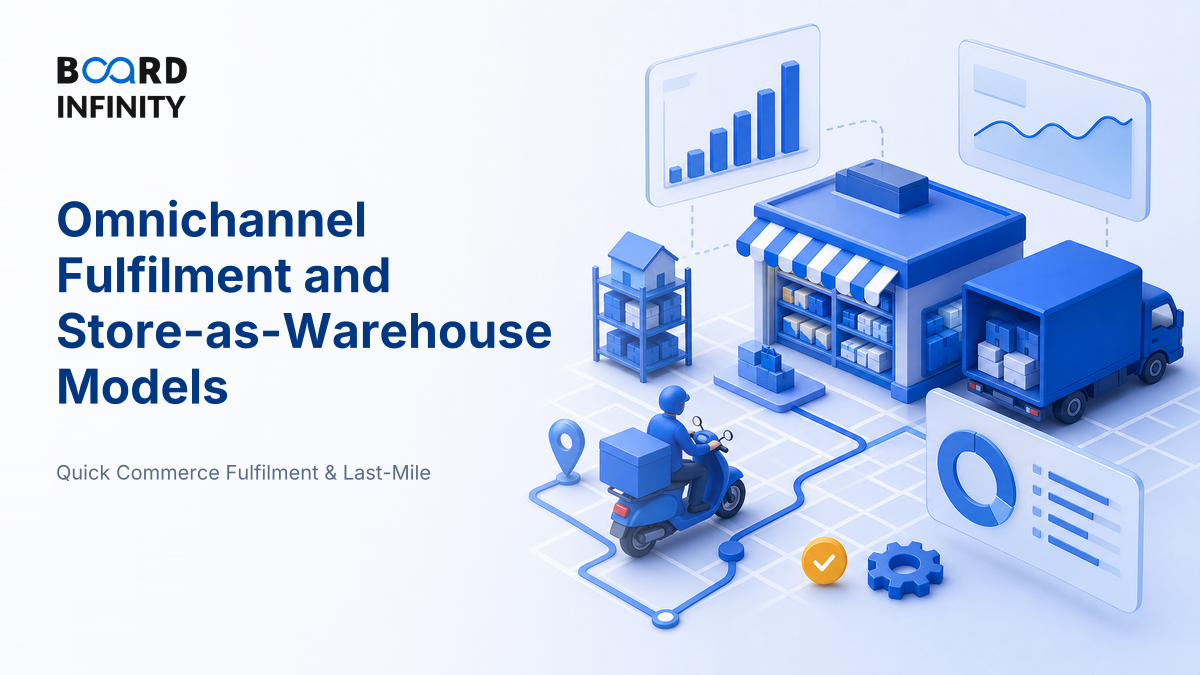
The biggest misconception about omnichannel fulfilment is that it is just “selling online plus offline.” It is not. The hard part begins after the customer clicks “buy” - the retailer must decide whether that order should be served from a warehouse, a nearby store, a dark store, a vendor, or a partner network without breaking inventory accuracy, store service, or unit economics.
- Omnichannel fulfilment means fulfilling orders across multiple customer and inventory channels through one coordinated promise.
- Store-as-warehouse uses retail stores as mini-fulfilment nodes for ship-from-store, pickup, returns, and local delivery.
- The model works best when stores are close to demand, inventory accuracy is high, and store teams can pick without hurting walk-in customers.
- The operating backbone is: single inventory view, order orchestration, picking discipline, last-mile choice, and feedback into replenishment.
- The key trade-off is speed versus complexity - faster customer promise can raise picking cost, stockouts, and store workload.
- Track OTIF, inventory accuracy, fulfilment cost per order, pick productivity, order cycle time, and split-shipment rate.
- The best interview answer does not praise omnichannel blindly - it explains when store fulfilment creates value and when a central warehouse is better.
Big Picture: The Store Becomes a Node, Not Just a Shop
Traditional retail treated stores and warehouses as separate worlds. Omnichannel fulfilment connects them into one fulfilment network. If you need the basics of picking, packing, shipping, returns, and order flow, revise how e-commerce fulfilment actually works before this topic.
Core Explanation: How Omnichannel Fulfilment Actually Works
Omnichannel fulfilment is the coordinated fulfilment of customer orders across stores, warehouses, digital channels, and partners through one inventory and service promise.
Store-as-warehouse is a model where a physical retail store also acts as a fulfilment node for online orders, pickups, returns, and local deliveries.
The operating logic is simple to say but hard to execute: every unit of stock must be visible, promised, reserved, picked, packed, handed over, and reconciled correctly.
The Store-as-Warehouse Operating Loop
A store fulfilment model only works when the feedback loop is tight. If a store sells one unit to a walk-in customer but the online system still thinks that unit exists, the retailer has created a false promise.
The most important concept here is available-to-promise, or ATP. It is not the same as stock on hand. ATP is the quantity the business can safely promise to customers after considering reservations, safety stock, damaged units, pending orders, and expected demand.
When Store-as-Warehouse Works - And When It Fails
Store fulfilment is powerful when customer demand is local and stores sit close to dense demand pockets. It becomes dangerous when store stock records are inaccurate, store labour is already stretched, or online orders cannibalise walk-in availability.
Think of the model through four decisions:
In Indian electronics retail, store-as-warehouse logic is especially useful for categories such as phones, laptops, appliances, chargers, and accessories because customers often value local availability, fast handover, installation support, and easy returns. The primary driver is proximity to demand; supporting drivers are store staff product knowledge, local delivery partners, inventory visibility, and category-level service requirements. The strategic “so what” is clear: the store is no longer only a sales floor - it becomes a fulfilment, advisory, and service node.
Key Metrics: What to Track in Omnichannel Fulfilment
Interviewers like this topic because it exposes whether you can connect customer experience with operations cost. Do not say “faster delivery” vaguely - name the operating metrics.
These metrics should be read together. A retailer can reduce cycle time by overusing stores, but if fulfilment cost per order and stockouts rise, the operating model is not truly better.
Definitions You Can Say in One Breath
- Omnichannel fulfilment: Coordinated fulfilment of orders across stores, warehouses, digital channels, and partners through one customer promise.
- Store-as-warehouse: A retail store used as a fulfilment node while still serving walk-in customers.
- Ship-from-store: An online order is picked and dispatched from a physical store instead of a central warehouse.
- Click-and-collect: A customer orders digitally and collects from a store, locker, or pickup point.
- Order orchestration: The logic that decides which node should fulfil an order based on cost, stock, speed, and capacity.
Case Study: Inditex and Zara’s Integrated Store-Online Fulfilment
Inditex uses its store network and digital channels as an integrated fulfilment system, making Zara a strong example of store-as-warehouse thinking at global scale.
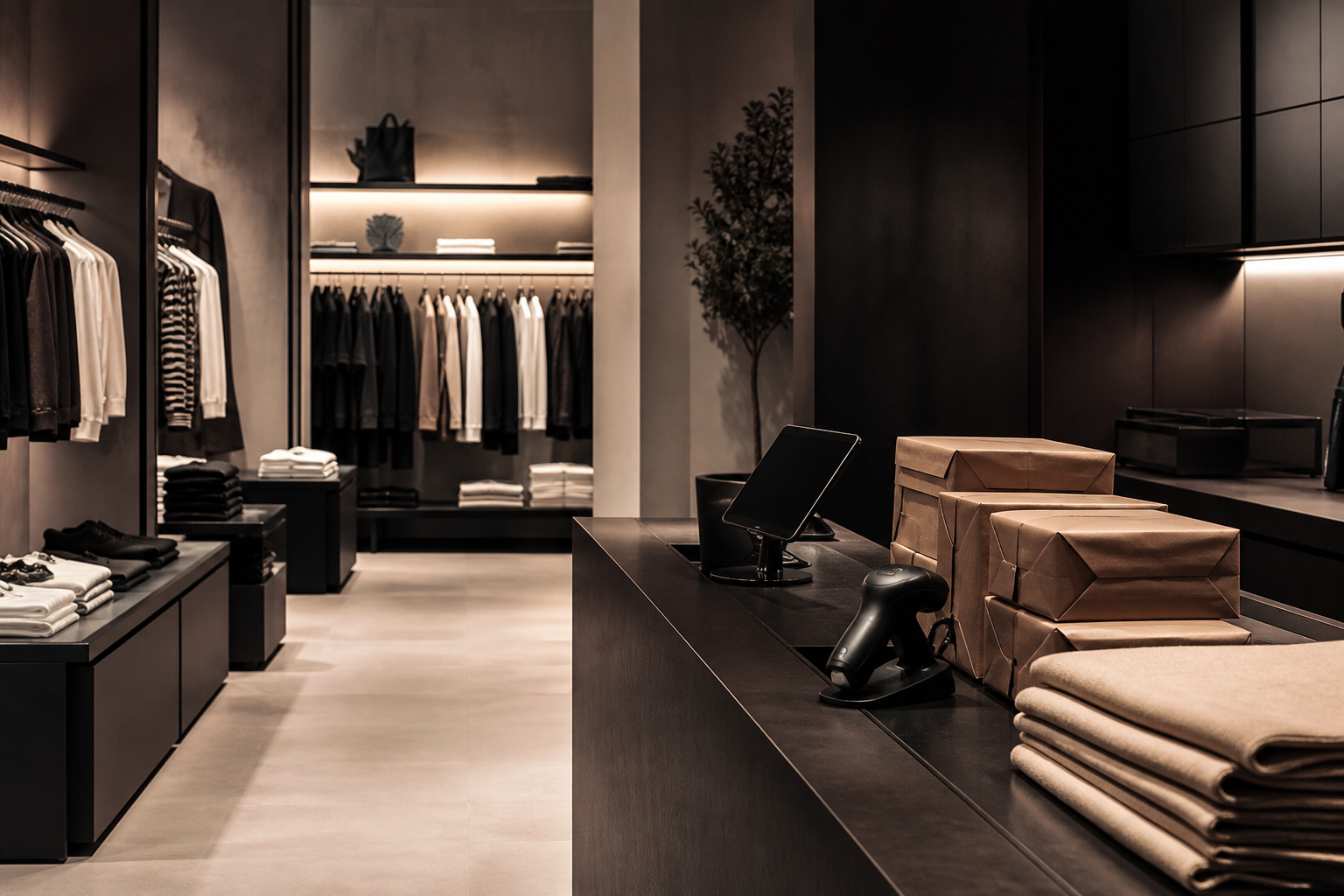
Situation: Fashion retail has a brutal fulfilment problem. Demand is volatile, sizes fragment inventory, seasons move fast, and customers expect both store experience and online convenience. Holding separate inventory for stores and e-commerce would create duplication, markdown risk, and lost sales.
The move: Inditex built a more integrated store-online model. Across its public annual reporting, Inditex describes capabilities such as integrated inventory, RFID-enabled stock visibility, online-store integration, and store-based digital services as part of its operating model (Inditex annual reports). In practical terms, Zara stores are not treated only as display spaces - they can help fulfil online demand, support pickup and returns, and improve local stock availability.
Why it works: The primary driver is inventory visibility across channels. Supporting drivers include RFID discipline, fast replenishment rhythms, a dense store network in key markets, trained store teams, and close coordination between merchandising, technology, and logistics. This is important: Zara does not win because of “stores” alone. It wins because stores are connected to a broader operating system.
Outcome or lesson: The lesson for interviews is not “copy Zara.” The lesson is that store-as-warehouse needs an operating backbone - technology, inventory accuracy, replenishment cadence, and store execution - or else it simply shifts e-commerce chaos into the store.
How AI Changes Omnichannel Fulfilment and Store-as-Warehouse Models
AI is making omnichannel fulfilment less rule-based and more predictive. The biggest changes are practical, not futuristic.
The caution: AI cannot fix dirty inventory data. If scans are missed, returns are not reconciled, or damaged units remain in sellable stock, the model will produce confident but wrong fulfilment decisions. For deeper inventory logic, revise using AI for inventory optimisation and replenishment.
Use NotebookLM or ChatGPT like an interview simulator: upload a retailer’s annual report, ask for its fulfilment model, then prompt, “Identify where store-as-warehouse could reduce delivery time, where it could increase cost, and which five KPIs I should track.”
Interview Relevance
“A retailer with 200 stores wants to reduce e-commerce delivery time by fulfilling online orders from stores. How would you evaluate whether store-as-warehouse is a good idea?”
Use the phrase “node economics.” It signals that you understand fulfilment is not about the nearest store automatically - it is about the best node after considering stock, cost, speed, and capacity.
Common Mistake
The mistake is assuming store-as-warehouse always reduces delivery cost because the store is closer to the customer. It can actually raise cost if picking disrupts staff, inventory is inaccurate, orders are split, or courier pickups are inefficient. The one-line fix: evaluate every fulfilment node on total landed fulfilment cost plus service reliability, not distance alone.