
Fulfilment Centre Operations and Peak Readiness
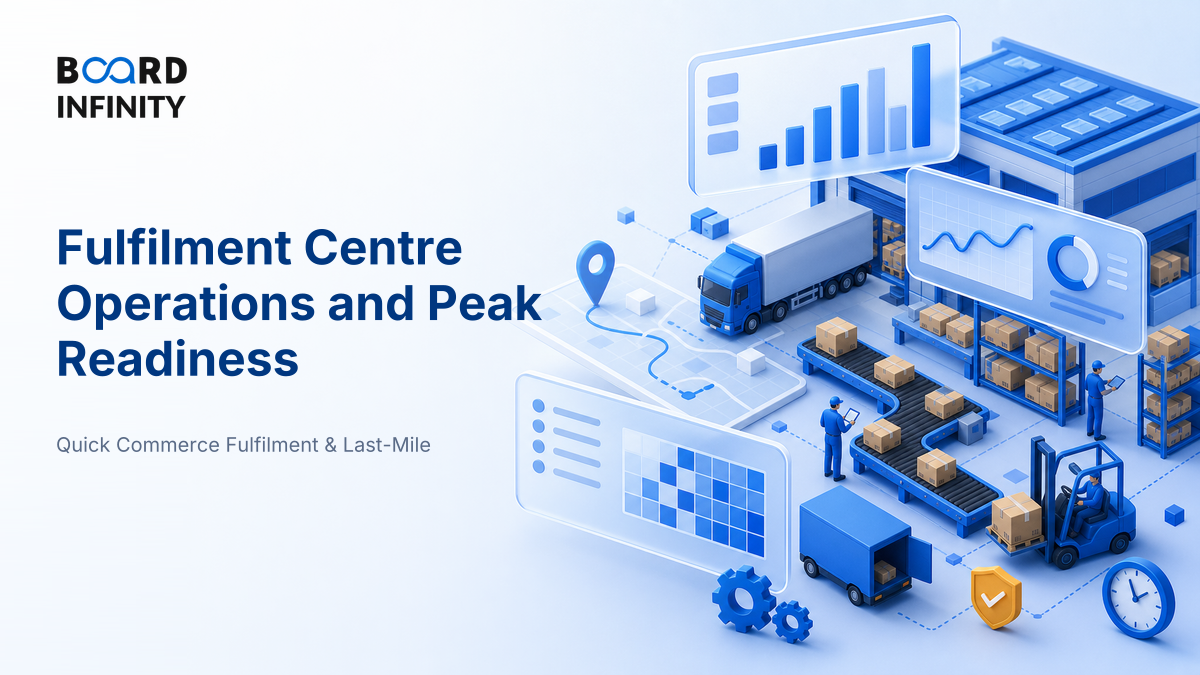
At 11:58 p.m. on a sale night, the website is still calm - but inside the fulfilment centre, scanners are already beeping, cartons are staged near dock doors, and supervisors are watching one number: can the building absorb the spike without breaking the promise? Peak readiness is what separates a smooth sale from a warehouse full of late orders, wrong picks and exhausted teams.
- Fulfilment centre operations convert customer orders into shipped parcels through receiving, storage, picking, packing, sorting and dispatch.
- Peak readiness means the FC has enough inventory, labour, space, systems and carrier capacity before demand spikes.
- The core constraint usually shifts during peak: first inventory, then picking capacity, then packing, then dock or carrier handoff.
- Use the framework: forecast demand - stress-test capacity - pre-position inventory - flex labour - control execution in real time.
- Track operational KPIs: order cycle time, pick accuracy, fill rate, dock-to-stock time, throughput per labour hour and backlog ageing.
- The biggest interview mistake is saying “add more workers”; peak readiness is a system design problem, not just a manpower problem.
Big Picture: A Fulfilment Centre Is a Promise Factory
A fulfilment centre is not just a warehouse. A warehouse stores inventory; a fulfilment centre stores, locates, picks, packs and dispatches customer orders against a service promise. During peak, the same process must run faster without losing accuracy.
Core Explanation: How Fulfilment Centre Operations Actually Work
The operating logic is simple: convert inventory availability into customer delivery reliability. The execution is hard because thousands of SKUs, orders, workers, bins, totes, packing stations and carrier cut-offs must move in sync.
Here are the core building blocks you should be able to explain fluently:
- Receiving: unloading, counting and quality-checking inbound stock from vendors or upstream warehouses.
- Put-away: placing stock into storage locations, ideally based on velocity, size, fragility and handling needs.
- Slotting: deciding which SKU sits where, so fast-moving items reduce picker travel and congestion.
- Picking: retrieving ordered items from storage. This may be single-order picking, batch picking, zone picking or wave picking.
- Packing: verifying items, choosing packaging, adding labels and making the parcel carrier-ready.
- Sorting and dispatch: grouping parcels by route, carrier, city, service level or delivery promise.
Peak readiness begins when you stop looking at these as departments and start seeing them as one connected flow. A picking team can work perfectly and still fail if packing benches choke. A packing area can work perfectly and still fail if carrier vehicles miss cut-off.
The Five-Step Peak Readiness Framework
Use this in an interview when asked how you would prepare a fulfilment centre for Diwali, Big Billion Days-style sale events, a new product launch, month-end spikes or flash-sale demand.
If you want to go deeper into the inventory side, revise Using AI for Inventory Optimisation and Replenishment. If the bottleneck is people and stations, revise Line Balancing and Workstation Design.
The Four Levers of Peak Readiness
Every peak plan is built from four levers. Missing even one can collapse the promise.
- Inventory readiness: top SKUs available, inbound cut-offs frozen, substitutions planned where relevant.
- Labour readiness: trained pickers, packers, auditors, supervisors and exception handlers available by shift.
- Space readiness: enough pick-face space, packing benches, staging zones, returns area and dock doors.
- Carrier readiness: pickup slots, route capacity, sortation timing and contingency partners aligned with dispatch volume.
Worked Example: How Many Pickers Do You Need?
Suppose a fulfilment centre expects 48,000 orders during a 10-hour peak picking window. Each order has an average of 1.25 order lines. A trained picker can pick 80 lines per hour. Management wants a 15% buffer for breaks, errors and congestion.
- Total order lines = 48,000 orders × 1.25 lines = 60,000 lines
- Base picker hours = 60,000 ÷ 80 = 750 picker-hours
- With 15% buffer = 750 × 1.15 = 862.5 picker-hours
- Pickers needed for 10 hours = 862.5 ÷ 10 = 86.25, so plan about 87 pickers
The interview insight: do not stop at the picker count. Ask whether packing stations, totes, aisles, system capacity and carrier pickup can also handle the same flow.
Key KPIs That Prove Peak Readiness
Peak readiness should be measured before, during and after the spike. These are the six KPIs interviewers expect you to know.
Use these KPIs as a dashboard, not as isolated numbers. A high fill rate with poor pick accuracy still fails the customer. Strong throughput with ageing backlog may mean the team is processing easy orders while exceptions rot.
Definitions You Can Say in One Breath
A fulfilment centre is an operations facility that receives, stores, picks, packs and dispatches customer orders.
Peak readiness is the ability to meet surge demand without breaking cost, accuracy, safety or delivery promises.
Slotting is the placement of SKUs in storage locations to reduce travel, congestion and handling effort.
Wave picking releases orders in planned batches based on cut-off time, location, carrier or priority.
Case Study: Myntra and Fashion Sale Peak Readiness
Myntra shows why fashion fulfilment peaks are difficult: demand surges are sharp, SKU variety is huge, and errors in size, colour or style are highly visible to customers.
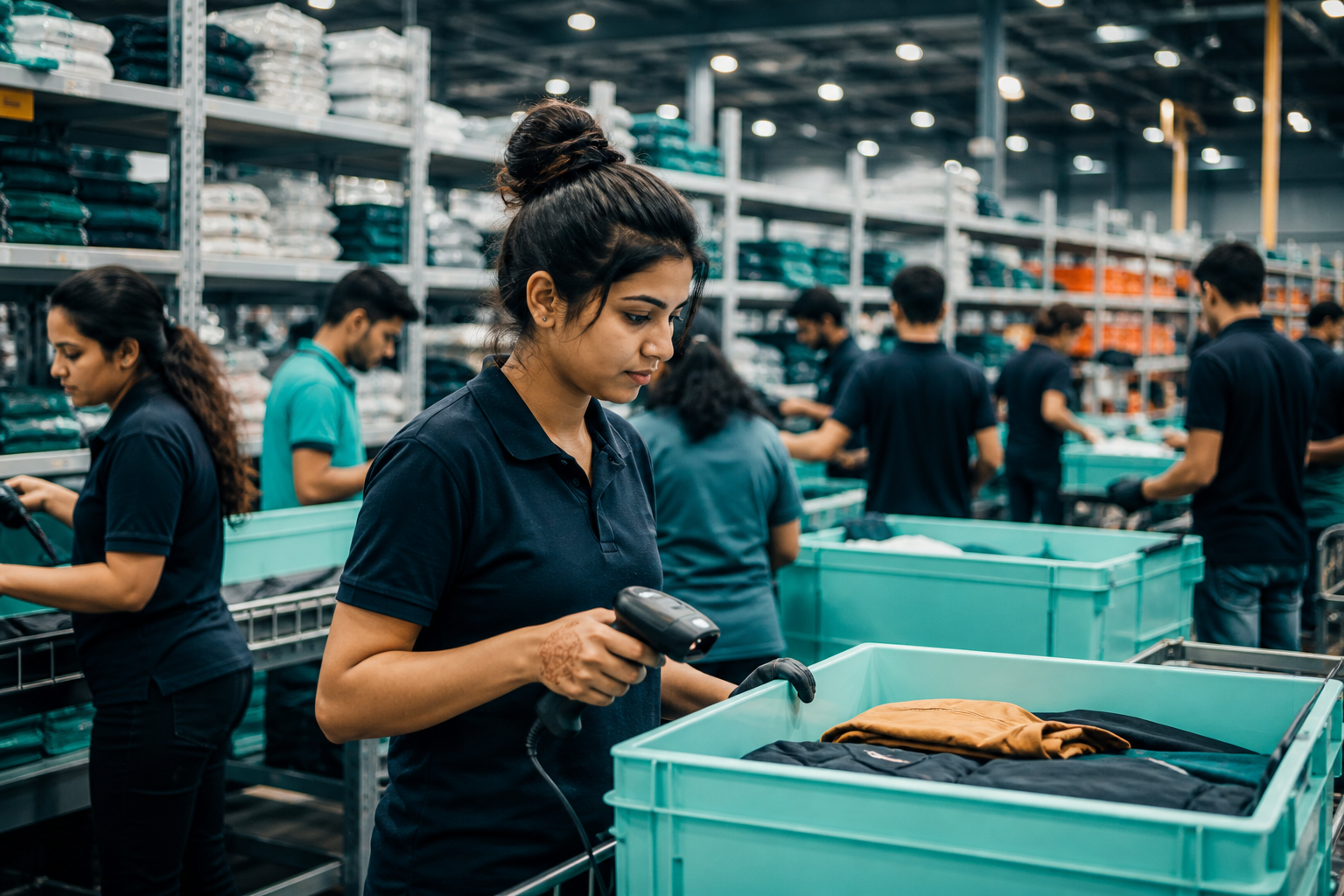
Fashion e-commerce is a tougher fulfilment problem than it first appears. A phone charger may have one SKU and predictable packaging; a shirt creates combinations of size, colour, style, seller, return condition and regional demand. During a sale event, that complexity multiplies.
Situation: Myntra-style fashion demand concentrates around sale windows. Customers expect fast dispatch, but the assortment has a long tail and high substitution sensitivity. A wrong size is not “almost right”; it is a failed order.
The move: A peak-ready fashion FC must prepare in layers: pre-slot fast movers near pick paths, separate high-velocity sale SKUs from slow movers, train temporary staff on barcode discipline, create packing quality checks for size and colour, hold enough polymailers and cartons, and coordinate dispatch waves with carrier cut-offs.
The lesson: The primary driver of success is not simply extra labour. The primary driver is pre-designed flow - supported by accurate inventory, disciplined slotting, trained labour, exception handling and carrier coordination.
The “so what” for interviews: in fashion fulfilment, peak readiness is about controlling variability. The more SKU complexity you have, the more you need process discipline before demand arrives.
How AI Changes Fulfilment Centre Operations and Peak Readiness
AI is changing fulfilment centres in practical, operational ways - not by replacing the warehouse, but by improving decisions before supervisors feel the bottleneck.
- Demand sensing and replenishment: AI models can combine order history, promotions, seasonality, browsing signals and local demand shifts to decide what stock should be positioned closer to demand before peak.
- Labour and wave optimisation: AI can recommend how many workers are needed by hour, which orders to release together, and when to switch capacity from picking to packing.
- Exception detection: Computer vision and anomaly detection can flag damaged items, wrong packing, abnormal backlog ageing, scanner errors or carrier delay risk earlier than manual reviews.
A practical student workflow: load this lesson, a company annual report and any public operations notes into NotebookLM. Ask it to generate “10 interview questions on fulfilment capacity, inventory availability, SLA risk and peak readiness for this company,” then practise answering with the five-step framework above.
Interview Relevance
“You are operations manager for an e-commerce fulfilment centre before a major sale. How will you ensure peak readiness?”
When answering, always move from “volume” to “flow.” Interviewers reward candidates who see bottlenecks, not just demand numbers.
Common Mistake
The costly mistake is saying, “I will hire more workers for peak.” That ignores inventory, slotting, packing stations, dock capacity, WMS stability and carrier cut-offs. The one-line fix: treat peak readiness as end-to-end constraint management, not manpower addition.