
Pricing Strategies for Interviews: Skimming, Penetration, Premium and EDLP
A launch team can spend months perfecting a product, and then one number on the pricing page can decide whether it feels desirable, desperate, mass-market or unaffordable. Price is not just revenue math - it is positioning, customer psychology and competitive strategy compressed into a single decision.
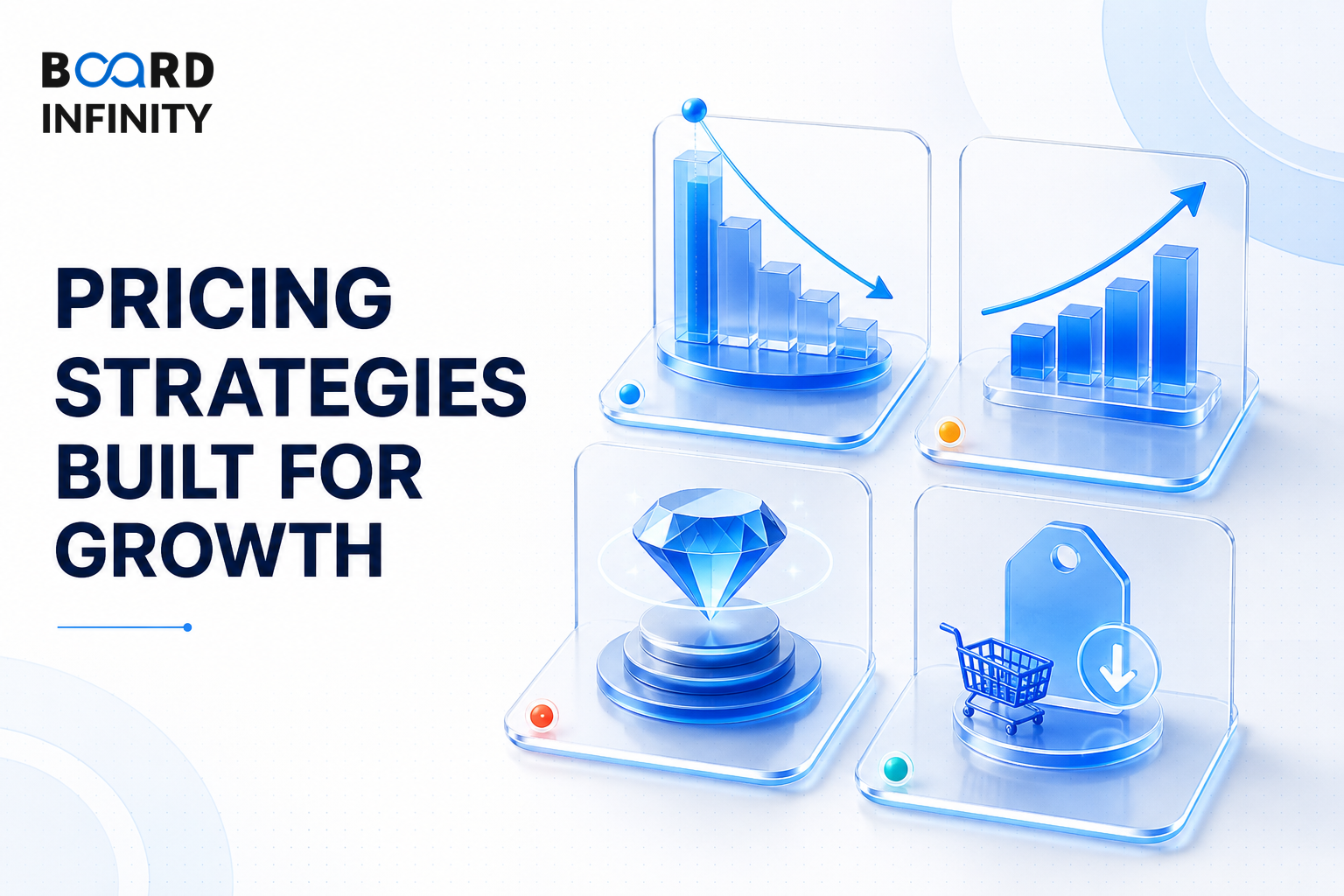
- Skimming means launching at a high price to capture early adopters, then reducing price as competition and adoption broaden.
- Penetration pricing means entering at a low price to build users, volume, habit or network effects quickly.
- Premium pricing keeps price high because the brand, experience, design or ecosystem creates superior perceived value.
- Everyday Low Price or EDLP promises consistently low prices instead of frequent high-low promotions.
- The best pricing choice depends on four anchors: cost floor, competitor reference price, customer willingness to pay and strategic objective.
- Do not judge pricing only by sales volume. Track gross margin, contribution margin, price realization, elasticity, conversion and CLV/CAC.
- Interview-safe answer: define the strategy, state when it works, give one example, name risks and mention metrics.
Big Picture: Price Lives Inside a Corridor
Good pricing is not guessing what customers will tolerate. It is choosing a strategic point between the cost floor and the willingness-to-pay ceiling, while keeping competitors and brand positioning in view.
Core Explanation: Four Pricing Plays and When to Use Them
The big idea is simple: different pricing strategies solve different strategic problems. A company may want fast adoption, high margins, brand prestige, predictable footfall or category disruption. The same product can be priced differently depending on the objective.
1. Skimming Pricing
Skimming is a high-launch-price strategy. It captures surplus from customers who value novelty, performance or exclusivity, before price falls to reach broader segments.
Use it when the product has clear differentiation, patents or early scarcity; customers are less price-sensitive at launch; and the brand can justify a high initial reference price. It is common in technology, gaming consoles, consumer electronics and pharma innovations.
2. Penetration Pricing
Penetration pricing is a low-entry-price strategy designed to build market share quickly. The company accepts lower initial margin because scale, repeat purchase, data, habit or network effects can create long-term value.
Use it when price elasticity is high, competitors are vulnerable, switching costs can be built later, and scale reduces unit cost. The danger is training customers to buy only when cheap.
3. Premium Pricing
Premium pricing is not simply charging more. It is charging more because customers believe the brand delivers superior functional, emotional or social value.
Premium pricing works when the offer has visible differentiation: design, service, reliability, craftsmanship, ecosystem, status or trust. The primary driver is perceived value; supporting drivers include distribution control, storytelling, after-sales experience and consistent quality.
4. Everyday Low Price
EDLP is a consistency strategy. Instead of running frequent discounts, the retailer promises low prices every day so customers do not need to wait for a sale.
EDLP works only when the operating model supports it. The primary driver is a structural cost advantage; supporting drivers include disciplined assortment, fast inventory rotation, supplier negotiation, low wastage and simple store operations.
Definitions You Can Say in One Breath
Kotler and Armstrong: “Price is the amount of money charged for a product or service.”
Pricing Metrics Interviewers Expect You to Track
A pricing strategy is not complete until you say how you will judge it. Strong candidates connect strategy to economics, not just customer excitement.
A Quick Worked Example: Will a Lower Price Actually Help?
Suppose a D2C brand sells a backpack at ₹1,000. Variable cost is ₹600, so contribution per unit is ₹400. Current monthly sales are 10,000 units.
Current contribution = ₹400 × 10,000 = ₹40,00,000.
If the brand cuts price to ₹900, contribution per unit becomes ₹300. To keep the same total contribution, it needs:
Required units = ₹40,00,000 / ₹300 = 13,333 units.
That means volume must rise by about 33% just to break even on contribution. If research suggests volume will rise only 20%, the discount grows revenue but hurts contribution. This is the classic pricing trap.
How to Choose the Right Pricing Strategy
Use this five-step decision process whenever a case asks, “How should we price this?” It prevents you from jumping to a fashionable answer.
Case Study: DMart and the Discipline Behind EDLP
DMart, operated by Avenue Supermarts in India, shows that Everyday Low Price is not a tagline - it is an operating system built for cost discipline and customer trust.

Situation: Indian grocery retail is highly price-sensitive, fragmented and habit-driven. Customers compare prices across kirana stores, local markets, online grocery and modern retail. A retailer promising low prices cannot survive on advertising alone; the promise must show up in the bill.
The move: DMart built an EDLP model around a structural cost advantage. The primary driver is disciplined low-cost operations. Supporting drivers include focused assortment, high inventory rotation, careful store-level execution, supplier negotiation, limited frills and a culture of avoiding unnecessary operating complexity.
Outcome and lesson: DMart demonstrates that EDLP succeeds when pricing is backed by operations. The strategic lesson is powerful: a low-price promise is sustainable only if the company has a low-cost system behind it.
How AI Changes Pricing Strategies
AI does not replace pricing judgment, but it changes the speed and precision of pricing decisions.
- Elasticity estimation becomes sharper: ML models can estimate how different customer segments respond to price changes across geography, season, channel and competitor actions. This helps decide whether penetration, premium or skimming is realistic.
- Competitive price intelligence becomes continuous: Retailers and marketplaces can monitor public competitor prices, stock-outs and promotions more frequently, then adjust offers or bundles while maintaining margin guardrails.
- Promotion optimization becomes more targeted: AI can recommend coupon depth, bundle price or markdown timing. The caution is fairness and privacy - in India, customer data use must respect consent, purpose limitation and DPDP Act expectations.
Use Perplexity to gather competitor price ranges for one category, then use ChatGPT to classify each brand as skimming, penetration, premium or EDLP and ask: “What evidence would prove or disprove this pricing strategy?”
Interview Relevance
“A new Indian D2C electronics brand is launching wireless earbuds. Should it use skimming, penetration, premium pricing or EDLP?”
A strong answer can combine strategies over time: for example, start with skimming for a differentiated launch model, then introduce lower-priced variants later for penetration without damaging the flagship brand.
Common Mistake
The biggest mistake is saying “use penetration pricing to gain market share” without checking contribution margin and elasticity. It sounds customer-friendly but may destroy profit. One-line fix: always say, “I will validate the low price with break-even volume, elasticity and CLV/CAC before recommending it.”
What to Revise Next
Now move from strategy choice to customer response. Revise The Psychology of Pricing & Behavioral Pricing Tactics to understand why ₹999 feels different from ₹1,000, then study Price Elasticity of Demand - Made Simple to quantify how customers react when price changes.