
Agriculture, Cold Chain & Food Supply Chains in India
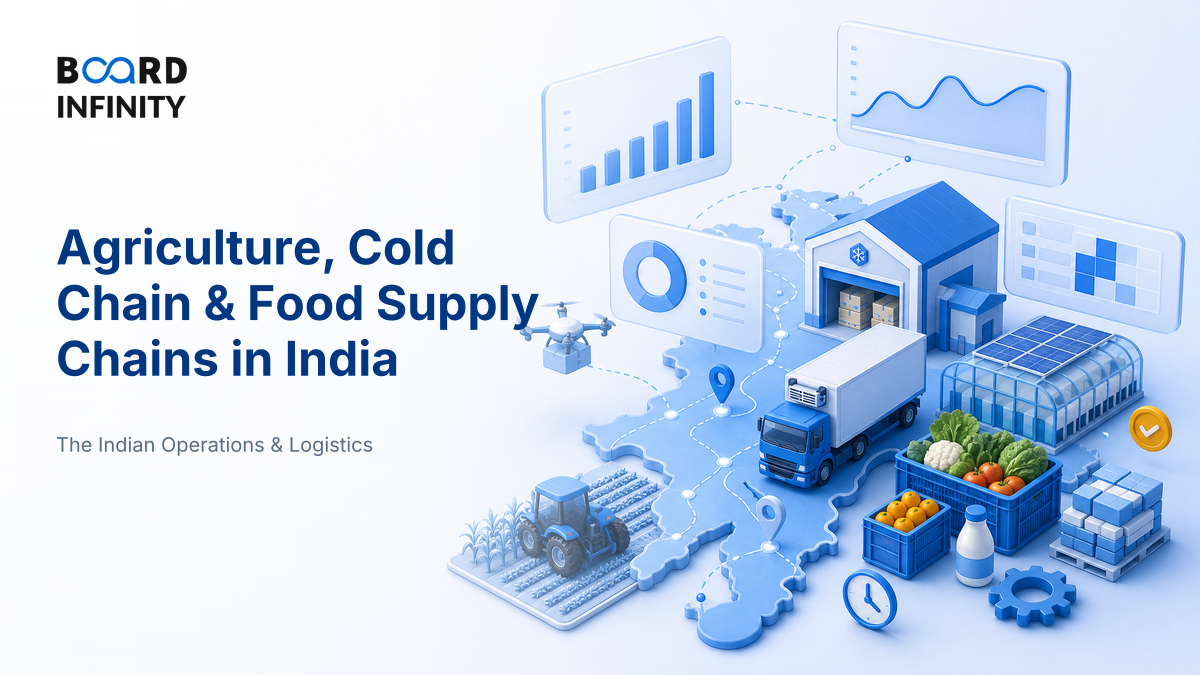
A tomato harvested at 6 a.m. can reach a city kitchen crisp, graded and traceable - or arrive bruised, warm and discounted by evening. The difference is not “a refrigerator truck”; it is the design of the entire food supply chain from farm aggregation to temperature control, inventory policy, quality checks and demand visibility.
- Agriculture supply chains move food from farm to consumer through aggregation, grading, storage, processing, transport, wholesale, retail and last-mile fulfilment.
- Cold chain is the temperature-controlled part of that system - pre-cooling, cold rooms, reefer transport, distribution and retail storage.
- The core problem in India is not only production; it is fragmented sourcing, perishability, uneven infrastructure and demand uncertainty.
- The best answer separates physical flow, information flow, money flow and quality/regulatory flow.
- Key metrics: temperature compliance, OTIF, fill rate, wastage percentage, inventory days and forecast accuracy.
- Cold chain success is an economics problem: service level must improve without making logistics cost higher than the product margin.
- The common mistake is saying “add cold storage” without explaining aggregation density, handling discipline, demand planning and ownership of losses.
Big Picture: The Farm-to-Fork Chain Is Four Flows, Not One Truck Route
Food supply chains look physical because we see trucks, crates and warehouses. In reality, the physical movement only works when information, money and quality control move with it. If the farmer does not know demand, the packhouse cannot grade correctly; if temperature data is invisible, the retailer cannot trust shelf life; if payments are delayed, the network becomes unreliable.
Core Explanation: How Indian Agriculture and Cold Chains Actually Work
Start with the journey. Most fresh food does not travel in a neat factory-like line. It is aggregated from many small farms, sorted by quality, sometimes processed, moved through temperature-sensitive nodes and finally matched to uncertain consumer demand.
For an MBA interview, think of the system in three operating layers:
- Upstream sourcing: farmer relationships, FPOs, contract farming, collection centres, quality standards and procurement price logic.
- Midstream operations: sorting, grading, ripening, pre-cooling, cold storage, inventory planning and transport routing.
- Downstream demand: wholesalers, modern trade, quick commerce, food service, exports and processing companies.
The Indian context adds four complications. First, farm output is seasonal but demand is daily. Second, smallholder production makes aggregation expensive. Third, perishability punishes delays more sharply than in FMCG or durables. Fourth, temperature control only helps if handling discipline exists before and after the cold room.
Farmgate Push vs Consumer-Pull Cold Chain
A useful contrast: traditional agriculture chains often start with what farmers have harvested; modern food chains increasingly start with what consumers and retailers are expected to need.
This is why food supply chain roles overlap with procurement, operations and analytics. If your job is sourcing onions for a processor, you are solving price risk and farmer supply. If your job is fresh fulfilment for an e-grocery player, you are solving forecast error, picking speed, shrinkage and service level. If you need a deeper base on supplier decisions, revise supplier selection, scorecards and evaluation.
The Cold Chain Logic: Temperature, Time and Touches
Cold chain performance depends on three variables:
- Temperature: whether the product stays within its required band.
- Time: how long the product spends between harvest, pre-cooling, storage, movement and sale.
- Touches: how many times it is loaded, unloaded, opened, sorted or exposed.
Cold chain is not automatically better if it is expensive and slow. A fresh paneer network, a frozen food network and a banana ripening network need different designs. The right design depends on shelf life, product value, temperature sensitivity and demand predictability.
Metrics That Matter in Food and Cold Chain Operations
Use metrics to show managerial maturity. Do not say “reduce wastage” as an intention; show how you would track it. The ranges below are interview thumb rules, not universal benchmarks - product category, season, geography and channel change the target.
For multi-product food businesses, the next layer is SKU-level inventory policy - safety stock, reorder points and service levels. If you want to practise the calculation side, revise setting inventory policy for a multi-product business.
A Small Worked Example: Why Cold Chain Decisions Are Economic, Not Cosmetic
Assume a retailer receives 1,000 kg of strawberries at ₹120 per kg. Without better pre-cooling and handling, 12% becomes unsaleable. With improved pre-cooling and insulated movement, wastage falls to 6%, but logistics cost rises by ₹4 per kg.
The decision is attractive here because the value recovered from lower wastage exceeds the added cold-chain cost. In an interview, this simple logic is powerful: cold chain investment must pay back through lower shrinkage, higher price realisation, better service or longer selling window.
Definitions You Should Be Able to Say Cleanly
The Council of Supply Chain Management Professionals defines supply chain management as “the planning and management of all activities involved in sourcing and procurement, conversion, and all logistics management activities.”
- Agriculture supply chain: the network that moves farm output into consumable products through sourcing, handling, processing, logistics and sales.
- Cold chain: a temperature-controlled supply chain that preserves product safety, quality and shelf life from origin to consumption.
- Post-harvest loss: loss in quantity or quality after harvest and before final consumption.
- Traceability: the ability to track a food item across suppliers, batches, locations and handling events.
Case Study: Sahyadri Farms and the Power of Integrated Produce Supply Chains
Sahyadri Farms built a farmer-linked fruits and vegetables value chain in Maharashtra, showing how aggregation, packhouse discipline and market access can change farm-to-consumer economics.
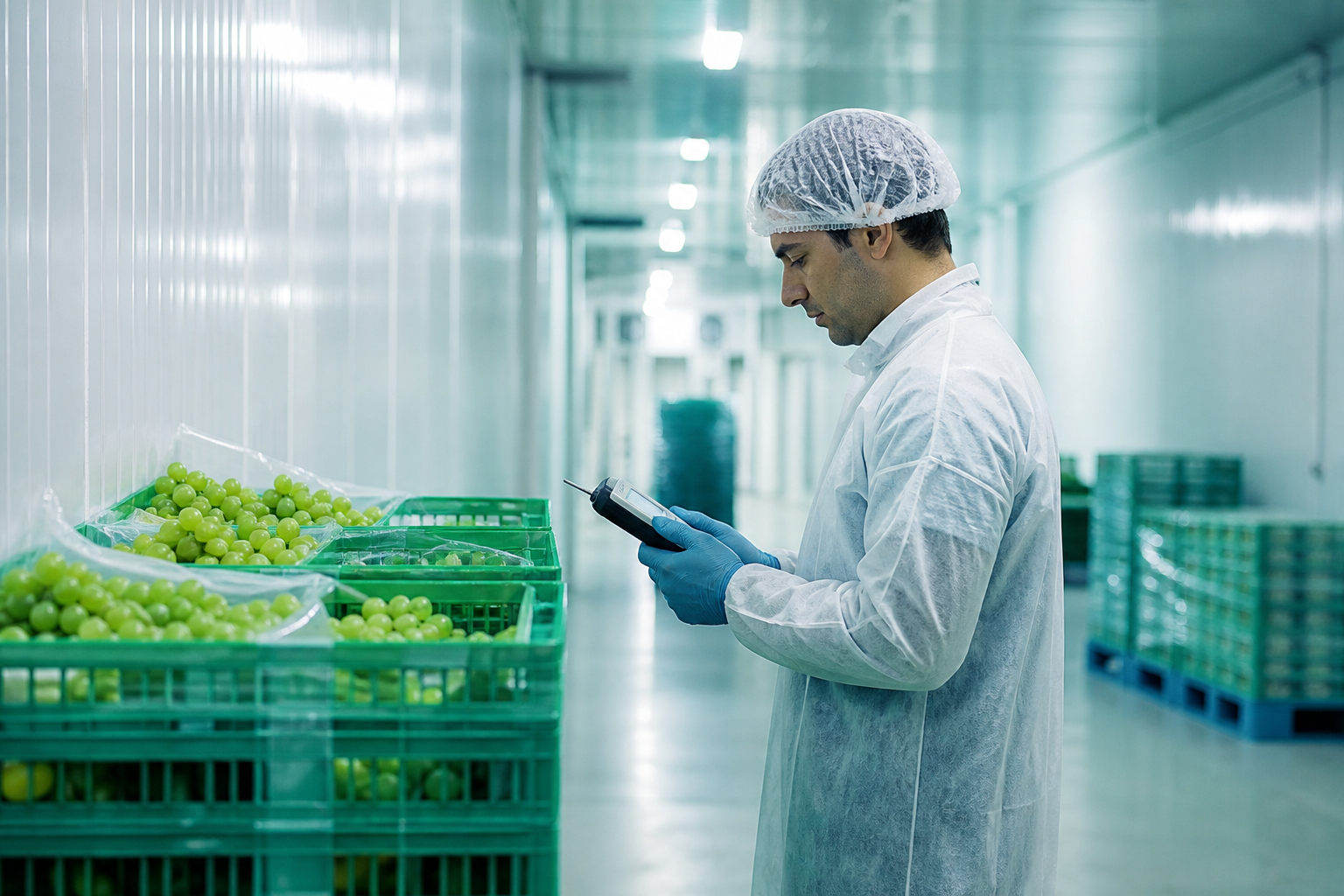
Sahyadri Farms is a Nashik-based farmer-linked platform focused on fruits and vegetables; the company presents itself as an integrated agri value chain connecting farmers to domestic and export markets through packhouses, processing and distribution (Sahyadri Farms). The interesting point is not just that it uses infrastructure. The point is that it tries to control the weak links that usually sit between farmers and reliable buyers.
Situation: High-value horticulture such as grapes and other fruits can lose value quickly if quality, residue standards, grading, packaging and temperature are not managed consistently. Fragmented farm supply also makes it hard for modern retailers, processors and export buyers to trust volume and quality.
The move: Sahyadri’s model integrates farmer sourcing with packhouse operations, grading, quality systems, processing capability and market linkage. The primary driver is aggregation with operational control - enough farmer supply linked to enough process discipline. Supporting drivers include quality standardisation, post-harvest handling, buyer relationships and better information flow.
Lesson: Cold chain works best when it is not a standalone asset. A cold room without farmer alignment, grading discipline, demand visibility and market access is just expensive storage. Sahyadri is memorable because it shows cold chain as part of a larger operating system.
How AI Changes Agriculture, Cold Chain & Food Supply Chains in India
AI is most useful here when it reduces uncertainty - what to procure, where to store it, when to dispatch, and which exception needs attention first.
- Demand forecasting and replenishment: ML models can combine sales history, weather, holidays, local events and price changes to forecast demand for fresh SKUs. This improves procurement and reduces both stockouts and wastage. For the operating logic, revise using AI for inventory optimisation and replenishment.
- Cold-chain monitoring: IoT sensors plus anomaly detection can flag temperature excursions, door-open events or route delays before the product is damaged.
- Quality grading: Computer vision can help sort produce by size, colour, defects and ripeness, reducing manual inconsistency. Human checks still matter because food safety and buyer specifications carry accountability.
Use NotebookLM or Claude to upload a company annual report, a logistics case article and your notes. Ask: “Create a cold-chain interview answer for this company covering sourcing, storage, transport, KPIs, risks and AI use cases.” Then verify every factual claim before using it.
Interview Relevance
“Suppose you are designing the supply chain for a fresh dairy or fruit brand entering three Indian cities. How would you reduce wastage while maintaining availability?”
If the interviewer gives you a product, immediately say: “I will design this based on shelf life, temperature sensitivity, demand volatility and value density.” That one sentence makes your answer sound structured.
Common Mistake
Mistake: Treating cold chain as “more cold storage.” This costs candidates because it ignores the real failure points - aggregation, pre-cooling, handling, demand forecasting, route discipline and ownership of shrinkage. Fix: say “cold chain is an end-to-end operating system, not an asset purchase.”