
Indirect Tax Reform and Its Supply Chain Consequences
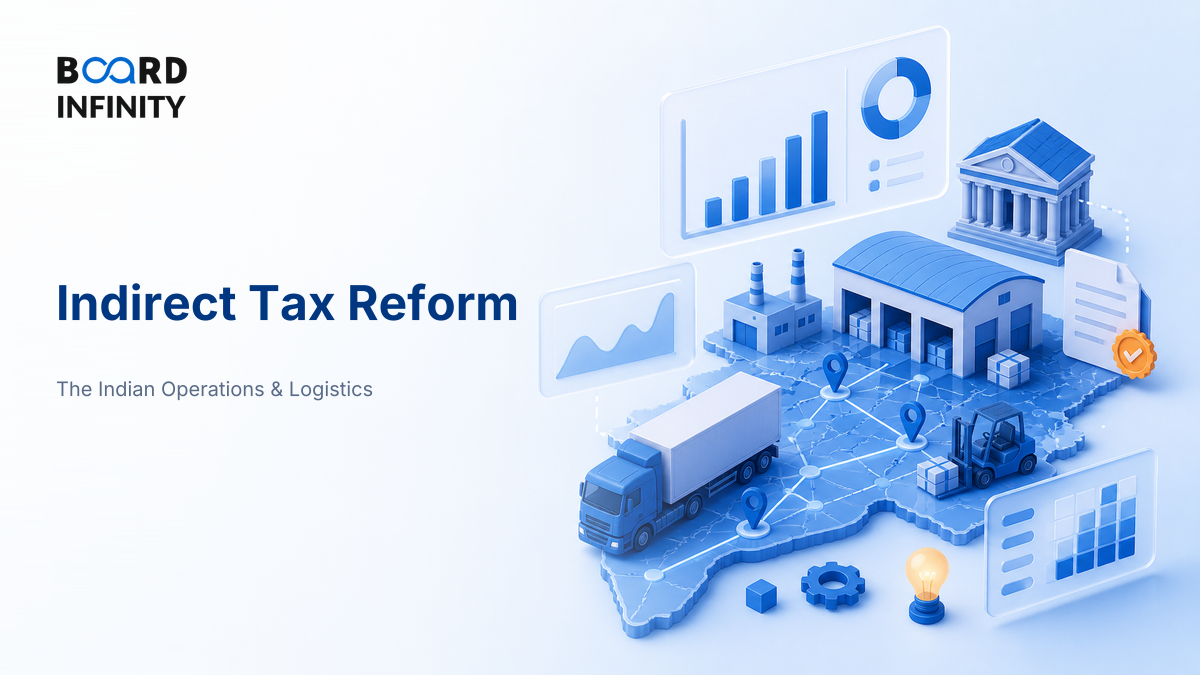
A truck that once waited at a state border because one document was missing now moves through a digital tax trail before it reaches the warehouse gate. That is the real supply chain story of indirect tax reform: not “tax rates changed,” but “the rules of where to store, move, invoice and finance goods changed.”
- Indirect tax reform changes supply chains because taxes sit inside purchase price, freight routing, warehouse location, invoicing and working capital.
- India’s GST shifted many decisions from tax-driven warehouses to service-and-cost-driven networks.
- The biggest operational levers are input tax credit, e-way bills, e-invoicing, place of supply and compliance data quality.
- Post-reform, companies often review warehouse count, depot roles, transport lanes, inventory buffers and vendor invoicing discipline.
- GST does not automatically mean fewer warehouses. Fast delivery, returns, freshness, spare parts and omnichannel service may still require local nodes.
- Interview answer formula: tax rule - supply chain decision - metric impact - risk control.
Big Picture: Tax Reform Rewrites the Physical Network
Indirect tax reform matters because it changes the economics of every node and movement in the supply chain. Before GST, many Indian firms kept state-wise depots partly to manage state tax effects. After GST, the question became sharper: “Where should inventory sit if tax is no longer the main reason for a warehouse?”
Core Explanation: The Five Supply Chain Consequences
The simplest way to understand indirect tax reform is this: tax changes the cost-to-serve equation. Once the recoverability of tax, documentation flow and interstate movement rules change, the optimal supply chain may also change.
1. Warehouse Footprint Moves from Tax Logic to Service Logic
Pre-GST, a company could be tempted to maintain depots across states to reduce tax friction or serve state-specific documentation requirements. Under GST, with a more unified indirect tax structure and input tax credit mechanism, companies can ask a cleaner network design question: fewer large regional distribution centres, more local fulfilment nodes, or a hybrid?
The right answer depends on product economics. Paints, appliances and auto parts may benefit from regional consolidation. Grocery, quick commerce, pharmaceuticals and spare parts may still need local inventory because service promise beats tax efficiency.
2. Input Tax Credit Changes Procurement and Vendor Discipline
Input tax credit makes tax paid on inputs usable against output tax liability, but only if invoices, GST registrations and filings match correctly. This pulls procurement, finance and supply chain into one operating system. A cheap supplier with poor tax compliance can create blocked credit, reconciliation work and shipment delays.
That is why supplier scorecards should include tax-document accuracy, invoice timeliness and compliance history, not just price and quality. If this feels like procurement territory, revise what procurement owns and how it creates value as the natural next layer.
3. E-Way Bills Make Movement Data Operationally Critical
The e-way bill system digitises documentation for movement of goods under GST through the official GST e-way bill portal. In practice, this makes master data quality - GSTIN, HSN code, invoice value, vehicle details and delivery address - a logistics control point.
A route plan is useless if the truck is stopped because the invoice and e-way bill do not match. Good logistics teams now treat tax documentation like a pre-dispatch quality check.
4. E-Invoicing Converts Compliance into Structured Data
The GST e-invoice system pushes standardised invoice reporting into the operating rhythm of businesses covered by the rules. The supply chain consequence is powerful: invoice data becomes more structured, traceable and reconcilable across buyer, supplier, transporter and finance teams.
This improves auditability, but it also raises the cost of bad process discipline. Incorrect product codes, mismatched purchase orders and delayed invoice uploads can block dispatches, credit claims or vendor payments.
5. Working Capital Becomes a Cross-Functional Problem
Indirect tax is not just a P&L line. It can sit inside receivables, payables, inventory valuation, blocked credits and refunds. A supply chain redesign that reduces warehouses may still fail if it increases stock-outs or traps cash in tax credits.
Definitions You Should Be Able to Say in One Breath
- Indirect tax: A tax on goods or services collected by an intermediary from the buyer and remitted to government.
- GST: India’s destination-based indirect tax system on supply of goods and services, administered through the official GST portal.
- Input tax credit: Credit of tax paid on business inputs that can be used to offset output tax liability.
- E-way bill: A digital movement document required for specified goods transport under GST rules.
- Supply chain network design: The choice of facility locations, roles, flows and inventory positions to meet demand at target cost and service.
Pre-Reform vs Post-Reform Supply Chain Logic
The mistake is to think “GST reduced warehouses.” The better answer is: GST reduced tax as a reason for warehouses, so companies could redesign networks around service, cost and risk.
Worked Example: When Warehouse Consolidation Actually Pays
Assume a consumer durables company compares a five-depot network with a two-regional-DC network after indirect tax reform. These are interview-style hypothetical numbers.
The two-DC model saves ₹3.35 lakh per month in this simplified example. But a strong answer adds the caveat: if delivery time worsens, stock-outs rise or reverse logistics becomes slower, the cheaper network may still be strategically wrong. For deeper network decisions, connect this with setting inventory policy for a multi-product business.
Metrics to Track After Indirect Tax Reform
Because reform changes both cost and compliance, do not track only tax savings. Track whether the supply chain is cheaper, cleaner and still serviceable.
Case Study: Blue Dart and the Compliance-Ready Express Network
Blue Dart shows why indirect tax reform rewards logistics networks that combine physical reach with digital document discipline.
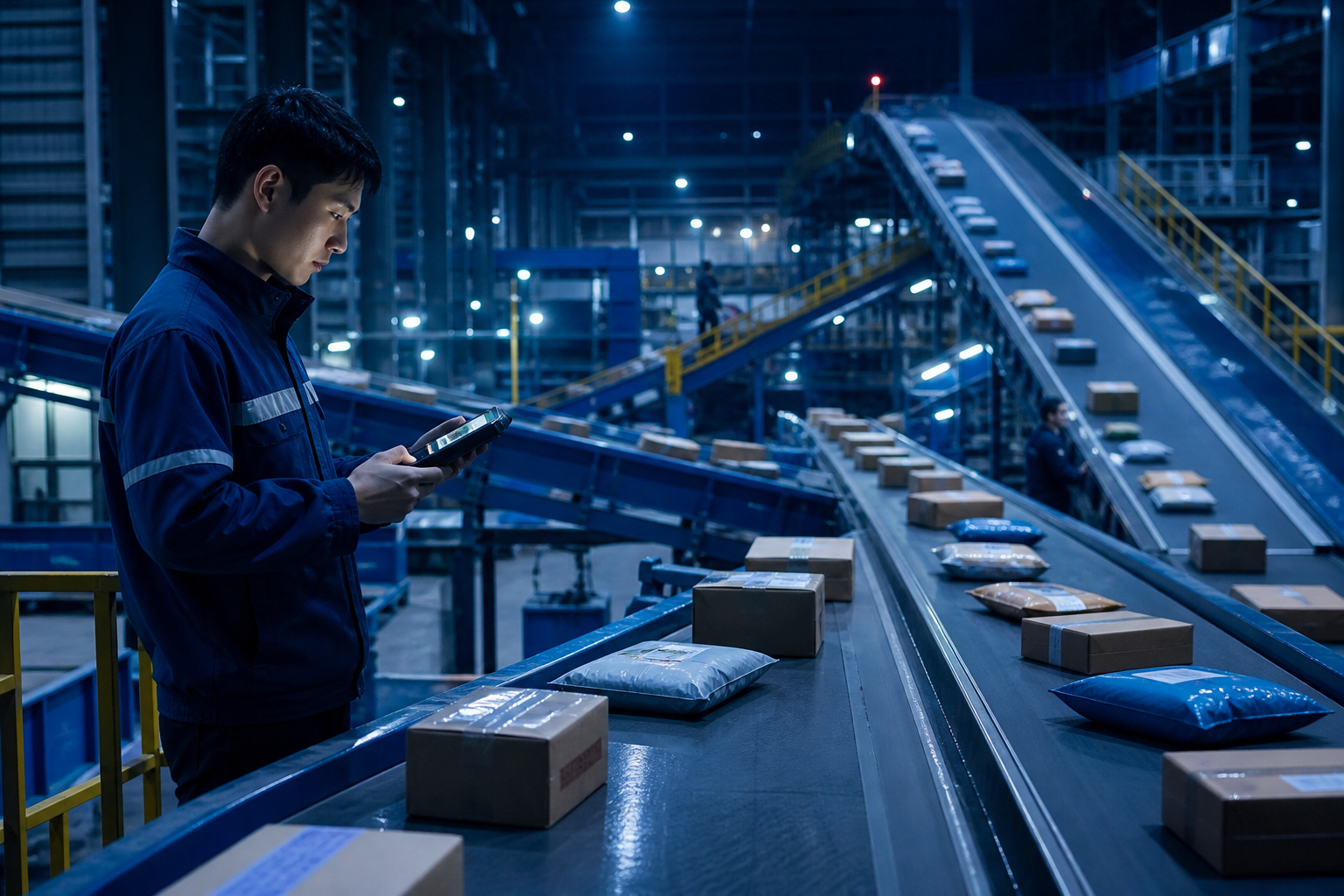
Blue Dart operates in express logistics, where shipment speed, tracking visibility and document accuracy are central to customer value. GST and e-way bill digitisation did not remove the need for operational control; it changed what control meant.
Situation: Indian express logistics had to serve customers moving goods across states, categories and documentation requirements. In a GST environment, interstate movement became more standardised, but shipment-level compliance data became more important.
The move: The winning logic for an express player is not merely “run more vehicles.” It is to integrate customer booking data, invoice information, shipment tracking, hub sorting, vehicle assignment and e-way bill readiness into one reliable operating rhythm.
Outcome and lesson: The primary driver is a compliance-ready national operating model. Supporting drivers are scanning discipline, hub-and-spoke execution, trained frontline teams, customer data capture and exception management. The lesson for interviews: tax reform creates opportunity only when operations can absorb the new rulebook.
How AI Changes Indirect Tax Reform and Supply Chain Consequences
AI is making this topic more operational, not less. The biggest shift is that tax, invoice and logistics data can now be analysed continuously instead of only during audits.
For a next-level operations answer, connect tax-data visibility with replenishment decisions through using AI for inventory optimisation and replenishment.
Interview Relevance
“How did GST or indirect tax reform change supply chain decisions in India?”
Use the phrase “tax-neutral network design”. It signals that you understand both finance and operations.
Common Mistake
The costly mistake is saying, “GST reduced the number of warehouses.” That is too shallow. The one-line fix: GST reduced tax-driven warehousing, but the final network still depends on demand density, service promise, inventory risk, real estate and compliance capability.