
Electronics, Semiconductor & Component Manufacturing in India
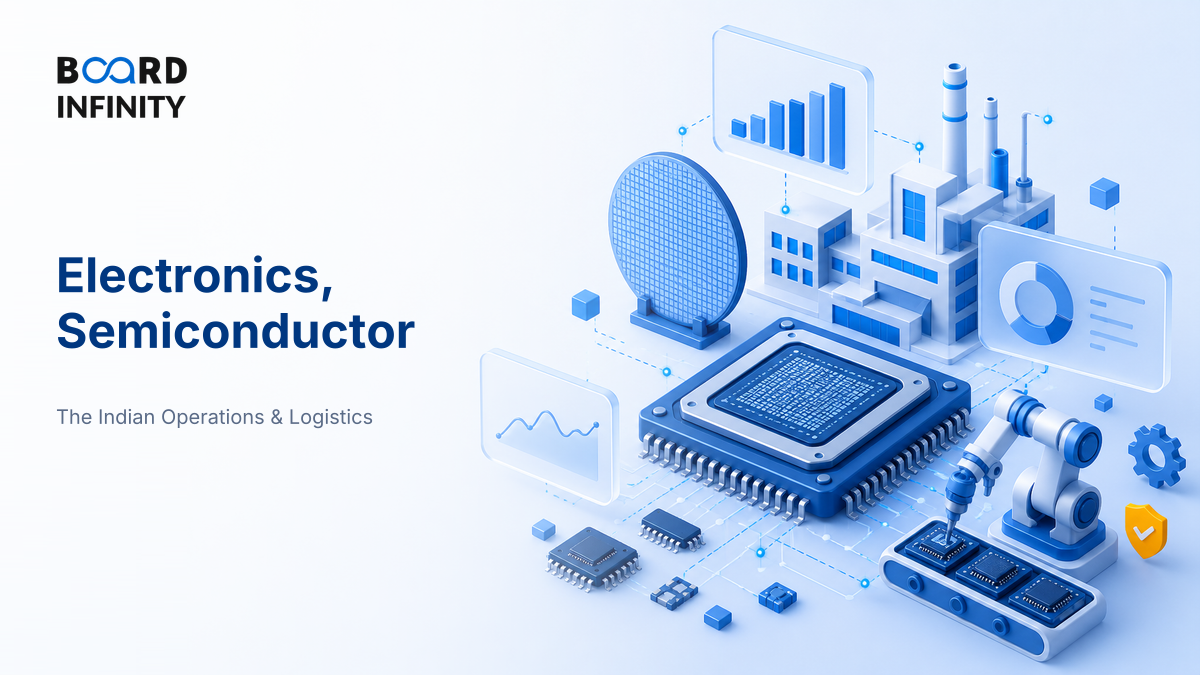
On a surface-mount line in Noida, reels of tiny resistors feed into machines faster than the eye can follow, while a technician watches one screen for placement errors and another for component shortages. A smartphone may look like one product, but behind it sits a layered system of chips, displays, PCBs, batteries, camera modules, contract manufacturers, cleanrooms, import dependencies and policy incentives.
- Electronics manufacturing converts components into finished devices; semiconductor manufacturing creates and packages the chips inside those devices.
- India is stronger today in EMS, final assembly, PCB assembly and selected components than in advanced wafer fabrication.
- The industry logic is a funnel: policy support and capex matter only if they pass through qualification, yield improvement and customer nomination.
- Key operating metrics are yield, DPPM, OEE, OTIF, inventory turns and local value addition.
- Semiconductor strategy is not just “build a fab”; it also includes OSAT, compound semiconductors, design, chemicals, gases, substrates, tools and skilled operators.
- The biggest risks are import dependence, technology obsolescence, low yield learning, customer concentration and geopolitical supply shocks.
- In interviews, answer with the value chain first, then India’s position, economics, policy drivers, risks and a practical company-level strategy.
Big Picture - What This Industry Really Is
Think of India’s electronics and semiconductor manufacturing push as a ladder, not a single factory. At the visible end are phones, TVs, wearables, appliances and chargers. Below them are printed circuit board assemblies, camera modules, displays, passive components, batteries and connectors. Deeper still are semiconductor design, wafer fabrication, assembly, testing and materials.
The funnel matters because announcements are easy; repeatable manufacturing is hard. A plant wins only when customers trust its process capability, suppliers can feed it reliably, and the line produces at acceptable cost and quality.
Core Explanation - The Value Chain, Economics and India Angle
Electronics manufacturing is the industrial process of sourcing parts, assembling circuits, testing devices and delivering finished electronic products at scale.
Semiconductor manufacturing is the process of designing, fabricating, assembling, packaging and testing integrated circuits used inside electronic products.
Component manufacturing sits between the two: it includes PCBs, connectors, passives, camera modules, batteries, displays, sensors, power modules, enclosures and other subassemblies.
The Five Layers You Must Be Able to Explain
The managerial point is simple: each layer has different economics. EMS is usually high-volume and margin-sensitive. Components depend on process control and tooling. Semiconductors require high capex, long qualification cycles and deep technical know-how. A strong answer separates these layers instead of saying “India should make chips.”
India’s Current Position - Strong in Assembly, Building Depth in Components and Chips
India’s electronics manufacturing story has three simultaneous tracks. First, large-scale electronics assembly has expanded through domestic demand, export ambition and manufacturing incentives. Second, component localization is becoming strategically important because final assembly without local components can leave value addition shallow. Third, semiconductor policy has moved from aspiration to ecosystem-building through the India Semiconductor Mission, which focuses on semiconductor and display manufacturing, design and related ecosystem development.
Do not say, “India is becoming a semiconductor hub” as a blanket statement. Say, “India is scaling electronics assembly, trying to deepen component localization, and selectively building semiconductor design, packaging and fabrication capability.”
Where Management Decisions Sit
This sector is not only about engineering. MBA roles enter through sourcing, vendor development, cost modelling, production planning, category strategy, customer account management, operations excellence, government relations and business development.
For example, a power management IC, a custom display module and a standard resistor should not be bought the same way. Strategic parts require dual sourcing, long-term contracts, qualification planning and supplier development. Standard parts can use catalogue buying, framework agreements and inventory discipline. If you need to strengthen this logic, revise category strategy and the supply positioning matrix.
Key Metrics to Track in Electronics and Semiconductor Manufacturing
These metrics convert the industry from vague policy talk into operating reality. In interviews, use them to show that you understand factories, not just headlines.
For supplier-heavy categories, combine these metrics with formal supplier selection scorecards and evaluation. For cost discussions, a basic should-cost analysis and cost breakdown model helps you separate material cost, conversion cost, yield loss, logistics, tooling amortisation and margin.
A Small Worked Example - Reading a Manufacturing Line
Suppose a PCB assembly line produces 50,000 boards in a week. Out of these, 48,500 pass final inspection the first time, and 120 boards are confirmed defective after rework and testing.
The lesson: in electronics manufacturing, quality and cost are linked. A low purchase price can become expensive if it creates scrap, rework, field failures or customer penalties.
Definitions You Can Say in One Breath
- EMS: outsourced manufacturing services that assemble, test and deliver electronic products for brand-owning customers.
- ODM: a manufacturer that designs and manufactures a product, often for sale under another company’s brand.
- Fab: a fabrication plant where semiconductor wafers are processed to create integrated circuits.
- OSAT: outsourced semiconductor assembly and test - packaging chips and verifying performance after wafer fabrication.
- Yield: the percentage of units produced that meet specifications without unacceptable defects.
- BOM: the bill of materials listing every part, quantity and specification required to build a product.
Case Study - Dixon Technologies: Scaling Indian EMS Beyond Simple Assembly
Dixon shows how an Indian EMS company can scale by combining customer relationships, multi-category manufacturing, operating discipline and localization efforts.
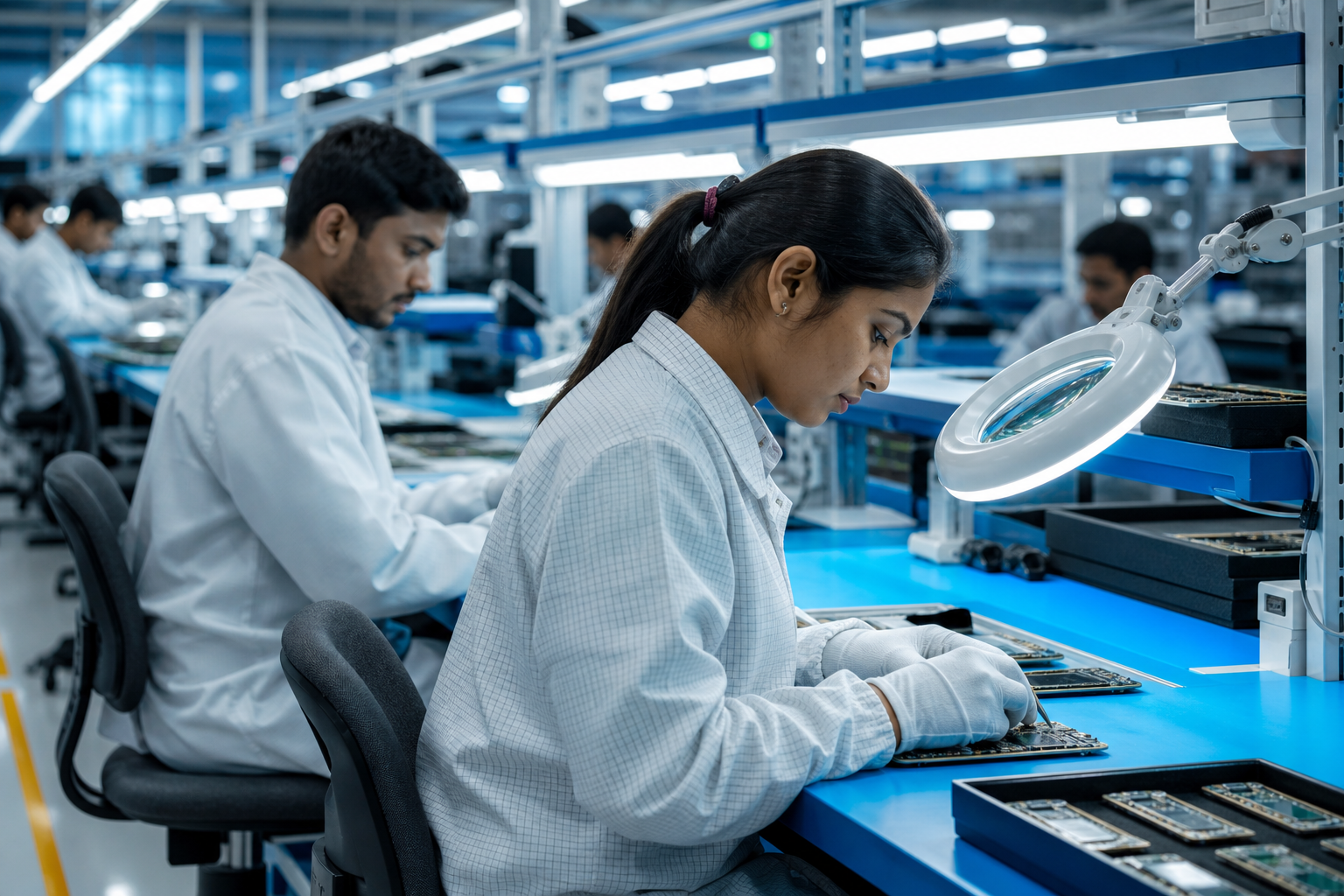
Situation: India’s electronics brands and global OEMs needed local manufacturing partners that could deliver scale, quality and compliance across categories such as phones, consumer electronics, lighting and appliances. For a contract manufacturer, the challenge was not simply to add capacity; it was to win customer trust in multiple product lines while managing thin margins and volatile component supply.
The move: Dixon built itself as a multi-category electronics manufacturing services player rather than a single-product assembler. The primary driver was its EMS operating model - serving brand owners through manufacturing scale and execution. Supporting drivers included category diversification, customer acquisition, backward integration in selected areas, plant-level process control, and the ability to work within India’s policy-driven manufacturing environment.
The result or lesson: The strategic lesson is that EMS success comes from repeat orders, not one-time assembly. A company must keep improving yield, delivery reliability, supplier depth and cost competitiveness. For an MBA interview, Dixon is useful because it proves the difference between “manufacturing in India” and “building a scalable manufacturing system.”
A shallow answer says Dixon benefits from incentives. A complete answer says incentives help, but the durable advantage comes from execution across customers, suppliers, factory systems and localization.
How AI Changes Electronics, Semiconductor & Component Manufacturing
AI is changing this sector at three practical points, not as a buzzword.
The immediate MBA use case is planning and procurement. For example, load a company’s annual report, product categories and supplier-risk notes into NotebookLM, then ask: “Map the top component dependencies, likely supply risks, and interview questions on manufacturing strategy.” For replenishment-heavy roles, revise using AI for inventory optimisation and replenishment.
AI can recommend actions, but semiconductor and electronics decisions still need engineering validation, customer approval and process qualification. A model cannot simply “change a component” without reliability testing.
Interview Relevance
“India wants to become a major electronics and semiconductor manufacturing hub. Where exactly is the opportunity, and what risks should a company watch before investing?”
If the interviewer asks about semiconductors, do not jump straight to advanced fabs. Mention OSAT, design services, compound semiconductors, power electronics and materials because these may be more realistic entry points for ecosystem building.
Common Mistake
The single biggest mistake is treating electronics and semiconductor manufacturing as the same thing. It costs candidates because EMS, components, OSAT and fabs have different economics, risks and capabilities. One-line fix: always map the value chain first, then discuss India’s position in each layer.