
Warehousing Real Estate, Quality Supply & Logistics Parks
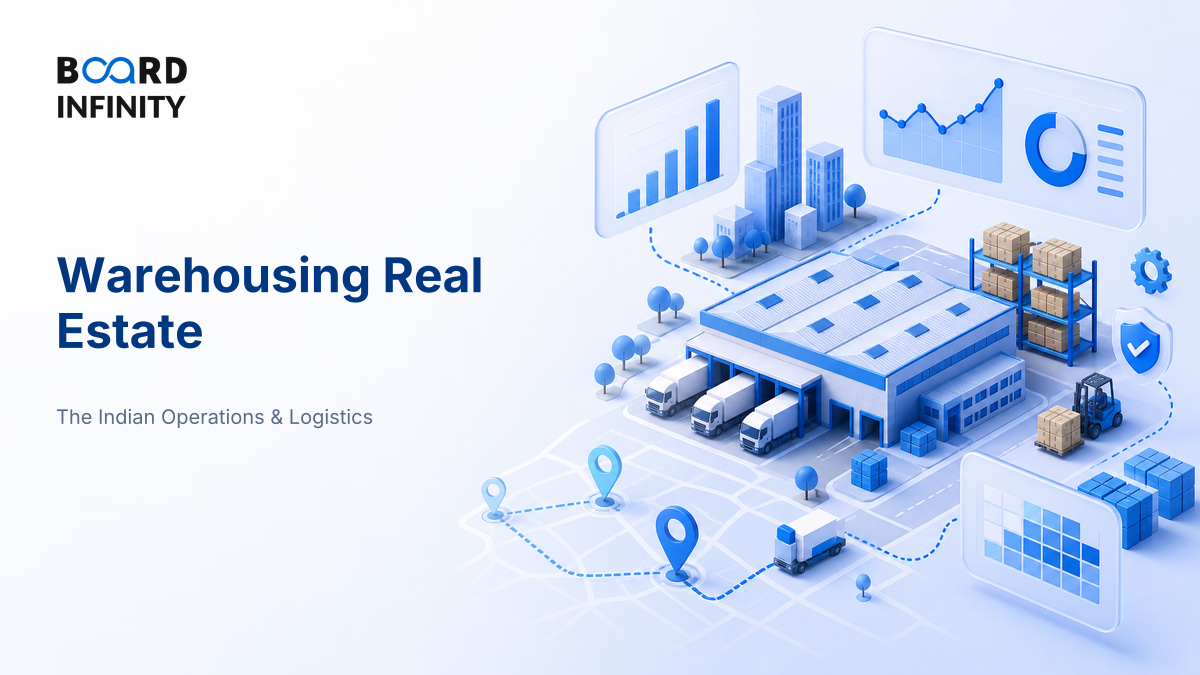
Why does a warehouse 20 km outside the city sometimes beat a cheaper one 5 km away? Because in warehousing real estate, the real product is not the building - it is speed, reliability, compliance and network access bundled into one location decision.
- Warehousing real estate means physical storage infrastructure designed to move goods faster, safer and at lower total logistics cost.
- Quality supply is Grade-A, compliant, scalable space with good access, floor strength, height, docks, fire safety and professional facility management.
- Logistics parks win when they combine location, transport connectivity, shared infrastructure and tenant ecosystems - not just cheap land.
- The core trade-off is rent versus service level: the cheapest shed can become expensive through delays, damages, stockouts and poor truck turnaround.
- Key KPIs include space utilization, throughput per square foot, dock turnaround time, OTIF, occupancy and total logistics cost as a percentage of sales.
- For interviews, evaluate a warehouse through four lenses: location, building quality, operating economics and strategic fit.
Big Picture: A Warehouse Is a Node in the Supply Chain, Not a Box
The easiest way to understand warehousing real estate is to stop thinking like a real estate broker and start thinking like a supply chain manager. The building is only one layer; value is created when the site improves inventory availability, vehicle movement, labour productivity and customer service.
Core Explanation: What Makes Warehousing Real Estate Valuable?
Warehousing real estate is industrial property used for receiving, storing, processing and dispatching goods across supply chains. It includes standalone warehouses, fulfilment centres, cold stores, built-to-suit facilities, in-city distribution centres and large logistics parks.
Quality supply refers to modern, compliant warehouse stock that can support reliable operations. For an MBA answer, do not define quality only as "new construction." Quality means the warehouse reduces operating friction.
A logistics park is an integrated industrial zone where multiple warehouses, transport access, parking, utilities and support services are planned together. The best parks behave like supply chain platforms: they let tenants share infrastructure, access labour, reduce truck congestion and scale without changing locations.
The 2x2 Matrix: Classifying Warehouse Real Estate Quality
In interviews, this matrix is your fastest way to sound structured. Plot any warehouse on two axes: building quality and network connectivity. A facility with only one strength is incomplete.
Prime Park: Strong road access, compliant construction, truck circulation, tenant ecosystem and professional management. This is ideal for e-commerce, 3PL, FMCG, auto components and electronics distribution.
Good Shed: Modern building but poor location. It may look impressive but cause higher line-haul cost, late deliveries or weak labour access.
Flow Node: Excellent location but poor structure. Useful for temporary storage, but risky for high-value inventory, automation or compliance-heavy sectors.
Cost Trap: Low rent, weak access and poor building quality. Candidates often recommend this because it looks financially attractive; operators reject it because service failures erase rent savings.
Definitions You Can Say in One Breath
- Warehouse: A facility for receiving, storing, protecting, processing and dispatching goods within a supply chain.
- Grade-A warehouse: A modern, compliant warehouse with strong specifications, safety systems, access, scalability and professional management.
- Logistics park: An integrated cluster of warehouses, transport access, utilities and support services for efficient goods movement.
- Built-to-suit: A facility designed for a specific occupier's operational, compliance and expansion requirements.
- Last-mile fulfilment centre: A small urban or near-urban node positioned close to customers for faster deliveries.
Key Metrics: How to Judge a Warehouse Like an Operator
When a question asks whether a warehouse is "good," answer with metrics. Real estate teams may start with rent; supply chain teams care about total performance.
Notice the logic: warehouse rent is only one line item. If a higher-rent Grade-A facility improves OTIF, reduces damage, enables automation and cuts vehicle delays, it can lower total logistics cost. For the inventory side of this decision, revise setting inventory policy for a multi-product business.
Mini Case Study: TVS Industrial & Logistics Parks
TVS Industrial & Logistics Parks shows how Indian warehousing real estate has moved from isolated sheds to professionally managed, specification-led logistics infrastructure.
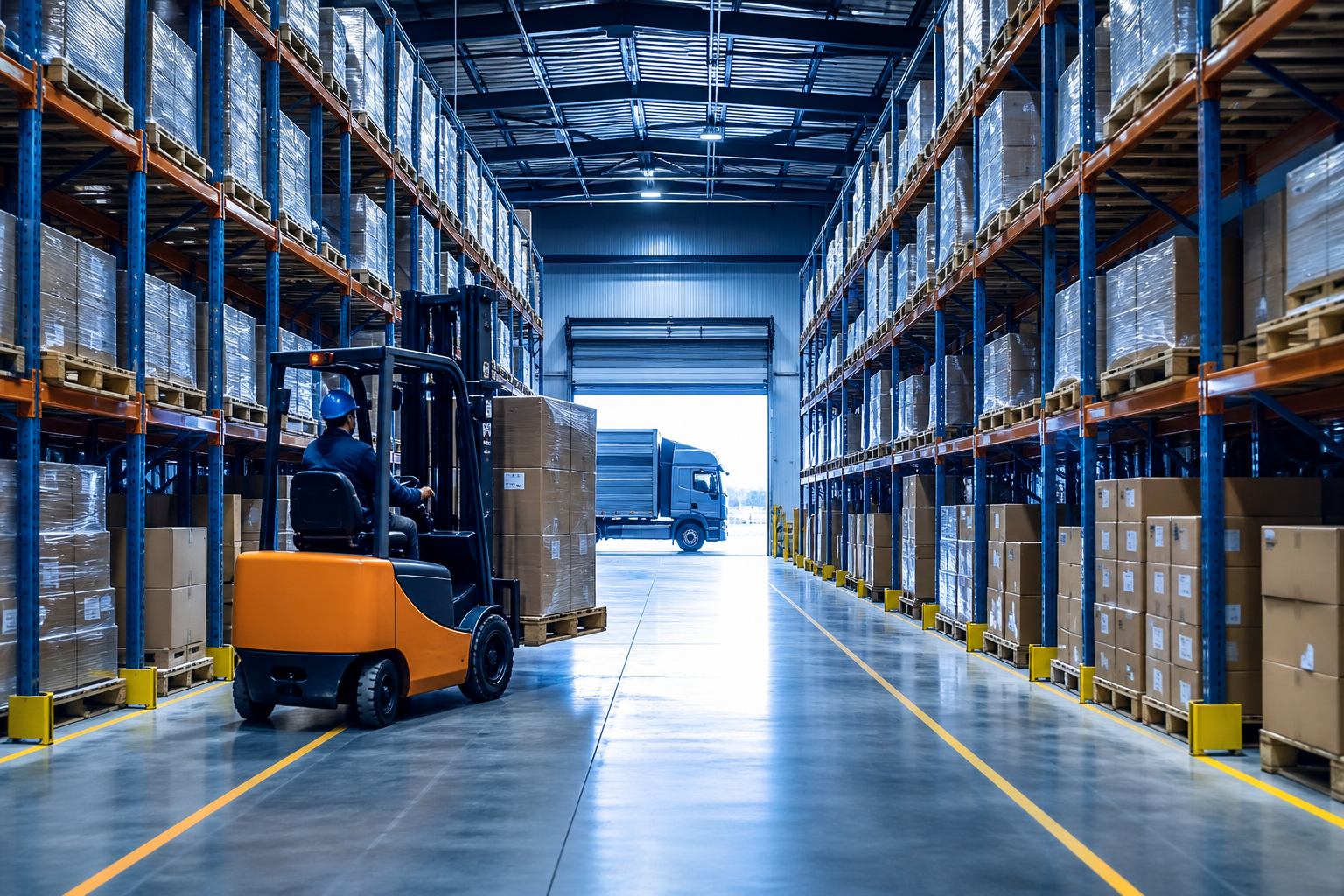
TVS Industrial & Logistics Parks operates in the Indian industrial and logistics infrastructure space, where customers increasingly expect compliant, scalable and professionally managed facilities. The strategic tension is familiar: occupiers want lower rent, but they also want faster dispatch, safer inventory, room to expand and fewer compliance surprises.
Situation: Indian supply chains historically used many small, fragmented warehouses close to tax or local distribution boundaries. As supply chains became more national, e-commerce and manufacturing customers needed larger, better-connected, higher-quality facilities.
The move: TVS ILP's model reflects the shift toward organized warehousing: planned logistics parks, build-to-suit capabilities, standard operating infrastructure, better truck access and space that can serve manufacturing, retail, FMCG, auto and third-party logistics tenants.
Outcome and lesson: The lesson is not "build bigger sheds." The primary driver is organized, operations-ready supply. Supporting drivers include location near industrial and consumption clusters, scalable design, tenant-specific customization, professional facility management and the credibility needed by large occupiers.
So what: A high-quality logistics park creates value by reducing uncertainty - in access, compliance, scalability and operations. That is why serious occupiers evaluate warehouses through total network cost, not only rent per square foot.
How AI Changes Warehousing Real Estate, Quality Supply & Logistics Parks
AI is changing this topic in three practical ways, and each one matters for interviews in 2026.
The AI point is not that algorithms replace real estate judgment. They make the judgment more evidence-based. A supply chain leader still decides the network strategy, but AI can test more location and capacity scenarios faster.
Use NotebookLM: upload this lesson, a company annual report and a logistics park brochure, then ask, "Evaluate this warehouse decision using location, quality, economics and strategic fit." Follow up by asking for five interview questions and model answers.
If you want the operating link between warehouses, reorder points and replenishment logic, revise using AI for inventory optimisation and replenishment.
Interview Relevance
"A retail company wants to lease a warehouse near Mumbai. One option has low rent but weak infrastructure; another is in a Grade-A logistics park at higher rent. How would you evaluate the decision?"
Say this line: "I would not compare warehouses on rent alone; I would compare total logistics cost and service reliability." It instantly moves your answer from real estate to business strategy.
For lease terms, SLAs and incentives with warehouse operators or 3PL partners, revise contracting, incentives and service agreements.
Common Mistake
The mistake: Choosing the warehouse with the lowest rent per square foot. Why it costs candidates: it ignores transport, delays, damages, compliance, stockouts, scalability and customer service. One-line fix: evaluate warehouses on total logistics cost and service level, with rent as only one component.