
India's Logistics Cost Problem and What Is Being Done
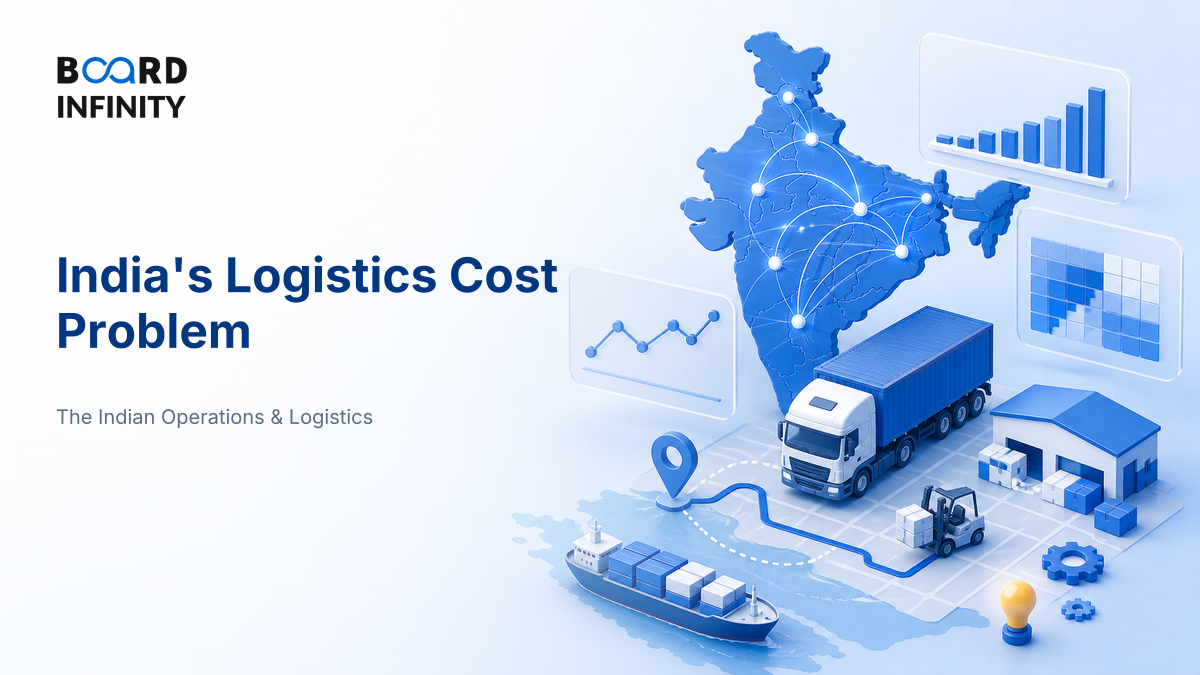
A truck carrying FMCG cartons leaves a plant outside Pune, waits at a congested loading bay, loses hours at city entry restrictions, reaches a distributor late, and quietly turns every delay into working capital. That is India’s logistics cost problem in its most visible form - not one dramatic expense, but thousands of small frictions added to every tonne, pallet and invoice.
- Logistics cost is the total cost of moving, storing and coordinating goods from origin to customer - not just freight.
- India’s problem is a landed-cost problem: transport, warehousing, inventory, delays, compliance and poor load utilisation combine.
- The biggest root causes are fragmented transport, road-heavy movement, infrastructure gaps, documentation friction, and weak shipment visibility.
- What is being done: PM GatiShakti, the National Logistics Policy, multimodal parks, dedicated freight corridors, ULIP-style data integration and GST-enabled network redesign.
- Companies reduce logistics cost by network redesign, rail/coastal shift, better forecasting, warehouse automation, 3PL contracts and lower inventory buffers.
- Track the issue with six metrics: logistics cost as % sales, freight cost per tonne-km, OTIF, truck turnaround time, inventory days and warehouse cost per order.
- The interview-safe answer: define the cost stack, diagnose root causes, separate policy levers from company levers, and end with measurable KPIs.
Big Picture: It Is Not a Freight Problem, It Is a Landed-Cost Problem
When candidates say “India’s logistics cost is high because transport is expensive,” they miss the point. Freight is only the visible line item. The real issue is that slow, uncertain and fragmented movement forces firms to hold extra inventory, use more warehouses, pay for idle assets and lose service reliability.
Core Explanation: Why India’s Logistics Cost Becomes High
Logistics cost means the full cost of moving, storing and controlling goods until they reach the customer. In practice, it includes transport cost, warehousing cost, inventory carrying cost, packaging and handling, damage, documentation, coordination and delay costs.
The problem becomes serious because India has massive geographic demand, highly fragmented trucking, uneven warehousing quality, variable road congestion, port and rail bottlenecks in some lanes, and many small shippers who cannot consolidate loads. The result is not just higher cost - it is higher uncertainty.
The Cost Stack: What Actually Adds Up
Notice the compounding effect: a late truck does not only increase transport cost. It also increases safety stock, warehouse congestion, customer complaints and sometimes expensive emergency dispatches.
The Root Causes: Five Frictions Behind the Problem
This is why logistics reform must combine roads, rail, ports, warehouses, digital platforms and firm-level operating discipline. A new highway helps, but it does not automatically fix poor load planning or excess inventory.
What Is Being Done: The Reform Funnel
India’s response is moving from isolated infrastructure building to integrated logistics planning. The PM GatiShakti National Master Plan focuses on coordinated infrastructure planning, while the DPIIT Logistics Division anchors national logistics policy initiatives and logistics ecosystem development.
There are two levels of action: public-system levers that improve national logistics productivity, and firm-level levers that reduce a company’s own landed cost.
The key point: government can create capacity and reduce systemic friction, but companies still have to redesign networks, contracts and inventory policies. For example, firms that improve replenishment using AI-based inventory optimisation and replenishment can reduce the buffer stock that unreliable logistics often creates.
The Company Playbook: How Firms Actually Lower Logistics Cost
For a company, logistics cost reduction is not “negotiate lower freight rates.” That is the shallow answer. The better answer is to redesign the system so fewer kilometres, fewer touches, fewer exceptions and fewer emergency shipments are needed.
Where outsourcing is involved, the contract matters as much as the carrier rate. A low freight quote with weak service levels can create hidden inventory and stockout costs; this is why logistics managers must understand contracting, incentives and service agreements before choosing a 3PL partner.
Metrics to Track: Six Numbers That Make the Problem Measurable
Do not discuss logistics cost only as a national headline. In an interview, convert it into measurable operating metrics. Good performance depends heavily on industry, product value density and service promise, so use peer benchmarks and internal trend improvement rather than one universal target.
The interviewer will respect this because you are showing the trade-off: a company can cut freight cost and still damage the business if OTIF collapses or inventory days rise.
Definitions You Can Say Clearly
- Logistics cost: Total cost of transporting, storing, handling and coordinating goods from origin to customer.
- Landed cost: Total cost incurred to make a product available at the customer or selling location.
- Multimodal logistics: Movement of goods using two or more modes such as road, rail, air, coastal or inland waterways.
- OTIF: The percentage of orders delivered on the promised date and in the promised quantity.
Case Study: Maruti Suzuki and Rail-Led Finished Vehicle Logistics
Maruti Suzuki shows how an Indian manufacturer can attack logistics cost by shifting suitable finished vehicle movement from road-only dispatch to a more rail-led, network-aware model.
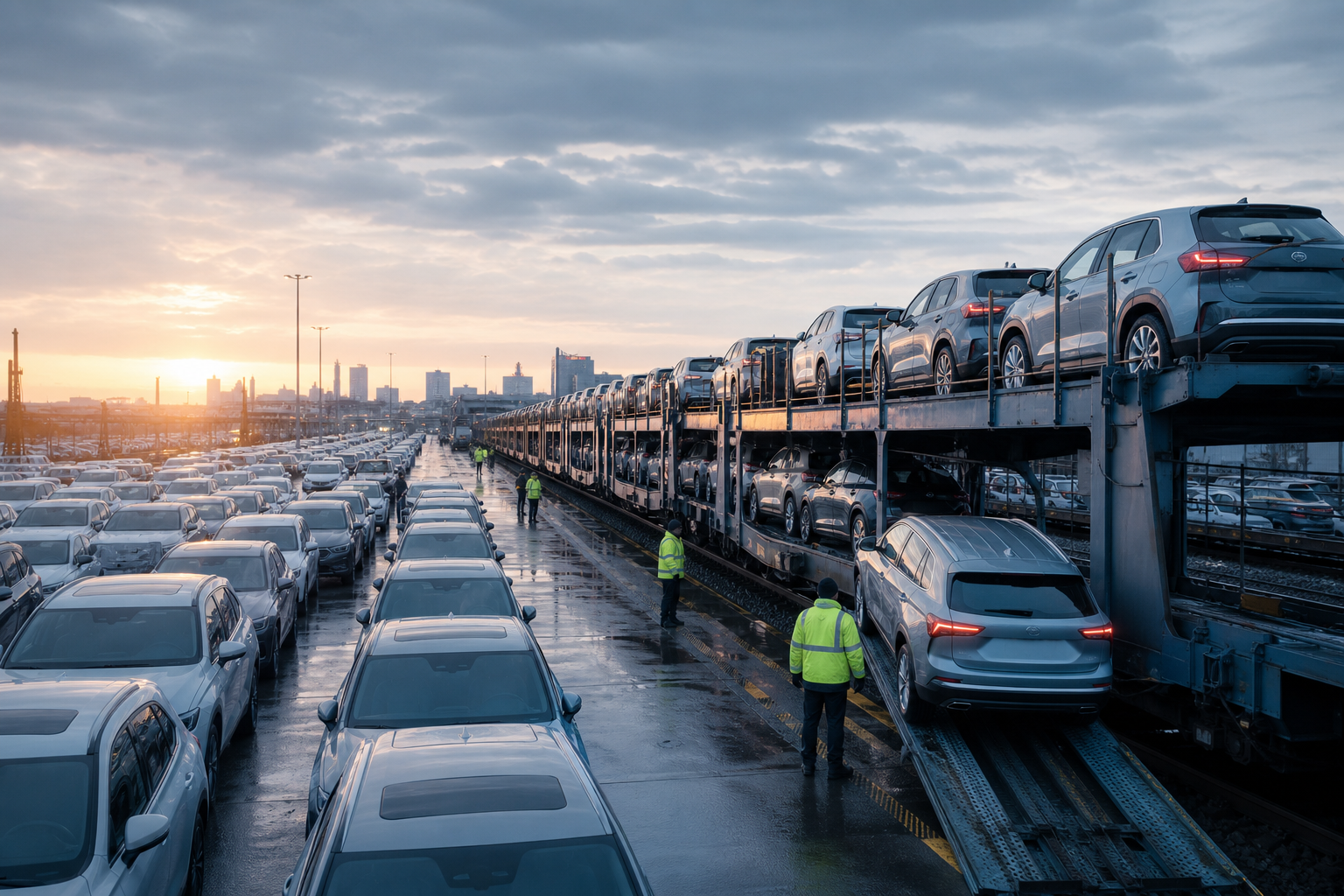
Situation: Finished vehicle logistics is tough because cars are bulky, damage-sensitive and geographically dispersed across dealers. A road-only model gives flexibility, but it can create congestion exposure, driver availability issues, damage risk, fuel cost pressure and inconsistent delivery reliability across long distances.
The move: Maruti Suzuki has publicly emphasised rail-based vehicle dispatch as part of its outbound logistics approach, supported by plant-level coordination, dealer demand planning and logistics partners. The primary driver is modal shift for suitable long-haul movement. Supporting drivers include better dispatch planning, aggregation of vehicle loads, alignment with dealer demand and reduction of avoidable road dependence.
The lesson: The win is not “rail is cheaper.” The real lesson is that logistics cost falls when the company matches the right mode to the right lane, synchronises production with dispatch, and protects service quality. A rail-led move without demand planning would simply shift the bottleneck from road to yard.
How AI Changes India’s Logistics Cost Problem
1. AI improves demand and dispatch planning. Better forecasts help firms decide what to produce, where to stock and when to dispatch. This reduces emergency freight, warehouse congestion and excess inventory - three hidden contributors to logistics cost.
2. AI enables dynamic routing and exception management. Logistics teams can use traffic, weather, carrier performance and delivery constraints to flag likely delays before they become customer failures. The value is not only route optimisation; it is earlier intervention.
3. AI strengthens logistics procurement and contract review. Shippers can analyse lane-wise spend, compare carrier performance, detect rate leakage and review 3PL contract clauses faster. The practical next step is to connect logistics spend analytics with sourcing decisions, similar to the logic in using AI in spend analysis, sourcing and contract review.
Use NotebookLM: upload a company annual report, a logistics policy note and your class notes; ask it to generate “five interview questions on how this company can reduce landed cost without hurting OTIF.” Then force every answer to include one metric.
Interview Relevance
“India’s logistics cost is considered high. What are the main reasons, and what can government and companies do to reduce it?”
Use the phrase “cost-service trade-off.” It signals maturity because logistics leaders are not trying to minimise cost blindly; they are trying to reduce landed cost while protecting availability and reliability.
Common Mistake
Mistake: Saying “build more roads” or “reduce fuel cost” as the main solution. Why it costs candidates: it makes the answer sound one-dimensional and ignores inventory, warehousing, modal mix and data visibility. Fix: always answer in three layers - cost stack, root causes, and policy plus company levers.