
National Logistics Policy and Multimodal Infrastructure
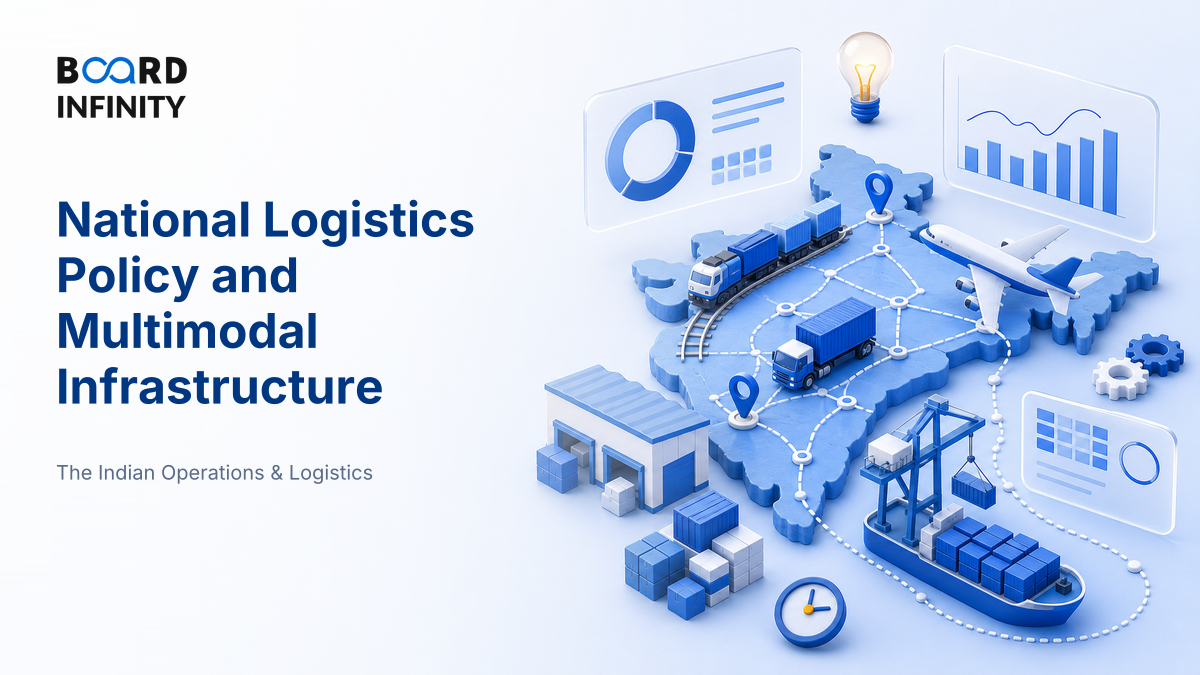
The biggest misconception about India’s National Logistics Policy is that it is “just more roads.” It is not. The real idea is simpler and more powerful: make goods move across road, rail, ports, airports and warehouses as one coordinated system, not as broken handoffs between ministries, transporters and paperwork.
- National Logistics Policy is India’s policy architecture for lowering logistics friction through digital systems, standards, coordination and better service reliability.
- Multimodal infrastructure means using two or more modes - road, rail, water, air - as one planned network, not separate legs.
- PM Gati Shakti is the infrastructure planning layer; NLP is the logistics efficiency and process-improvement layer.
- The interview answer should connect cost, time, reliability, documentation, modal mix and competitiveness.
- Do not say “logistics cost will fall because highways are built.” Better answer: cost falls when mode choice, warehousing, data visibility and last-mile reliability improve together.
- For companies, the value is not only cheaper freight; it is lower inventory buffers, fewer delays, better export competitiveness and stronger network design.
Big Picture: NLP Is the Operating System for India’s Logistics Network
Think of multimodal infrastructure as the physical network and the National Logistics Policy as the operating system that makes that network usable. Roads, railways, ports and warehouses create capacity; data, standards, service levels and governance turn that capacity into reliable supply chains.
Core Explanation: What the National Logistics Policy Actually Does
The Government of India launched the National Logistics Policy in 2022 to improve logistics efficiency through integrated digital systems, standardisation, skill development, state engagement and service improvement mechanisms (Prime Minister’s Office, 2022). For an MBA answer, the key is to explain how the policy changes the logistics system from fragmented movement to coordinated movement.
The clean way to understand the policy is through four levers:
NLP vs PM Gati Shakti: Do Not Confuse the Two
PM Gati Shakti is India’s national master-planning approach for integrated infrastructure and connectivity, supported by a digital platform for coordinated planning across ministries (PM Gati Shakti portal). NLP sits on top of that logic and focuses on making logistics services faster, more reliable and easier to use.
Multimodal Infrastructure: The Real Meaning
Multimodal infrastructure means a shipment can move across multiple modes without the business treating each leg as a separate crisis. A container may move by road from a factory to an inland terminal, by rail to a port, by sea to another country, and by road again to the buyer.
The strategic point is not “rail is better than road” or “waterways are cheaper.” The right mode depends on the lane.
For example, a high-value replacement part may justify air freight because downtime is expensive. A predictable bulk shipment may suit rail or coastal shipping. A city distribution route may require road even if the long-haul leg uses rail. The best answer is always total landed cost plus service reliability, not freight rate alone.
Mini Worked Example: Why Mode Mix Beats Freight Rate Thinking
Suppose a company ships 10,000 units per month from a plant to a port. A road-only route costs 100 cost-units per unit and takes 2 days. A rail-plus-road route costs 82 cost-units per unit but adds holding and handling cost of 3 cost-units per unit.
Road-only monthly cost = 10,000 × 100 = 1,000,000 cost-units.
Multimodal monthly cost = 10,000 × (82 + 3) = 850,000 cost-units.
Saving = 150,000 cost-units, or 15%, if service reliability remains acceptable.
The interview insight: multimodal logistics should be judged on total cost, transit time, reliability, inventory impact and handling risk, not just the cheapest freight quote.
Metrics That Prove the Policy Is Working for a Business
If an interviewer asks “How will you measure impact?”, do not answer with vague phrases like efficiency and synergy. Use operational KPIs that connect policy to business outcomes.
These metrics also link naturally to procurement. A logistics contract should not reward only the lowest rate; it should include service levels, delay accountability, capacity commitments and visibility requirements. If you want to revise that next layer, connect this topic to service agreements and incentive design.
Definitions You Can Say in One Breath
- Logistics: The coordinated movement, storage and information flow that gets goods from origin to customer at required service and cost.
- National Logistics Policy: India’s policy framework for reducing logistics friction through digital systems, standards, coordination and service improvement.
- Multimodal logistics: Movement of goods using two or more transport modes under one coordinated network plan.
- Logistics node: A point where goods are stored, transferred, processed or consolidated, such as a port, warehouse or terminal.
- Corridor: A high-flow freight route connecting production, consumption, export or import clusters.
Case Study: DP World India and the Logic of Integrated Multimodal Logistics
DP World India shows why modern logistics advantage comes from linking ports, terminals, inland movement and logistics services rather than optimising one transport leg in isolation.
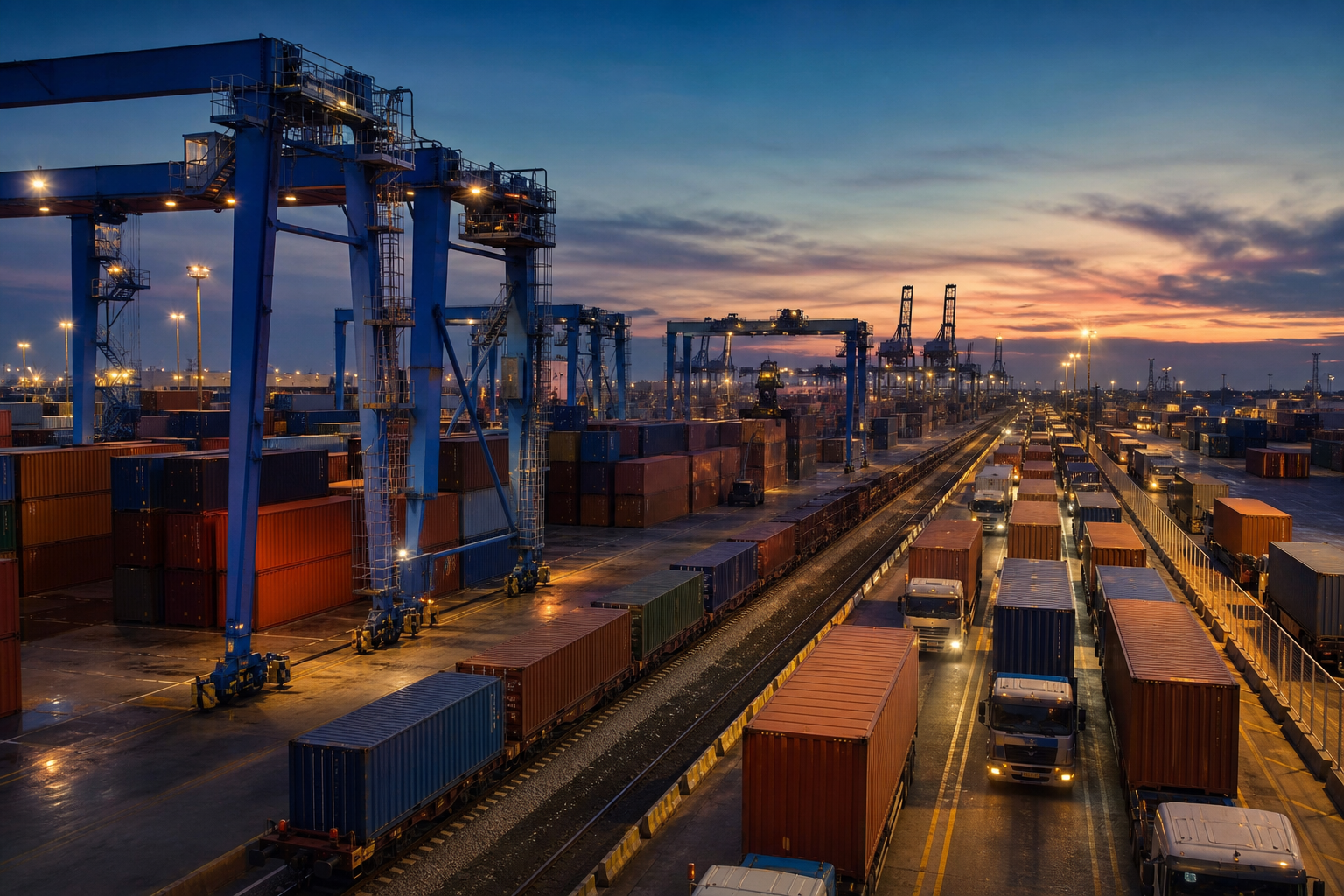
Consider the problem faced by an exporter or importer in India. The shipment may touch a factory, road transporter, inland container depot, rail connection, port terminal, customs process and shipping line. If every handoff is managed separately, the company pays in delays, buffer inventory, follow-up calls, documentation errors and uncertain delivery promises.
DP World India’s business footprint is useful for understanding the NLP logic because it spans ports and terminals, inland logistics, rail-linked movement and supply-chain services in India (DP World India). The strategic move is not merely owning transport assets; it is integrating nodes so that a customer can plan the movement as a corridor instead of negotiating every leg as a separate transaction.
The primary driver here is network integration: connecting port and hinterland logistics into one operating model. The supporting drivers are digital visibility, standard processes, multimodal optionality and customer-facing service commitments. That is exactly the mindset an interview answer should show.
For a heavy manufacturer such as a steel or cement company, the value of multimodal infrastructure is not abstract. Bulk raw materials and finished goods need predictable high-capacity corridors, while road transport remains essential for last-mile customer delivery. The so what: India’s manufacturing competitiveness depends on combining rail, road, port access, warehousing and planning discipline.
How AI Changes National Logistics Policy and Multimodal Infrastructure
AI does not replace logistics infrastructure; it makes the network smarter. In 2026, the most practical AI impact appears in three places.
The student workflow: pick a company with logistics-heavy operations, load its annual report and official logistics-policy notes into NotebookLM, and ask: “Where could multimodal infrastructure reduce cost, delay or inventory buffers for this company?” Then connect your answer to using AI for inventory optimisation and replenishment so you can discuss both national infrastructure and firm-level supply-chain decisions.
AI also changes sourcing. Large shippers can use spend analytics to identify expensive lanes, repeated detention charges, vendor concentration and poor service reliability. That makes digital procurement and spend analytics a natural next layer after this topic.
Interview Relevance
“How will India’s National Logistics Policy and multimodal infrastructure improve manufacturing competitiveness? Explain with a business example.”
Use the phrase “total landed cost plus reliability”. It instantly signals that you understand logistics as a management system, not a transport-rate negotiation.
The most common mistake is treating NLP as a highway programme and claiming logistics cost will automatically fall. That costs candidates because it ignores modal choice, terminal delays, documentation, warehousing, service reliability and coordination. Fix: answer through the chain - infrastructure, mode mix, digital visibility, standards, KPIs and business competitiveness.