
AIDA Model: The 4 Stages of the Customer Journey
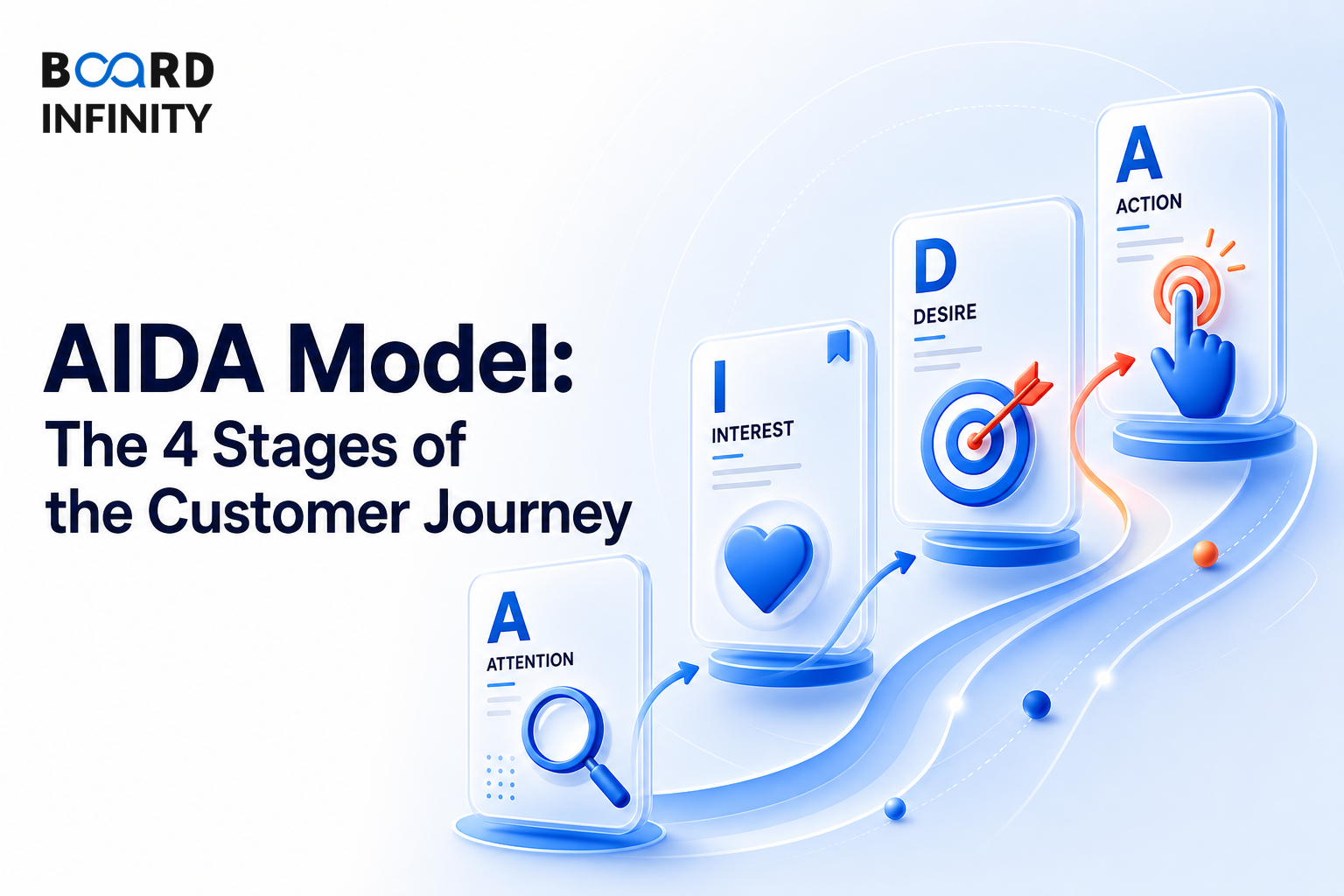
After Marketing Mix Explained: The 4Ps and 7Ps, the natural question is how promotion actually moves a customer toward purchase. The AIDA model answers that question by showing the four stages a consumer passes through during the purchasing decision process. In interviews, it helps you explain advertising as a practical funnel that turns noticing a message into completing a purchase.
- The AIDA model describes the four stages a consumer passes through during the purchasing decision process.
- It is one of the oldest and most widely used frameworks in advertising.
- The four stages are Attention - Interest - Desire - Action.
- Attention is about grabbing notice and breaking through noise.
- Interest engages with relevant information, while Desire creates emotional want and urgency.
- Action drives the conversion using clear CTA, easy checkout, and one-tap ordering.
- Some marketers add a fifth stage: Satisfaction - ensuring post-purchase satisfaction to drive repeat purchase, positive reviews, and referrals.
How AIDA Works as an Advertising Funnel
The AIDA model describes the four stages a consumer passes through during the purchasing decision process. It is one of the oldest and most widely used frameworks in advertising: Attention - Interest - Desire - Action.
The big picture is simple: first the consumer must notice the message, then engage with relevant information, then feel emotional want and urgency, and finally complete the purchase.
The AIDA model describes the four stages a consumer passes through during the purchasing decision process.
Using AIDA with Swiggy-Style Tactics
A Swiggy-style AIDA funnel begins with Attention by using a push notification such as "Hungry? Order now!" to grab notice and break through noise. It then builds Interest with relevant information, such as "50% off your favorite restaurant tonight!"
Desire is created through food images, reviews, limited-time offers, and FOMO, such as high-quality food photography with ratings. Action is completed through a clear CTA, easy checkout, and one-tap ordering, such as an "Order Now" button with saved address and payment.
Extended Model - AIDAS
Some marketers add a fifth stage: Satisfaction - ensuring post-purchase satisfaction to drive repeat purchase, positive reviews, and referrals. This is especially critical for subscription and D2C businesses.
Structuring a AIDA Model Interview Answer
"What is the AIDA model? How is it used in advertising?"
Do not stop at naming Attention - Interest - Desire - Action. Connect each stage to its objective, tactics, and a Swiggy-style example.
The most frequent error is treating AIDA as four labels instead of a consumer response sequence. It costs points because the model is useful only when each stage is linked to an objective, tactics, and the conversion path.
Conclusion
The AIDA model is a practical advertising funnel: Attention gets the consumer to notice, Interest engages them, Desire creates emotional want, and Action drives conversion. For interviews, the strongest answers explain the sequence and make it concrete with Swiggy-style tactics at each stage.