
STP Marketing Framework: Segmentation, Targeting and Positioning
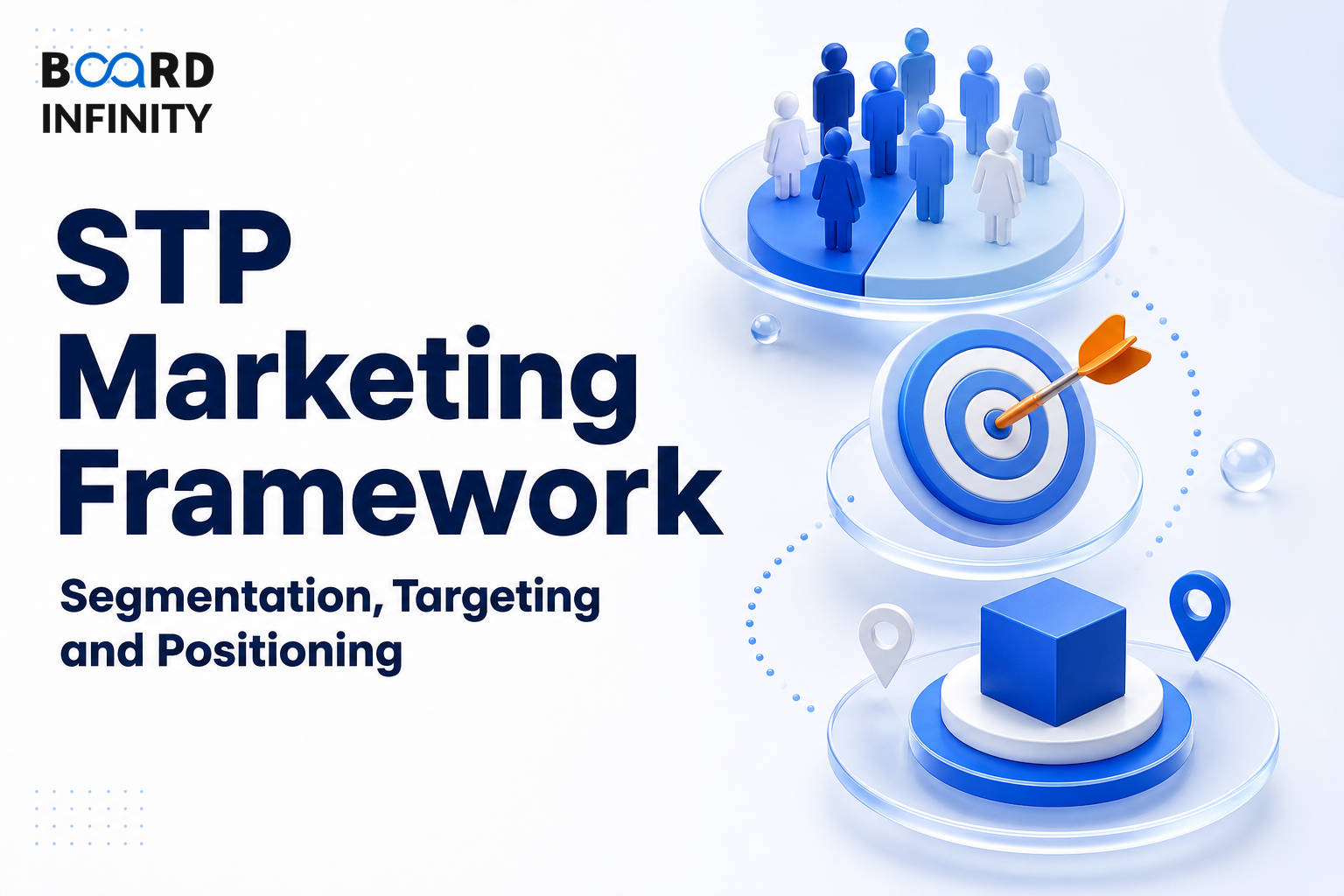
STP - Segmentation, Targeting, Positioning - is the foundational strategic framework in marketing. It helps brands identify the right customers, focus resources efficiently, and craft compelling value propositions. In interviews, STP is the first-principles structure expected before any 4Ps, communication, or campaign recommendation.
- STP is the foundational strategic framework in marketing.
- Every marketing strategy begins with STP.
- Market segmentation is the process of dividing a broad market into distinct subgroups of consumers who have common needs, characteristics, or behaviors.
- Once segments are identified, firms must evaluate and select which segments to serve.
- Positioning is about owning a space in the consumer's mind.
- Interviewers expect you to segment first, then target, then position.
- A common mistake is jumping directly to communication without establishing STP.
How STP Fits Together
STP helps brands identify the right customers, focus resources efficiently, and craft compelling value propositions. The sequence is simple: divide the market, choose the segment or segments to serve, and then define the space the brand should own in the consumer's mind.
Segmentation - Dividing the Market
Market segmentation is the process of dividing a broad market into distinct subgroups of consumers who have common needs, characteristics, or behaviors.
Targeting - Choosing Your Segment(s)
Once segments are identified, firms must evaluate and select which segments to serve.
Segment Attractiveness Criteria
After identifying segments, the next decision is whether a segment is worth serving. Segment attractiveness criteria help evaluate whether a segment can be quantified, reached, served profitably, distinguished from other segments, and acted upon through effective programs.
Positioning - Owning a Space in the Consumer's Mind
Points of Parity (POP): Associations necessary to be considered a legitimate player in the category. These are the 'must-haves' - a smartphone must have a camera, touchscreen, and app store. Without POPs, consumers won't even consider the brand.
Points of Difference (POD): Unique attributes that distinguish a brand from competitors. Must be (1) Desirable to consumers, (2) Deliverable by the company, and (3) Differentiating from competitors. Example: Volvo = Safety, Apple = Design + Simplicity.
Perceptual Mapping: A visual tool that plots competing brands on two key dimensions (e.g., price vs quality, performance vs style) to identify positioning gaps and opportunities.
"For [target market] who [need/want], [brand] is the [category] that [point of difference] because [reason to believe]."
Positioning Statement Example
"For health-conscious millennials who want convenient nutrition, Epigamia is the Greek yogurt brand that offers high-protein, low-sugar options because it uses authentic straining techniques with natural ingredients."
Structuring a STP Marketing Framework Interview Answer
"How would you market X?"
STP is the single most important framework. Start every marketing case with STP. Always justify your segmentation basis and targeting choice before jumping to the 4Ps.
Conclusion
STP helps brands identify the right customers, focus resources efficiently, and craft compelling value propositions. The final takeaway for interviews is clear: segment first, target deliberately, position sharply, and only then move to the marketing mix.
A common mistake is jumping directly to communication without establishing STP. This costs points because interviewers expect you to segment first, then target, then position before jumping to the 4Ps.