
Ansoff Matrix: The 4 Growth Strategies with Examples
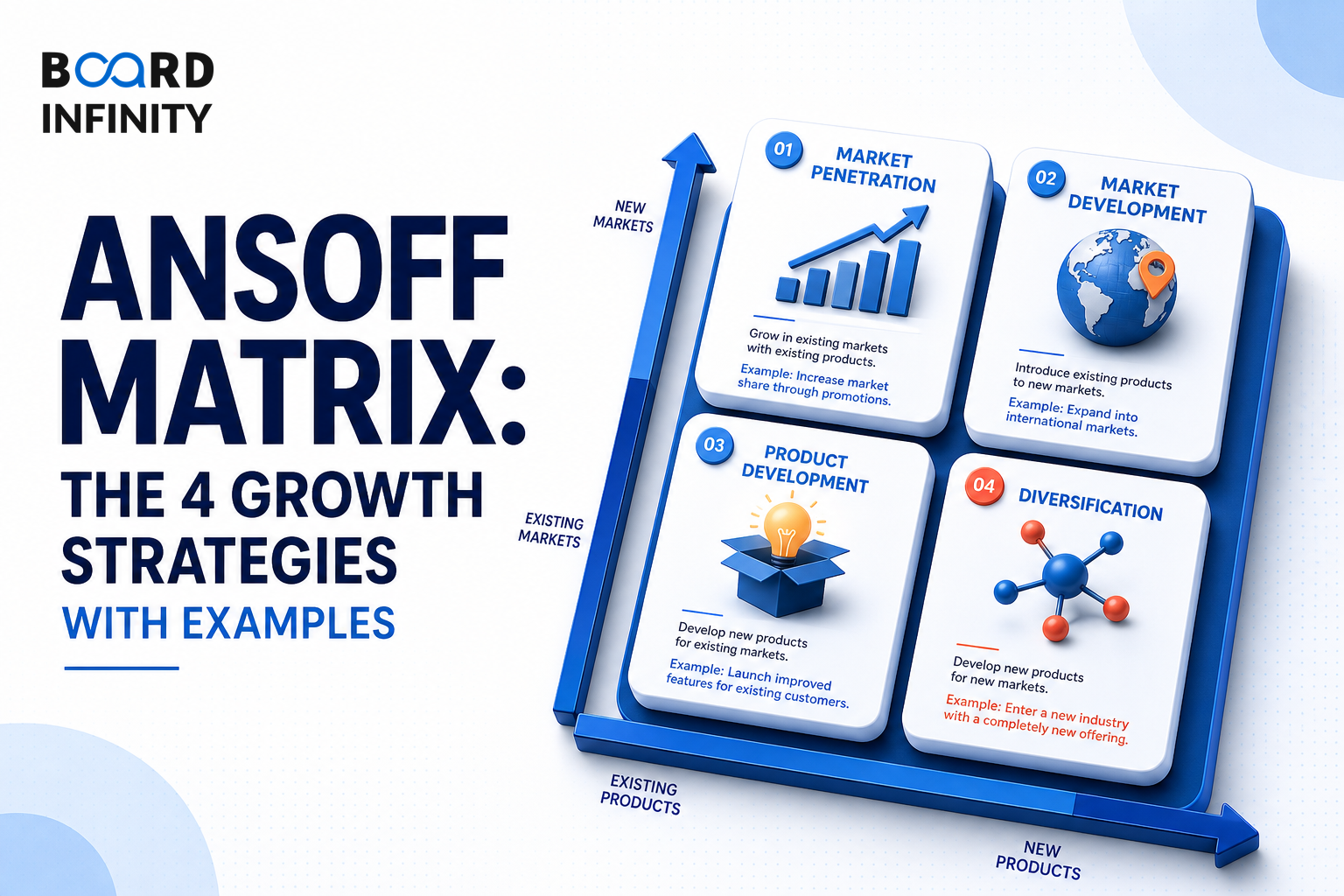
After the BCG Matrix classifies a company's business units or products based on market growth rate and relative market share, the Ansoff Matrix answers the next strategic question: how should the company grow? It matters in interviews because it gives a practical risk-based growth map for choosing between selling more of what the firm already has, creating new products, entering new markets, or diversifying completely.
- Igor Ansoff's Growth Matrix helps firms evaluate strategic growth options based on product-market combinations.
- Risk increases as you move away from existing products and markets.
- Market Penetration is the lowest risk option: grow share in current market with current products.
- Product Development means create new products for existing customers.
- Market Development means take current products to new markets/segments.
- Diversification is the highest risk option: new products in new markets.
- ITC is a textbook Ansoff example because it has executed all four strategies brilliantly.
Big Picture: Product-Market Growth Options
The Ansoff Matrix is built on two choices: existing products versus new products, and existing markets versus new markets. Risk increases as you move away from existing products and markets, making market penetration the lowest risk option and diversification the highest risk option.
Igor Ansoff's Growth Matrix helps firms evaluate strategic growth options based on product-market combinations.
The Ansoff Matrix
The Four Growth Strategies
Market Penetration is the lowest risk strategy. It means growing share in the current market with current products, such as Aashirvaad increasing distribution and shelf space.
Product Development means creating new products for existing customers. The example is Aashirvaad launching atta noodles and ready mixes.
Market Development means taking current products to new markets or segments. The example is Aashirvaad expanding to Southern states and export markets.
Diversification is the highest risk strategy. It means new products in new markets, such as ITC diversifying from tobacco to hotels, IT, FMCG, and agri-business.
ITC: A Textbook Ansoff Example
ITC has executed all four strategies brilliantly.
A shallow answer only names the four quadrants; a complete answer shows how one company can use all four growth routes across products and markets.
Structuring an Ansoff Matrix Interview Answer
"How should company X grow?"
The strongest answer frames Ansoff Matrix as a risk-based growth map, not just a list of four strategies.
Conclusion
The Ansoff Matrix helps firms evaluate growth options through product-market combinations, with risk rising as they move away from existing products and existing markets. In interviews, use it to structure how a company should grow and support the answer with examples like Aashirvaad and ITC.
The most frequent error is treating all four growth strategies as equally risky. This costs points because the core logic of the Ansoff Matrix is that risk increases as you move away from existing products and markets!