
SWOT Analysis: How to Build One with Examples
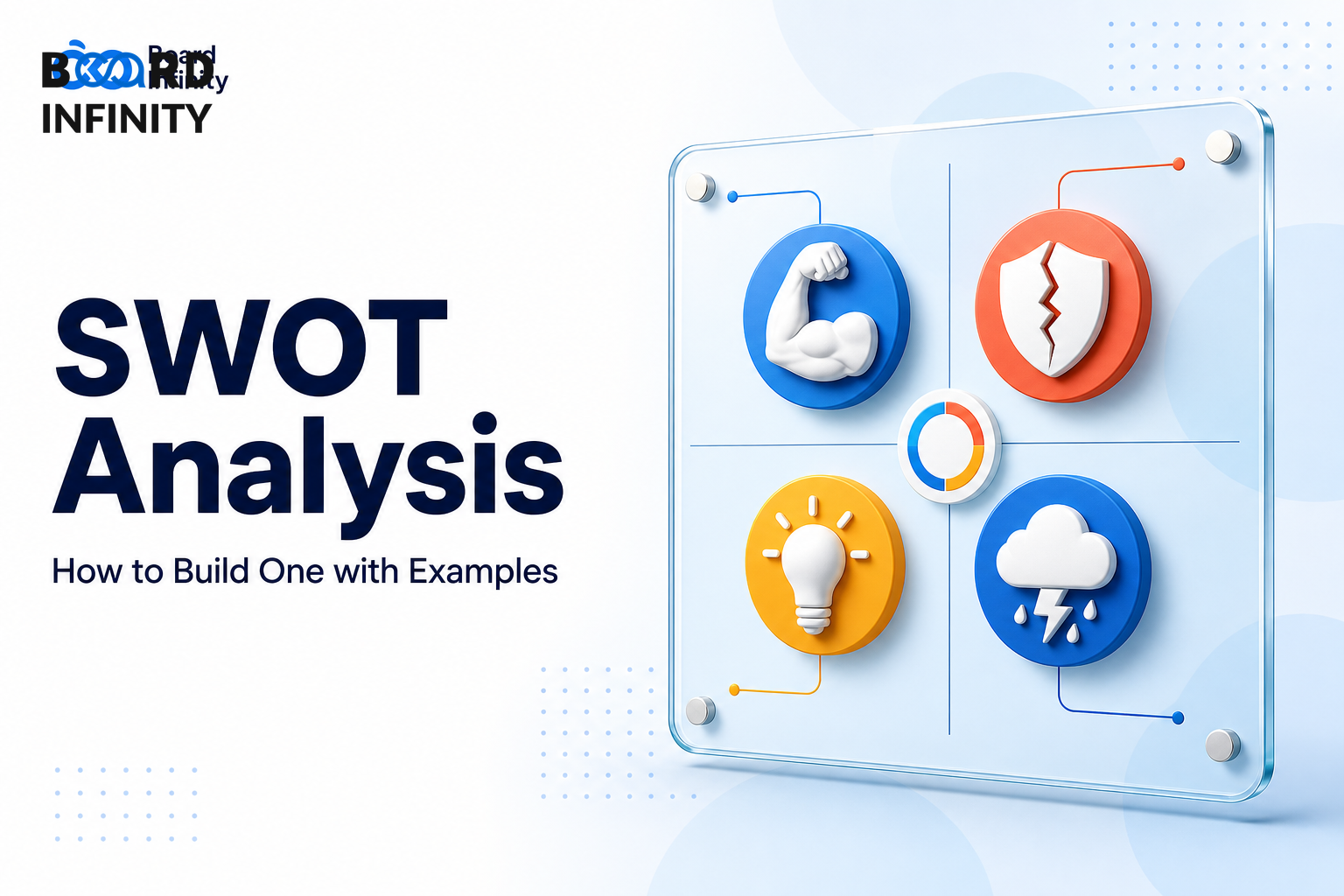
After PESTLE Analysis, which examines Political, Economic, Social, Technological, Legal, and Environmental factors affecting a business, SWOT answers the next question: how do internal capabilities and external factors shape a company's strategic position? In interviews, it matters because a SWOT without strategic implications is incomplete.
- SWOT is a strategic planning tool that evaluates both internal capabilities and external factors.
- It provides a structured way to assess a company's strategic position.
- Strengths are resources, capabilities, and competitive advantages that the company controls.
- Weaknesses are limitations, resource gaps, and areas needing improvement.
- Opportunities are favorable external trends and conditions the firm can exploit.
- Threats are external challenges and risks that could harm performance.
- In interviews, always link SWOT to action: leverage strengths, mitigate weaknesses, capitalize on opportunities, and defend against threats.
Big Picture: SWOT as a Strategic Position Assessment
SWOT stands for Strengths, Weaknesses, Opportunities, and Threats. It combines internal factors within the organization with external factors outside the organization, and separates them by whether they are helpful or harmful to achieving objectives.
How to Build a SWOT Analysis
Start by separating what is internal from what is external. Strengths and weaknesses are within the organization, while opportunities and threats are outside the organization.
Then separate what is helpful from what is harmful to achieving objectives. This makes SWOT more than a list - it becomes a structured way to assess a company's strategic position.
Turning SWOT into Strategic Action
In interviews, always link SWOT to action. Each quadrant should lead to a clear strategic implication, not just a diagnosis.
Strengths → How to leverage. Weaknesses → How to mitigate. Opportunities → How to capitalize. Threats → How to defend.
Structuring a SWOT Analysis Interview Answer
"How would you use SWOT to assess a company's strategic position?"
The number one way candidates get this wrong is by stopping at the four boxes. A SWOT without strategic implications is incomplete.
The most frequent error is treating SWOT as a static list instead of linking it to action. This costs points because interviewers expect Strengths → How to leverage, Weaknesses → How to mitigate, Opportunities → How to capitalize, and Threats → How to defend.
Conclusion
SWOT is useful because it evaluates both internal capabilities and external factors in one structured view. The final takeaway is simple: every quadrant should lead to a concrete strategic action.