
PESTLE Analysis: Meaning, Factors and India FMCG Examples
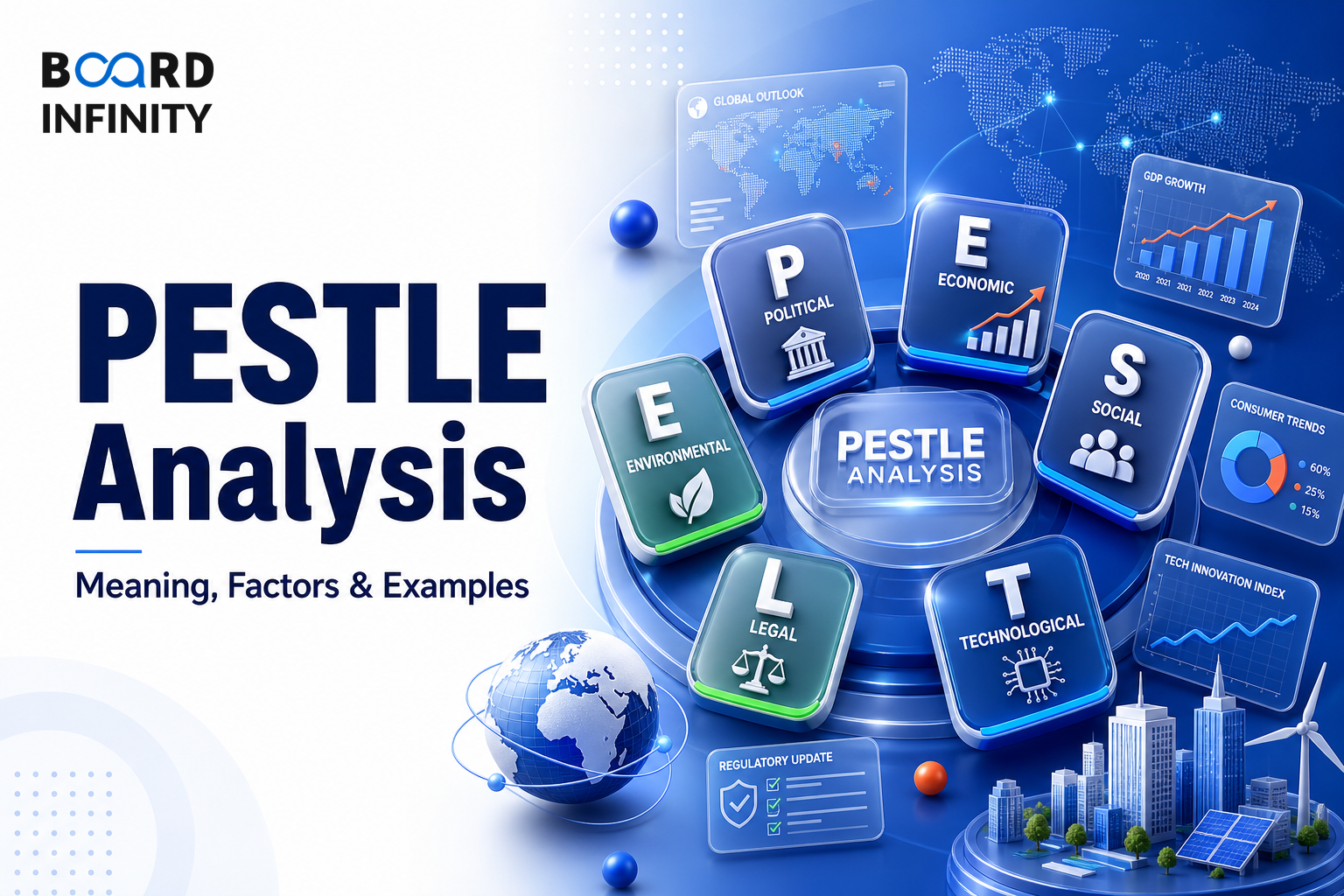
Porter's Five Forces is useful for industry competitive analysis; PESTLE answers the next question - what external context surrounds that industry? PESTLE is a macro-environmental analysis framework that examines six categories of external factors affecting a business. In interviews, it helps you scan external forces before market entry, competitive analysis, and strategy reviews.
- PESTLE is a macro-environmental analysis framework that examines six categories of external factors affecting a business.
- PESTLE stands for Political, Economic, Social, Technological, Legal, and Environmental.
- It is a macro-environment analysis tool used in market entry, competitive analysis, and strategy reviews.
- Political factors cover government policies, taxation, trade restrictions, and political stability.
- Economic factors cover GDP growth, inflation, exchange rates, consumer spending, and interest rates.
- Social and Technological factors cover demographics, cultural trends, health consciousness, urbanization, innovation, automation, digital transformation, R&D, AI/ML.
- Legal and Environmental factors cover employment laws, consumer protection, IP, advertising standards, sustainability, climate, ESG, green regulations, and CSR.
How PESTLE Fits Into External Analysis
PESTLE is used for macro-environmental scanning. It gives external analysis and context for strategy by separating the environment into six categories: Political, Economic, Social, Technological, Legal, and Environmental.
For marketing cases, this makes the scan practical: each factor forces the answer to move beyond the company and look at external forces affecting a business.
PESTLE is a macro-environmental analysis framework that examines six categories of external factors affecting a business: Political, Economic, Social, Technological, Legal, and Environmental.
Reading the Six PESTLE Factors
Political factors cover government policies, taxation, trade restrictions, and political stability. In India FMCG, examples include GST implementation consolidating state-level taxes and FDI policy in retail.
Economic factors cover GDP growth, inflation, exchange rates, consumer spending, and interest rates. In India FMCG, examples include post-COVID recovery boosting discretionary spending and rural income growth.
Social factors cover demographics, cultural trends, health consciousness, and urbanization. A relevant India FMCG example is the rise of the health & wellness trend driving demand for organic, natural products.
Technological factors cover innovation, automation, digital transformation, R&D, and AI/ML. Examples include 5G rollout enabling richer digital experiences and AI in supply chain optimization.
Legal factors cover employment laws, consumer protection, IP, and advertising standards. Examples include ASCI guidelines on misleading ads and FSSAI regulations on food labeling.
Environmental factors cover sustainability, climate, ESG, green regulations, and CSR. Examples include the single-use plastic ban affecting packaging and carbon footprint disclosure pressure.
When to Use PESTLE in Interviews
PESTLE is a macro-environment analysis tool used in market entry, competitive analysis, and strategy reviews. It is especially useful when an interviewer asks for external analysis or context for strategy.
A strong answer does not stop at naming the six factors. It connects each external factor to the business situation being analysed, using specific evidence from the market context.
Structuring a PESTLE Analysis Interview Answer
"How would you use PESTLE to evaluate market entry for an India FMCG business?"
Do not treat PESTLE as a generic list. Use it as macro-environmental scanning and make each factor specific to the market, using evidence such as GST implementation, post-COVID recovery, the health & wellness trend, 5G rollout, ASCI and FSSAI regulations, or the single-use plastic ban.
The most frequent error is confusing PESTLE with internal company analysis. PESTLE examines external factors affecting a business, so answers should stay with Political, Economic, Social, Technological, Legal, and Environmental forces and use them as context for strategy.
Conclusion
PESTLE is a practical macro-environmental scan of six external forces affecting a business. Use it to bring structure to market entry, competitive analysis, and strategy reviews, and make every factor specific to the market being analysed.