
Keller's Brand Equity Model (CBBE Pyramid) Explained
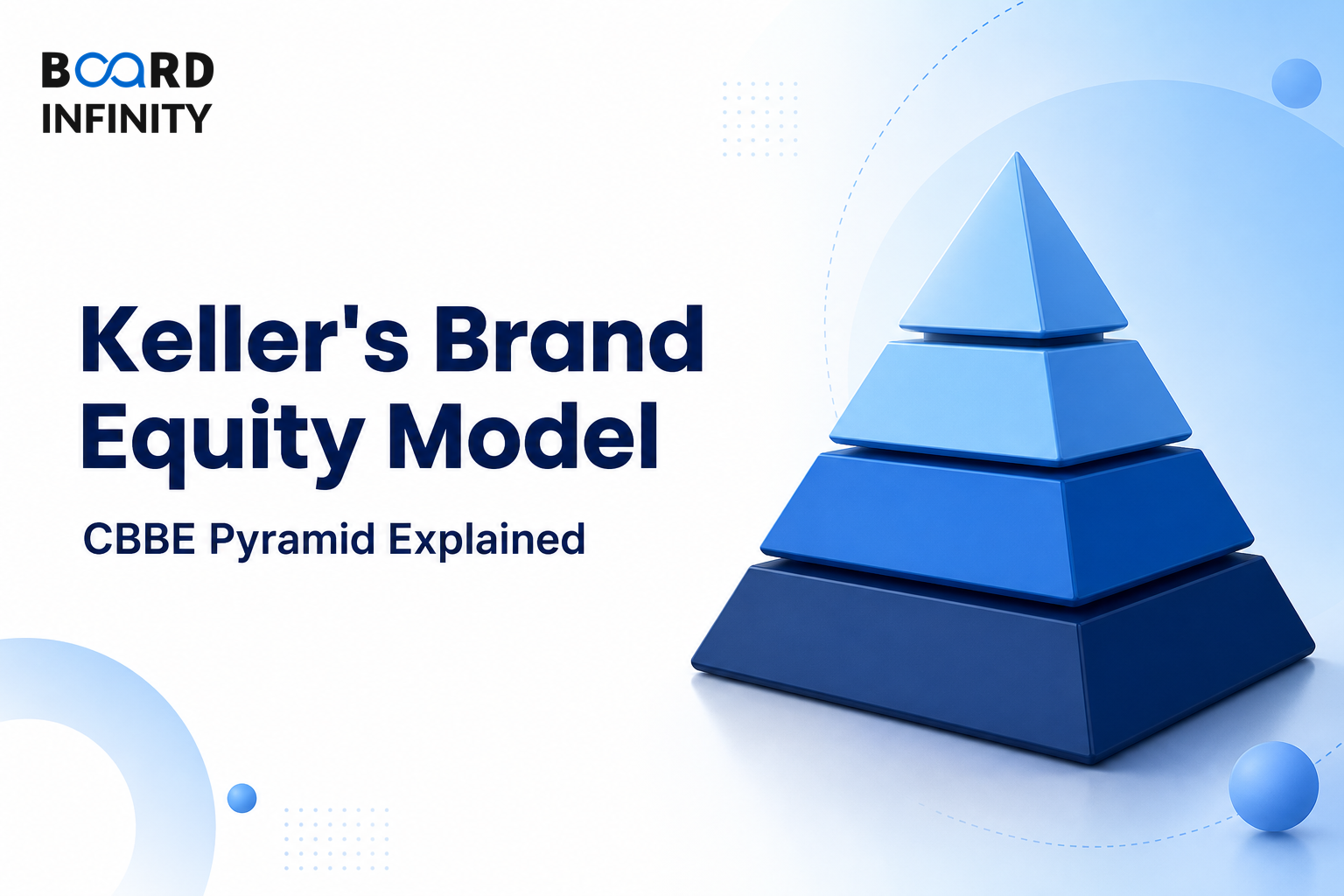
After SWOT Analysis shows how to link strengths, weaknesses, opportunities and threats to action, Keller's Customer-Based Brand Equity model answers a deeper branding question: how do you build strong brand equity step by step? In interviews, this matters because it helps you explain brand equity as a structured ladder, from clear identity at the base to active loyalty at the top.
- Keller's Customer-Based Brand Equity (CBBE) model describes how to build strong brand equity through four sequential levels, from the base (identity) to the pinnacle (loyalty).
- The four levels are Salience, Performance / Imagery, Judgments / Feelings and Resonance.
- Salience asks, "Who are you?" and covers category identification and need satisfaction.
- Performance / Imagery asks, "What are you?" and covers reliability, durability, style, user profiles and heritage.
- Judgments / Feelings asks, "What do people think and feel about us?" and covers quality, credibility, superiority, warmth, fun and excitement.
- Resonance asks, "What relationship do we have?" and covers active loyalty, community and attachment.
- You cannot build Resonance without first establishing Salience. Each level must be built sequentially.
The Big Picture: Brand Equity Built From the Bottom Up
Keller's Customer-Based Brand Equity (CBBE) model describes how to build strong brand equity through four sequential levels, from the base (identity) to the pinnacle (loyalty). The key idea is sequential: a brand cannot jump directly to loyalty without first building clear identity, performance credentials and meaning.
CBBE means Customer-Based Brand Equity. Keller's pyramid: Salience - Performance/Imagery - Judgements/Feelings - Resonance. Brand strength built from the bottom up.
Level 1: Salience
Salience is the base of the pyramid. Its key question is: "Who are you?" It covers category identification and need satisfaction.
For Amul, salience means top-of-mind for dairy products across all of India and instant recognition. This base matters because you cannot build Resonance without first establishing Salience.
Level 2: Performance / Imagery
Performance / Imagery asks: "What are you?" Performance covers reliability, durability and style, while imagery covers user profiles and heritage.
For Amul, this level is visible in consistent dairy quality, wide range, "Taste of India" and family values imagery. This is where the brand moves beyond recognition into meaning grounded in what it delivers and what it represents.
Level 3: Judgments / Feelings
Judgments / Feelings asks: "What do people think and feel about us?" Judgments cover quality, credibility and superiority; feelings cover warmth, fun and excitement.
For Amul, this level includes trusted, affordable, consistent quality, along with nostalgia, national pride and warmth. The brand's meaning is no longer only functional; consumers also carry emotional associations with it.
Level 4: Resonance
Resonance is the pinnacle of the pyramid. Its key question is: "What relationship do we have?" It covers active loyalty, community and attachment.
For Amul, resonance appears in decades of loyalty, the Amul Girl as cultural icon and the consumer-owned cooperative model. This is the strongest level of brand equity because it reflects a relationship, not just awareness or preference.
Why the Sequence Matters
The key insight is simple: you cannot build Resonance without first establishing Salience. Each level must be built sequentially.
Many brands make the mistake of trying to create emotional connections at Level 3-4 without first establishing clear identity and performance credentials at Level 1-2. In a case interview, this is the main nuance to highlight: strong emotional loyalty is only credible when identity and performance are already clear.
Amul Through the CBBE Pyramid
Amul is a useful example because the same brand can be mapped across all four levels of Keller's pyramid. At the base, it has instant recognition and is top-of-mind for dairy products across all of India. At the performance and imagery level, it stands for consistent dairy quality, wide range, "Taste of India" and family values imagery.
At the judgments and feelings level, Amul is trusted, affordable and associated with consistent quality, nostalgia, national pride and warmth. At the resonance level, it has decades of loyalty, the Amul Girl as cultural icon and a consumer-owned cooperative model.
Structuring a Keller's Brand Equity Model (CBBE Pyramid) Explained Interview Answer
"What is brand equity? How do you build it?"
Do not start with emotional storytelling alone. A strong answer shows that emotional connections at Level 3-4 depend on clear identity and performance credentials at Level 1-2.
Many brands make the mistake of trying to create emotional connections at Level 3-4 without first establishing clear identity and performance credentials at Level 1-2. In interviews, this costs points because it ignores the sequential logic of Keller's CBBE Pyramid.
Conclusion
Keller's CBBE Pyramid is a bottom-up brand-building ladder: Salience creates identity, Performance / Imagery builds meaning, Judgments / Feelings shape response and Resonance creates loyalty. The final takeaway is that strong emotional loyalty is only possible after clear identity, performance and meaning are established.