
Distribution Channels: Direct, Indirect & Hybrid Models
Walk into a Reliance Digital store and you can see distribution strategy hiding in plain sight: a laptop brand selling through a retailer, a phone brand pushing online-exclusive offers, and a smart-home start-up trying to be discovered on both Amazon and the shelf. The product may be the same, but the route to the customer changes the economics, control, trust and scale of the entire business.
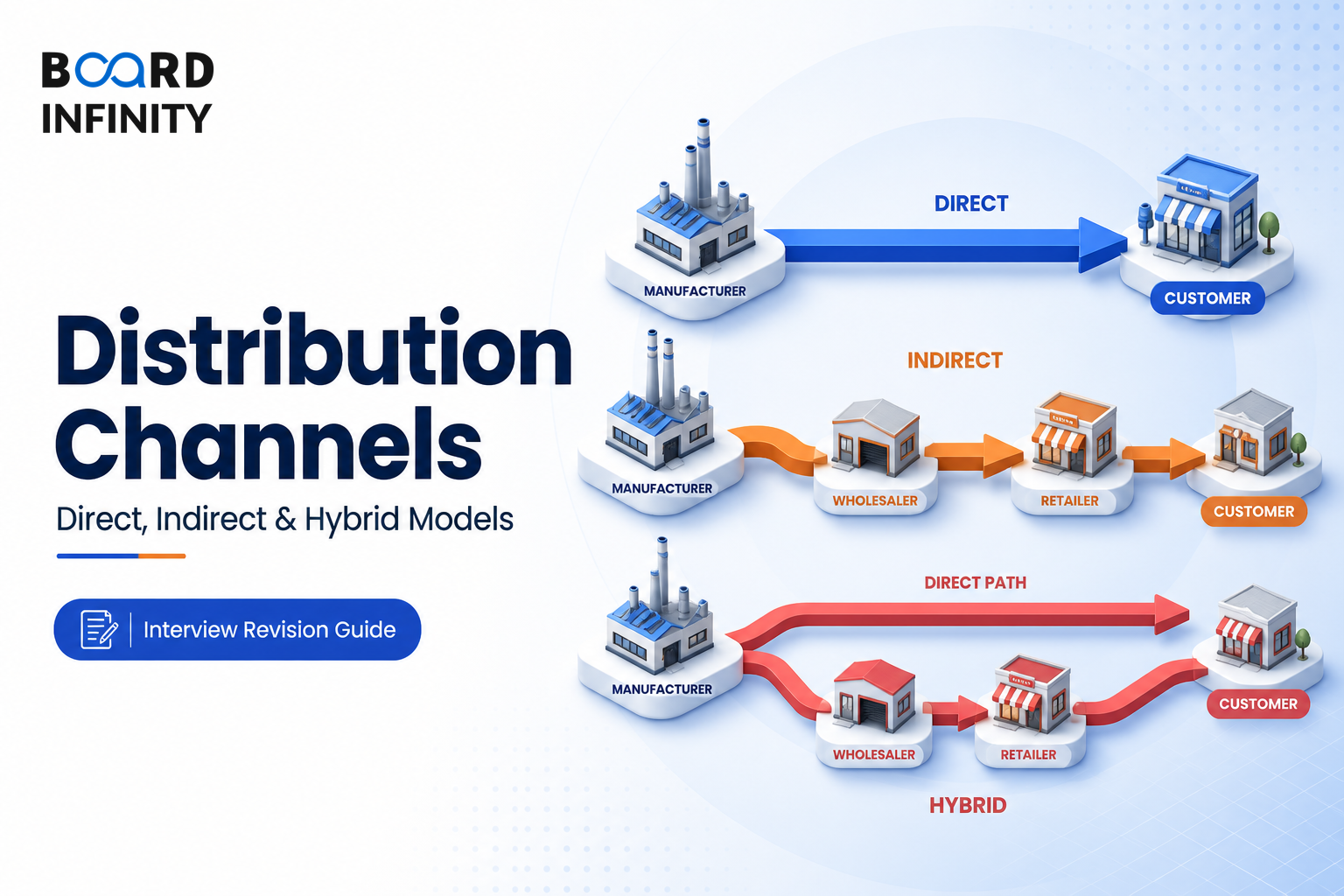
- Distribution channel means the path a product or service takes from producer to end customer.
- Direct channel: brand sells to customers itself - website, app, owned store, salesforce. High control, but high customer acquisition and fulfilment burden.
- Indirect channel: brand uses intermediaries - distributors, wholesalers, retailers, agents, marketplaces. High reach, but lower control and shared margins.
- Hybrid channel: brand combines direct and indirect routes. Powerful, but needs clear pricing, territory and service rules to avoid channel conflict.
- Choose a channel by matching customer buying behaviour, product complexity, margin structure, service needs and speed of scale.
- Do not say “direct is always better because margins are higher.” Direct channels often have higher CAC, logistics cost and operating complexity.
- Track distribution using numeric distribution, weighted distribution, fill rate, stockout rate, channel margin and CAC payback.
Big Picture: Distribution Is Not Delivery, It Is Market Access
Delivery is the movement of goods. Distribution is the strategic system that makes a product available, visible, trusted and economically viable at the moment the customer wants to buy. The best channel is not the shortest route - it is the route that fits the customer journey and still makes money.
Core Explanation: The Three Channel Models
A channel decision answers one deceptively simple question: who should perform the work of selling, stocking, explaining, financing, delivering and servicing the product? If the brand performs most of that work, the channel is direct. If intermediaries perform it, the channel is indirect. If the brand splits the work across routes, the model is hybrid.
1. Direct Distribution
In a direct channel, the company sells to the end customer without an external selling intermediary. Examples include a D2C website, owned app, brand-owned store, company salesforce, telesales or direct enterprise sales.
Use direct distribution when: the product needs education, data ownership matters, service quality is critical, margins can absorb fulfilment cost, or the brand wants tight control over customer experience. Tesla’s company-owned sales model is a classic global example: the primary driver is control over the buying and service experience, supported by software-led products, high-ticket economics and a need to explain EV technology.
2. Indirect Distribution
In an indirect channel, the company uses intermediaries such as distributors, wholesalers, retailers, agents, franchisees or marketplaces. This is common in FMCG, pharmaceuticals, consumer durables, insurance and B2B industrial products.
Use indirect distribution when: physical reach matters, customers prefer local purchase, the product needs retailer recommendation, working capital must be shared, or the brand must scale faster than it can build its own network. In India, a soap, biscuit or packaged beverage brand usually needs general trade because millions of small stores provide reach, credit familiarity and daily purchase convenience.
3. Hybrid Distribution
A hybrid channel combines direct and indirect routes. A brand may sell through its website, Amazon or Flipkart, modern trade, general trade and exclusive brand outlets at the same time.
Use hybrid distribution when: customers discover and buy across multiple touchpoints, the brand needs both data and reach, product categories have different buying journeys, or geographies differ in retail maturity. Hybrid is powerful, but dangerous without governance because the brand may end up competing with its own partners.
The Channel Choice Funnel: From Market Need to Profitable Availability
Do not start with “online or offline?” Start with the customer’s buying journey. A channel is good only if it can carry the customer from awareness to purchase to repeat without destroying unit economics.
How to Choose the Right Distribution Channel
The Control-Reach Trade-off
Every channel model sits on a trade-off. Direct channels increase control but can limit reach. Indirect channels increase reach but dilute control. Hybrid models try to capture both, but only work when the brand actively manages channel roles.
Metrics to Track Channel Performance
Channel strategy becomes real only when measured. Use these metrics as a practical dashboard; the “good” number varies by category, but the ranges below are useful interview heuristics.
For a packaged snacks brand in India, general trade is often not optional because kirana stores deliver neighbourhood availability, informal trust and high-frequency buying occasions. The primary driver is last-mile reach, supported by distributor credit, retailer recommendation and small pack-size economics. The strategic so what: indirect channels win when convenience and physical availability shape demand more than brand-owned experience.
Definitions You Can Say in One Breath
Kotler and Keller: “Marketing channels are sets of interdependent organizations participating in making a product or service available for use or consumption.”
- Direct distribution: The producer sells to the end customer without an external selling intermediary.
- Indirect distribution: The producer sells through intermediaries such as distributors, wholesalers, retailers, agents or marketplaces.
- Hybrid distribution: The producer uses more than one channel type to reach different customers, occasions or geographies.
- Channel conflict: Tension between channels when one route undercuts, overlaps or weakens another route’s economics.
Atomberg: Building a Hybrid Channel for a New-Age Fan Brand
Atomberg shows why a consumer durable brand may begin online for early adoption but still need offline distribution to scale trust, demonstration and service.
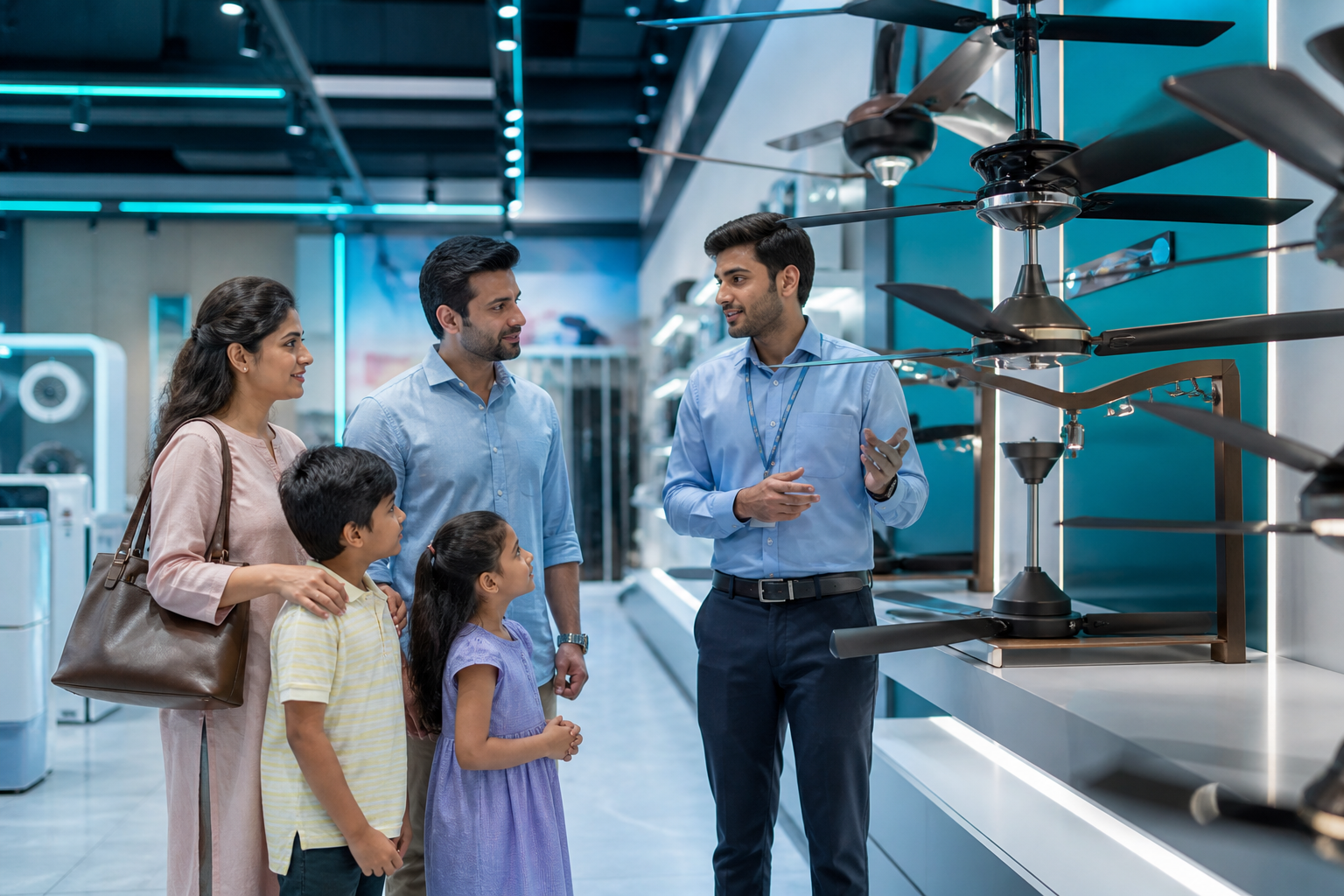
Situation: Atomberg entered the Indian fan market with energy-efficient BLDC motor fans, a category where customers traditionally bought through electricians, local dealers and electrical retail shops. The product had a strong functional benefit, but the buying habit was offline and trust-led.
The move: The company used online channels to reach early adopters and explain the energy-saving proposition, while also expanding into offline retail and dealer networks where customers could see the product, ask questions and access local service support. The primary driver of the hybrid model was category trust and demonstration. Supporting drivers included electrician influence, after-sales service needs, marketplace discovery, and the need to compete where conventional fan brands were already present.
Outcome and lesson: Atomberg’s channel evolution shows a key principle: D2C can create early demand and data, but durable categories often need indirect reach to scale. The strategic win is not “online versus offline”; it is using each route for the job it does best.
How AI Changes Distribution Channels
AI is making distribution less guesswork-driven and more predictive. The biggest change is not replacing distributors or retailers; it is helping brands decide where to place inventory, which channel to prioritise, and which partners deserve more support.
- Demand sensing and allocation: ML models can combine sales history, search trends, weather, local events and promotion calendars to forecast demand by pin code, store cluster or fulfilment node. This helps brands reduce stockouts in high-demand areas and avoid excess stock in weak channels.
- Partner scoring and assortment planning: AI can rank dealers, retailers or marketplaces by sell-through, margin, payment discipline, returns and service quality. A brand can then recommend different assortments for premium stores, general trade, quick commerce and e-commerce.
- Channel conflict monitoring: AI tools can scan marketplaces and partner listings for price undercutting, grey-market sellers and inconsistent product information. This is especially useful in hybrid models where one channel’s discounting can damage another channel’s economics.
Use Perplexity to map a company’s active channels from its website, marketplace listings and annual report commentary. Then use ChatGPT to create a channel-role table: direct, indirect, hybrid, target customer, economics, risks and likely interview questions.
Interview Relevance
“You are launching a premium electric toothbrush in India. Would you choose a direct, indirect or hybrid distribution model? Justify your answer.”
A strong answer does not merely name a channel. It explains which channel performs which job in the customer journey.
The mistake: saying “direct is better because the company keeps the full margin.” This ignores CAC, fulfilment cost, returns, service complexity, customer trust and the reach provided by intermediaries. One-line fix: compare channels on total contribution, control, reach and customer fit - not on gross margin alone.
What to Revise Next
Next, revise Channel Design & Channel Management to learn how companies select, motivate and control channel partners. Then move to Distribution in India: General Trade, Modern Trade & Quick Commerce so you can apply channel thinking to the Indian market structure interviewers love testing.