
Emerging Trends Reshaping Energy & Renewables
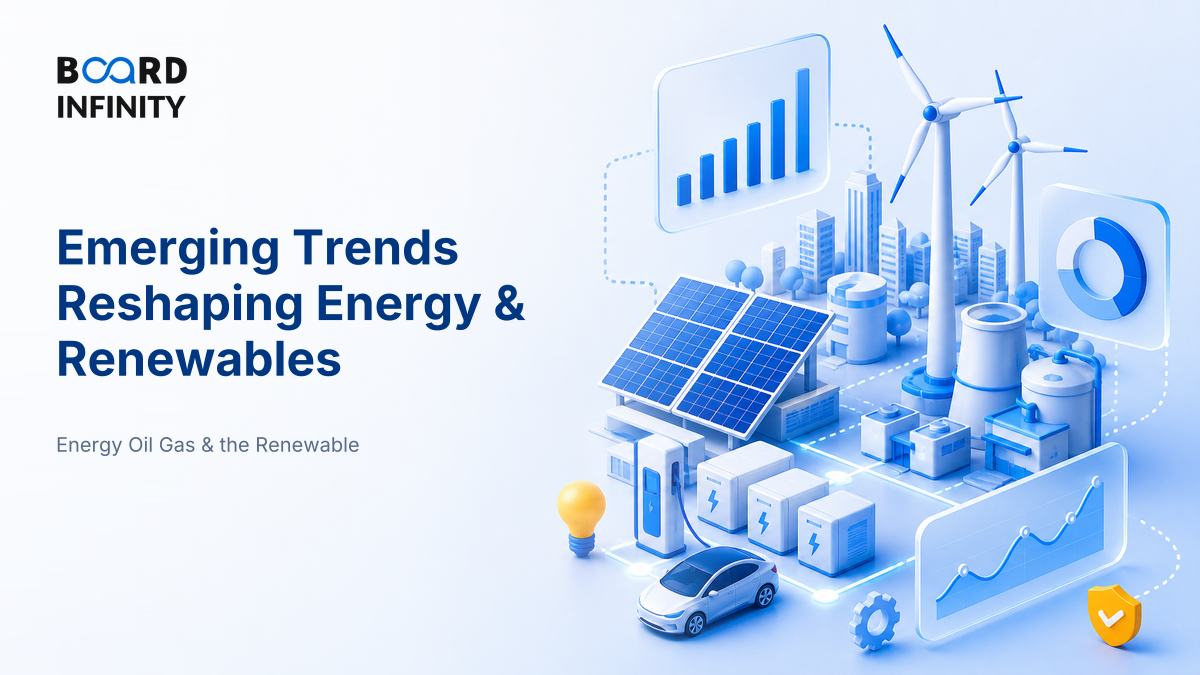
A power system used to be simple to picture: coal at one end, consumers at the other, electricity flowing one way. Now the same grid must absorb rooftop solar at noon, charge batteries in the evening, serve EVs at night, and still keep the lights on when the wind drops.
That is the real shift in energy and renewables: not “solar is growing,” but “the entire energy system is becoming cleaner, more distributed, more digital, and harder to balance.”
- Renewables are moving from cheap energy to firm power - storage, hybrid projects and round-the-clock contracts matter as much as solar panels.
- The energy transition is a systems shift - generation, grids, storage, demand, regulation and finance all move together.
- Five trends dominate interviews: renewables scale-up, battery storage, green hydrogen, distributed energy, and grid digitalisation.
- India-specific angle: the opportunity is huge, but grid evacuation, DISCOM health, land, offtaker risk and policy execution shape returns.
- Key metrics: capacity factor, LCOE, curtailment rate, DSCR, round-trip efficiency and receivable days.
- AI is becoming operational - forecasting generation, predicting failures, optimising batteries and reading policy or tender documents faster.
- Best interview answer: explain the trend, business impact, India constraint, company response and one metric to track.
Big Picture - The Energy System Is Moving From Linear to Networked
The old energy model was built around centralised fuel-based generation. The emerging model is built around variable renewables, flexible storage, digital control and customers who may also generate power.
For an MBA answer, this is the master lens: every trend either cleans the source of energy, balances variability, moves demand, or changes how money flows.
The Core Trends Reshaping Energy and Renewables
Do not memorise trends as a list. See them as a value chain. Clean generation creates the need for flexibility. Flexibility creates new business models. New business models need better regulation and finance.
Trend 1 - Renewables Are Becoming the Default New Capacity
Renewables are no longer a niche ESG category. Solar and wind are now central to power planning because they can be built in modular increments, financed through long-term contracts, and scaled across utility, commercial and rooftop segments.
The important interview nuance is this: cheap renewable energy is not the same as reliable renewable power. A solar plant produces most during daylight; demand often peaks later. Wind output varies by season and location. So the business question has moved from “Can we generate renewable power?” to “Can we deliver it when the customer needs it?”
Commercial and industrial buyers in India increasingly evaluate renewable procurement to reduce power cost volatility and meet decarbonisation goals. The strategic point is not just ESG signalling - it is procurement strategy, tariff risk management and energy security for large consumers.
Trend 2 - Storage Turns Intermittent Power Into a Product
Battery energy storage systems and pumped hydro storage are becoming the bridge between variable renewable generation and dependable supply. Storage does three jobs: it shifts energy across time, stabilises the grid, and enables new contract structures such as peak power or round-the-clock renewable supply.
This is why storage is not an “add-on” to renewables. It changes what the seller can promise and what the buyer is willing to pay for.
Trend 3 - Green Hydrogen Is a Decarbonisation Bet, Not Just a Fuel
Green hydrogen is produced using renewable electricity to split water through electrolysis. Its strongest use case is not replacing every fuel everywhere. It is more relevant for sectors that are hard to electrify directly - such as certain industrial processes, refining, fertilisers, shipping fuels and long-duration storage pathways.
The interview-safe answer is balanced: green hydrogen has strategic potential, but its adoption depends on renewable electricity cost, electrolyser cost, water availability, infrastructure, offtake contracts and policy support.
Trend 4 - Distributed Energy Is Changing the Customer’s Role
Rooftop solar, behind-the-meter batteries, smart meters, EV charging and energy management software are turning some consumers into “prosumers” - users who both consume and produce energy.
This matters because utilities and energy companies can no longer think only in megawatt-scale plants. They must manage customer acquisition, financing, after-sales service, software, billing, maintenance and regulatory approvals. The skill set starts looking closer to consumer tech and infrastructure finance at the same time.
Trend 5 - Grids Are the Bottleneck Everyone Underestimates
The International Energy Agency has warned that grids are becoming a critical bottleneck for clean energy transitions, because transmission and distribution investment must keep pace with renewable capacity, electrification and new demand patterns (IEA, Electricity Grids and Secure Energy Transitions).
For India, this shows up as evacuation capacity, inter-state transmission, state-level approvals, distribution company finances, scheduling rules and payment discipline. If you want to sound mature in an interview, mention the grid before the interviewer has to.
If you are analysing a company in this sector, pair the business model with the regulator and the control point. A quick refresher on locating the regulator and what it controls will help you separate policy risk from execution risk.
Trend 6 - Finance Is Moving From Capacity Funding to Risk Pricing
Energy and renewables are capital-intensive. The strategic question is not only whether a project is technically attractive, but whether cash flows are bankable. Lenders and investors care about offtaker quality, tariff certainty, curtailment risk, project execution, equipment warranties, interest rates and receivable collection.
That is why two companies with similar megawatts can have very different valuations. One may have stronger contracts, better counterparties, lower financing cost and lower execution risk.
Use these metrics when reading a company’s results. If you need a structured method, revise reading an annual report for sector insight before your sector interview.
Definitions You Should Be Able to Say Cleanly
- Renewable energy: Energy from natural sources replenished faster than they are consumed (United Nations).
- Energy transition: A structural shift from high-carbon energy systems to lower-carbon, more efficient and flexible energy systems.
- Firm renewable power: Renewable electricity backed by storage, hybridisation or contracts so supply is available in agreed time blocks.
- Green hydrogen: Hydrogen produced using renewable electricity, typically through electrolysis of water.
- Curtailment: Renewable power that could have been generated but is not accepted by the grid or offtaker.
Case Study - Greenko: From Renewable Generation to Storage-Led Energy Platform
Greenko shows why the next renewables advantage is not only owning solar or wind assets, but combining renewables with storage to offer more dependable clean power.
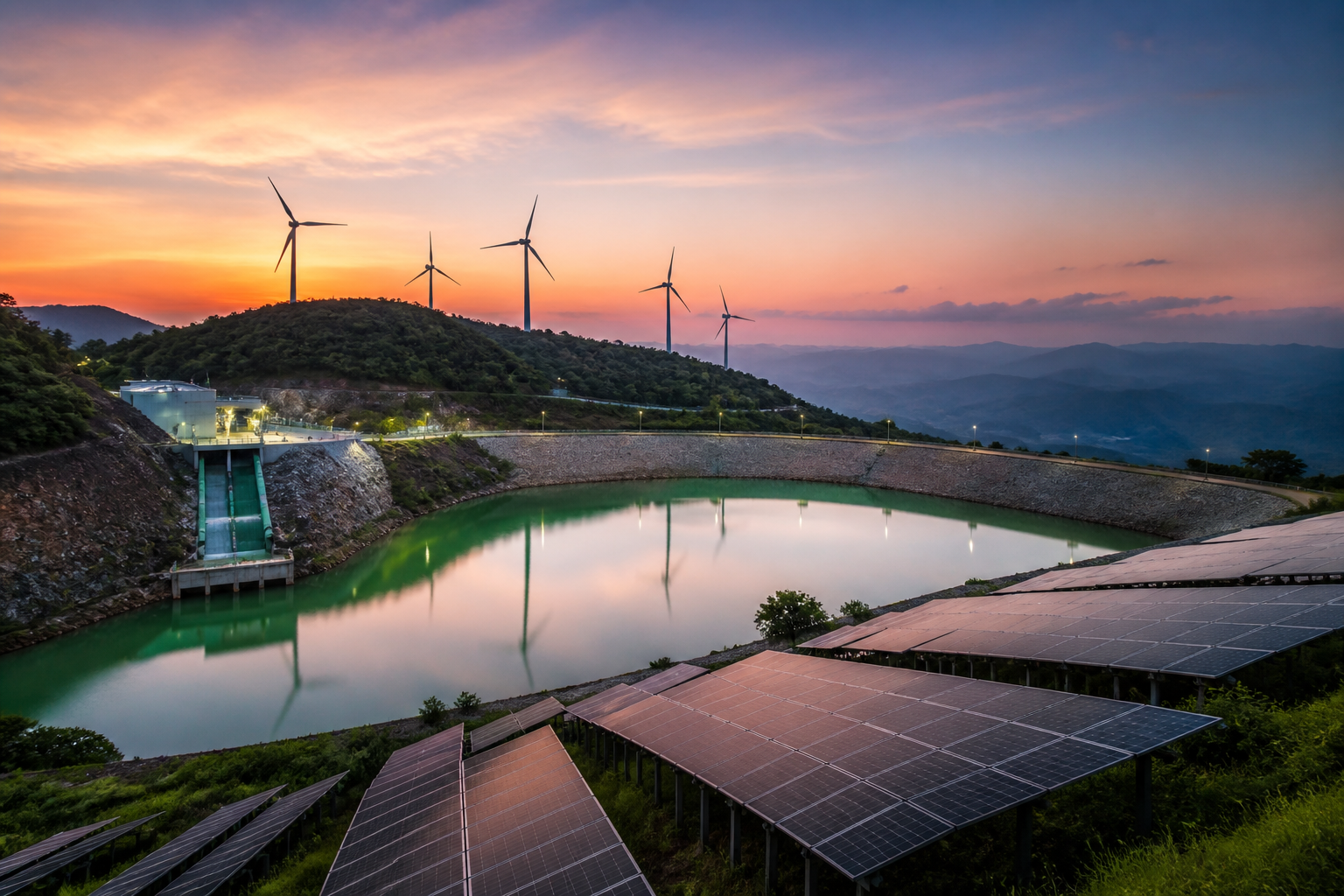
Situation: As renewable penetration rises, customers and grids need more than low-cost daytime solar or seasonal wind. They need clean power that can be scheduled, shifted and delivered when demand appears.
The move: Greenko has positioned itself around renewable generation combined with energy storage, including pumped storage, to support more reliable decarbonised power supply. Its corporate platform highlights integrated renewable energy and storage capabilities (Greenko Group).
Why it matters: The primary driver is storage-led firming - making renewable power more dispatchable. Supporting drivers include a portfolio approach across renewable sources, long-duration storage logic, industrial decarbonisation demand, and the need for grid-friendly clean power rather than only lowest-cost units.
Outcome or lesson: The winning energy company of the next decade may not be the one with the most megawatts. It may be the one that can convert megawatts into reliable, financeable and customer-relevant energy products.
How AI Changes Emerging Trends Reshaping Energy & Renewables
AI is not a separate trend sitting outside energy. It is becoming the operating layer across generation, grid and customer systems.
Student workflow: Take one listed energy company’s annual report, one recent government policy note, and one competitor presentation. Load them into NotebookLM or ChatGPT, then ask: “What are the top five business risks, which metrics prove them, and what interview questions could be asked?” Cross-check every generated claim using the original documents. For safe research habits, revise using AI to research a sector without importing its errors.
Interview Relevance
“What are the most important trends reshaping the energy and renewables sector, and how would they affect an Indian energy company?”
If the interviewer asks you to compare energy with another sector, use the same dimensions - demand drivers, regulation, capital intensity, margins, risks and technology disruption. The framework in comparing two sectors on the same framework is useful for this.
Common Mistake
The mistake: saying “renewables are growing because solar is cheap and ESG is important.” That answer is too shallow because it ignores storage, grids, contracts, finance and regulation. One-line fix: always answer energy trends as a system - generation plus flexibility plus grid plus customer plus finance.