
Integrated Marketing Communication (IMC): Unified Brand Messaging Across Channels
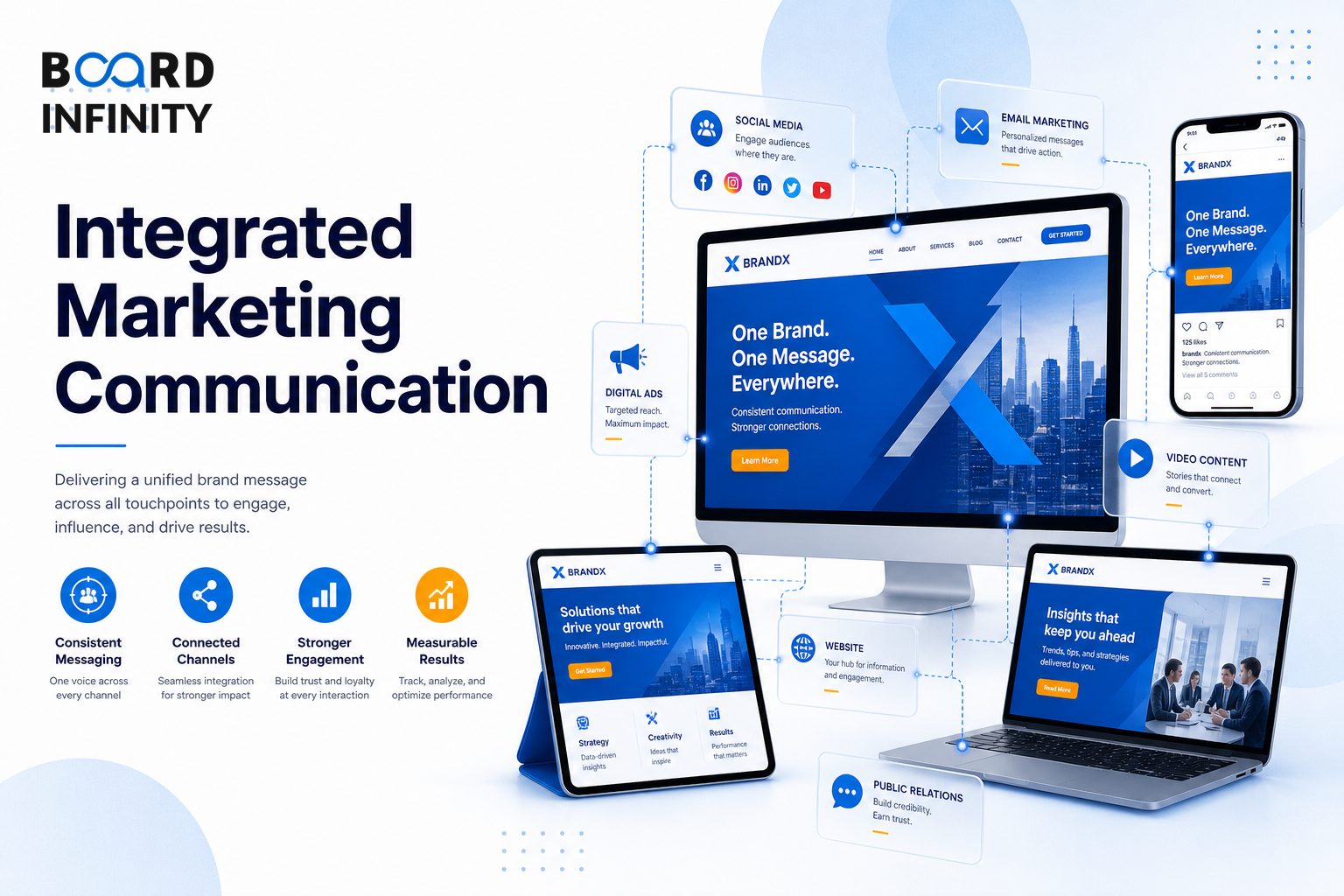
After studying Above-the-Line (ATL), Below-the-Line (BTL) and Through-the-Line (TTL) advertising, the next interview question is not just which channel to use, but how all channels work together. Integrated Marketing Communication (IMC) answers that question by ensuring every communication channel delivers a consistent, unified brand message. It matters in interviews because strong candidates do not treat TV, digital, print, retail, public relations, reviews and social sharing as separate silos - they show how each touchpoint reinforces the same brand promise.
- Integrated Marketing Communication means all channels reinforce the same brand message, tone and visual identity.
- The big idea is synergy: the whole is greater than the sum of its parts because each channel strengthens the others.
- IMC starts with the consumer journey, not the media plan, by mapping touchpoints across the purchase funnel.
- Paid media, owned media and earned media should work together instead of sending disconnected messages.
- Brand equity is protected when visual identity, tone and promise remain constant across agencies, partners and touchpoints.
- Measurement requires Key Performance Indicators across channels, with unified attribution methods such as Marketing Mix Modeling, multi-touch attribution and incrementality testing.
- Timing and frequency matter because campaigns may use flighting, continuous or pulsing media schedules depending on objectives.
IMC in the Marketing Communication System
IMC sits above individual advertising choices. ATL, BTL and TTL describe the broad type of media approach, while IMC ensures those media choices are connected by one consistent message, tone, visual identity and brand promise.
The easiest way to understand IMC is to see it as a discipline of coordination. It aligns paid media such as ads, owned media such as a website or app, earned media such as public relations, reviews and social shares, and retail communication so that the consumer experiences one coherent brand.
Integrated Marketing Communication is the process of ensuring that all communication channels deliver a consistent, unified brand message so that every paid, owned, earned and retail touchpoint reinforces the same brand promise across the consumer journey.
At a big-picture level, IMC can be read as a chain: start with the consumer journey, define the brand message, align channels, protect identity, measure impact and optimize timing.
Why IMC Matters
The central principle of IMC is that the whole is greater than the sum of its parts. A single channel may create awareness, another may provide information, another may validate the brand through reviews or public relations, and retail may influence the final decision. IMC makes those parts reinforce one another rather than compete for attention with different messages.
This is especially important in placement interviews because communication strategy cases often test whether a candidate can think beyond a media plan. A media plan asks where to spend and when to advertise. IMC asks whether the consumer receives the same brand promise through TV, digital, print, retail and other touchpoints.
Core Principles of IMC
The source framework for IMC can be broken into six practical principles. Each principle answers a different execution question: what stays consistent, where the consumer is, which channels interact, how the brand is protected, how performance is measured and how media timing is optimized.
Consistency and Integration
Consistency means the brand does not look or sound like a different brand across channels. The message, tone and visual identity remain aligned whether the consumer sees the communication on TV, digital, print or at retail.
Integration goes one step further. It means channels do not merely repeat the same line mechanically; they reinforce the same brand promise in a way suited to their role. For example, TV may build broad awareness, digital may deepen engagement, print may add detail, and retail may support the purchase moment - but the brand colors, tagline and messaging should remain coherent.
The interview nuance is that consistency does not mean identical execution everywhere. A digital asset and a retail asset may differ in format, but they should not create confusion about the brand promise, tone or identity.
Consumer-Centric Approach
IMC starts with the consumer journey rather than the media plan. The consumer journey is the sequence of touchpoints a consumer moves through before, during and after purchase. The purchase funnel is a way to describe stages in that journey, from early awareness to consideration and eventual purchase.
A consumer-centric IMC plan first maps touchpoints and then designs communication for each stage. This prevents the common mistake of choosing channels first and then forcing a message into them. In a strong IMC answer, the consumer journey decides the role of each touchpoint.
Paid, Owned, Earned and Retail Touchpoints
IMC uses multiple channels because consumers do not experience brands through only one medium. Paid media means communication bought by the brand, such as ads. Owned media means brand-controlled assets, such as a website or app. Earned media means attention the brand receives through public relations, reviews and social shares.
Retail is also important because communication at the point of sale can either reinforce or dilute the brand promise. If the same colors, tagline and messaging appear across TV, digital, print and retail, the consumer receives a clearer and more memorable signal.
Brand Equity Protection
Brand equity refers to the value built in a brand through recognition, associations, trust and a clear promise. IMC protects brand equity by keeping visual identity, tone and promise constant across agencies, partners and touchpoints.
This is why brand guidelines matter. In many organisations, different agencies or partners may handle different channels. Without clear guidelines, one agency may emphasize one tone, another may use a different visual style, and a retail execution may look disconnected from the main campaign. IMC reduces that risk by enforcing a common identity system.
The practical interview point is to mention governance. A candidate should not stop at saying "keep the message consistent"; they should explain that guidelines need to be applied across agencies, partners and touchpoints.
Measurement and Attribution
IMC must also be measured. A Key Performance Indicator (KPI) is a metric used to judge whether a marketing activity is performing against its objective. In IMC, KPIs should be tracked across channels rather than viewed only in isolation.
Attribution means assigning credit to the touchpoints that influenced performance. The source framework highlights three approaches: Marketing Mix Modeling (MMM), which evaluates the contribution of marketing activities at an aggregate level; multi-touch attribution, which considers multiple touchpoints in a consumer journey; and incrementality testing, which checks the additional impact created by marketing activity.
The nuance is that measurement is not just a reporting task after a campaign ends. It shapes how the brand learns which channels reinforce one another and whether the integrated plan is actually stronger than separate channel activity.
Timing and Frequency
IMC also covers when and how often communication should appear. Reach refers to how many consumers the communication touches, while frequency refers to how often they are exposed to it. The objective is to optimize reach and frequency for maximum impact.
The source framework identifies three media schedule patterns. Flighting is a burst schedule, continuous means ongoing presence, and pulsing combines ongoing activity with heavier bursts. The right schedule depends on the campaign objective.
Worked Example: Building an IMC Plan in an Interview Case
Because no named company example is required to understand the framework, use this as a sample interview case structure. The goal is to show how a candidate can move from a fragmented channel plan to a unified IMC plan without inventing unsupported numbers.
This example works well in interviews because it demonstrates both strategy and execution. It starts with the consumer journey, aligns the brand promise, coordinates channels, protects brand equity and closes with measurement.
Reusable IMC Answer Template
When solving an IMC case, use a simple template: Consumer journey - Brand promise - Channel roles - Consistency system - Measurement - Timing. This keeps your answer structured and prevents you from jumping straight into media choices.
For each stage of the purchase funnel, define the consumer touchpoint, the message to reinforce, the channel role, the required visual and tone guidelines, the Key Performance Indicator, and the timing or frequency choice.
Structuring a Integrated Marketing Communication (IMC) Interview Answer
"How would you design an Integrated Marketing Communication plan to ensure a brand delivers one consistent message across TV, digital, print, retail and other touchpoints?"
The strongest answers make channel synergy explicit. Do not merely list TV, digital, print and retail; explain what role each touchpoint plays in reinforcing the same brand promise across the consumer journey.
Conclusion
Integrated Marketing Communication is the discipline of making every channel work as one system. If you remember one idea, remember this: IMC is not about using more media, but about making paid, owned, earned and retail touchpoints reinforce the same brand promise with consistent identity, clear measurement and the right timing.
The most frequent error is treating IMC as a channel checklist. That costs points because it misses the core principle: all channels must reinforce the same brand message, tone, visual identity and promise across the consumer journey.
Social Media Platform Deep-Dive for India