
Extended Producer Responsibility and Packaging Rules in India
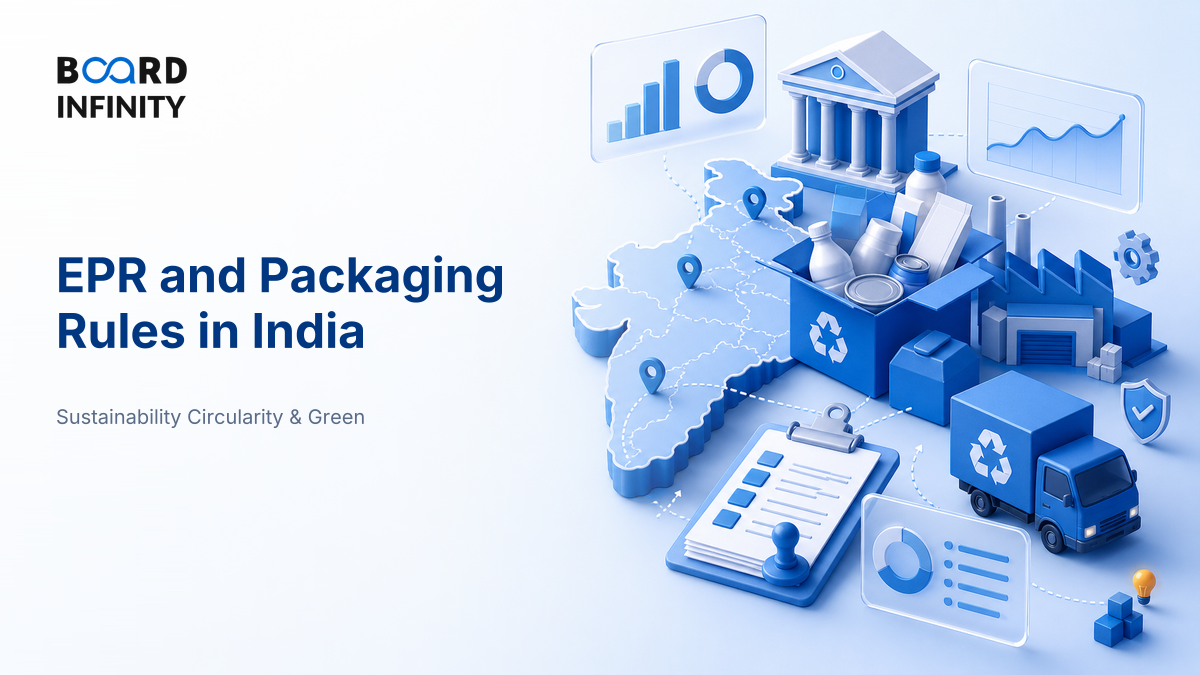
A brand manager approves a glossy new pouch because it looks premium on a kirana shelf. Then the sustainability team asks the uncomfortable question: after the consumer tears it open, who is responsible for bringing that plastic back into the system?
That is the real tension behind Extended Producer Responsibility - packaging is no longer just a design or cost decision; it is a post-consumer accountability decision.
- EPR means the producer stays responsible after sale - especially for collection, recycling, reuse or end-of-life treatment of packaging waste.
- In India, plastic packaging EPR applies to Producers, Importers and Brand Owners, commonly called PIBOs, and involves registration, targets, certificates and reporting.
- The core managerial shift is from cheap packaging to compliant, traceable, recyclable packaging.
- The best answer links EPR to design, procurement, reverse logistics, recycler partnerships, data reporting and consumer behaviour.
- Do not confuse recyclable with actually recycled - EPR is about proof, not intent.
- Interviewers like this topic because it connects operations, marketing, sustainability, regulation and cost-to-serve.
Big Picture - EPR Turns Packaging Into a Closed-Loop Responsibility
Traditional packaging thinking ends at sale. EPR thinking begins again after consumption: the company must plan how packaging will be collected, processed, certified and reported.
Core Explanation - How EPR Works in India
Extended Producer Responsibility makes the producer accountable for the environmental impact of packaging even after the consumer has used the product. In India, this is especially important for plastic packaging because consumption is fragmented, waste collection is informal in many cities, and packaging choices differ widely across food, FMCG, e-commerce and personal care categories.
The Ministry of Environment, Forest and Climate Change notified EPR guidelines for plastic packaging through amendments to the Plastic Waste Management Rules; these guidelines cover registration, category-wise obligations, recycling, reuse, recycled-content use and end-of-life disposal for plastic packaging (PIB, Ministry of Environment, Forest and Climate Change, 2022).
For an MBA student, the key is not to memorise legal clauses. The key is to see the operating model:
The Four Practical Levers Managers Control
EPR is often treated as a legal topic, but in companies it is managed through four business levers: packaging design, sourcing, recovery, and reporting.
The pyramid matters because companies cannot solve EPR only at the top layer. If the base is weak - say, a hard-to-recycle laminate chosen for aesthetics - the recovery and reporting layers become expensive and fragile.
This is why EPR belongs in procurement conversations, not only sustainability dashboards. If you are revising procurement foundations, connect this to supplier risk, compliance and responsible sourcing.
Key Packaging Categories Under Indian Plastic EPR
India’s plastic packaging EPR framework classifies plastic packaging into broad categories such as rigid plastic packaging, flexible plastic packaging, multilayered plastic packaging, and compostable plastic packaging under the notified guidelines (PIB, Ministry of Environment, Forest and Climate Change, 2022).
The managerial trap is to assume all plastic is treated the same. It is not. Category, recyclability, recycled-content feasibility and proof of processing all change the compliance plan.
Compliance Metrics - What a Good EPR Dashboard Tracks
If an interviewer asks “how would you measure EPR performance?”, do not answer with vague words like “sustainability impact.” Name the operating metrics.
Worked Example - Calculating the Compliance Gap
Suppose a beverage brand has an assigned EPR obligation of 600 tonnes for a plastic packaging category. It has valid recycling certificates for 520 tonnes.
Compliance ratio = 520 ÷ 600 × 100 = 86.7%.
Gap = 600 - 520 = 80 tonnes.
The managerial answer is not “buy certificates.” A better answer is: check certificate validity, understand why collection fell short, strengthen recycler contracts, improve source segregation and redesign future packaging to reduce the obligation or improve recoverability.
Definitions You Should Be Able to Say Cleanly
OECD: Extended Producer Responsibility is “an environmental policy approach in which a producer’s responsibility for a product is extended to the post-consumer stage of a product’s life cycle” (OECD).
Plastic packaging EPR in India is a legal obligation on PIBOs to manage specified post-consumer plastic packaging waste through registered systems and proof.
Case Study - Bisleri’s Bottles for Change
Bisleri’s Bottles for Change initiative shows that EPR works only when consumer segregation, collection partners and recycler linkages operate together.
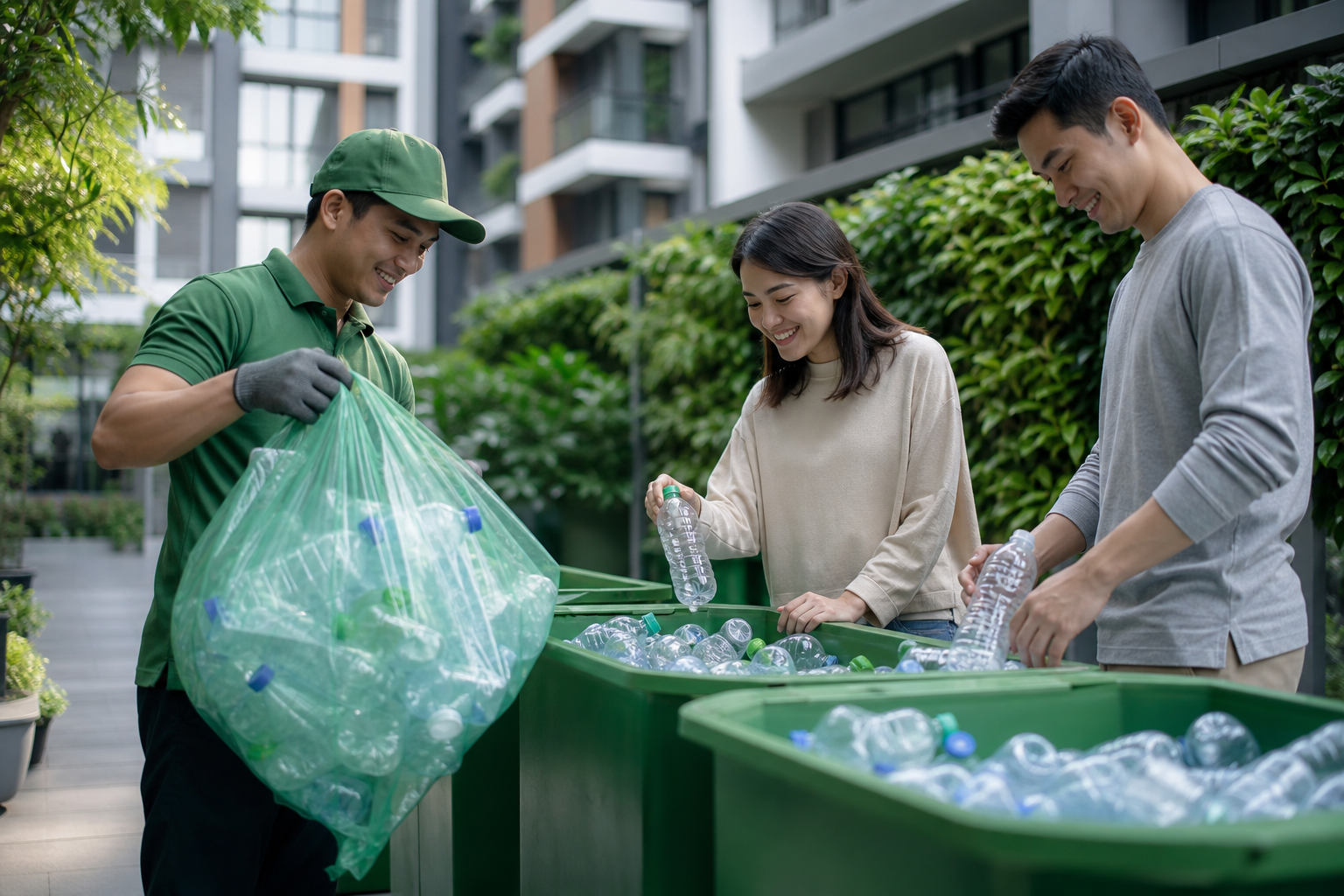
Bisleri International created Bottles for Change, a programme focused on educating citizens to clean, segregate and send used plastic bottles into recycling channels rather than treating them as waste (Bisleri Bottles for Change).
Situation: PET bottles can be recyclable, but recyclability on paper does not guarantee recycling in practice. If bottles are mixed with wet waste or collected without sorting discipline, the recovery value drops sharply.
The move: Bisleri focused on behaviour change and channel building - encouraging consumers, housing societies, schools, corporates and institutions to segregate plastic and connect it with collection and recycling ecosystems.
Why it matters: The primary driver is source segregation. Supporting drivers include consumer education, recycler partnerships, institutional collection points, packaging material value and public visibility of the initiative. This is a stronger explanation than saying “Bisleri recycles plastic” because it shows the actual operating system behind EPR.
Lesson for interviews: A recyclable pack is only a starting point. EPR success depends on the system around it - segregation behaviour, reverse logistics, processor capacity, documentation and packaging redesign.
Strategic Trade-Offs in Packaging Decisions
EPR makes packaging decisions more cross-functional. Marketing may want shelf appeal, procurement may want low unit cost, operations may want packing speed, and sustainability may want recyclability. The best managers frame this as a trade-off, not a morality debate.
Use this matrix in answers. The urgent quadrant is high brand or barrier need but low recyclability - for example, a pack that protects the product well but creates EPR complexity. That is where companies need R&D, supplier development and possibly alternative materials.
Packaging EPR also changes supplier discussions. Commercial teams must move beyond price and ask whether vendors can provide specifications, recycled-content documentation, compliance records and material traceability. That links naturally to supplier selection, scorecards and evaluation.
How AI Changes Extended Producer Responsibility and Packaging Rules
AI is not replacing EPR compliance, but it is changing how companies manage packaging data, collection planning and audit readiness.
- Packaging data extraction: AI can read invoices, bills of materials, supplier declarations and packaging specifications to classify materials faster. This reduces manual errors when mapping rigid, flexible, multilayered and compostable packaging.
- Collection and reverse-logistics planning: Machine learning can help forecast where post-consumer packaging waste will arise, which collection routes are efficient, and which partners are likely to meet quantity and quality commitments.
- Compliance anomaly detection: AI can flag unusual certificate patterns, duplicate records, mismatches between packaging placed in market and certificates claimed, or sudden changes in recycler performance.
Load a company’s sustainability report, packaging notes and the CPCB EPR portal guidance into NotebookLM. Ask it to generate: “What are the likely EPR risks, what packaging categories are involved, and what interview questions could be asked about compliance gaps?” Then verify every regulatory claim against the official CPCB plastic packaging EPR portal.
Interview Relevance
“A packaged food company wants to launch a new multilayer pouch in India. How would you evaluate the decision from an EPR and packaging compliance perspective?”
Use the phrase “proof over promise”. It signals that you understand EPR is not just about sustainable intent - it is about traceable, auditable post-consumer waste management.
Common Mistake
The most common mistake is saying “we will use recyclable packaging” and stopping there. That costs candidates because EPR is about actual recovery, processing, certificates and reporting - not just design intent. Fix: always complete the chain: design choice - collection system - registered processor - certificate - compliance dashboard.