
Sustainable Sourcing and Supplier Decarbonisation
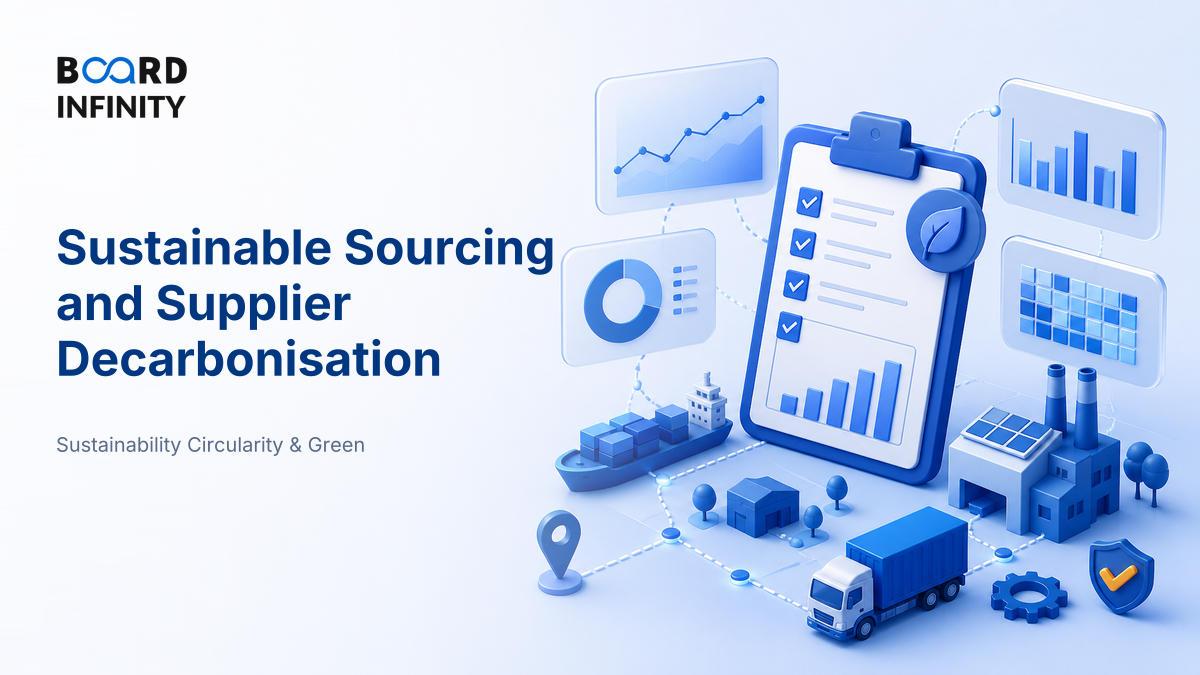
What if the biggest carbon footprint of a company is not inside its factory at all, but sitting quietly in the purchase orders it sends every week? For many businesses, the hard part of sustainability is not switching off lights - it is persuading thousands of suppliers to change materials, energy, logistics and data discipline.
- Sustainable sourcing means buying in a way that improves environmental, social and economic outcomes across the product life cycle.
- Supplier decarbonisation focuses on reducing Scope 3 emissions from suppliers, especially purchased goods, logistics, packaging and outsourced manufacturing.
- The winning playbook is: baseline emissions, segment suppliers, engage priority suppliers, redesign levers, contract incentives, verify progress.
- Do not treat all suppliers equally. Prioritise suppliers by emission impact and influenceability.
- Useful metrics include supplier emissions intensity, renewable electricity share, spend covered by sustainability clauses, and verified emissions data coverage.
- Procurement cannot solve this alone - engineering, finance, operations and suppliers must co-design lower-carbon specifications.
- The interview trap: saying “choose green suppliers” without explaining cost, risk, data quality and supplier capability trade-offs.
Big Picture: Procurement Is Where Scope 3 Becomes Action
Sustainable sourcing is not charity added after price negotiation. It is a procurement operating model that makes carbon, waste, labour standards, traceability and resilience part of supplier decisions. Supplier decarbonisation is the carbon-specific part of that model.
Core Explanation: The Procurement Playbook for Decarbonising Suppliers
The big idea is simple: a buyer cannot manage supplier emissions unless it can first see them, then prioritise them, then make the business case for change. This is why supplier decarbonisation is both a sustainability topic and a procurement strategy topic.
If you need a quick procurement foundation before this topic, revise what procurement owns and how it creates value. Sustainable sourcing is not separate from procurement value - it expands value from price savings to total cost, risk, resilience and carbon.
The Six-Step Supplier Decarbonisation Process
Notice the sequence. You do not start with a lecture to suppliers. You start with spend and emissions visibility, then use sourcing power carefully. For deeper execution, connect this to supplier selection, scorecards and evaluation and supplier relationship management and development.
The 2x2 Matrix: Which Suppliers Deserve Management Attention?
The most interview-ready framework is a 2x2 matrix using two questions: “How much do they contribute to our emissions?” and “How much influence do we have over them?” This prevents the common mistake of spreading sustainability effort evenly across all vendors.
Partner suppliers are the priority. These are high-emission suppliers where the buyer has spend leverage, long contracts, technical collaboration or strategic importance. Switch or pool suppliers may be high-emission but hard to influence - for example commodity inputs bought in fragmented markets. Here, buyers may need industry standards, supplier consortia or alternative materials rather than one-to-one persuasion.
What Actually Reduces Supplier Emissions?
Supplier decarbonisation is not one lever. A strong answer separates the reduction levers by source of emissions.
In Indian e-commerce, Flipkart's sustainability agenda is a useful lens because packaging choices, logistics partners, fulfilment operations and marketplace suppliers all affect the footprint seen by the customer. The strategic lesson is that supplier decarbonisation in India often needs practical support for MSME vendors, road-heavy logistics realities, packaging redesign and affordable data collection - not just a global policy document.
Definitions You Can Say Cleanly
Sustainable procurement: “Procurement that has the most positive environmental, social and economic impacts possible over the entire life cycle” - ISO 20400.
Scope 3 emissions: Indirect emissions, outside purchased energy, that occur in a company's value chain, as defined in the GHG Protocol Scope 3 Standard.
Supplier decarbonisation: Reducing suppliers' value-chain emissions through better materials, energy, process efficiency, logistics, data and commercial incentives.
Key Metrics: How to Track Supplier Decarbonisation
Metrics must separate actual emissions performance from reporting theatre. A supplier that fills a questionnaire is not necessarily decarbonising; it may simply be better at paperwork.
Worked Example: Estimating a Supplier Electricity Emission Baseline
Assume a packaging supplier uses 1,000,000 kWh of electricity annually for the production line serving your company. Assume the supplier reports an electricity emission factor of 0.82 kg CO2e per kWh. If the supplier shifts 40% of that electricity to credible renewable electricity, what is the estimated reduction?
The answer is not just “328,000 kg CO2e saved.” In a real sourcing discussion, you would also ask: Is the renewable electricity claim credible? Is the reduction allocated only once? Does production volume change? Will the supplier pass through a cost increase? That is what makes the answer managerial, not just mathematical.
Case Study: Schneider Electric's Zero Carbon Project
Schneider Electric built a supplier decarbonisation programme around its upstream value chain, showing how a buyer can move from ambition to supplier enablement.
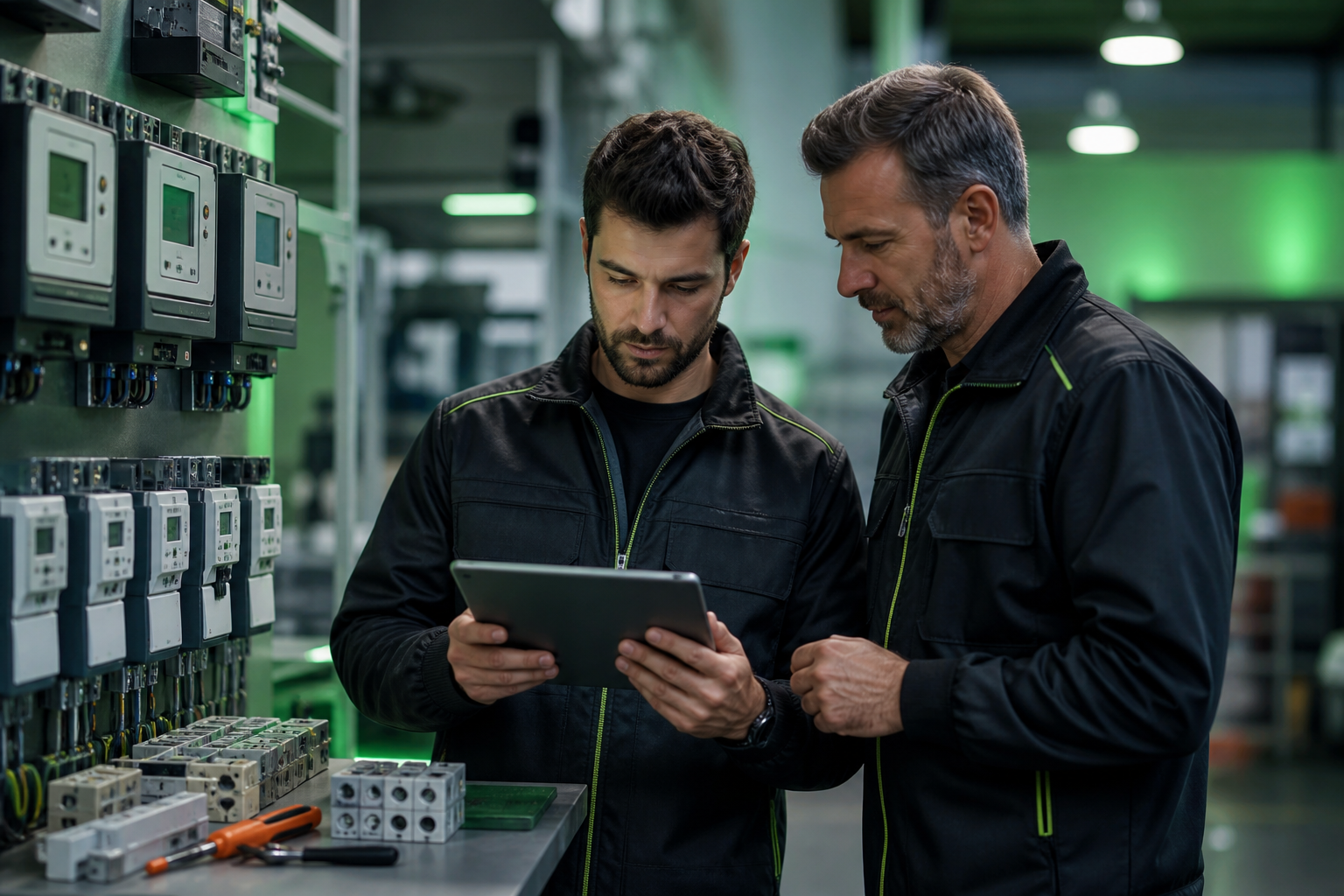
Situation. Schneider Electric sells energy management and automation solutions, so its sustainability promise depends heavily on credibility across its own supply chain. Like many industrial firms, a meaningful part of its climate challenge sits outside its direct operations - in purchased components, supplier manufacturing and upstream activities.
The move. The company launched its Zero Carbon Project to work with a large group of strategic suppliers on operational decarbonisation. The logic was not merely to demand targets. Schneider combined supplier engagement, capability building, data collection and practical decarbonisation guidance - especially around energy efficiency and renewable energy.
The result and lesson. The important lesson is the operating model: the primary driver is supplier enablement on emissions reduction, supported by supplier prioritisation, executive sponsorship, technical know-how, progress tracking and procurement integration. A one-factor explanation like “Schneider asked suppliers to go green” misses the real point - supplier decarbonisation works when commercial pressure and technical support move together.
How AI Changes Sustainable Sourcing and Supplier Decarbonisation
AI changes this topic because supplier decarbonisation is data-heavy, document-heavy and pattern-heavy. The best use is not “AI writes a sustainability policy.” The best use is helping procurement teams find emission hotspots, supplier risks and practical levers faster.
- Spend-to-carbon mapping: AI can classify spend descriptions, purchase orders and supplier categories, then flag likely high-emission categories for deeper analysis. This connects naturally to AI in spend analysis, sourcing and contract review.
- Supplier document review: AI can scan supplier ESG reports, certificates, energy invoices, audit responses and contracts to identify missing data, inconsistent claims and renewal clauses.
- Scenario support: AI can compare decarbonisation options such as renewable power, recycled content, packaging redesign or route changes, but the procurement team must still validate costs, availability and supplier feasibility.
Upload a company annual report, its sustainability report and this lesson into NotebookLM. Ask: “Which purchased categories are likely Scope 3 hotspots, what supplier levers should procurement use, and what interview questions could test this?” Then convert the output into a 2x2 supplier prioritisation matrix.
Interview Relevance
“You are the procurement manager of an Indian consumer goods company. Your CEO wants to reduce Scope 3 emissions from suppliers without increasing cost sharply. How would you approach it?”
Use the phrase “cost-carbon-risk trade-off.” It signals that you understand procurement reality: the lowest-carbon supplier is not automatically the best supplier if cost, capacity, quality or continuity risk breaks the business case.
Common Mistake
The mistake: Saying “we will choose sustainable suppliers” as if supplier decarbonisation is just vendor replacement. Why it costs candidates: it ignores Scope 3 data quality, supplier capability, switching cost, specifications and long-term contracts. One-line fix: say, “I would first prioritise high-emission, influenceable suppliers, then combine technical levers, contract incentives and verified metrics.”