
Applied: Building a Decarbonisation Roadmap for a Supply Chain
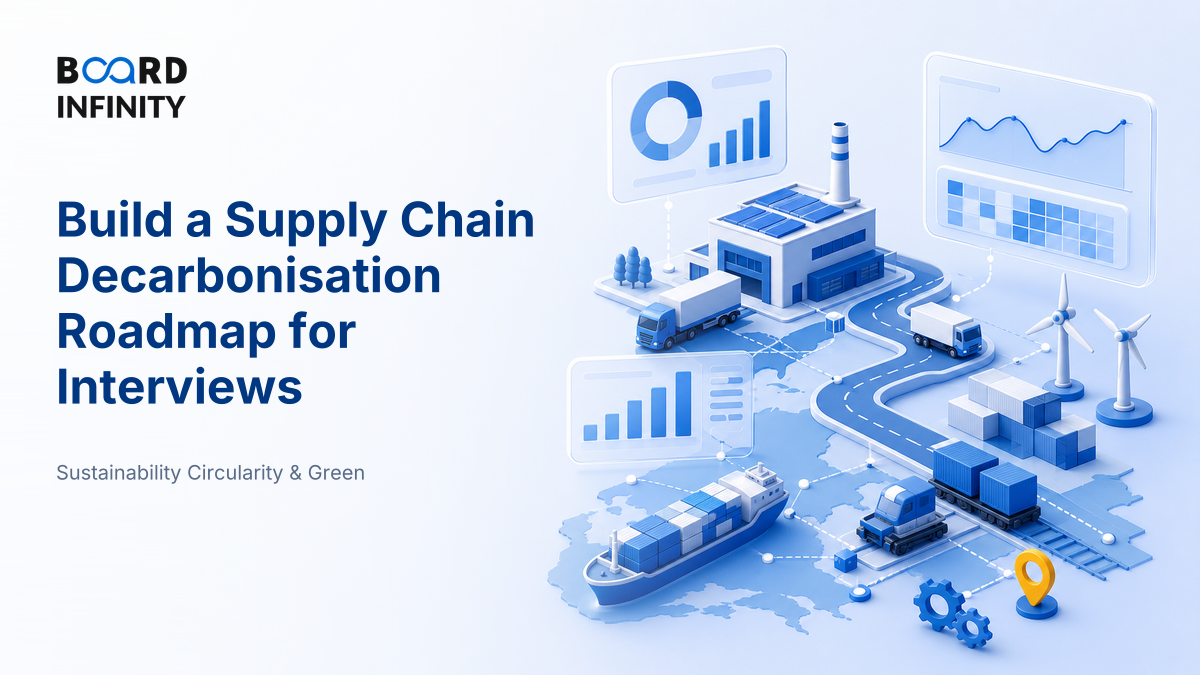
A truck pulls into a warehouse gate at 6 a.m., its diesel engine idling while pallets from multiple suppliers wait for unloading. The carbon in that scene is not sitting in one department - it is hidden in routes, packaging, supplier energy, inventory policy, contracts and customer service promises.
- A supply chain decarbonisation roadmap is a sequenced plan to cut CO2e across sourcing, making, moving, storing and returning goods.
- Start with the emissions baseline: Scope 1, Scope 2 and the relevant Scope 3 categories.
- Prioritise by carbon impact, cost, feasibility, customer impact and supplier readiness - not by what sounds green.
- The strongest levers are usually clean energy, modal shift, fleet electrification, packaging redesign, supplier engagement and demand-inventory optimisation.
- Use a roadmap funnel: measure emissions, identify hotspots, build abatement options, sequence initiatives, govern delivery.
- Track tCO2e, emissions intensity, renewable electricity share, supplier coverage, abatement delivered and marginal abatement cost.
- The interview-winning answer links carbon reduction with cost, resilience, procurement, operations and customer service.
Big Picture: Decarbonisation Is a Supply Chain Redesign Problem
The mistake is to treat decarbonisation as a CSR slide. In supply chain, it is an operating model question: where do we source, how do suppliers produce, how much inventory do we hold, which transport mode do we use, and how do we make carbon visible in daily decisions?
What a Decarbonisation Roadmap Actually Contains
A supply chain decarbonisation roadmap is a time-phased plan that reduces emissions across the end-to-end value chain while protecting cost, service and resilience. It is not a random list of green projects.
Think of it as four linked layers:
The roadmap should answer five practical questions:
- Where are the emissions? Own factories, warehouses, purchased electricity, inbound logistics, supplier materials, packaging or product use?
- Which emissions matter most? Use carbon value, spend, risk and control to rank hotspots.
- Which levers reduce carbon without breaking service? For example, route optimisation may reduce both emissions and cost, while a cleaner material may increase cost.
- Who must change? Procurement, operations, logistics partners, suppliers, finance and product teams all own different levers.
- How will progress be measured? Carbon KPIs must sit beside OTIF, cost-to-serve, inventory turns and supplier performance.
Definitions You Must Be Able to Say Cleanly
- Decarbonisation: reducing or eliminating CO2e emissions from an activity, asset, product or value chain.
- Net zero: reducing emissions close to zero, with remaining emissions re-absorbed from the atmosphere, as described by the United Nations net zero explanation.
- Scope 1: direct emissions from sources owned or controlled by the company, under the GHG Protocol standards.
- Scope 2: emissions from generation of purchased electricity consumed by the company, under the GHG Protocol standards.
- Scope 3: other indirect value-chain emissions from sources not owned or controlled by the company, under the GHG Protocol standards.
The Six-Step Roadmap Framework
Use this structure whenever you are asked to build a roadmap from scratch. It is simple enough for interviews and robust enough for a real supply chain project.
This is where procurement becomes central. If most emissions sit in purchased materials and outsourced logistics, carbon reduction depends on supplier selection, contracts and development - exactly the territory covered in what procurement owns and how it creates value.
Where the Emissions Hide: The Supply Chain Hotspot Map
Supply chain emissions usually hide in four places: energy used in operations, materials bought from suppliers, logistics movements and decisions that create unnecessary demand or waste. A good roadmap makes these visible before choosing solutions.
For example, an Indian e-commerce business may find that last-mile delivery emissions depend on delivery density, vehicle type, failed delivery rates and hub placement. Flipkart has publicly associated its fleet transition with The Climate Group's EV100 electric vehicle initiative, but the strategic lesson is broader: electrification works best when supported by route density, charging access, vehicle utilisation and delivery-slot design.
Prioritising Decarbonisation Levers
Once hotspots are clear, build an abatement portfolio. Do not choose projects only because they sound impressive. Choose them because they reduce meaningful emissions within real operating constraints.
A useful prioritisation matrix is carbon impact versus implementation feasibility. The best early moves sit in the top-right: high impact and feasible. The hardest strategic bets sit in the top-left: high impact but difficult, often requiring supplier transformation or capex.
Metrics That Prove the Roadmap Is Working
Carbon intent is easy to announce and hard to operate. These are the KPIs that make a roadmap measurable.
Notice the link to analytics and planning. Poor forecasts create excess stock, markdowns, emergency shipments and waste. That is why AI for inventory optimisation and replenishment becomes a decarbonisation lever when it reduces overstock and expedites without hurting availability.
Mini Case Study: Schneider Electric and Supplier Decarbonisation
Schneider Electric built a supplier-focused decarbonisation programme, showing that supply chain carbon reduction depends on supplier capability, data discipline and joint execution.

Situation: For many industrial companies, a large share of climate impact sits outside owned operations - in purchased materials, components and supplier energy use. That makes decarbonisation impossible if procurement only negotiates price and delivery.
The move: Schneider Electric launched its Zero Carbon Project to help major suppliers reduce operational carbon emissions, with the programme publicly described as focused on engaging 1,000 top suppliers and aiming to halve their operational CO2 emissions by 2025 (Schneider Electric Zero Carbon Project). The important design choice is not only the target; it is the supplier operating system around it - education, emissions measurement, energy-efficiency support and renewable electricity adoption.
The lesson: The primary driver is supplier engagement at scale. Supporting drivers are data standardisation, capability building, category-level prioritisation, renewable-energy guidance and governance through supplier scorecards. In interview language: Schneider did not merely ask suppliers to be greener; it changed the procurement relationship so carbon became part of performance management.
For a procurement interview, connect this case to supplier selection, scorecards and evaluation: carbon performance should move from a compliance checkbox to a scored business criterion.
How AI Changes Supply Chain Decarbonisation
AI is not a magic carbon reducer. It improves the roadmap when it makes better decisions visible faster.
- Cleaner emissions baselines: AI can classify spend, match suppliers to emissions factors, detect missing data and flag suspicious changes in Scope 3 estimates. The risk is false precision, so finance and sustainability teams must validate factors and assumptions.
- Lower-emission planning: Machine learning can improve demand forecasts, reduce excess inventory and recommend replenishment policies that avoid air freight, emergency production and disposal.
- Transport and network optimisation: AI can recommend load consolidation, route changes, hub placement and delivery windows that reduce tonne-km or improve vehicle utilisation.
Use NotebookLM by loading a company annual report, sustainability report and supplier policy. Ask: "Identify the likely supply chain emission hotspots, map them to Scope 1, 2 and 3, and propose five decarbonisation initiatives with KPIs and owners." Then check every numeric claim against the original document before using it.
AI also changes procurement execution. Contract review tools can flag missing emissions clauses, supplier dashboards can surface risk, and spend analytics can identify high-carbon categories - a natural extension of using AI in spend analysis, sourcing and contract review.
Interview Relevance
"You are the supply chain manager of a consumer goods company. Leadership wants a decarbonisation roadmap without increasing cost sharply. How would you approach it?"
Say one trade-off explicitly: "I would avoid cutting emissions by simply holding more inventory or worsening service; the roadmap must optimise carbon, cost and reliability together."
Common Mistake
The biggest mistake is jumping straight to visible solutions like electric vehicles or solar panels without a baseline. It costs candidates because it sounds tactical, not managerial. The fix: always start with "measure hotspots, then prioritise levers by carbon impact, feasibility, cost and service risk."