
Decarbonisation Levers Across Sourcing, Making & Moving
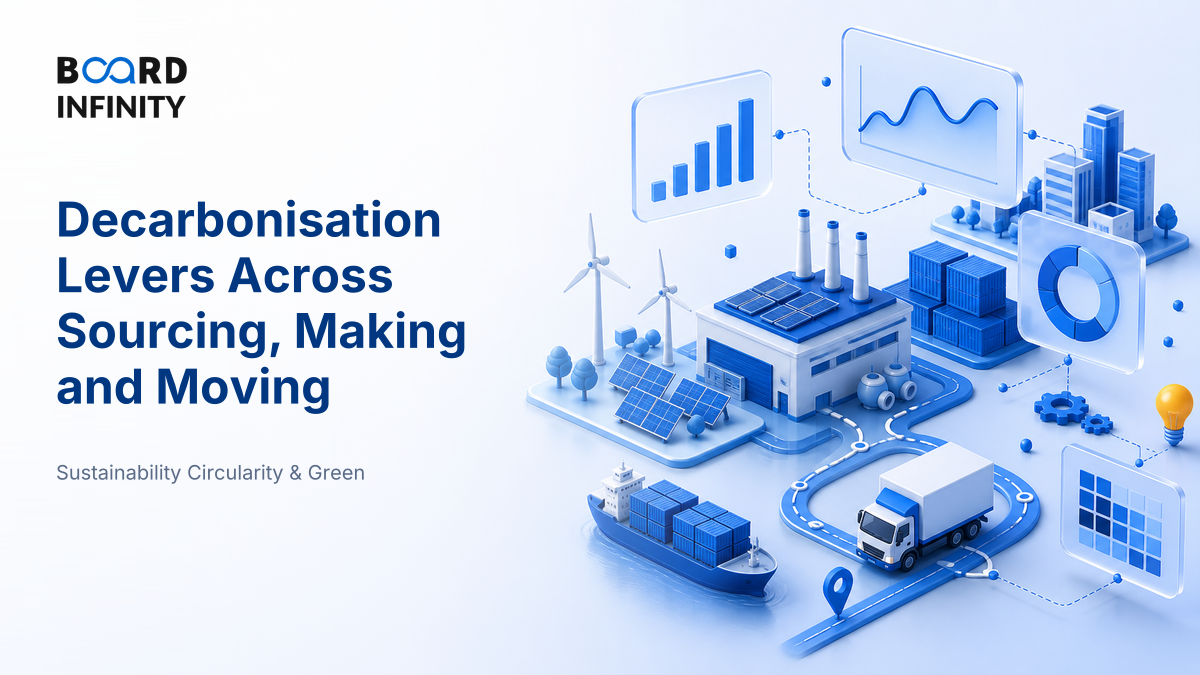
A factory can look efficient on the shop floor and still be carbon-heavy before the first machine starts - because the steel, cement, chemicals, packaging and power arrived with emissions already embedded. The real contrast is this: yesterday’s supply chain was optimized for cost, speed and service; tomorrow’s winning supply chain must optimize cost, service and carbon together.
- Decarbonisation means reducing greenhouse-gas emissions from operations and value chains toward net zero.
- Think in three operating zones: sourcing decides embedded carbon, making controls process and energy emissions, and moving controls freight and distribution emissions.
- The best levers are not always the most visible. Supplier material choices and process redesign often matter more than office-level initiatives.
- Use the hierarchy: avoid emissions, then reduce them, then replace high-carbon inputs, and only then neutralise residuals.
- Key metrics: carbon intensity, renewable electricity share, supplier emissions coverage, freight emissions per tonne-km, and abatement cost.
- Interview answer formula: map emissions by scope, identify hotspots, choose levers by impact and feasibility, quantify trade-offs, and govern through KPIs and supplier contracts.
- The common mistake is treating decarbonisation as only “green logistics” or “renewable power” instead of an end-to-end value-chain redesign problem.
Big Picture: Carbon Is Designed Into the Chain
Decarbonisation across sourcing, making and moving is a value-chain problem. Every product carries carbon from the materials selected, the suppliers chosen, the process route used, the energy consumed, and the kilometres travelled before it reaches the customer.
A useful mental model is to split emissions by where managers can act. Procurement influences what carbon enters the system. Operations decide how much energy and waste the system creates. Logistics decides how efficiently the product moves.
Core Explanation: The Three Decarbonisation Zones
1. Sourcing: Reduce the Carbon You Buy
Sourcing is often the biggest decarbonisation battlefield because purchased goods and services sit in Scope 3 for many firms. The procurement question changes from “Who is cheapest?” to “Who offers the best total value after cost, risk, quality, resilience and carbon?”
Important sourcing levers include:
- Material substitution: using lower-carbon alternatives such as recycled inputs, certified renewable materials, or blended materials where performance allows.
- Supplier selection: adding emissions intensity, renewable energy use, and data transparency to supplier scorecards. If this is weak, revise Supplier Selection, Scorecards and Evaluation before the interview.
- Supplier development: helping strategic suppliers improve energy efficiency, switch fuels, or measure emissions more accurately.
- Contracting for carbon: including data-sharing clauses, low-carbon specifications, green premium sharing, and improvement milestones.
- Demand redesign: challenging over-specification. A lighter pack, simpler part, or standardised component can cut carbon before manufacturing begins.
A consumer-goods company reducing packaging thickness without compromising shelf protection is not just saving material cost. It is cutting upstream material emissions, transport weight and waste. The primary driver is design simplification, supported by supplier capability and quality testing.
2. Making: Reduce the Carbon You Create
Making covers emissions from manufacturing, assembly, utilities, heat, power, process chemistry, scrap and rework. The decarbonisation challenge differs by sector. An FMCG plant may focus on boilers, refrigeration and electricity; a cement or steel plant must also tackle process emissions and fuel intensity.
The main making levers are:
- Energy efficiency: better motors, compressors, heat recovery, insulation, control systems and preventive maintenance.
- Renewable electricity: onsite solar, power purchase agreements, open-access renewable procurement, or renewable certificates where credible.
- Fuel switching: moving from coal, furnace oil or diesel to lower-carbon fuels where technically feasible.
- Process redesign: changing recipes, temperature profiles, cycle times, yield losses, or equipment routes.
- Waste and yield improvement: reducing scrap, rejects and rework. A defective unit carries the carbon of production without creating customer value.
This is why decarbonisation is close to lean operations. Line balancing, quality improvement and energy optimisation often reinforce each other. If an operations case asks how to improve both productivity and emissions, connect your answer to Line Balancing and Workstation Design.
3. Moving: Reduce the Carbon You Ship
Moving covers inbound logistics, inter-plant transfers, warehousing, outbound distribution, last-mile delivery and reverse logistics. The best logistics decarbonisation usually starts before choosing an electric truck: reduce unnecessary movement first.
Key moving levers include:
- Network redesign: placing warehouses, plants and suppliers to reduce total distance and empty running.
- Modal shift: moving suitable freight from road to rail, waterways or coastal shipping where service requirements allow.
- Load efficiency: improving cube utilisation, pallet design, routing, backhauls and milk runs.
- Fleet transition: using EVs, CNG, LNG, biofuels or other alternatives where duty cycle and infrastructure fit.
- Packaging for logistics: reducing weight and volume so more units move per trip.
The Lever Matrix: Impact Versus Control
In interviews, do not list levers randomly. Rank them by two questions: “How much carbon can this reduce?” and “How much control does the company have?” This separates boardroom priorities from nice-to-have initiatives.
Definitions You Must Be Able to Say Cleanly
- Decarbonisation: reducing greenhouse-gas emissions from operations and value chains toward net zero.
- Carbon footprint: total greenhouse-gas emissions caused directly and indirectly by an activity, product or organisation, expressed as CO2e.
- Scope 1 emissions: direct emissions from sources owned or controlled by the company, as classified by the GHG Protocol Corporate Standard.
- Scope 2 emissions: indirect emissions from purchased electricity, steam, heating or cooling, as classified by the GHG Protocol Corporate Standard.
- Scope 3 emissions: all other indirect value-chain emissions, as classified in the GHG Protocol Scope 3 Standard.
- Net zero: balancing remaining greenhouse-gas emissions with equivalent removals after deep emissions reduction, following the Science Based Targets initiative net-zero guidance.
Metrics: What to Track Across Sourcing, Making and Moving
Good decarbonisation answers use metrics. Avoid vague phrases like “reduce carbon footprint” unless you can say how it will be measured.
A Five-Step Decarbonisation Approach
Use this when you are asked to design a supply-chain decarbonisation plan. It keeps your answer structured and commercial.
If the question goes deep into procurement execution, connect decarbonisation to what procurement owns and how it creates value: specification, supplier choice, commercial terms, risk and performance management.
Case Study: Dalmia Cement and the Hard-to-Abate Playbook
Dalmia Cement is a useful Indian example because cement decarbonisation demands action across raw materials, process energy, power and logistics - not one symbolic green initiative.
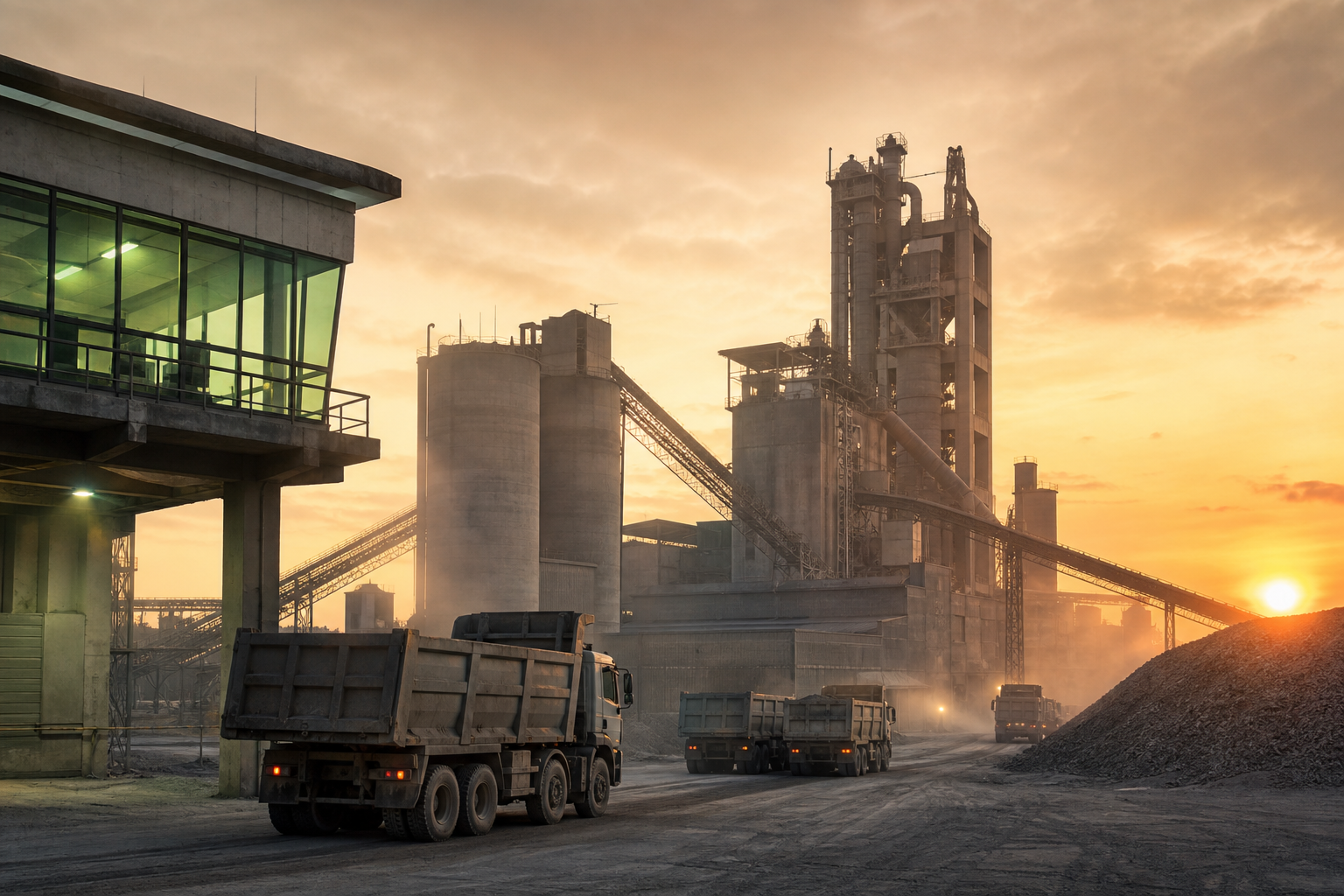
Situation. Cement is a hard-to-abate sector because emissions come not only from fuel combustion but also from the chemical conversion of limestone into clinker. The International Energy Agency’s cement sector analysis highlights the sector’s need for multiple pathways, including efficiency, alternative fuels, lower clinker-to-cement ratios and emerging technologies.
The move. Dalmia Cement’s sustainability communication emphasises a portfolio approach across low-carbon cement, energy efficiency, renewable energy, waste heat recovery, alternative fuels and operational improvements (Dalmia Cement sustainability page). The primary driver is reducing the carbon intensity of cement production, especially through material and process choices. Supporting drivers include better thermal efficiency, cleaner electricity, use of waste heat, and logistics optimisation.
Outcome and lesson. The case teaches an interview-critical point: in hard-to-abate sectors, there is rarely a silver bullet. The strongest decarbonisation programs combine product chemistry, process engineering, procurement choices, energy strategy and logistics discipline.
How AI Changes Decarbonisation Levers Across Sourcing, Making and Moving
AI makes decarbonisation less dependent on annual reporting and more embedded in operating decisions. Three shifts matter in 2026:
- Supplier emissions intelligence: AI can classify spend, detect high-carbon categories, flag missing supplier data, and compare supplier disclosures with invoices, material specs and shipment records. This strengthens procurement analytics, especially when paired with AI in spend analysis, sourcing and contract review.
- Manufacturing energy optimisation: machine-learning models can predict energy spikes, detect compressed-air leaks, optimise batch schedules and recommend process settings that reduce energy per unit without hurting quality.
- Carbon-aware logistics planning: routing engines can optimise for cost, service level, load factor and emissions together, rather than treating carbon as an after-the-fact report.
Use NotebookLM or Claude for interview prep: upload a company annual report, sustainability report and this lesson, then ask, “Identify the top sourcing, making and moving decarbonisation levers for this company, and frame a two-minute interview answer with risks and KPIs.”
Interview Relevance
“Suppose a manufacturing company wants to reduce supply-chain emissions without damaging cost and service levels. What levers would you recommend across sourcing, production and logistics?”
Use the phrase “carbon is a design variable.” It signals that you understand decarbonisation is built into specifications, networks, processes and contracts - not reported after the fact.
Common Mistake
The mistake: jumping straight to electric vehicles or renewable energy and ignoring upstream materials and process emissions. Why it costs candidates: it makes the answer shallow and misses the biggest hotspots in many industries. One-line fix: always start with a footprint map, then choose levers across sourcing, making and moving.