
Why Sustainability Became an Operations Priority
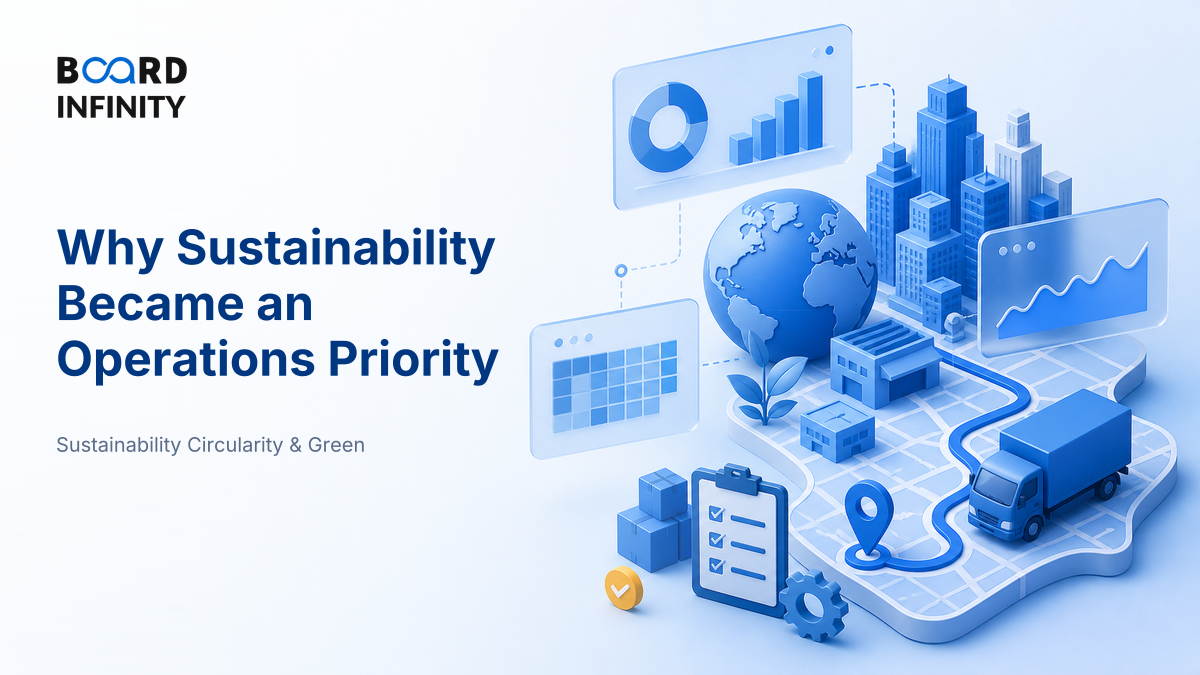
At a Bhiwandi warehouse gate, the sustainability story is visible before anyone opens a strategy deck: thinner cartons, electric delivery vehicles charging near the dock, and a dispatch dashboard trying to reduce empty kilometres. What used to sit in a CSR report now decides routing, packaging, supplier choice, plant layout and working capital.
- Sustainability became an operations priority because carbon, energy, waste, water and supplier practices now affect cost, service, compliance and risk.
- The shift is from “doing good” to “operating better” - fewer inputs, fewer losses, fewer disruptions, better licence to operate.
- The five big drivers are regulation, customer requirements, cost pressure, supply risk and investor or board scrutiny.
- Operations owns the levers: product design, sourcing, production process, logistics, warehousing, packaging and returns.
- Track it with operational metrics: carbon intensity, energy intensity, waste-to-landfill rate, water intensity and supplier ESG coverage.
- The best interview answer links sustainability to the operations triangle: cost, quality/service and risk - not just environment.
- The trap: giving a moral answer instead of an operating answer. The fix is to show one concrete process change and one measurable KPI.
The Big Picture: Sustainability Moved from Report to Routine
Sustainability becomes operational when it changes daily decisions: which supplier wins, what packaging is approved, how a truck is loaded, how a plant uses energy, and how returns are handled. It is no longer a parallel ESG activity; it is embedded inside the operating model.
Why Sustainability Became an Operations Priority
The clean way to think about this topic is: sustainability entered operations when external pressure became internal economics. A carbon rule, a customer tender, a water shortage or a fuel-price shock only matters to a COO when it changes cost, capacity, service level or business continuity.
There are five practical reasons.
Notice the pattern: none of these reasons lives only in the sustainability department. They land in procurement, manufacturing, logistics, planning, quality and product design. If you need to connect this with buying decisions, revise what procurement owns and how it creates value.
The Operations Levers: Where Sustainability Actually Gets Built
A strong answer names the specific levers. “We should be sustainable” is weak. “We can redesign packaging, shift to renewable energy, qualify lower-risk suppliers and improve vehicle utilisation” is operational.
This is why sustainability belongs in supplier evaluation and category strategy, not only annual reporting. A natural next step is supplier selection, scorecards and evaluation, because sustainability criteria must eventually sit beside cost, quality and delivery.
The Sustainability Priority Matrix
Operations teams cannot fix everything at once. The practical approach is to rank sustainability issues by business materiality and operational controllability.
Quick wins are actions like LED retrofits, packaging reduction, load consolidation or scrap reduction. Strategic bets are harder moves like supplier decarbonisation, process redesign, alternate materials or fleet transition. Both matter, but they need different governance.
Metrics That Make Sustainability Operational
If it is an operations priority, it must be measurable in operating reviews. There is no universal “good” number across industries; a cement plant, data centre, FMCG factory and logistics network have different baselines. In interviews, the strong answer is: baseline it, benchmark it, then show improvement without hurting service or quality.
Worked example: Suppose a consumer goods plant reduces packaging from 100 grams to 90 grams per unit for 1,000,000 units. That saves 10,000 kg of material. If the material costs ₹120 per kg, the direct material saving is ₹12,00,000. If a hypothetical emissions factor is 2 kg CO2e per kg of material, avoided emissions are 20,000 kg CO2e, or 20 tonnes CO2e. The interview point is not the exact factor; it is the logic - one packaging decision affects cost, freight weight, waste and emissions together.
Definitions You Should Be Able to Say Cleanly
Sustainability: “Development that meets the needs of the present without compromising the ability of future generations to meet their own needs” (World Commission on Environment and Development, 1987).
Sustainable operations: Designing and running processes to deliver cost, quality and service while reducing environmental and social harm.
Operational sustainability priority: A sustainability issue important enough to change process design, resource allocation, supplier choice or performance metrics.
Case Study: Mahindra Logistics and Green Operations in Indian Logistics
Mahindra Logistics shows why sustainability in logistics is not a branding add-on - it affects fleet choices, routing, warehousing, customer contracts and risk control.
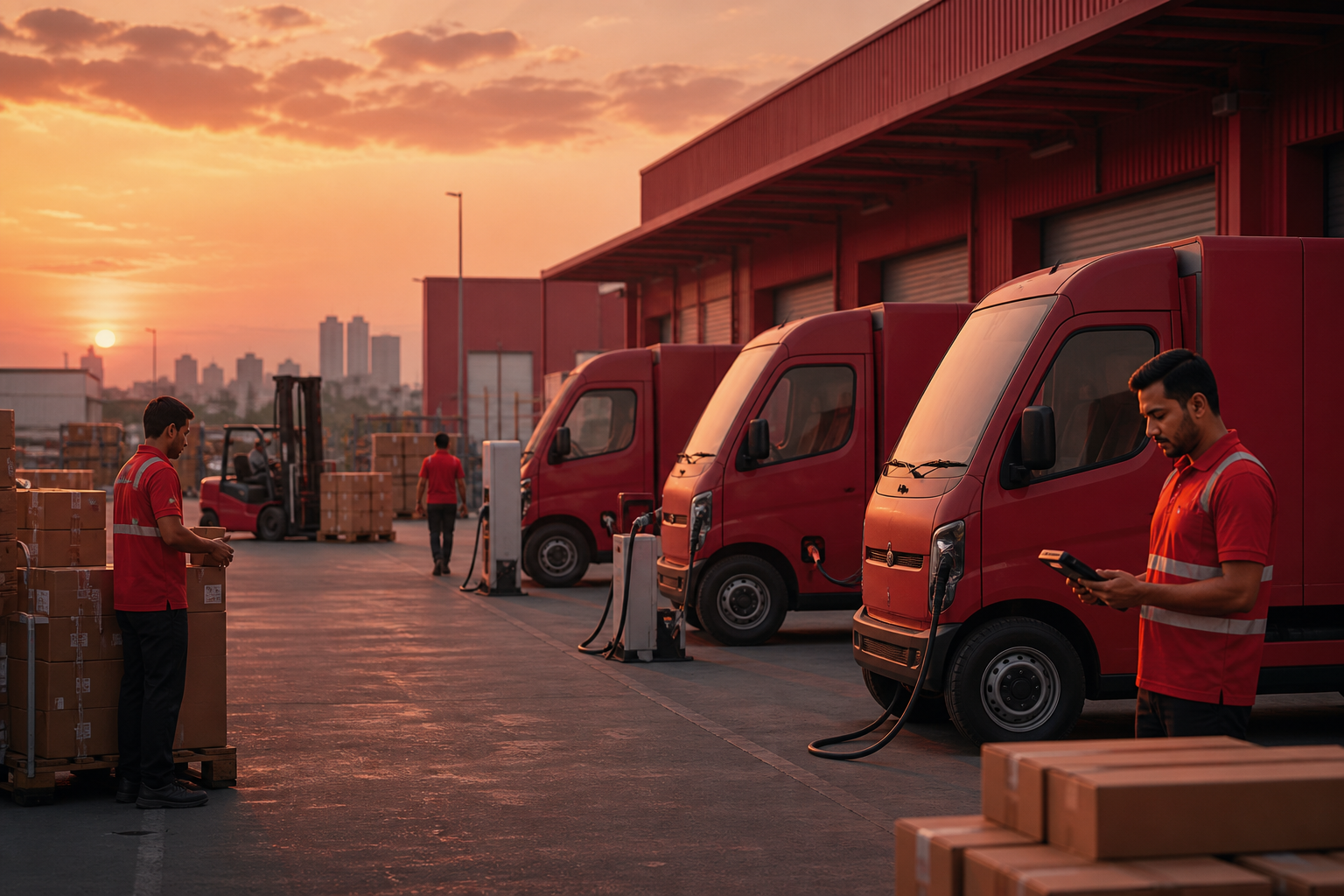
Situation: Logistics is an operations-heavy business where emissions are tied directly to miles travelled, vehicle utilisation, fuel choice, warehousing energy and packaging flows. Indian customers in sectors such as e-commerce, automotive and consumer goods increasingly want reliable delivery with lower environmental impact.
The move: Mahindra Logistics has positioned sustainability inside its logistics operating model through areas such as green transportation, resource-efficient warehousing and responsible business practices, as described in its own Mahindra Logistics sustainability agenda. The primary driver is the need to decarbonise logistics while protecting service reliability. Supporting drivers include customer expectations, fleet technology availability, route planning capability, warehouse efficiency and stronger ESG governance.
The lesson: The company illustrates the correct interview answer: sustainability is not one initiative. It is a system of choices - vehicle mix, network design, load planning, energy use, supplier standards and customer value proposition.
In Indian quick commerce, sustainability appears in small but high-frequency operating decisions: bag type, carton reuse, order batching, rider distance, cold-chain energy and reverse logistics for damaged goods. The so what: even a tiny improvement per order can matter when repeated across dense urban networks, but it works only if service speed and product condition are protected.
How AI Changes Sustainability as an Operations Priority
AI makes sustainability more operational because it can convert messy process data into decisions faster. The useful shift is from annual reporting to near-real-time control.
A practical student workflow: load a company annual report, sustainability report and a supplier scorecard template into NotebookLM. Ask: “Identify the top five operational sustainability risks, the KPIs used, and three interview questions a COO might ask.” Then verify the answer against the original documents.
If the discussion turns toward planning and replenishment, connect sustainability with using AI for inventory optimisation and replenishment, because fewer stock-outs and less excess inventory often reduce both cost and waste.
Interview Relevance
“Why has sustainability become a core operations priority, and how would you operationalise it in a manufacturing or logistics company?”
Use the phrase: “Sustainability becomes operational when it changes a decision right now - supplier, route, packaging, process setting, energy source or KPI.” It sounds practical and senior.
The mistake: treating sustainability as charity, branding or compliance only. That costs candidates because operations interviewers want process logic, constraints and metrics. One-line fix: always connect sustainability to one operating lever and one measurable KPI.