
Energy, Water & Waste Efficiency in Plants
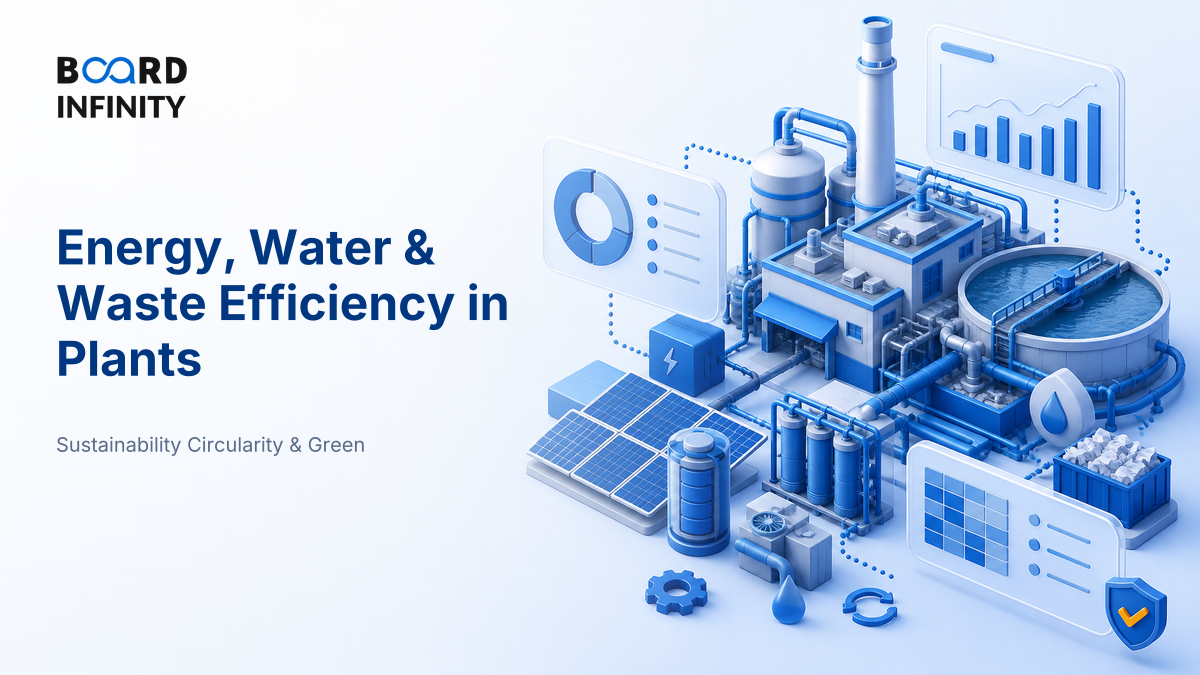
Walk through a modern plant at 6 a.m. and the invisible losses become visible: compressed air hissing from a tiny leak, warm water going straight to drain, rejected material piling beside a line that is still running. Energy, water and waste efficiency is the discipline of finding those leaks in the system - then turning them into lower unit cost, lower risk and cleaner operations.
- Plant efficiency means producing the same or better output with less energy, water and material loss per unit.
- Think in three loops: energy loop for power and heat, water loop for withdrawal, reuse and discharge, and waste loop for yield, scrap and disposal.
- The best projects start with a baseline: kWh/unit, m3/unit, waste kg/unit, yield percentage and utility cost/unit.
- The hierarchy is simple: avoid loss first, reuse next, recycle after that, dispose last.
- Efficiency is not only an ESG topic - it is a productivity, cost, compliance and resilience topic.
- Interview answers should connect technical levers like motors, boilers, compressed air and ETPs to business outcomes like unit cost, payback, downtime and regulatory risk.
Big Picture: Three Resource Loops Inside Every Plant
A plant is not just a production line. It is a set of resource loops. Raw material becomes product or scrap. Energy becomes useful work or heat loss. Water becomes process input, reusable stream or discharge. The manager's job is to tighten all three loops without damaging safety, quality or throughput.
Core Explanation: How Energy, Water and Waste Efficiency Actually Works
The big idea is specific consumption: measure resource use per unit of good output, then reduce the avoidable part. Total electricity may rise if production rises, but kWh per finished unit should fall if the plant is getting more efficient.
Energy, water and waste are connected. A rejected batch wastes material, but it also wastes the power, steam, labour hours and water already consumed. A leaking compressed-air line increases electricity cost. A poor cleaning process wastes water and increases effluent treatment load. So the right mental model is not “three separate sustainability projects”; it is one operating system for reducing resource loss.
The Efficiency Funnel: From Avoidance to Disposal
Use this funnel whenever you are asked “how would you improve plant efficiency?” The top of the funnel gives the highest-value levers because it prevents loss before it is created.
Avoid means redesigning the process so the loss does not occur - for example, better first-time-right quality or better changeover planning. Reduce means using less resource for the same step - efficient motors, right-sized pumps, optimized steam traps or low-flow cleaning systems. Reuse means using the same stream again inside the plant, such as reusing treated water for gardening, cooling or flushing where safe. Recycle means converting waste into a useful input, either internally or through a partner. Dispose is the final option after value recovery has been exhausted.
Definitions You Should Be Able to Say in One Breath
- Energy efficiency: using less energy to perform the same task or produce the same output, as explained by the U.S. Department of Energy.
- Water efficiency: minimizing freshwater withdrawal and wastewater generation while maintaining process performance, safety and product quality.
- Waste efficiency: maximizing saleable output from inputs while minimizing scrap, rejects, sludge, hazardous waste and disposal dependency.
- ISO 50001: an energy management system standard that helps organizations improve energy performance, described by ISO.
The Plant Manager's Five-Step Improvement Process
Most weak answers jump straight to “install solar panels” or “recycle water.” A strong answer follows a sequence: measure the loss, locate the cause, prioritize the fix, implement, and lock the gains into daily management.
This is also where classic operations topics connect. If a bottlenecked line keeps upstream machines running idle, energy is wasted; that is why line balancing and workstation design is a real prerequisite for plant efficiency, not a separate theory topic.
Key Metrics: What to Track in Energy, Water and Waste Efficiency
There is no universal “good” number across cement, FMCG, chemicals, auto components and textiles. A responsible answer says: compare against the same product family, same plant baseline, engineering standard and peer benchmark where available. Still, the formulas are standard and interviewers expect you to know them.
Worked Example: Turning Resource Savings into Rupees
Suppose a plant produces 100,000 good units per month. After leak repair, motor scheduling and water reuse, its energy intensity falls from 12 kWh/unit to 10.8 kWh/unit. At a tariff of ₹8/kWh, monthly energy saving is:
(12 - 10.8) x 100,000 x ₹8 = ₹9,60,000
Water use falls from 0.60 m3/unit to 0.48 m3/unit. If water plus treatment cost is ₹60/m3, monthly water saving is:
(0.60 - 0.48) x 100,000 x ₹60 = ₹7,20,000
Waste falls from 20 tonnes to 15 tonnes a month. If disposal cost is ₹5,000/tonne, disposal saving is:
5 x ₹5,000 = ₹25,000
Total visible monthly saving is ₹17,05,000, before counting softer benefits such as lower downtime, lower regulatory risk, better audit performance and improved customer confidence.
Where the Levers Sit: Low-Cost Wins vs Capital Projects
In interviews, do not give only glamorous capex answers. Many plants get meaningful savings from discipline: switching off idle equipment, repairing steam traps, fixing compressed-air leaks, improving preventive maintenance and reducing rework.
Procurement has a large role because pumps, motors, packaging, chemicals, maintenance contracts and waste-handling vendors shape the plant's resource footprint. For that bridge, revise what procurement owns and how it creates value and supplier risk, compliance and responsible sourcing.
Mini Case Study: Dalmia Cement and Resource Efficiency in an Energy-Intensive Plant
Dalmia Cement is a useful Indian case because cement manufacturing forces managers to connect energy, materials, water and waste into one operating system, not treat efficiency as a side project.
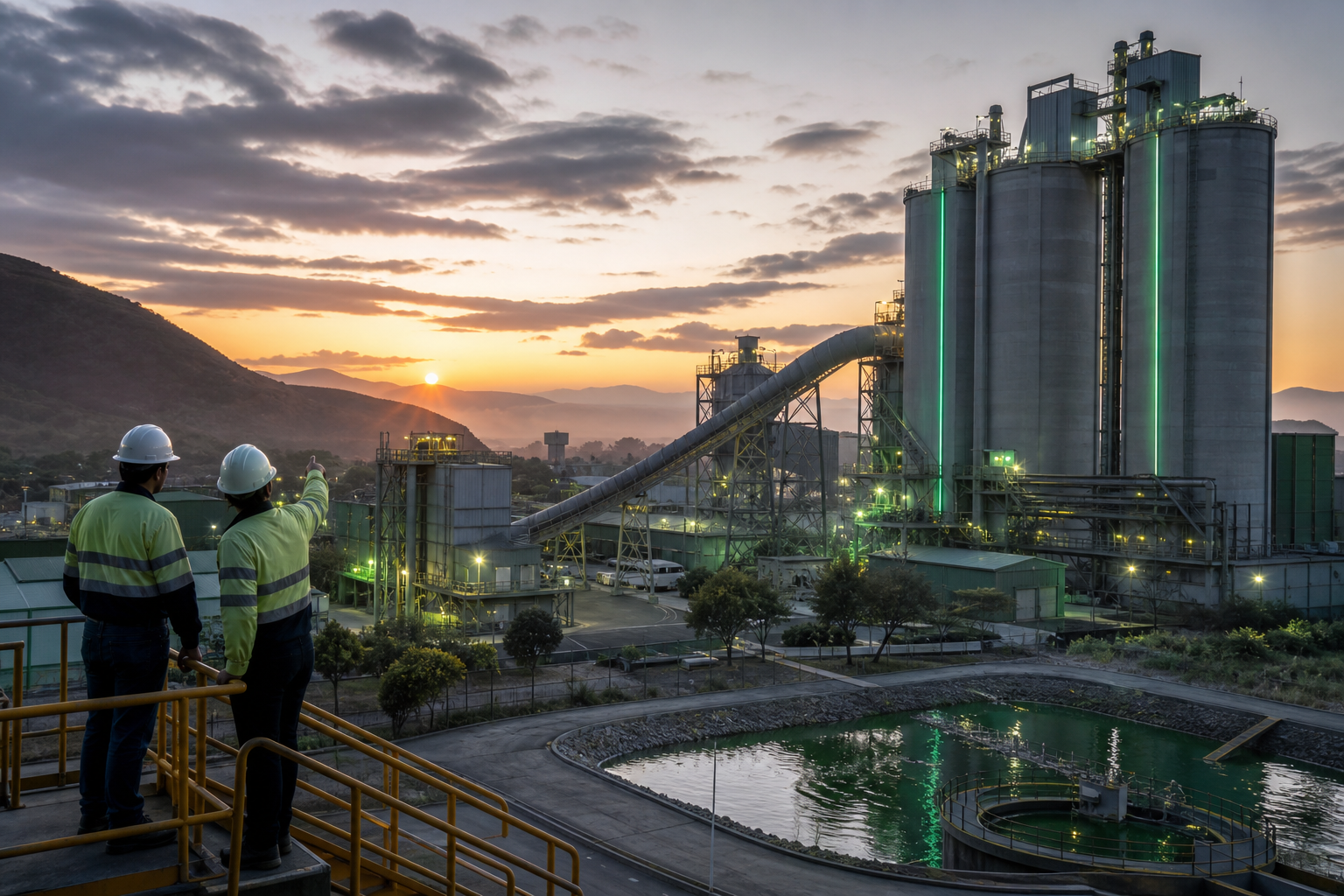
Situation. Cement is a resource-intensive industry: kilns need high heat, grinding needs power, limestone and additives must be handled carefully, and dust, water and waste streams require disciplined control. For any cement player, efficiency is not optional polish; it affects cost competitiveness, emissions exposure, compliance and customer credibility.
The move. Dalmia Cement has publicly positioned sustainability and decarbonisation as core to its cement operations through levers such as blended cement, alternative fuels, waste heat recovery and resource conservation, described on its Dalmia Cement sustainability page. The important management lesson is the combination: the primary driver is process and energy efficiency in a high-heat manufacturing system, supported by material substitution, waste-derived inputs, water conservation practices, and leadership focus.
Outcome and lesson. The case shows that plant efficiency scales when it is embedded into operations, procurement and engineering decisions together. A weak answer would say “they save energy.” A strong answer says “they reduce resource intensity through process control, heat recovery, alternative inputs, product mix choices and water discipline - and that lowers both cost and sustainability risk.”
How AI Changes Energy, Water & Waste Efficiency in Plants
AI makes plant efficiency more predictive and less dependent on monthly review meetings. The shift is from “find the loss after the bill arrives” to “detect abnormal consumption while it is happening.”
- AI energy optimization: ML models can learn normal energy patterns for compressors, chillers, boilers, pumps or HVAC systems and flag abnormal consumption, poor scheduling or equipment drift.
- Computer vision for waste and quality loss: Cameras can detect defects, poor segregation, overflowing bins or repeated reject patterns, helping teams reduce waste at source rather than only measure it later.
- Water analytics and leak detection: IoT meters plus anomaly detection can identify unusual flows, stuck valves, night-time leakage and high-usage cleaning cycles.
Practical student workflow: Load a company annual report, sustainability report, plant process notes and the metrics table from this lesson into NotebookLM. Ask: “Create five interview questions on energy, water and waste efficiency for this company, and suggest plant-level KPIs I should mention.” If the company has inventory-driven waste or expiry risk, connect it with using AI for inventory optimisation and replenishment.
Interview Relevance
Question: “You are the operations manager of a manufacturing plant. Energy, water and waste costs are rising. How would you improve efficiency without hurting output?”
Use the phrase “per good unit”. It signals that you understand productivity, quality and sustainability together.
Common Mistake
The mistake: treating energy, water and waste efficiency as a CSR answer full of generic ideas like “install solar” or “recycle waste.” It costs candidates because interviewers are testing plant economics and operational thinking. The fix: always start with specific consumption metrics, identify loss points, prioritize by impact and feasibility, and connect each lever to cost, quality, compliance and payback.