
Product Life Cycle Strategies: Answer PLC Questions with Stage-Wise Confidence
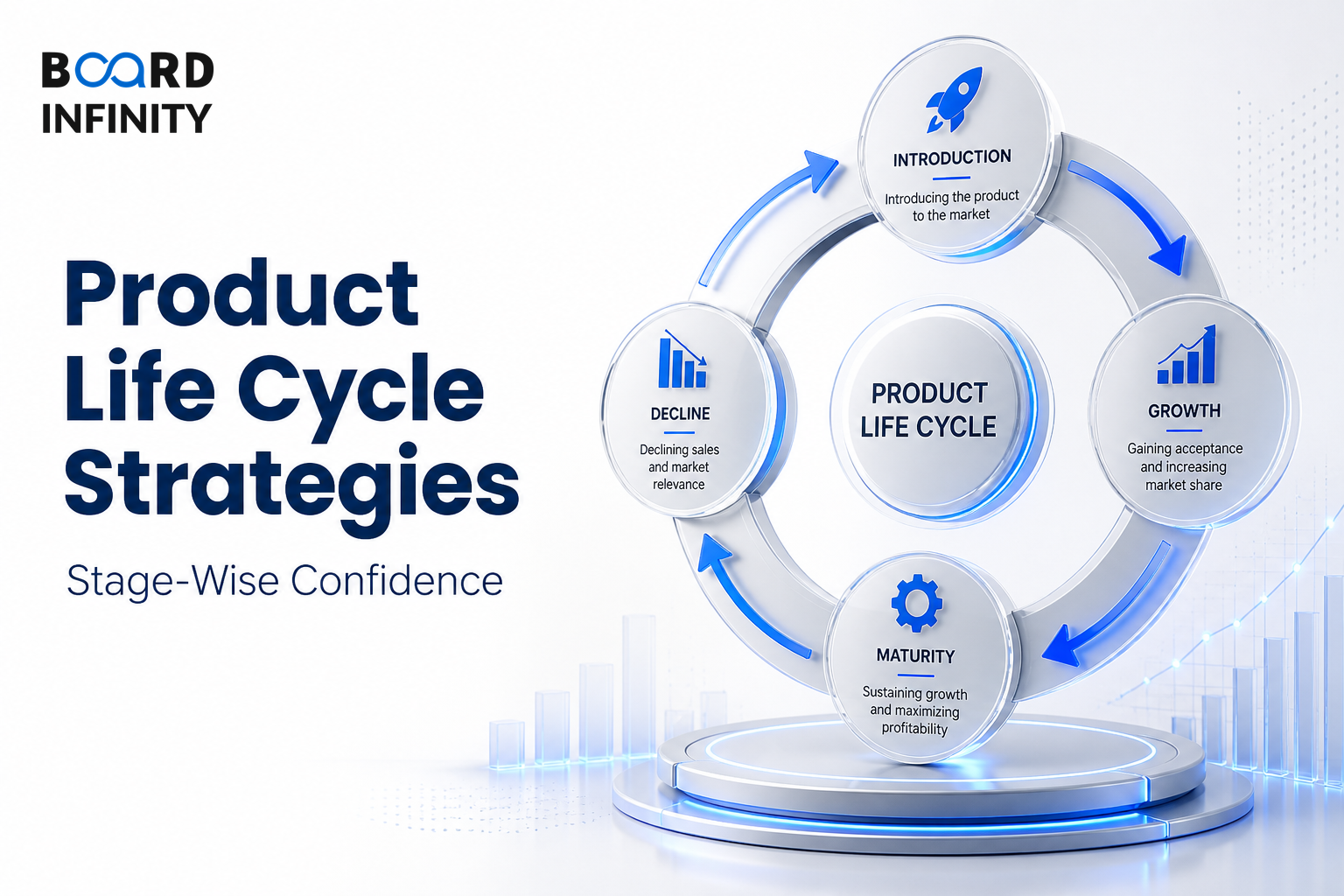
A product can be loved and still disappear. Apple discontinued the iPod touch in 2022 not because music vanished, but because the job of portable music had moved into smartphones and streaming.
- Product Life Cycle explains how sales and profits typically move through introduction, growth, maturity and decline.
- The key interview move is diagnosis first, strategy second - never jump to “increase advertising” without identifying the stage.
- Introduction: create awareness, trial and distribution; profits are often low or negative.
- Growth: build preference, expand channels, improve features and defend against new competitors.
- Maturity: protect share, differentiate, improve margins, find new users or new usage occasions.
- Decline: harvest, niche, rejuvenate or exit - depending on cash flow, brand equity and strategic fit.
- The biggest trap: treating PLC as a fixed calendar. It is a diagnosis based on sales, profit, competition, adoption and channel behaviour.
The Big Picture
The Product Life Cycle is a simple but powerful mental model: products behave like economic assets whose marketing job changes as the market changes. The same 4P decision - price, promotion, place or product - can be brilliant in one stage and wasteful in another.
Core Explanation: What Changes Across the PLC
The Product Life Cycle has two moving curves: sales and profit. Sales usually rise slowly at introduction, accelerate in growth, flatten in maturity and fall in decline. Profit often lags because early-stage marketing, distribution and education costs are high.
Strategies for Each Product Life Cycle Stage
A strong PLC answer sounds practical because it links each stage to a different strategic priority. Use this table as your stage-wise playbook.
Cadbury Dairy Milk Silk operates in a relatively mature premium chocolate space in India, so the play is not basic category education. The brand keeps relevance through gifting occasions, indulgence positioning, variants and seasonal communication. The strategic lesson: in maturity, growth often comes from usage occasions and differentiation, supported by distribution and packaging, not from simply shouting louder.
The Four PLC Strategy Choices in Decline
Decline is where candidates often sound vague. A declining product is not automatically a failed product. Some declining products still generate cash, some can survive as niches, and some deserve a clean exit.
How to Diagnose the Stage: Measures That Matter
PLC diagnosis is stronger when it uses evidence. There is no universal “good” number across categories, so judge each metric against category benchmarks, past cohorts and management targets.
Definitions You Can Say in One Breath
Kotler and Armstrong: Product life cycle is “the course of a product’s sales and profits over its lifetime.”
Three terms are worth separating clearly:
- Product class: the broad category, such as packaged beverages or smartphones.
- Product form: the specific format, such as carbonated soft drinks or foldable smartphones.
- Brand: the company’s named offer, such as Thums Up, iPhone or Paper Boat.
This matters because a product class may be mature while a product form or brand is still growing. For example, the overall smartphone market may mature while premium foldables are still in a growth phase.
Paper Boat: Managing Growth in a Traditional Category
Paper Boat turned Indian traditional drinks into a modern packaged beverage brand, showing how introduction and growth strategies differ from ordinary FMCG line extension.

Situation: When Paper Boat entered packaged beverages, Indian consumers already had many choices - colas, juices, bottled water and local drinks. The challenge was not only distribution; it had to make traditional drinks like aam panna and jaljeera feel trustworthy, convenient and premium enough for modern retail.
The move: Paper Boat did not compete head-on with cola brands on mass refreshment. Its primary driver was differentiated positioning around Indian nostalgia. Supporting drivers included convenient packaging, selective modern trade and e-commerce distribution, distinctive storytelling, seasonal flavours and a portfolio that made traditional beverages easier to buy outside the home.
Outcome and lesson: The brand created a recognizable niche in packaged ethnic beverages. The PLC lesson is sharp: in introduction, the job was education and trial; in growth, the job became repeat purchase, channel expansion and portfolio discipline. A good PLC strategy does not just ask “How do we sell more?” It asks “What barrier is stopping the next stage?”
How AI Changes Product Life Cycle Strategy
AI makes PLC less of a retrospective chart and more of an early-warning system. The marketer can now detect stage shifts faster and tailor actions with more precision.
- Earlier stage diagnosis: AI can scan sales, search trends, social listening, reviews and competitor listings to detect whether a product is moving from growth to maturity before the quarterly review catches it.
- Smarter lifecycle extension: Generative AI can identify new use occasions, audience segments and message variations, then help test them through rapid creative experimentation.
- Better decline decisions: ML models can estimate which SKUs still generate profitable repeat demand and which ones should be pruned, helping teams avoid emotional product decisions.
Use Perplexity to collect recent news, category signals and competitor moves for one product. Then use ChatGPT to classify the product’s PLC stage using sales signals, competition, channel expansion, pricing behaviour and promotion intensity.
Interview Relevance
“Pick any product category you know. Identify its Product Life Cycle stage and recommend marketing strategies for that stage.”
If you choose an example like EVs, quick commerce, UPI apps, premium chocolates or smartwatches, separate category PLC from brand PLC. That one distinction instantly makes your answer sound managerial.
Common Mistake
The most common mistake is giving the same strategy for every stage - usually “advertise more and reduce price.” It costs candidates because it shows no diagnosis. The one-line fix: first identify the stage using evidence, then choose the objective and only then recommend the 4Ps.
What to Revise Next
Once PLC is clear, move one step earlier and one step sharper: learn how products are created, then how marketers test whether the market truly wants them.