
Case Study: How to Explain a Successful Product Launch in India
A family walks into an EV scooter showroom in Bengaluru, not asking about top speed first, but about seat comfort, storage, safety and whether their parents can ride pillion comfortably. That is the moment a product launch either clicks or collapses - when the promise in the campaign meets the real job the customer wants done.
- A successful product launch is not an ad campaign; it is a coordinated system across customer insight, product, pricing, channel, communication and feedback.
- The core launch question is: who is this for, what problem does it solve better than alternatives, and how will the customer discover, try and repeat it?
- In India, launches must handle heterogeneity - language, income, channel mix, city tiers, payment behaviour, trust barriers and after-sales expectations.
- The cleanest answer framework is: insight - segment - positioning - product readiness - GTM - launch funnel - metrics - learning loop.
- Track the launch funnel: awareness, consideration, trial or demo, purchase, activation, repeat and advocacy.
- Ather Rizta is a useful Indian case because it shows how a brand can stretch from enthusiasts to families by changing the product, message and go-to-market system.
- The biggest mistake is treating “launch success” as buzz. Buzz matters only if it converts into adoption, repeat usage and profitable distribution.
The Big Picture: A Launch Is a System, Not a Moment
A product launch is the market-facing activation of a business decision: the company has chosen a customer, built a promise, prepared supply, priced the offer, trained channels and created a feedback loop. The event is visible; the system underneath decides whether it survives.
Core Explanation: The Anatomy of a Successful Product Launch
The simplest way to understand a launch is to see it as a controlled transfer of belief: the company believes it has built something valuable; the customer must come to believe it is worth attention, trial, payment and repeat use.
That transfer happens through eight moving parts.
The Launch Funnel: Where Interest Becomes Adoption
A funnel forces discipline. It prevents a candidate from saying “the campaign was viral” when the real question is whether attention converted into customers.
What Must Fit in India
India makes launch strategy unusually demanding because the same product can face different adoption barriers in different markets. A metro customer may worry about time saved; a Tier 2 customer may worry about trust, service access or EMI affordability; a traditional trade retailer may worry about margin and stock rotation.
Definitions You Should Be Able to Say Cleanly
- Product - Kotler and Keller: “Anything that can be offered to a market to satisfy a want or need.”
- Positioning - Kotler and Keller: “The act of designing the company's offering and image to occupy a distinctive place in the minds of the target market.”
- Product launch: The coordinated market introduction of a product through targeting, positioning, pricing, distribution, communication and feedback.
- Go-to-market: The plan for reaching, selling to, serving and retaining the chosen customer segment.
The Launch Scorecard: Metrics That Matter
Good launch evaluation combines leading indicators and lagging indicators. There is no universal “good” number across FMCG, EVs, SaaS and fintech, so judge performance against the launch target, historical category benchmark and cohort trend.
When brands launch snack, beauty or electronics accessories through Indian quick-commerce platforms, the launch is not only about visibility on the app. The primary driver is instant availability at the moment of intent, supported by platform merchandising, localized inventory, introductory offers and ratings. The strategic “so what”: a launch channel can change the product experience itself by collapsing the time between desire and consumption.
Case Study: Ather Rizta and the Family Scooter Launch
Ather Energy launched Rizta in 2024 to move beyond performance-focused EV enthusiasts and address Indian families looking for practicality, comfort and trust.
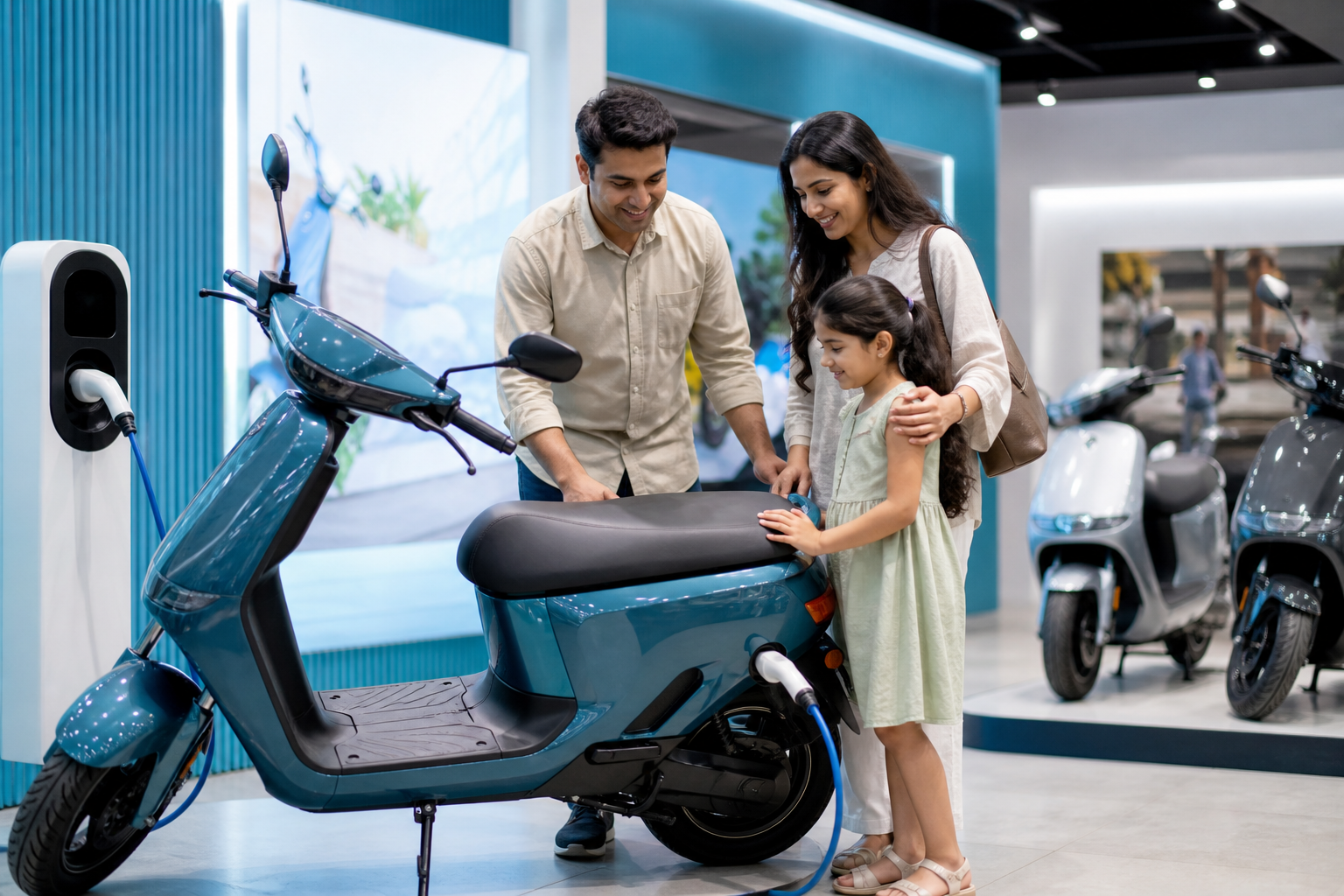
Situation: Ather had built strong credibility with performance-oriented electric scooters and a tech-forward brand image. But India's scooter market is broad, and many household buyers evaluate a scooter through everyday practicality: seat comfort, storage, safety, ride ease, service support and family acceptance.
The strategic move: With Rizta, Ather shifted the launch centre of gravity from “fast, smart EV” to “family scooter.” The primary driver was sharper product-market fit for family use, supported by feature choices around comfort and utility, a more accessible communication frame, showroom demonstrations, financing and the existing Ather trust ecosystem.
Why this is a good launch case: The launch was not just a new model announcement. It was a segment expansion. Ather had to reassure a different buyer that an EV scooter could be practical for the household, not only exciting for an early adopter.
Outcome or lesson: The durable lesson is not “Ather launched a new scooter.” It is that a successful launch changes the adoption conversation. Rizta gave Ather a credible way to speak to families, while using the company's existing technology and service trust as supporting proof.
Launch Risk Matrix: What Can Go Wrong
Strong candidates also discuss failure modes. A launch can fail because the product is weak, but it can also fail because the product is good and the market system is unprepared.
How AI Changes Product Launches in India
AI is changing product launches in practical, specific ways - especially in a market as multilingual and behaviourally diverse as India.
- Faster insight mining: Teams can summarize thousands of reviews, support tickets, marketplace comments, Reddit threads and social posts to detect unmet needs by city, language and customer cohort.
- Creative and message testing: GenAI helps create multiple positioning angles, ad variants, landing-page copies and vernacular scripts, which can then be A/B tested with real customers.
- Demand sensing and launch allocation: ML models can help predict which geographies, stores or cohorts may see higher launch demand, reducing stock-outs in high-potential pockets and overstock in weak ones.
Use NotebookLM or Perplexity before an interview: upload the company's launch announcement, product page, recent reviews and competitor pages, then ask, “Build a launch funnel, identify likely adoption barriers in India, and suggest three interview questions with model answers.” Validate every factual claim before using it.
Interview Relevance
“Pick a recent product launch in India that you think was successful. Explain why it worked, what metrics you would track, and what risks the company should watch.”
Use the phrase “primary driver, supported by...” in your answer. For example: “The primary driver was sharper family-segment fit, supported by product utility, trust in the brand ecosystem, showroom demos and financing.” This prevents shallow single-cause answers.
Common Mistake
The biggest mistake is equating launch success with media buzz or a clever campaign. That costs candidates because it ignores product readiness, distribution, conversion and repeat usage. One-line fix: always explain the launch through the funnel and end with adoption metrics.
What to Revise Next
This is the final lesson, so move from learning to synthesis. As a capstone, pick any one Indian launch from the last two years and write a one-page launch audit using the exact structure above: insight, segment, positioning, GTM, funnel, metrics, risks and learning. If you can explain that case in three minutes without notes, you are placement-ready on product launch strategy.