
What Is a Product? Levels, Types and Product Mix for Interviews
A smartphone before activation is a shiny rectangle; after activation it becomes maps, payments, warranty, status, storage, repairs and a thousand tiny promises. That shift - from object to complete value experience - is the difference between a weak answer on “product” and a sharp marketing answer.
- Product means anything offered to a market to satisfy a need or want - goods, services, experiences, people, places, ideas or platforms.
- Kotler defines a product as “anything that can be offered to a market for attention, acquisition, use, or consumption that might satisfy a want or need.”
- The strongest way to explain a product is through five levels: core benefit, basic product, expected product, augmented product and potential product.
- Consumer products are commonly classified as convenience, shopping, specialty and unsought products based on buying behaviour.
- Industrial products include materials and parts, capital items, and supplies and business services.
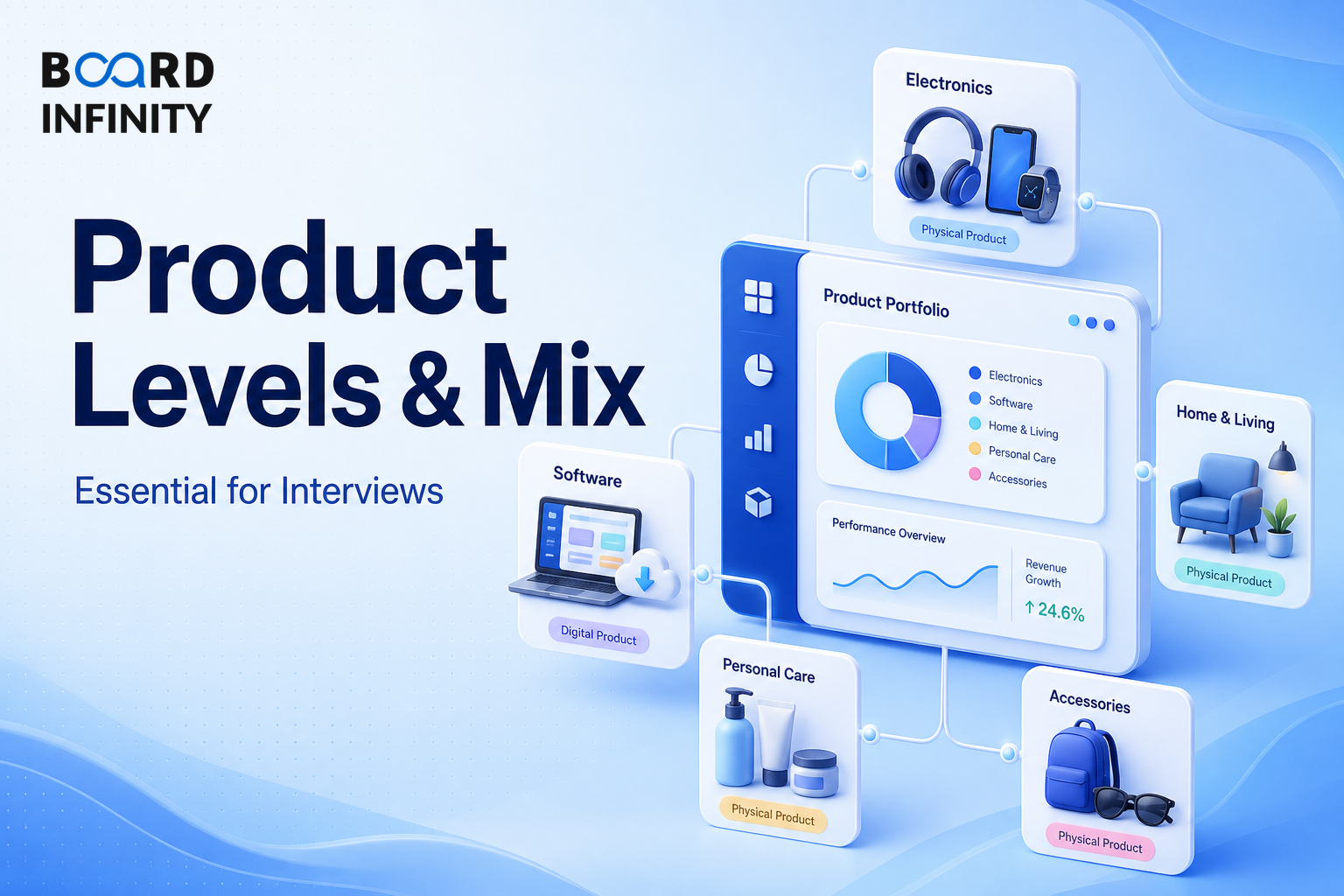
- Product mix is the full portfolio a company sells; judge it using width, length, depth and consistency.
- The interview trap: do not say “product = physical good.” A complete answer links customer benefit, product layers, type and product mix.
Big Picture
A product is best understood as a stack of value. The customer may see the packet, app, shoe, policy or laptop, but the marketer must manage the benefit underneath it and the services around it.
Core Explanation: Levels, Types and Product Mix
The big idea is simple: customers do not buy products; they buy problem-solving value. A commuter does not buy a scooter only for metal and wheels; she buys mobility, fuel savings, status, service access, financing and peace of mind.
1. Product Levels: What the Customer Is Really Buying
Kotler’s five product levels help you move from a superficial SKU answer to a marketer’s answer.
Interview line: “A product is not only the physical good; it is the total bundle of benefit, features, quality, brand, packaging, service and experience.”
2. Product Types: How Buying Behaviour Changes the Marketing Task
Product type matters because it changes pricing, distribution, promotion and sales effort. Do not classify only by “cheap versus expensive”; classify by how the customer buys.
Industrial products are classified differently because the buyer is usually an organisation. The common types are materials and parts, capital items, and supplies and business services. For example, steel used by an auto manufacturer is a material, a robotic welding system is a capital item, and maintenance support is a business service.
Amul is not one product; it is a large dairy-led product portfolio spanning milk, butter, cheese, ice cream, beverages and more. Its primary driver is cooperative milk sourcing and trust in dairy quality, supported by cold-chain distribution, mass pricing and a brand that travels across categories. So what: a product answer becomes stronger when you connect individual items to the company's broader product mix.
3. Product Mix: Width, Length, Depth and Consistency
A product item is a specific version of a product. A product line is a group of related products. A product mix is the total collection of product lines and items a company offers.
Worked Example: Calculating Product Mix Dimensions
Suppose a food brand sells three product lines: breakfast cereals, snacks and beverages. Cereals has cornflakes, muesli and oats; snacks has chips and namkeen; beverages has iced tea and juice.
How Managers Evaluate a Product Mix
Use metrics to decide whether to extend, prune, reposition or support a product line. Benchmarks vary by category, so compare against the company average, category norms and strategic role of the product.
Definitions
Product - Kotler: “Anything that can be offered to a market for attention, acquisition, use, or consumption that might satisfy a want or need.”
Product mix - Kotler: “The set of all product lines and items that a particular seller offers for sale.”
Lenskart: The Full Product Framework in One Business
Lenskart turned eyewear from a hesitant shopping purchase into an omnichannel product experience built around trust, fit and convenience.
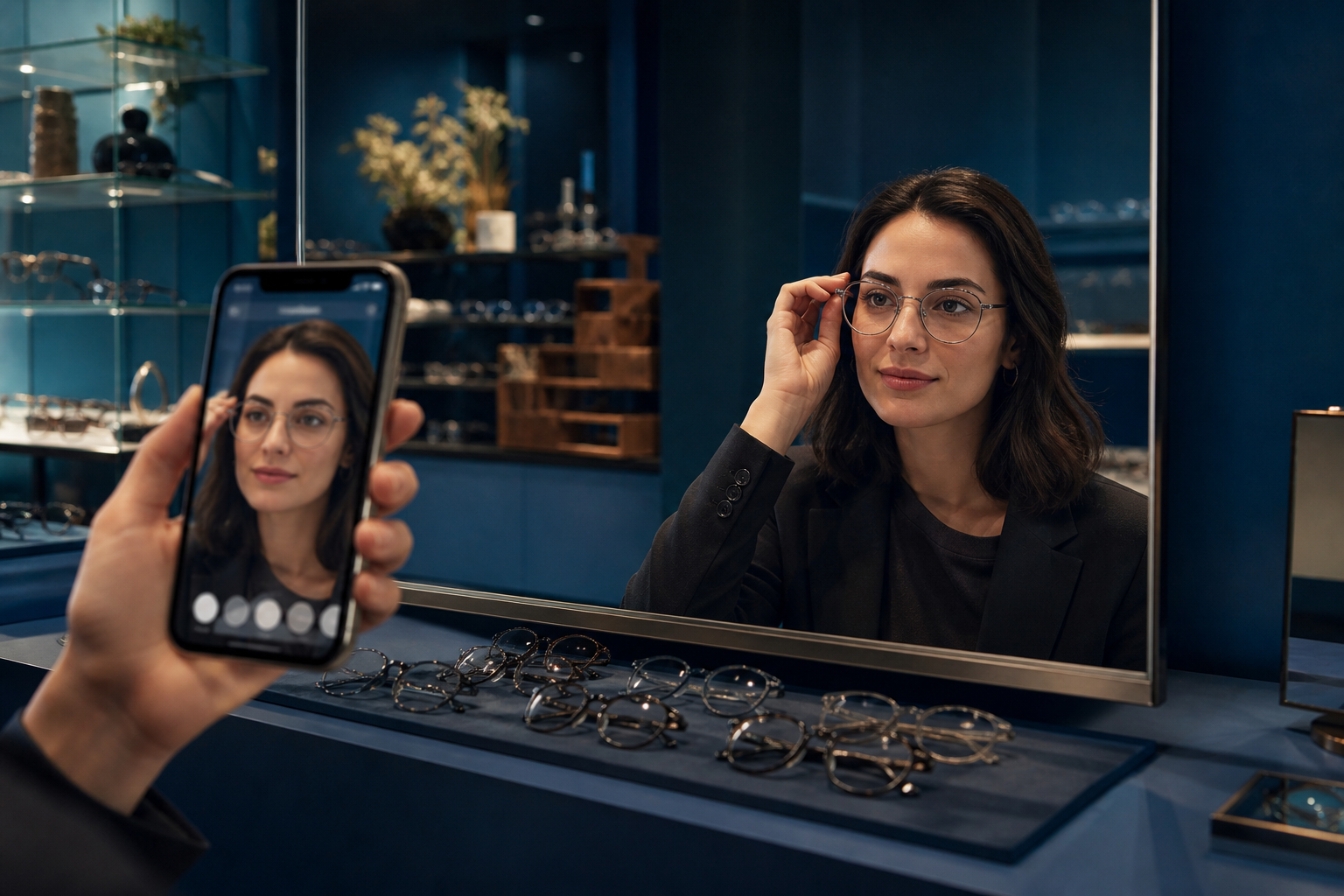
Situation: Buying prescription eyewear in India has traditionally involved friction: uncertainty about correct power, fit, style, price transparency and after-sales support. The physical frame alone was not enough to win trust.
The move: Lenskart built the product as a complete value system. The core benefit was clear vision and confidence. The actual product was frames and lenses. The augmented product included eye testing, online browsing, virtual try-on, retail stores, service support and a wider assortment across price points.
Primary driver: Its biggest strategic driver was reducing the trust and fit friction in eyewear through an omnichannel model. Supporting drivers included private-label assortment, technology-led try-on, manufacturing and supply-chain control, and accessible pricing across customer segments.
Outcome or lesson: Lenskart shows why “product” is bigger than the frame. The defensible offer is the combination of eyewear, trust, service, data, technology and channel experience.
How AI Changes Product Decisions
AI is changing product management by improving how companies understand needs, create variants and manage product portfolios.
Use NotebookLM: upload a company annual report, product catalogue pages and recent customer reviews. Ask it to create a table of product lines, likely core benefits, augmented services, weak SKUs and three interview questions on product mix strategy.
Interview Relevance
“What is a product in marketing? Explain product levels, product types and product mix with an Indian example.”
If you use an example, keep it consistent throughout. For instance, with Lenskart: core benefit = clear vision, product type = shopping product, mix = eyewear lines, augmentation = eye tests and try-on.
Common Mistake
The most common mistake is defining a product as only the physical item or SKU. It costs marks because it ignores core benefit, services, brand, experience and portfolio strategy. Fix: always answer in this order - benefit, levels, type, mix and example.
What to Revise Next
Once you are clear on what a product is, revise how products evolve and how new ones are built. Move next to The Product Life Cycle (PLC) and Strategies for Each Stage, then New Product Development: From Idea to Launch.