
What is Marketing? Core Concepts and Evolution of Marketing Eras
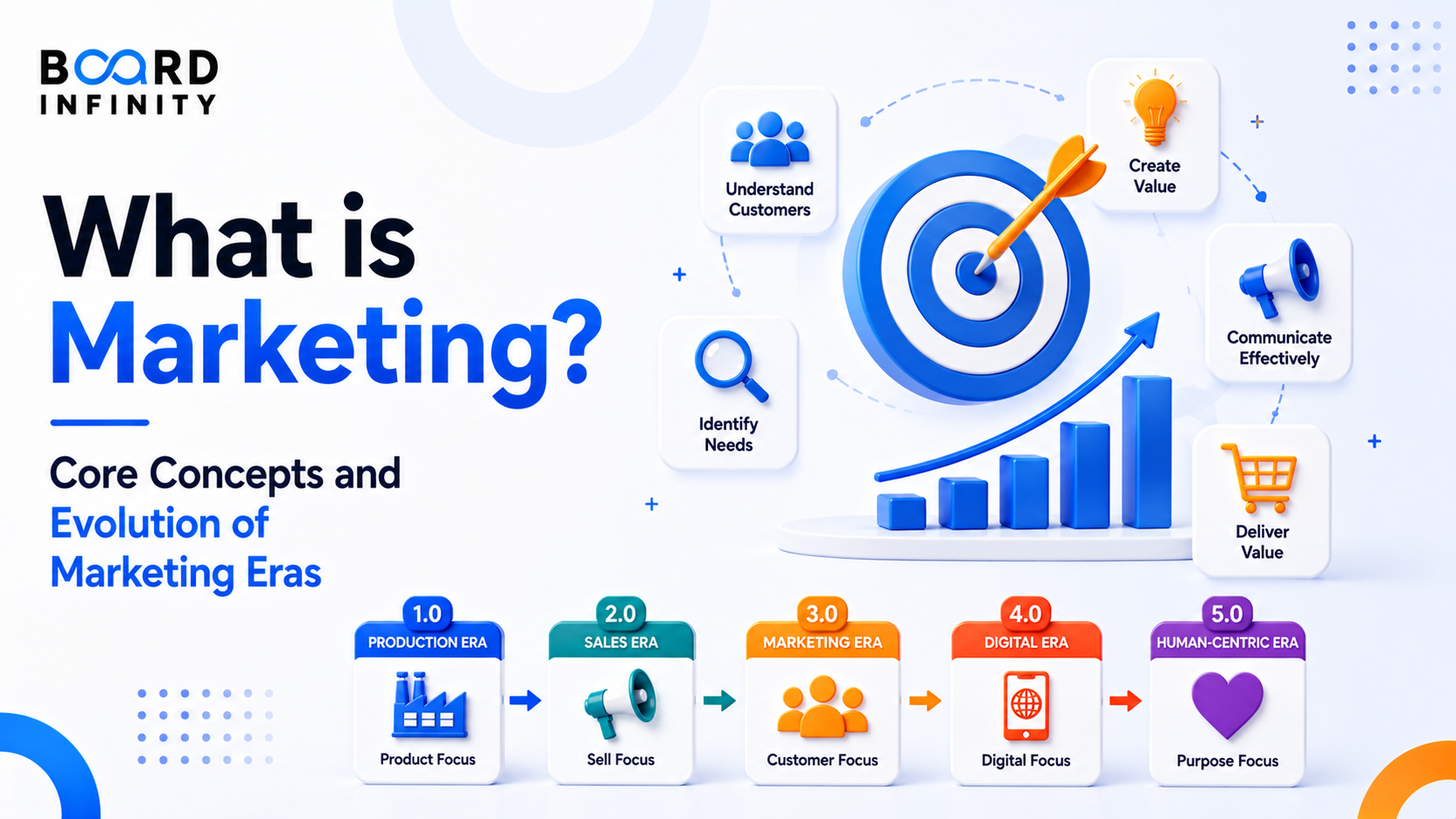
Marketing is often misunderstood as just advertising or selling, but in interviews it is better framed as a business orientation that has evolved over time. The journey moves from making products efficiently, to pushing sales, to understanding customers, personalizing experiences, and building long-term value through data. This matters in placement and case interviews because a strong answer shows that you understand both classic marketing logic and modern customer-centric practice.
- Marketing has evolved from production orientation to digital and relationship orientation.
- Early marketing logic focused on efficiency, mass production, product quality, and selling what firms made.
- Modern marketing focuses on customer needs, market research, STP, personalization, omnichannel engagement, and customer lifetime value.
- STP means segmentation, targeting, and positioning - dividing the market, choosing priority customers, and shaping a clear value proposition.
- Societal marketing adds the need to balance profit, customer value, and society through sustainability, CSR, and ethical practices.
- In interviews, avoid only reciting a definition. Explain the evolution and use named examples like Ford Model T, P&G, Tata Group, Amazon, Netflix, and Zomato.
The Big Picture: Marketing as an Evolution of Business Orientation
The simplest way to understand marketing is to see how business focus has shifted across eras. Each era answers a different question: Should we produce more, build a better product, sell harder, understand customers better, balance society, or personalize long-term relationships?
Marketing is the business discipline of understanding customer needs, creating offerings around those needs, communicating value, and building long-term customer relationships through research, positioning, engagement, and data-informed decisions.
Zomato is a useful interview example because it reflects the modern marketing shift toward data, personalization, and community. Instead of treating marketing as only promotion, the example shows how customer engagement can be driven by understanding behavior and building ongoing relevance. The strategic so what is that modern marketing is not just acquisition - it is repeated engagement and relationship value.
Marketing Is Not Just Selling
A common beginner mistake is to equate marketing with sales. Sales orientation says, "Sell what we make", and focuses on aggressive selling, promotions, and push tactics. Marketing orientation says, "Make what customers want", and focuses on customer needs, market research, and STP.
The distinction is important in interviews because it shows maturity. Selling is typically one part of marketing execution, while marketing includes understanding the market, deciding whom to serve, shaping the offering, and building value over time. Depending on the business model, sales and marketing may overlap, but the orientation is different.
Core Concepts Every Candidate Should Know
The source highlights several core marketing concepts that repeatedly appear in case interviews and placement discussions. Define acronyms clearly before using them: R&D means Research and Development, CSR means Corporate Social Responsibility, STP means Segmentation, Targeting, and Positioning, and customer lifetime value means the long-term value of a customer relationship.
These concepts also provide a reusable answer structure. Start with the customer, explain the market logic, choose the target segment, position the offering, and then show how the firm builds engagement or long-term value.
Production and Product Orientations
Production orientation is the earliest stage in the source. Its core belief is "Build it and they will come", and its focus is manufacturing efficiency, mass production, and wide distribution. The Ford Model T example captures this perfectly: "Any color as long as it's black" reflects a time when availability and efficiency mattered more than customization.
Product orientation, associated with the 1920s-1940s, shifts the logic from producing more to making a better product. Its core belief is "Best product wins", with focus on quality, features, R&D, and continuous improvement. The nuance is that product superiority can be powerful, but by itself it may not answer whether customers actually want the product or whether the market is changing.
Sales and Marketing Orientations
Sales orientation, from the 1940s-1960s, focuses on selling what the firm already makes. The source links this era to aggressive selling, promotions, push tactics, door-to-door sales, and hard-sell advertising. This is useful in interviews when describing categories where demand must be pushed through heavy persuasion.
Marketing orientation, from the 1960s-1990s, changes the core question. Instead of asking how to sell existing output, firms ask what customers want. The source highlights customer needs, market research, and STP, with P&G's consumer-centric product development as the example. This is the foundation of most modern marketing case answers because it connects customer insight to product and communication choices.
Societal and Digital Relationship Orientations
Societal marketing, from the 1990s-2010s, adds a broader lens: balance profit, customer, and society. Its focus includes sustainability, CSR, and ethical practices. Tata Group's social responsibility is the named example from the source, showing that marketing is not only about demand generation but also about trust and responsibility.
Digital and relationship marketing, from the 2010s to the present, focuses on personalization, engagement, and lifetime value. The source names Amazon's recommendation engine and Netflix personalization as examples. This era is data-driven and omnichannel, which means brands typically use customer data and multiple touchpoints to build ongoing engagement rather than treating every transaction as isolated.
Worked Example - Zomato and Modern Marketing Logic
Zomato is mentioned in the source as a current Indian example for explaining how data, personalization, and community can drive engagement. Here is how to turn that into a complete interview-ready mini case.
The learning is especially valuable in interviews because it connects the definition of marketing to a real Indian example. It also shows that you can move from theory to application without overclaiming numbers or outcomes that are not given.
How to Use Marketing Eras in Case Interviews
When a case asks about growth, declining demand, poor adoption, or brand strategy, use the eras as a diagnostic lens. First identify the firm's current orientation, then test whether that orientation fits customer needs and market conditions. A production-led company may need customer research; a sales-led company may need clearer positioning; a digital platform may need better engagement and lifetime value thinking.
Structuring a What is Marketing? Core Concepts & the Evolution of Marketing Eras Interview Answer
"What is marketing, and how has the concept of marketing evolved over time?"
The strongest candidates do not stop at a textbook definition. They show the shift from making and selling products to understanding customers, using data, and building lifetime value.
- Marketing is broader than selling - it includes customer understanding, value creation, positioning, engagement, and relationships.
- The key evolution is production to product to sales to marketing to societal to digital relationship orientation.
- Ford Model T represents production orientation through efficiency, mass production, and wide distribution.
- P&G represents marketing orientation through consumer-centric product development.
- Tata Group represents societal marketing through social responsibility.
- Amazon and Netflix represent digital relationship marketing through recommendation and personalization.
- For interviews, define marketing, explain the eras, add STP and customer lifetime value, and use a named example.
Conclusion
Marketing has evolved from producing efficiently and selling aggressively to understanding customers, balancing social responsibility, and using data to personalize long-term engagement. The final takeaway for interviews is simple: do not describe marketing as only promotion - describe it as a customer-centric, data-informed way to create and sustain value.
The most frequent error is answering "What is marketing?" with only a memorized definition or by saying it is advertising and sales. That costs points because it misses the evolution from production to digital relationship marketing and fails to show customer-centric, data-driven thinking.