
Agriculture, Food Processing & the Rural Economy is a structured track of 13 lessons that build a complete, interview-ready understanding of the topic. Work through them in order, then use the quiz and flashcards in each lesson to revise.
What this course covers
- Agriculture & Food at a Glance: Size, Growth & Structure - Agricultural output, farm holding structure, processing levels and rural consumption share.
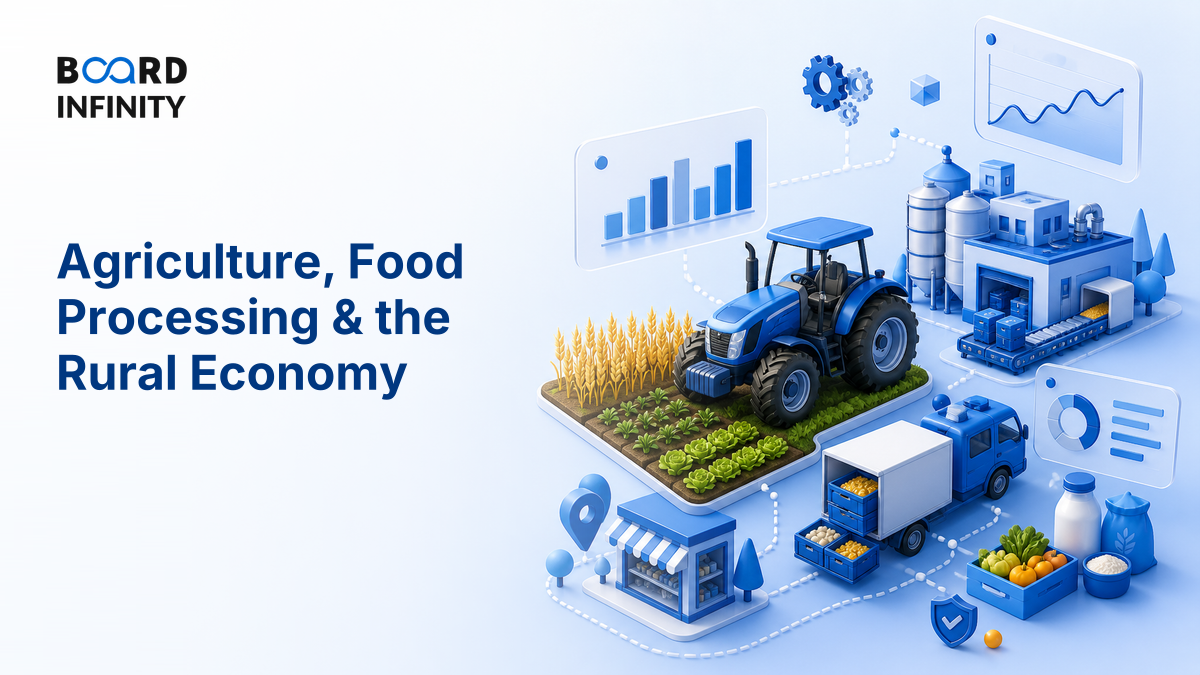
- How the Agriculture & Food Value Chain Works - Input supply to farm production to aggregation to processing to retail.
- Business Models: How Agriculture & Food Players Make Money - Thin farm realisation against processing value addition and brand margin.
- Key Players and the Competitive Map in Agriculture & Food - Agricultural input companies, processors, cooperatives, and agricultural technology firms.
- The Metrics That Define Agriculture & Food Performance - Yield per hectare, price realisation, wastage percentage, processing level and procurement cost.
- Regulation and the Bodies That Govern Agriculture & Food - Food safety rules, market committee regulation, pricing support and export controls.
- Government Policy and Incentives Shaping Agriculture & Food - Minimum support pricing, irrigation and input subsidies, and food processing incentives.
- Indian Market Nuances in Agriculture & Food - Fragmented holdings, monsoon dependence, mandi intermediation and credit access.
- Emerging Trends Reshaping Agriculture & Food - Farmer producer organisations, cold chain investment, direct sourcing and agricultural technology.
- Where AI Is Landing in Agriculture & Food - Yield prediction, pest detection from imagery, price forecasting and advisory services.
- Agriculture & Food Interview Questions With Model Answers - Supply chain, wastage and rural demand questions with model answers.
- Careers in Agriculture & Food: Roles, Employers & Pay - Sourcing, agribusiness, rural sales and supply chain roles across the value chain.
- Applied: A Full Agriculture & Food Teardown - A crop traced from farm gate to shelf, showing where the margin actually goes.