
Emerging Trends Reshaping Agriculture & Food
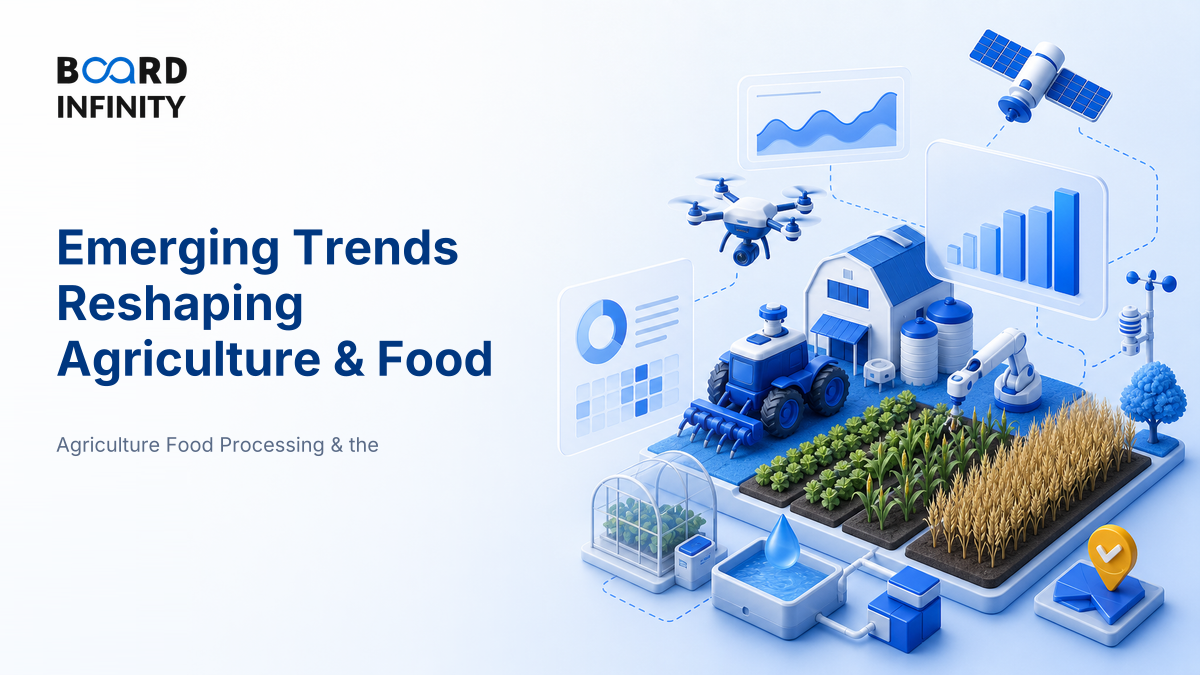
A tomato farmer can do everything right - choose good seed, apply inputs on time, harvest carefully - and still lose value if rain shifts, prices crash, trucks are delayed or the buyer cannot verify quality. That is why agriculture and food is no longer just a production story; it is becoming a climate, data, logistics, finance and trust story at the same time.
- Agriculture and food trends are reshaping the full chain: farm inputs, production, aggregation, processing, distribution, retail and consumption.
- The big shift: from yield-only thinking to resilience, traceability, nutrition, farmer income and lower waste.
- Seven trends matter most: climate-smart farming, digitized agritech, precision inputs, biologicals, cold-chain modernization, traceable food systems and health-led consumption.
- Profit pools are moving downstream: brands, data platforms, processing, B2B commerce and premium food experiences often capture more value than commodity production.
- India is structurally different: fragmented farms, mandi linkages, monsoon exposure, diverse diets and price-sensitive consumers make execution harder but opportunity larger.
- Interview answer rule: never list trends randomly; connect each trend to the value-chain pain point it solves and the business model it enables.
Big Picture: Agriculture Is Moving from Output to Orchestration
The old mental model was simple: grow more food. The new model is layered: produce reliably, prove quality, move fast, reduce waste, serve changing diets and build farmer-side economics. The companies that win are not only better farmers or better food brands; they orchestrate the system.
Core Explanation: The Seven Trends Reshaping Agriculture and Food
Think of every trend as an answer to one of three questions: Can we grow reliably? Can we move and monetize efficiently? Can consumers trust and pay for the product? This keeps your interview answer structured instead of sounding like a news list.
Notice the pattern: most trends do not replace farming; they add layers around farming. That is why agribusiness is becoming a mix of agriculture, FMCG, logistics, analytics, climate risk and financial services. If you want to strengthen the supply-chain side of this answer, revise how the aviation and logistics value chain works, because cold chain and fulfilment use similar network logic.
The Trend Map: Where Value Is Shifting
A useful way to classify trends is by certainty of demand and difficulty of execution. Some opportunities are attractive but hard to scale because farmers are fragmented, products are perishable or proof is difficult. Others are easier to execute but more commoditized.
For interviews, this matrix helps you avoid vague answers. If you say "organic food is growing," follow it with the execution reality: certification, residue control, consistent sourcing, price premium and consumer trust all have to work together.
Definitions You Can Say in One Breath
- Agriculture and food system: The chain of activities that produces, moves, processes, sells, consumes and disposes of food.
- Climate-smart agriculture: Farming that improves productivity, adapts to climate risk and reduces environmental damage where possible.
- Traceability: The ability to track a food product’s origin, movement, handling and quality records across the supply chain.
- Precision agriculture: Using data, sensors or advisory to apply inputs more accurately by plot, crop stage and condition.
- Food loss: Edible food quantity or quality lost before it reaches retail or consumers.
How to Track Whether a Trend Is Real
A trend is not real just because it sounds modern. In agriculture and food, it must improve economics, risk, quality, compliance or consumer willingness to pay. Use these measures to test whether the trend has business substance.
These are not vanity metrics. A digital platform with poor farmer repeat rate is weak. A sustainable sourcing program without traceability coverage is not credible. A fresh-food business with high post-harvest loss is structurally fragile.
Mini Case Study: DeHaat and the Full-Stack Agritech Bet
DeHaat shows why the future of Indian agritech is less about a single app and more about bundling advisory, inputs, aggregation and market linkage around the farmer.
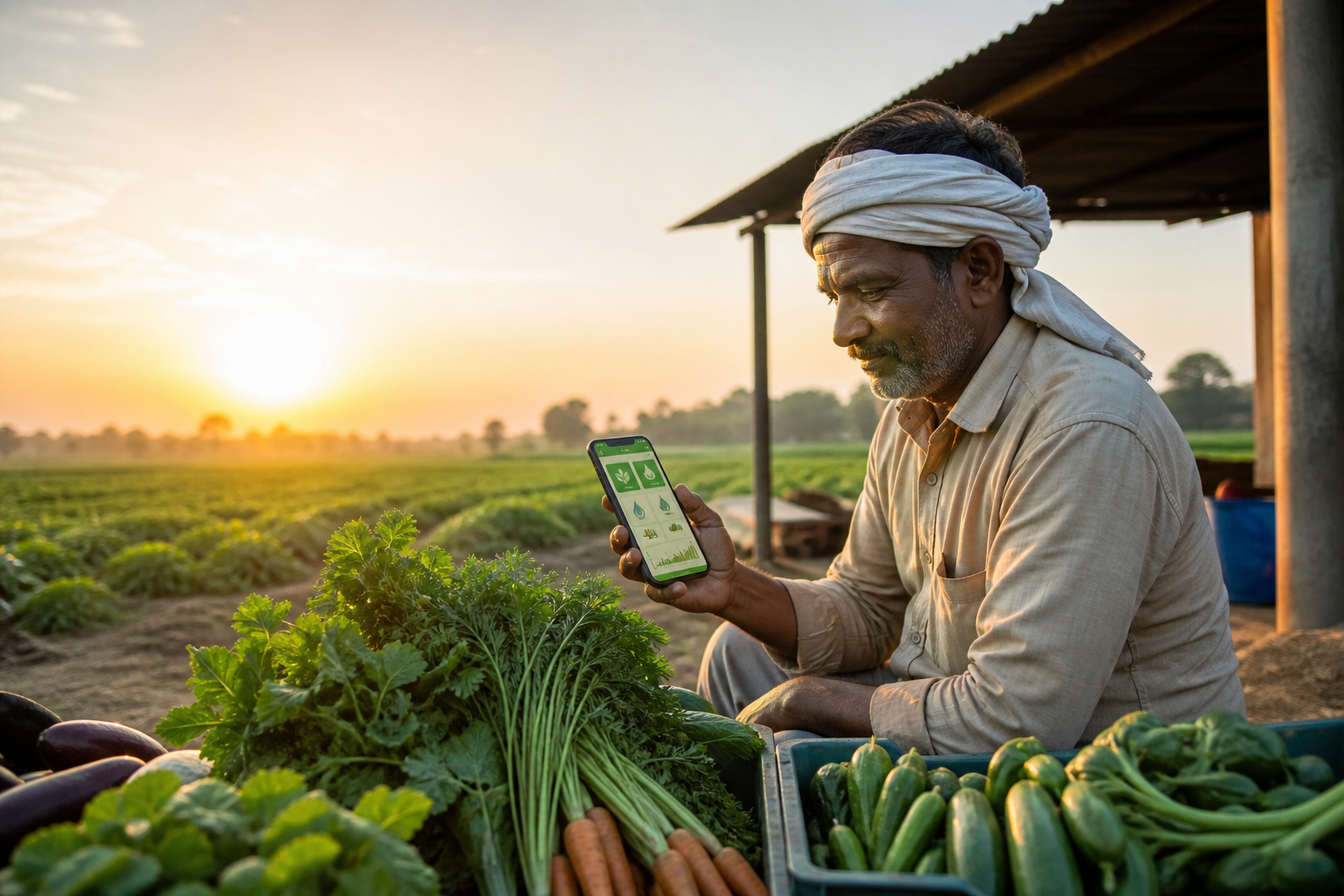
Situation: Indian agriculture has a classic coordination problem. Farmers need timely advice, genuine inputs, market access and price discovery, but the ecosystem is fragmented across local dealers, commission agents, traders, transporters and buyers.
The move: DeHaat built a full-stack model around the farmer rather than solving only one pain point. The primary driver is service bundling: advisory, input fulfilment and market linkage reinforce one another. Supporting drivers include local last-mile presence, crop-specific recommendations, aggregation of farmer produce and buyer-side demand connections.
The lesson: In Indian agritech, the app is rarely the whole product. The real moat is the operating system around the farmer - trust, field network, data, fulfilment and repeat transactions. That is why many successful agri-food models look less like pure software and more like tech-enabled distribution businesses.
The broader pattern also appears in other sectors where sustainability, inputs and industrial processes intersect. For example, fertilizer, crop protection, packaging and food-processing players face related transitions; you can connect this topic to emerging trends in chemicals, metals and industrials when discussing biological inputs, green chemicals and circular processing.
How AI Changes Emerging Trends Reshaping Agriculture & Food
AI matters in agriculture and food because uncertainty is high: weather shifts, pest risk, price volatility, demand variability and perishability all interact. The most useful AI applications reduce uncertainty or speed up decisions.
The caveat is important: AI cannot fix weak ground operations. A model that predicts pest risk is useful only if the farmer gets timely, trusted and affordable action. In agri-food, AI must be paired with distribution, behaviour change and last-mile execution.
Interview Relevance
“What are the major emerging trends reshaping agriculture and food, especially in India, and which one would you bet on?”
If the interviewer asks for “one trend,” do not just say “AI in agriculture.” Say exactly where AI lands: pest detection, yield prediction, credit underwriting, demand forecasting, quality grading or route planning.
Common Mistake
The mistake: giving a buzzword list - organic, AI, drones, millets, sustainability - without linking each trend to a business problem. Why it costs you: it sounds like newspaper reading, not managerial thinking. Fix: use this sentence: “This trend matters because it changes either farmer economics, supply-chain efficiency, compliance risk or consumer willingness to pay.”