
Indian Market Nuances in Agriculture & Food
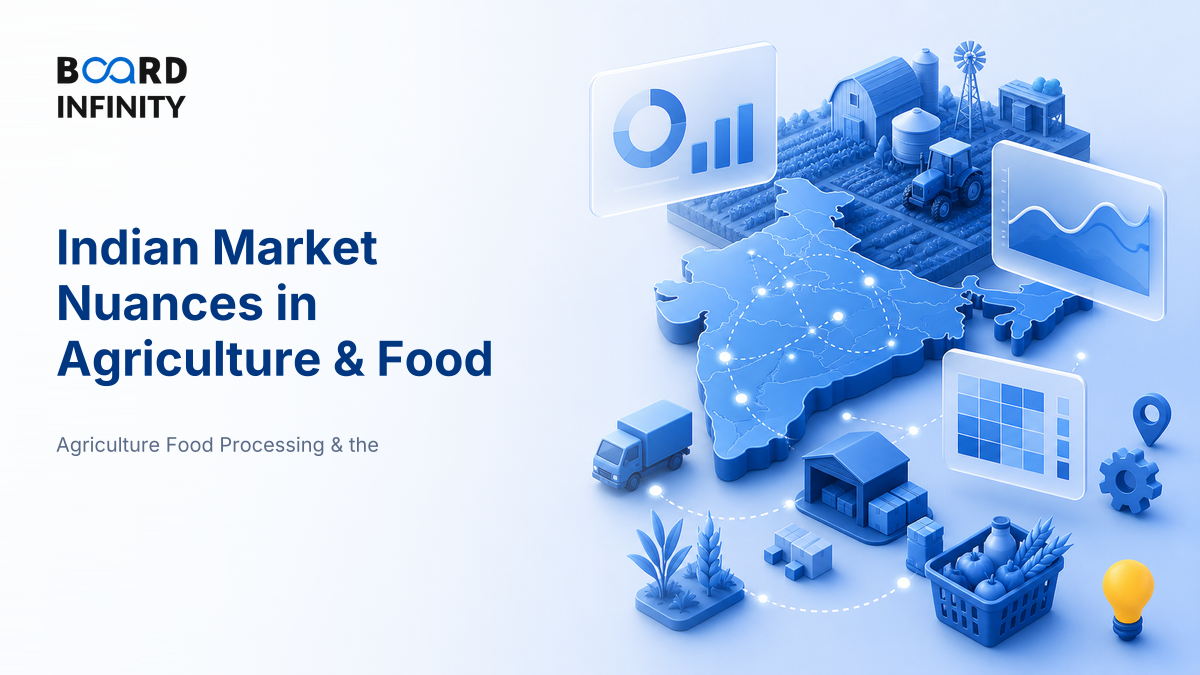
The biggest misconception about Indian agriculture and food is that it is one giant “farm-to-fork” market. It is not. A tomato farmer, a dairy cooperative, a basmati exporter, a quick-commerce buyer and a state procurement agency may all sit inside the same sector - but they operate in completely different economic worlds.
- India is many agri-food markets, not one: crop, region, season, channel and regulation change the business model.
- The core loop is crop cycle - aggregation - market price - cash flow - next sowing: winners reduce friction across the loop, not just at one point.
- Farmer-side markets are trust-led: physical presence, local language, credit, agronomy advice and predictable payment matter as much as app design.
- Food-side markets are demand-led: freshness, price pack architecture, taste localization, convenience and safety drive consumer adoption.
- Policy is not background noise: MSP, APMC rules, food safety, exports, subsidies and state-level procurement can reshape economics.
- Cold chain and logistics are strategic, not operational: perishability decides wastage, assortment, pricing power and feasible geography.
- Interview answer rule: always anchor your answer in crop-region-channel-policy before giving strategy.
Big Picture: India Is a Crop-Region-Channel-Policy Market
In Indian agriculture and food, the same product can behave differently across states, seasons and routes to market. A strong answer starts by asking: what is being produced, where, how it reaches buyers, and which policy layer affects it?
Core Explanation: The Five Nuances That Change the Business Model
For interviews, do not describe Indian agriculture as “large but fragmented” and stop there. That is only the surface. The real nuance is that fragmentation interacts with perishability, seasonality, policy, trust and logistics.
1. Crop economics decide the operating model
Not all crops behave alike. Wheat and rice are relatively more storable and closely linked to public procurement in some regions. Fruits, vegetables, dairy, meat and seafood are more perishable, so time, temperature and route density become critical. Premium categories like organic produce, spices or export-grade food need quality control and traceability.
2. The farmer journey is cyclical, not transactional
A farmer does not make one purchase decision. The farmer moves through a seasonal cycle: input selection, sowing, crop management, harvesting, selling, payment and reinvestment. A company that appears only at harvest may lose to one that is trusted throughout the crop cycle.
3. Route to market is the hidden profit pool
Food can move through APMC mandis, commission agents, processors, modern trade, kirana stores, foodservice, quick commerce, exporters or direct-to-consumer channels. Every route changes margins, wastage, credit period, quality control and bargaining power.
This is where agriculture links naturally to logistics. If you need a sharper view of cost-to-serve, truck utilization and network design, revise how the aviation and logistics value chain works because cold-chain economics often decide whether an agri-food model can scale.
4. Trust beats pure digitization
Many agri-tech and food businesses fail when they assume that app adoption automatically creates transactions. In rural and semi-urban markets, trust is built through local presence, predictable payment, problem resolution, credit access and advice in the farmer’s language.
5. Policy and state variation matter
A food company must understand food safety rules, procurement norms, state taxes and incentives, export restrictions, mandi structures and subsidy-linked input behavior. A fertilizer or agrochemical strategy also connects to industrial inputs, so the upstream logic overlaps with Indian market nuances in chemicals, metals and industrials.
The Practical Market Map: Farmer Side vs Consumer Side
Agriculture and food sit on two connected but different demand systems. On the farmer side, the customer is often optimizing yield, risk and cash flow. On the consumer side, the buyer is optimizing taste, price, convenience, freshness and safety.
Metrics That Make Your Answer Operational
Use metrics to show that you can move from market understanding to execution. Avoid quoting one universal “good number” because Indian agriculture benchmarks vary by crop, region and channel. Instead, explain the formula and the direction of strength.
Definitions You Should Be Able to Say Cleanly
- Indian market nuance: A local factor that changes demand, supply, cost-to-serve, risk or compliance.
- APMC mandi: A state-regulated wholesale market where licensed participants trade agricultural produce.
- MSP: A government-announced reference price used mainly for selected crop procurement.
- Food value chain: The linked activities moving food from inputs and farming to processing, distribution and consumption.
- Phygital agri model: A business model combining physical trust points with digital tools for service, data or transactions.
Case Study: DeHaat and the Phygital Agriculture Playbook
DeHaat matters because it shows why Indian agri-tech cannot be only a digital marketplace - it must solve trust, advisory, input access, output linkage and cash-flow friction together.
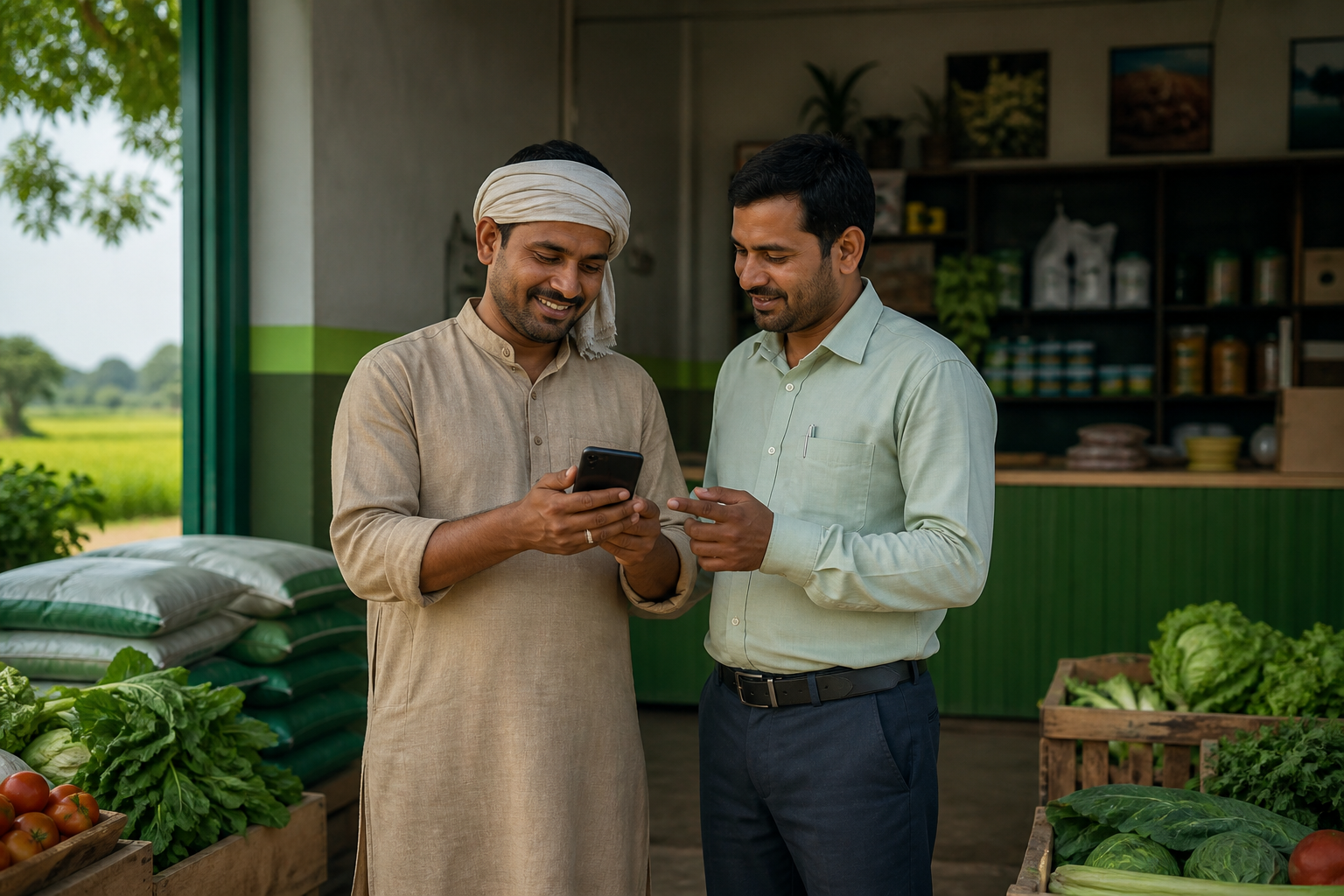
Situation: Indian smallholder farmers often face fragmented access to quality inputs, agronomy advice, working capital and reliable buyers. The pain point is not merely “lack of information”; it is that information, trust, credit and market access are split across different actors.
The move: DeHaat built a phygital model around local touchpoints and digital coordination. The primary driver is crop-cycle integration: serving farmers before sowing, during cultivation and at output sale. Supporting drivers include local micro-entrepreneur presence, agronomy support, input distribution, market linkages and data gathered across transactions.
The lesson: In India, agri-tech scale depends on density and trust. If a company can cluster farmers, serve multiple needs across the season and improve both buying and selling outcomes, it has a stronger chance of repeat engagement. But the model also has execution risk: logistics, working capital, quality control and local competition can pressure unit economics.
The strategic takeaway is simple: DeHaat is not interesting because it “uses technology.” It is interesting because it adapts technology to India’s trust-heavy, local, seasonal and fragmented agricultural reality.
How AI Changes Indian Market Nuances in Agriculture & Food
AI does not remove India’s market complexity. It makes that complexity more measurable, faster to act on and easier to localize.
The caution: AI recommendations can fail if data is biased, incomplete or not localized. In agriculture, a wrong advisory is not a bad dashboard - it can become a farmer’s income risk. Human agronomy review and local field validation remain essential.
Interview Relevance
“If you were launching a new packaged food or agri-input product in India, what Indian market nuances would you consider before designing the go-to-market strategy?”
A strong answer sounds specific: “For a fresh dairy product in South India, I would solve cold chain, daily replenishment and local taste first.” A weak answer sounds generic: “India is price-sensitive, so I will discount.”
Common Mistake
The mistake: treating agriculture and food like a standard FMCG market. Candidates talk about branding and distribution but ignore crop seasonality, mandi structure, policy, perishability and farmer cash flow. The fix: start every answer with crop-region-channel-policy, then add consumer or farmer behavior.