
Agriculture & Food at a Glance: Size, Growth & Structure
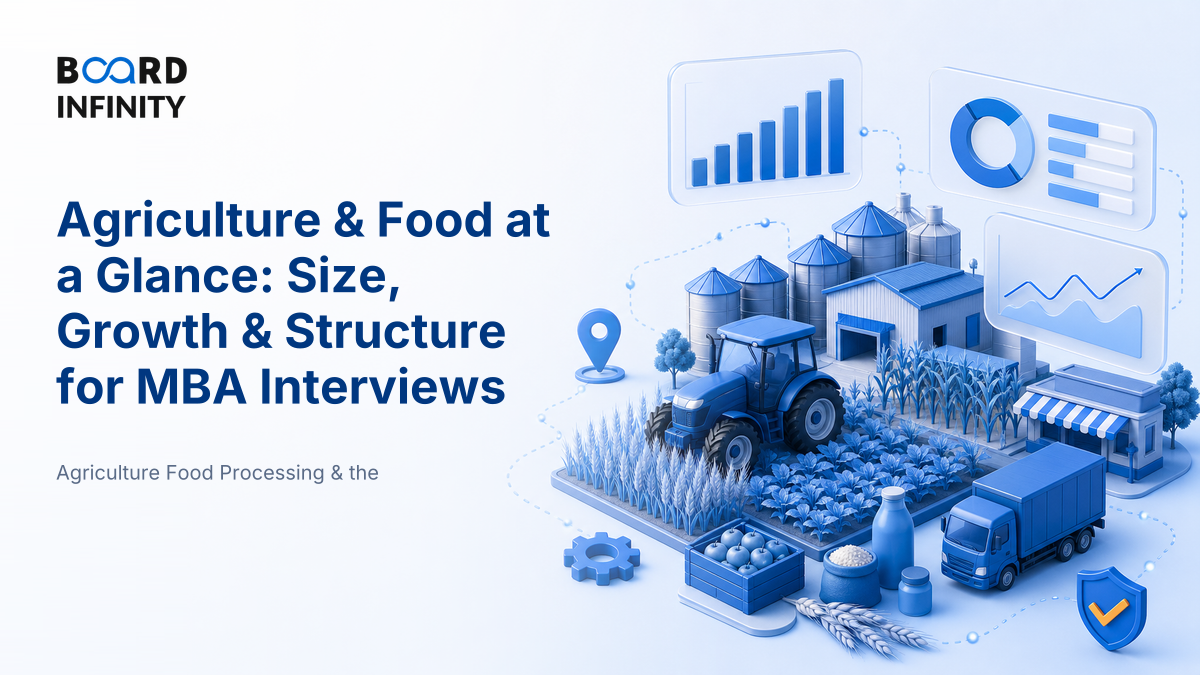
At 5:30 a.m., a crate of tomatoes leaves a farm gate, gets auctioned at a mandi, rides in a small truck, is sorted by a trader, appears on a quick-commerce app by evening, and becomes sauce in a QSR kitchen the next day. The same tomato is agriculture, logistics, processing, retail, and consumer brand - depending on where you stand in the chain.
- Agriculture & Food is not just farming. It runs from inputs and production to aggregation, processing, cold chain, retail, foodservice, and waste management.
- The sector is large because food is non-discretionary. The World Bank notes that agriculture accounts for about 4% of global GDP and more than 25% in some least-developed countries.
- India is structurally important in this sector because agriculture supports rural livelihoods, food security, inflation management, and downstream food businesses.
- Growth comes from three shifts: better farm productivity, more processing and branding, and changing consumption - convenience, protein, health, premiumisation, and out-of-home eating.
- Profit pools often move downstream. Commodities compete on yield and price; processors and brands capture value through quality control, distribution, packaging, and trust.
- The key interview frame: explain size, growth drivers, value chain structure, margin pools, risks, and one Indian example.
- The biggest trap: treating “agri” as only crops and farmers, while ignoring food processing, distribution, modern retail, foodservice, and brands.
Big Picture: One Sector, Three Lenses
To understand Agriculture & Food quickly, use three lenses: what is produced, how it moves, and where value is captured. Farming creates the base volume, but processing, logistics, branding, and channels decide shelf life, margins, and customer access.
Core Explanation: Size, Growth and Structure
Agriculture & Food is the system of businesses and institutions that produce, move, transform, sell, and serve food. It includes farms, input companies, mandis, FPOs, processors, cold-chain operators, FMCG companies, retailers, restaurants, exporters, and food-tech platforms.
The sector matters for four reasons. First, food is a basic need, so demand is resilient. Second, agriculture directly affects inflation and political economy. Third, food processing and brands create formal jobs beyond the farm. Fourth, supply shocks - weather, disease, export restrictions, logistics failures - can move prices very fast.
The clean way to revise the sector is to separate volume pools from profit pools. Farm production may be huge in volume, but margins are often thin and volatile. Higher margins usually appear where players solve perishability, standardisation, convenience, quality assurance, or brand trust.
Size: Globally, agriculture is a smaller share of GDP in rich economies but remains central to employment, food security, and rural income in developing economies. The World Bank agriculture overview states that agriculture accounts for about 4% of global GDP, and more than 25% of GDP in some least-developed countries.
India angle: India’s Agriculture & Food sector is unusually interview-relevant because it combines large farm output, fragmented producers, rising food consumption, food inflation sensitivity, and rapid formalisation in dairy, staples, packaged foods, QSR, grocery delivery, and exports. For example, India is the world’s largest milk producer, as tracked by NDDB milk production statistics.
Growth: Growth does not come from “more food” alone. It comes from better productivity, lower wastage, formal procurement, processing capacity, cold chain, food safety compliance, branded penetration, premiumisation, and new channels such as quick commerce and foodservice.
Structure: The sector is fragmented at the farm end and more organised near the consumer end. That is why players try to build control points - procurement networks, quality grading, chilling centres, milling plants, distribution routes, shelf space, app demand, or trusted brands.
How to Read the Sector Like a Manager
When someone says “agri-food opportunity,” ask: where in the chain is the company playing, and what problem is it solving?
A strong answer also distinguishes commodity logic from brand logic. In commodities, buyers care about price, grade, reliability, and bulk availability. In brands, consumers also pay for trust, taste, packaging, convenience, health claims, and consistency.
Key Metrics to Track
Use these metrics to judge whether an Agriculture & Food business is structurally strong, not just growing on paper.
These are especially useful when comparing food processing, dairy, staples, and distribution businesses. If cold chain or route economics feel unfamiliar, compare this sector with how the Aviation & Logistics value chain works, because freshness in food is often a logistics problem before it is a marketing problem.
Definitions You Should Be Able to Say
Michael Porter writes that a firm is “a collection of activities that are performed to design, produce, market, deliver, and support its product” in Competitive Advantage.
Agriculture & Food is the end-to-end system that produces, transforms, distributes, sells, and serves food to consumers.
Food processing converts raw agricultural output into safer, more convenient, longer-lasting or higher-value food products.
Case Study: Hatsun Agro Product and the Dairy Value Chain
Hatsun Agro Product shows how an Indian food company can create value by controlling procurement, cold chain, processing, and consumer brands in a highly perishable category.
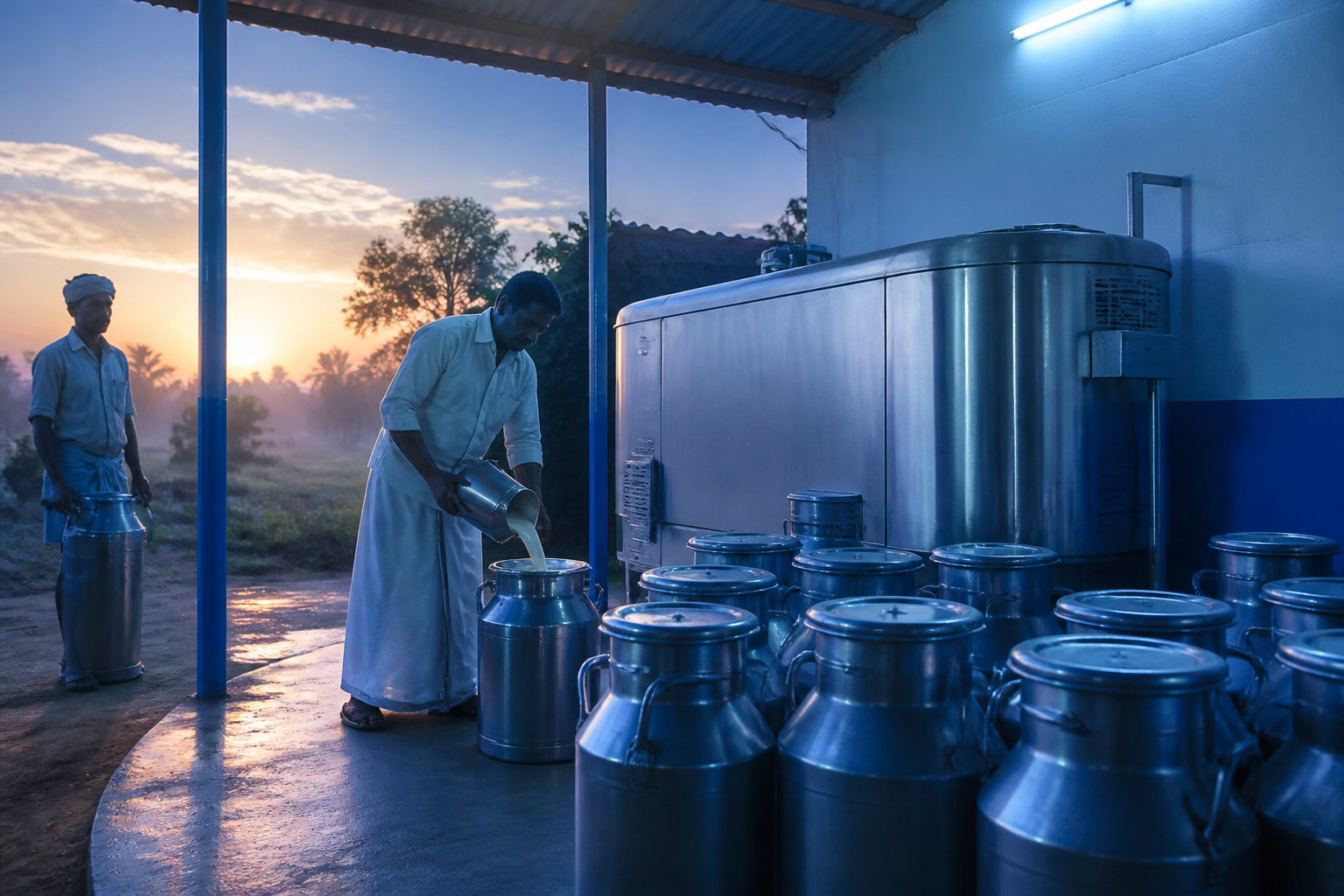
Dairy is one of the best sectors for understanding Agriculture & Food because the product is perishable, daily-consumption, trust-heavy, and operationally unforgiving. Milk quality can deteriorate quickly, so the business model depends on fast collection, testing, chilling, processing, and dense distribution.
Hatsun Agro Product, the company behind brands such as Arokya and Arun Icecreams, describes its dairy and ice-cream business across procurement, manufacturing and branded distribution in its official annual reports. The important lesson is not just that Hatsun sells milk products. It is that the company participates in multiple parts of the value chain where quality control and freshness matter.
Situation: India has large milk production, but supply is highly fragmented across farmers and regions. Consumers, meanwhile, demand safe, consistent milk, curd, paneer, ghee, ice cream and other dairy products.
The move: Hatsun built a model around organised procurement and processing, supported by chilling infrastructure, branded product lines, and route-to-market density. The primary driver is control over freshness and quality in a perishable category. Supporting drivers include farmer relationships, product diversification, brand trust, and distribution reach.
The result or lesson: In Agriculture & Food, value shifts to players that reduce uncertainty - uncertain quality, uncertain supply, uncertain freshness, or uncertain demand. A dairy company wins not by “selling milk” alone, but by designing a system that can repeatedly convert fragmented farm output into trusted consumer products.
How AI Changes Agriculture & Food
AI is not replacing the Agriculture & Food value chain. It is making weak links more visible and more predictable.
Practical student workflow: Load a food company’s latest annual report and the agriculture chapter of the Economic Survey into NotebookLM. Ask it to create a two-column brief: “sector growth drivers” versus “company-specific capabilities,” then generate five likely interview questions.
Interview Relevance
“Give me a two-minute overview of the Agriculture & Food sector in India. Where is the growth, and where do companies actually make money?”
If you have only 30 seconds, say: “Agriculture creates the base supply, but food businesses create value by reducing wastage, increasing shelf life, ensuring quality, building brands and controlling channels.”
Common Mistake
Mistake: Giving a farmer-only answer. Candidates talk about crops, MSP and monsoon, but miss processing, cold chain, retail, foodservice and brands. Why it costs marks: it sounds narrow and ignores where business value is captured. Fix: always answer with the value chain first, then discuss growth and profit pools by layer.