
Government Policy and Incentives Shaping Agriculture & Food
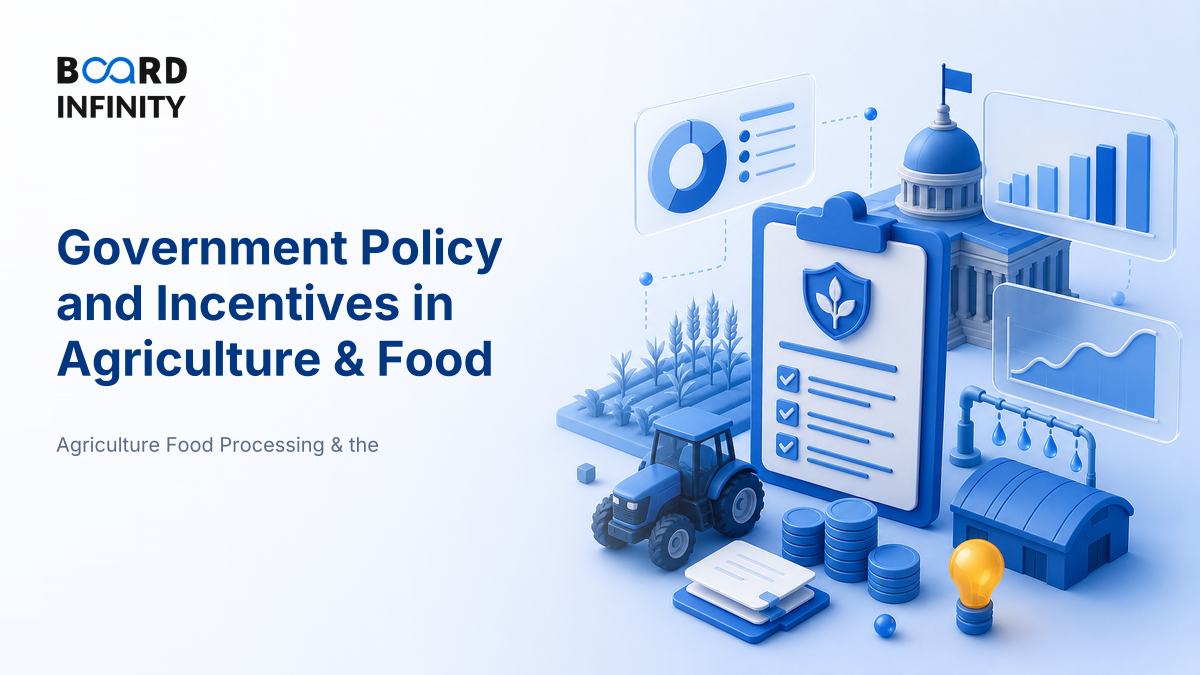
At 6 a.m. in a mandi, a farmer’s price is not shaped only by demand and supply. It is also shaped by MSP signals, state procurement, crop insurance rules, mandi fees, warehouse access, food safety standards and whether a processor nearby has an incentive to buy.
That is the core of agriculture and food policy: government does not sit outside the market - it rewires the market.
- Agriculture policy is an incentive system: it changes what farmers grow, how firms source, what consumers pay and where capital flows.
- The five big levers are price support, income support, risk cover, market infrastructure, and food regulation.
- For interviews, never list schemes randomly. Explain the incentive logic: who gets paid, who bears risk, and what behaviour changes.
- India’s visible tools include MSP, PM-KISAN, PMFBY, e-NAM, FSSAI regulation, food processing incentives and agri-infrastructure support.
- Policy can create growth, but it can also distort cropping patterns, strain fiscal budgets or weaken market price discovery.
- The best answer links policy to business decisions: sourcing, pricing, working capital, compliance, distribution and export readiness.
Big Picture: Policy Is the Hidden Operating System of Agriculture
Agriculture and food businesses operate inside a policy-heavy system because food is economically sensitive and politically visible. Governments intervene to protect farmer income, manage consumer prices, reduce risk, improve nutrition, build infrastructure and ensure food safety.
Think of policy as a set of signals. If MSP makes wheat attractive, farmers may plant more wheat. If cold-chain incentives reduce wastage risk, processors may source more perishables. If FSSAI standards tighten, food brands must invest in testing, labelling and compliance.
Core Explanation: The Five Policy Levers That Shape Agriculture & Food
The simplest way to understand agriculture policy is to ask: which economic pain is the government trying to reduce? Low farmer prices, income volatility, crop failure, weak market access, food safety risk and under-processing each require a different policy tool.
1. Price Support: Protecting Farmer Realisation
Price support tries to reduce downside risk for farmers when market prices fall. In India, the best-known signal is the Minimum Support Price, with the Commission for Agricultural Costs and Prices involved in MSP recommendations through the official CACP framework.
Business impact: MSP and procurement signals influence crop choice, mandi arrivals, processor raw-material prices and private trade behaviour. A food company sourcing rice, wheat, pulses or oilseeds must watch not just market price, but also procurement intensity and policy announcements.
2. Income Support: Putting Cash Directly in Farmer Hands
Income support gives farmers cash rather than manipulating only output prices. PM-KISAN provides income support to eligible farmer families through direct benefit transfer, as described on the official PM-KISAN portal.
Business impact: DBT can improve liquidity for seeds, fertilisers, small equipment and consumption. For agri-input firms, the timing of transfers can affect seasonal demand. For rural FMCG, it can affect purchasing power in farming households.
3. Risk Cover: Making Agriculture Bankable
Agriculture faces weather, pest, price and yield risks. Crop insurance reduces the fear that one bad season will wipe out a farmer’s income. India’s flagship crop insurance programme is PMFBY, described on the official PMFBY portal.
Business impact: When risk is partly insured, lenders, input firms and aggregators can work with farmers more confidently. But the quality of implementation matters: enrolment, claim assessment, settlement speed and trust decide whether insurance changes behaviour.
4. Market Infrastructure: Reducing the Distance Between Farm and Buyer
Market infrastructure includes mandis, warehouses, packhouses, cold chains, assaying labs, digital marketplaces and logistics. e-NAM is India’s national agriculture market platform for online trading across regulated markets, as described by the official e-NAM portal.
Business impact: Better infrastructure improves price discovery, reduces wastage, expands buyer access and enables quality-based procurement. For food processors and retailers, it can reduce sourcing friction and improve traceability.
5. Food Regulation and Processing Incentives: Moving from Commodity to Brand
Food regulation ensures safety, hygiene, labelling and quality. FSSAI is India’s food safety regulator and publishes licensing, compliance and standards guidance on its official FSSAI portal.
Business impact: Regulation raises compliance cost, but also builds consumer trust. Processing incentives, cold-chain schemes and export facilitation can move agriculture from bulk commodity sales to branded, value-added products.
A useful way to deepen your answer is to compare agriculture incentives with industrial policy. Manufacturing incentives often push capacity creation; agriculture incentives must also handle farmer income, food security and price volatility. For a contrast, revise government policy and incentives in chemicals, metals and industrials.
The Policy Map: Which Lever Helps Whom?
Interview answers become sharper when you separate direct support from market-enabling support. A subsidy paid to a farmer is different from a warehouse subsidy that indirectly improves farmer realisation by attracting buyers.
Definitions You Should Be Able to Say Cleanly
- Agriculture policy: government decisions that shape farm production, prices, income, risk, trade, food safety and market access.
- Producer Support Estimate: the OECD defines PSE as gross transfers from consumers and taxpayers to agricultural producers, measured annually through policy support (OECD PSE definition).
- Green Box support: WTO rules treat it as domestic support with no, or minimal, trade-distorting effects (WTO Agreement on Agriculture).
- Food safety regulation: rules governing hygiene, standards, labelling and compliance across food manufacturing, distribution and sale.
Metrics: How to Judge Whether a Policy Is Working
Do not evaluate policy by intent alone. A strong MBA answer uses operating metrics. The exact benchmark varies by crop, state and scheme, but these measures force you to discuss evidence rather than slogans.
Case Study: Sahyadri Farms and the FPO-Led Value Chain
Sahyadri Farms shows how farmer collectivisation, quality systems and market infrastructure can turn policy support into a commercial export-ready food value chain.
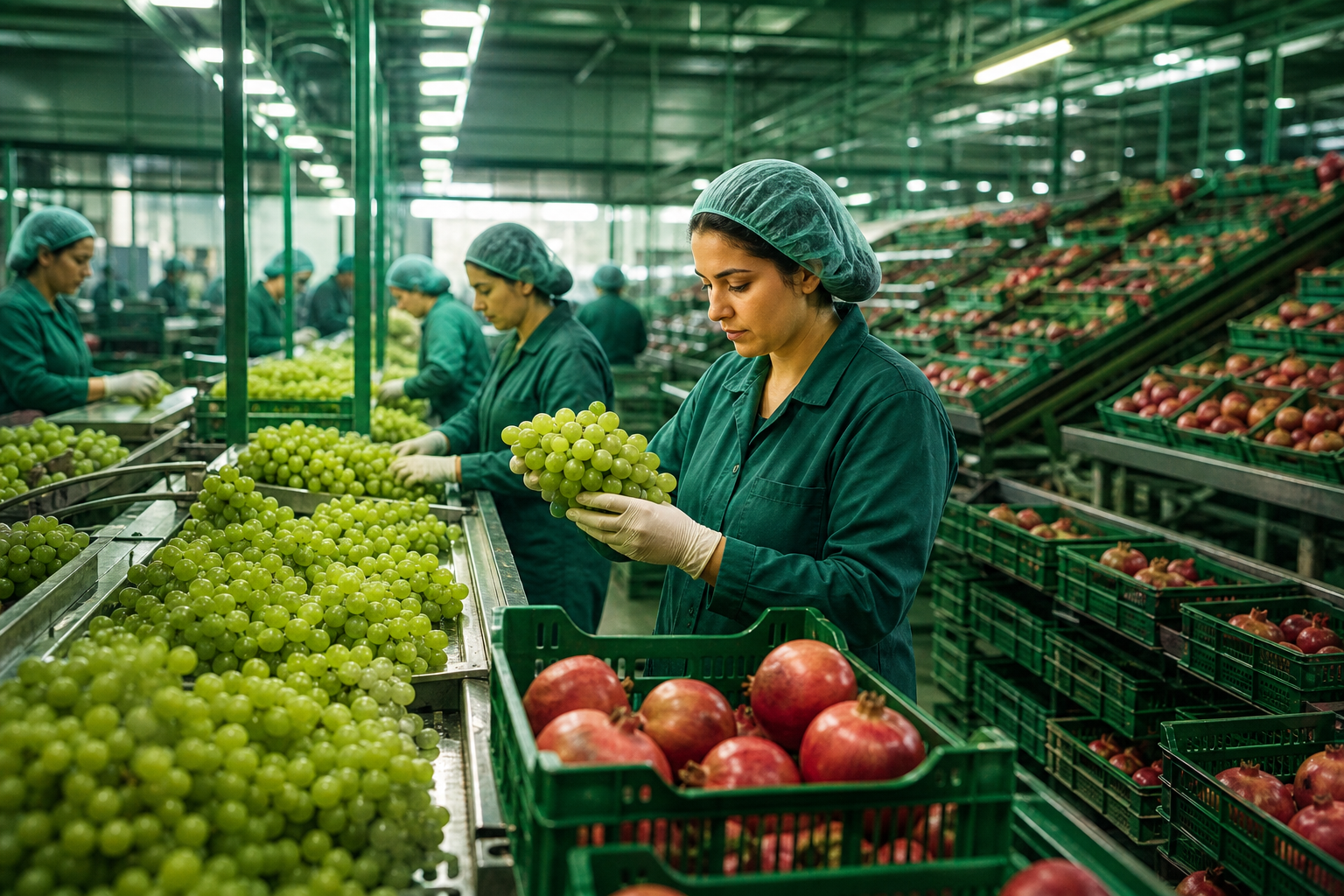
Sahyadri Farms is a strong Indian example because it is not just a farm brand; it represents a farmer-linked value chain model. The problem it addresses is classic Indian agriculture: smallholders often produce good crops but struggle with fragmented aggregation, inconsistent quality, weak bargaining power, and limited access to high-value domestic or export buyers.
The move: Sahyadri built an integrated model around farmer aggregation, packhouses, quality control, traceability, processing and buyer relationships. The policy context matters here: India’s push around farmer producer organisations, agri-infrastructure, export facilitation and food safety standards creates an enabling environment. But Sahyadri’s advantage does not come from policy alone.
Primary driver: the core driver is organised aggregation with quality discipline. Supporting drivers include farmer governance, post-harvest infrastructure, residue and quality compliance, buyer development, and the ability to move from raw produce into value-added channels.
Lesson: government policy creates the runway, but execution creates take-off. The winning model combines policy awareness with operating capability - aggregation, compliance, working capital, logistics and buyer trust.
How AI Changes Government Policy and Incentives Shaping Agriculture & Food
AI is changing agriculture policy from broad-brush intervention to more targeted, data-driven execution. The biggest shift is not “AI farming” in the abstract; it is better measurement of crops, risk, beneficiaries and supply chains.
Student workflow: before an interview, load a company annual report, one government scheme page such as PMFBY or e-NAM, and this lesson into NotebookLM. Ask: “How do current agriculture policies affect this company’s sourcing, margins, compliance and growth strategy?” Then convert the answer into a 60-second interview response.
AI can improve targeting, but agriculture data is messy. Land records, tenancy, crop mix, informal leasing and regional variation can create exclusion errors if models are used without human verification.
Interview Relevance
“How do government policies and incentives shape the agriculture and food sector in India?”
If the interviewer gives you a company - say a dairy brand, packaged staples player or agri-input firm - translate policy into that company’s P&L: raw-material cost, farmer acquisition, inventory, compliance, pricing and distribution.
For a useful cross-sector comparison, see how policy incentives work in regulated infrastructure-heavy sectors such as telecom and digital infrastructure policy. It helps you separate universal policy logic from agriculture-specific features like MSP, perishability and farmer income protection.
Common Mistake
The mistake: answering with a laundry list of schemes. It costs candidates because it sounds memorised and does not show business thinking. Fix: group schemes by incentive lever, then explain whose behaviour changes and how that affects the value chain.