
Business Models: How Agriculture & Food Players Make Money
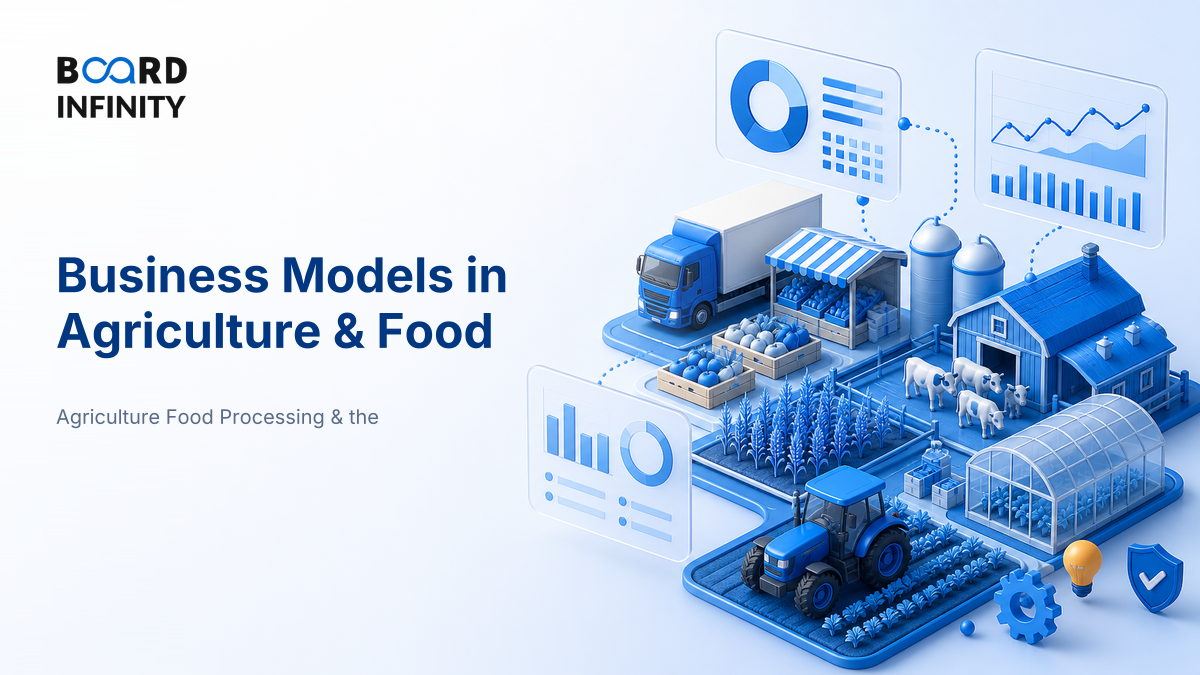
A farmer can harvest a good crop and still lose money if the mandi price crashes that week. A food brand can sell the same grain at a premium months later because it controlled processing, packaging, distribution and trust. That gap is the heart of agriculture and food business models: value is created in the field, but profit is often captured elsewhere.
- A business model explains how a firm creates, delivers and captures value - in agriculture and food, this depends heavily on seasonality, perishability, quality variation and working capital.
- The sector has four broad profit zones: inputs, farm production and aggregation, processing, and brands, retail and platforms.
- Commodity players earn mainly through volume and spread; branded players earn through differentiation and trust; platforms earn through take rates, services and data-enabled efficiency.
- The biggest margin shift happens when a company moves from selling undifferentiated output to controlling quality, processing, brand, channel and repeat demand.
- Critical metrics include gross margin, inventory days, shrinkage, capacity utilization, take rate and working capital cycle.
- Interview answers should follow the value chain: where the player sits, who pays, what cost risk it carries, how it captures margin, and what metrics prove success.
- The most common mistake is saying “farmers grow, companies sell” - that misses the real economics of procurement, processing, logistics, credit and channel power.
Big Picture: Follow the Value, Not Just the Product
Agriculture and food look simple because the product is physical: seed becomes crop, crop becomes food, food reaches a consumer. The business model becomes clear only when you ask a sharper question: at which stage does the firm control risk, quality, access or demand?
The pyramid is not saying farming is unimportant. It is saying that the closer a player gets to controlled demand and differentiated value, the more pricing power it can build. A farmer may face spot price risk; a branded food company may sell a consistent product through modern trade, e-commerce and exports.
Core Explanation: The Main Agriculture and Food Business Models
Use the agriculture and food value chain as your mental map. Every company can be located on this chain, and each location has a different revenue logic.
The Seven Money-Making Models
Notice the pattern: agriculture businesses often begin with supply access, while food businesses often win through demand access. The strongest players connect both - they secure reliable sourcing and also build a channel where customers repeatedly pay a premium.
How Each Model Captures Margin
There are four classic margin engines in agriculture and food. In interviews, naming these makes your answer sound commercial rather than generic.
- Spread: A trader or aggregator buys produce at one price and sells after sorting, storage, transport or timing advantage.
- Conversion margin: A processor turns paddy into rice, milk into cheese, wheat into flour, or fruit into packaged juice.
- Brand premium: A company earns more because consumers trust consistency, safety, taste, origin or convenience.
- Take rate: A platform earns a percentage or fee for enabling discovery, transactions, logistics, financing or fulfilment.
Commodity vs Branded vs Platform Models
This is the most interview-useful comparison. If you can place a company inside this matrix, you can explain its profitability drivers quickly.
For a broader comparison with other asset-heavy sectors where conversion margins, capacity utilization and working capital matter, you can revise business models in chemicals, metals and industrials. The logic is similar: physical assets create value only when capacity, input cost and customer demand are managed together.
Definitions You Should Be Able to Say Cleanly
Business model: “A business model describes the rationale of how an organization creates, delivers, and captures value,” from Osterwalder and Pigneur’s Business Model Generation.
Agriculture and food business model: the way a player earns money by controlling farm inputs, production, aggregation, processing, distribution, consumer demand or platform access.
Metrics That Reveal Whether the Model Works
Do not discuss agriculture and food business models only through revenue. The real test is whether the company can manage perishability, quality, working capital and channel economics.
There is no single “good number” across agriculture and food because rice, dairy, fresh vegetables, packaged snacks and agri-inputs have very different economics. In an interview, benchmark against same category, same channel, same perishability and same asset model.
Mini Case Study: LT Foods and the Move from Grain to Branded Value
LT Foods shows how an agriculture-linked company can move beyond commodity trading by controlling sourcing, processing, ageing, branding and international distribution.
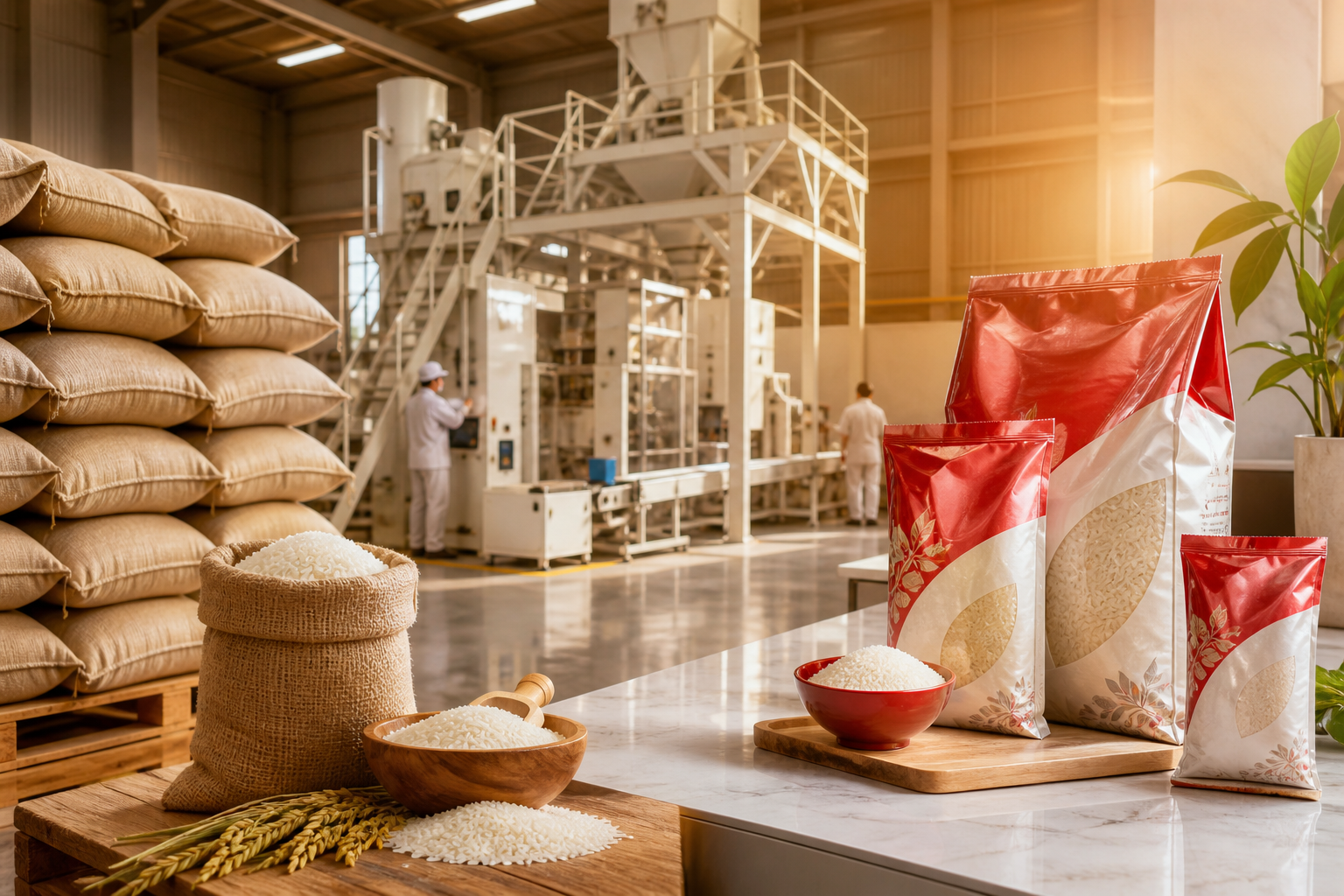
Rice can be a commodity business: buy paddy, mill it, sell into a price-sensitive market. LT Foods, associated with brands such as Daawat and Royal through its public company disclosures and investor communications on the LT Foods investor relations page, demonstrates a higher-value route: procure quality grain, process it, age basmati where relevant, package it under consumer brands, and sell across domestic and international channels.
The situation: In a commodity rice market, price discovery is sharp and margins can be thin. A player depending only on buy-sell spread remains exposed to harvest cycles, procurement cost and trade competition.
The move: LT Foods built a model around value addition - sourcing, milling, quality control, ageing, packaging, brand building and distribution. The primary driver is moving from commodity volume to branded and value-added food. Supporting drivers include procurement capability, processing know-how, quality consistency, export market access, portfolio breadth and consumer trust.
The lesson: The same agricultural output can support very different profit pools. Paddy sold as a commodity is a spread business; branded packaged rice becomes a trust, quality and distribution business.
The strategic takeaway is simple: agriculture-linked companies become more valuable when they reduce randomness - randomness in quality, supply, price, shelf life and demand.
How AI Changes Agriculture and Food Business Models
AI is not just a productivity add-on here. It can change who captures value because better prediction and quality visibility reduce the sector’s biggest frictions.
- AI-led demand and procurement forecasting: Processors, retailers and platforms can forecast demand by geography, season, festival period and weather pattern, then plan procurement more tightly. This reduces stockouts, markdowns and wastage.
- Computer vision for grading and quality: AI-enabled image recognition can help classify size, colour, defects and ripeness in produce. Better grading supports better pricing, lower disputes and more consistent processing input.
- Dynamic routing and cold-chain planning: Fresh food businesses can use route optimization to reduce travel time, spoilage and fulfilment cost. This connects directly with cold-chain and last-mile economics, which are also useful to compare with how the aviation and logistics value chain works.
Use NotebookLM before an interview: upload the company annual report, investor presentation and this lesson, then ask, “Map this company’s revenue streams, cost risks, working-capital pressures and likely interview questions.” Cross-check every generated claim against the source document.
Interview Relevance
“Pick any agriculture or food company and explain its business model. Where does it actually make money, and what risks can hurt margins?”
If you are stuck, say: “This is primarily a conversion business with commodity input risk and branded upside.” That sentence immediately separates revenue logic, risk and margin opportunity.
Common Mistake
The mistake: treating agriculture and food as one simple “buy from farmers, sell to consumers” model. Why it costs candidates: it ignores the real profit drivers - grading, storage, processing, brand, channel margins, wastage, credit and working capital. One-line fix: always map the company to the value chain first, then explain who pays and what risk the company absorbs.