
Campaign Breakdowns for Interviews: Decode Cadbury, Zomato & Nike with Confidence
A Diwali shopper sees Shah Rukh Khan recommending a nearby mithai store in one ad, a Zomato notification jokes about dinner in another, and a Nike film makes an athlete feel larger than life. Three very different campaigns - but the same question decides whether they worked: did the brand convert attention into meaning, action, and memory?
- A strong campaign breakdown follows six moves: context, objective, audience, insight, big idea, execution plus metrics.
- Do not start with “the ad was creative.” Start with the business problem the campaign was solving.
- Cadbury shows personalised emotional relevance; Zomato shows contextual moment marketing; Nike shows purpose-led brand storytelling.
- The best campaigns work across the funnel: they create awareness, build consideration, trigger action, and leave brand memory.
- Judge campaigns with both brand metrics and business metrics - reach alone is not proof of success.
- The interview-winning answer is not “I liked it.” It is “here is the insight, here is how execution amplified it, and here is what I would measure.”
Big Picture
A campaign breakdown is reverse-engineering: you look at a visible piece of communication and reconstruct the strategic machine behind it. The machine has to connect market context to consumer insight, then turn that insight into a creative idea, media plan, and measurable outcome.
Core Explanation: How to Break Down Any Campaign
The big idea is simple: do not analyse the ad first; analyse the problem first. A campaign is not just a film, post, jingle, billboard, app notification, influencer reel or event. It is a coordinated marketing response to a business or brand challenge.
The Funnel View: What the Campaign Was Trying to Move
A campaign may win awards and still fail commercially if it creates attention without moving the consumer. Use the funnel to ask: where did the campaign play, and what behaviour did it try to shift?
Cadbury, Zomato and Nike: Three Campaign Logics
Use this comparison when you need to show range. The three brands do not win for the same reason: Cadbury often wins through emotion and occasion ownership, Zomato through cultural timing and platform behaviour, and Nike through identity-based storytelling.
Zomato frequently uses topical food humour across notifications, social posts and outdoor copy. The primary driver is contextual relevance - being present when hunger, festivals, cricket, weather or pop culture makes food salient. Supporting drivers are fast creative approval, a distinctive brand voice, app-first distribution and a product that can convert attention into orders.
The 2x2 That Makes Campaigns Easy to Classify
Most campaign discussions become vague because candidates use one word - “creative” - for every good ad. Instead, classify campaigns on two axes: emotional depth and activation immediacy.
Metrics: How to Judge Whether a Campaign Worked
Campaign metrics must match the objective. A brand film, a festive sales push and an app notification should not be judged by the same single number.
Definitions
Marketing - Philip Kotler: “Marketing is the science and art of exploring, creating, and delivering value to satisfy the needs of a target market at a profit.”
Campaign breakdown: A structured teardown of a campaign's objective, insight, creative idea, execution, media choices and measurable business impact.
Consumer insight: A non-obvious human truth that explains why a target audience thinks, feels or behaves in a particular way.
Big idea: The central creative thought that makes the strategy memorable and expandable across media.
Case Study: Cadbury's “Not Just A Cadbury Ad”
Cadbury used AI-enabled personalisation to turn a national festive campaign into local store-level support, making gifting emotional and commercially useful.
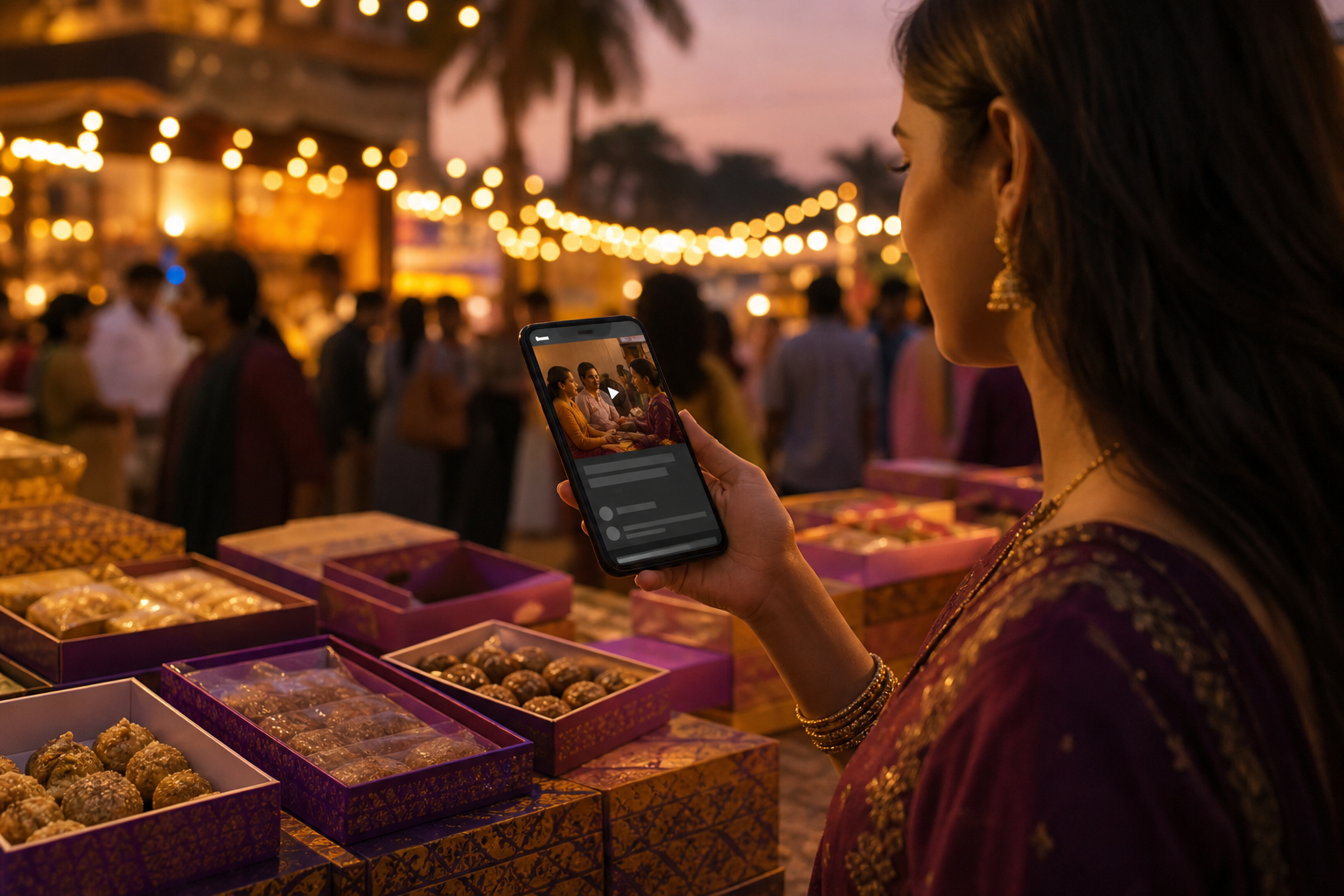
Situation: Cadbury has long linked chocolate with Indian celebrations through campaigns around festivals, gifting and family moments. During the festive season, local retailers also needed visibility because shopping behaviour was moving across digital discovery, e-commerce and neighbourhood stores.
The move: In “Not Just A Cadbury Ad,” Cadbury and Ogilvy used AI-enabled video personalisation so that Shah Rukh Khan appeared to recommend different local stores in campaign versions. Instead of only saying “buy Cadbury,” the campaign made the brand a platform for local businesses during Diwali.
Outcome and lesson: The campaign became widely discussed in marketing circles and won major creative recognition, including at Cannes Lions. Its primary driver was personalised festive relevance. Supporting drivers were Cadbury's strong association with gifting, Shah Rukh Khan's mass appeal, local retailer inclusion, AI-enabled versioning and a clear Diwali buying context. The lesson: personalisation is powerful when it serves a human emotion and a business ecosystem, not when it is used as a tech gimmick.
How AI Changes Campaign Breakdowns
AI changes campaign analysis in 2026 because campaigns are no longer only judged after release. Marketers can now simulate, personalise, monitor and optimise creative systems almost in real time.
Student workflow: Use ChatGPT or Claude to create a campaign teardown table. Paste the campaign film transcript, social posts, landing page copy and public campaign article links. Prompt: “Break this campaign into context, objective, audience, insight, big idea, channels, funnel stage, metrics and risks. Also give me three interview questions an FMCG recruiter may ask.” Then verify facts through Perplexity or official brand/agency sources before using them in an interview.
Interview Relevance
“Pick any one campaign by Cadbury, Zomato or Nike. Break it down from a marketing strategy perspective. What made it work, and what would you measure?”
Use this sentence to sound structured: “I will evaluate the campaign at three levels - strategic fit, creative execution and measurable impact.”
The biggest mistake is describing the campaign instead of analysing it. Candidates retell the ad scene by scene and never mention the objective, insight, target audience or metrics. Fix it in one line: “The campaign worked because the insight, media and measurement all supported the same business goal.”
What to Revise Next
This is the final lesson in the course, so your best next step is a capstone review: pick three campaigns from different categories and break each one down using the same six-part structure. If you can compare an FMCG campaign, a digital platform campaign and a global lifestyle brand campaign without losing structure, you are interview-ready.